
1955 – American actor and cultural icon James Dean is killed in a car crash aged 24
Tilghman Arrives!
Enter now to win a copy of
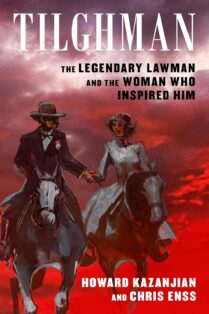
Tilghman: The Legendary Lawman and the Woman Who Inspired Him
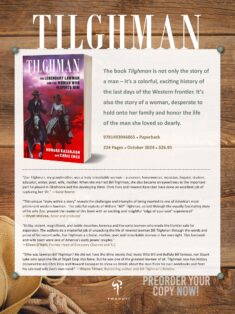
“Gritty, violent, magnificent, and noble describes America and the early lawmen who made the frontier safe for expansion. Authors Chris Enss and Howard Kazanjian do a masterful job of unpacking the life of revered lawman Bill Tilghman through the words and prose of second wife, Zoe Tilghman a scholar, mother, poet and remarkable woman in her own right. This husband-and-wife team were one of America’s early power couples.” Eileen O’Neill, Former Head of Discovery Channel and TLC
Tilghman
I'm looking forward to hearing from you! Please fill out this form and I will get in touch with you if you are the winner.
Join my email news list to enter the giveaway.
"*" indicates required fields
This Day…
1852 – George Aiken’s play “Uncle Tom’s Cabin” an adaptation of Harriet Beecher Stowe‘s famous anti-slavery novel premieres in Troy, New York
Capturing Outlaw Bill Doolin
Enter now to win a copy of
Tilghman: The Legendary Lawman and the Woman Who Inspired Him
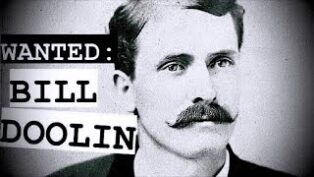
When Bill Tilghman stepped off the train in Eureka Springs he was dressed as an itinerant preacher complete with a long, black coat and derby hat. As he proceeded down the main thoroughfare clutching a Bible in his hand, he noticed a tall man bent at the waist walking with a cane. The man’s complexion was pale, and he carried himself as though he was in pain, but there was no mistaking he was Bill Doolin. Tilghman followed the fugitive to a barbershop. There Doolin made himself comfortable in front of a warm stove and began reading a paper he had tucked under his arm. The lawman walked into the room, scanning the setting for other patrons.
No one paid any attention to the lawman masquerading as a minister until he pulled a pistol from his suit pocket and pointed it at Doolin. “Put up your hands!” Tilghman ordered. The outlaw jumped to his feet and attempted to go for his six-shooter. The seasoned officer jerked Doolin’s gun arm back before his hand reached the holster. Bystanders scurried out of the business, leaving Tilghman alone with the combative criminal. “Bill, you know who I am?” Tilghman asked Doolin. “Yes, I do,” he replied. “Well, you better get your hands up,” the lawman told him. The desperado complied. After confiscating Doolin’s gun, he handcuffed him and led him out of the barbershop.
“The fact that Doolin knew him accounts for the easy manner in which Tilghman took him,” the January 16, 1896, edition of the Weekly Oklahoma State Capital reported. “There is no other marshal that could have gotten him without a desperate fight. Tilghman is the only man on Marshal Nix’s force who really made Doolin’s capture a study. He was following him incessantly for many months, being very close on his trail several times. …The government and the railroad and express companies had outstanding rewards aggregating $3,500 for the capture of Doolin, which Tilghman will receive.”
Tilghman
I'm looking forward to hearing from you! Please fill out this form and I will get in touch with you if you are the winner.
Join my email news list to enter the giveaway.
"*" indicates required fields
To learn more about Marshal Tilghman’s capture of outlaw Bill Doolin read
Tilghman: The Legendary Lawman and the Woman Who Inspired Him
This Day…
1948 – Mildred Gillars (Axis Sally), an American broadcaster employed by the Third Reich in Nazi Germany to proliferate propaganda during World War II, pleads not guilty to eight chargs of treason in Washington, D.C.
While Outlaws Ride
Enter now to win a copy of
Tilghman: The Legendary Lawman and the Woman Who Inspired Him
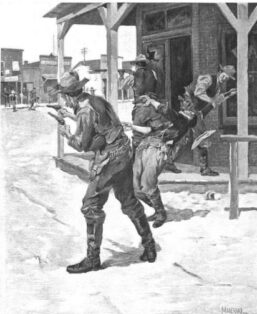
Bill Tilghman, Chris Madsen, and Heck Thomas lay on their stomachs behind a cluster of rocks, their rifles trained on a dugout three hundred yards away. The crude shelter, a rectangular hole carved into a ravine, was rumored to be the spot where the Doolin-Dalton Gang was hiding. The lawmen had sneaked into their position after midnight and were waiting until dawn to overtake the outlaws inside. The pale crescent moon above the trio shone like a silvery claw in the waning night sky. It was mid-March 1894, and it was cold.
The US deputy marshals were dressed for the frigid temperature, but the occasional icy winds left them wanting more than dusters and wool chaps to rely on for warmth. Knowing the outlaws would be in custody by daybreak kept them rooted to their setting despite the elements. Six months prior to Tilghman and the others learning the criminals’ location, a team of lawmen tried to apprehend the gang holed up in Ingalls. The outcome was disastrous for Evett Nix’s federal authorities. Three deputy marshals were killed and most of the outlaws escaped. Law enforcement’s defeat emboldened the desperados.
A month after the incident in Ingalls they attended an oyster supper in Cushing hosted by the women of the church. They were overheard planning bank and train robberies. They also threatened to come after the citizens of Ingalls who had sided with the deputy marshals who raided the area in September 1893. Frustrated with the lack of progress his officers were making to catch the gang, Nix persuaded Tilghman and Heck Thomas to leave their post in Perry and pursue a lead on the whereabouts of the Doolin-Dalton Gang. The pair would later reunite with Chris Madsen.
Madsen had sent his brother-in-law, Deputy Marshal Ed Morris, and two other officers to the Ingalls area to find out if those who championed the outlaws knew where they were hiding. Morris and his coworkers arrived in town on a chuck wagon disguised as cooks traveling to Texas to work on a cattle drive. During a visit to the local saloon, Morris learned that the gang was living in a dugout on the Dunn Ranch.
Rose Dunn’s paramour George Newcomb survived the police raid on Ingalls and was with the rest of the gang on her family’s property. Morris was informed that Rose had been seen taking provisions from the main ranch house to the dugout. Smoke emanating from the chimney of the dugout further confirmed their theory that Doolin, Dalton, and the other members of their group were indeed inside.
Tilghman
I'm looking forward to hearing from you! Please fill out this form and I will get in touch with you if you are the winner.
Join my email news list to enter the giveaway.
"*" indicates required fields
To learn how Marshal Tilghman apprehended Bill Doolin read
Tilghman: The Legendary Lawman and the Woman Who Inspired Him
This Day…
1875 – Billy the Kid is arrested for the 1st time and jailed after receiving clothing stolen from a Chinese laundry. Escapes two days later.
Tilghman Is One The Way
This Day…
1893 – Cherokee Strip, Oklahoma, opens white settlement homesteaders
Tilghman in Dodge City
Enter now to win a copy of
Tilghman: The Legendary Lawman and the Woman Who Inspired Him
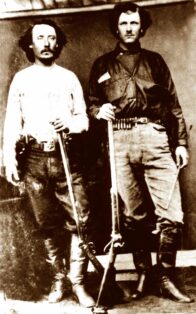
In mid-October 1885, two men ambled down the Jones and Plummer Trail, 120 miles from the Kansas border, toward the Cimarron River. Marshal Bill Tilghman was in the lead, his eyes fixed on the spot the riders would have to ford the swollen waterway. He had a tight grip on a bald-faced mare trailing behind him. Atop the animal was a horse thief named George Synder. He was a dark-complected man in his mid-thirties with a thin moustache and a gaunt intensity that wasn’t entirely healthy looking. Tilghman had journeyed to Mobeetie, Texas, to arrest Synder for stealing a horse that belonged to a politician from Great Bend named J. C. Briggs.
It wasn’t the first time Tilghman had made a long trip to apprehend a criminal. Unlike other lawmen who had to encroach on another jurisdiction to make an arrest, Tilghman insisted on acquiring the necessary writs from the officers overseeing the area he planned to invade. He expected the same courtesy to be shown him from law enforcement seeking to detain an offender in his domain.
In the first pages penned about his life and work, Zoe made note of such professional courtesies practiced by the marshal. “My husband’s career in law enforcement began in Dodge City when the country west of the Mississippi was finding its way,” she wrote. “Bill traveled to Okla homa in 1889 just before the first land rush in the nation. He served the rough Territory for thirty-five years as U. S. deputy marshal, sheriff, chief of police, and special aide to governors. His peers admired his ethics and outlaws feared his tenacity. In the end, when a new kind of frontier opened during the brawling oil boom of the 1920s, Bill gave his life as he had lived it—in the cause of decency and order.” Zoe could envision her husband escorting Synder to jail and contemplating his early years on the open range. His family had moved to Kansas after the military closed the fort where William Matthew Tilghman Sr. had been employed as a sutler at Fort Dodge, Iowa, selling provisions to the troops.
“He grew up on the plains, and a gun was rarely far from his hand,” Zoe noted about Tilghman’s upbringing. “At that time, in 1862, his father and oldest brother Richard enlisted in the Union Army and fought in the Civil War. Tilghman had to do the work on the farm near Atchison, Kansas, and furnish his mother Amanda and six others with food, which mostly consisted of rabbits and prairie chickens. When he wasn’t feeding the stock, milking, and gathering corn, he was practicing his shooting. In time, he was able to provide his mother, brothers, and sisters with geese and turkeys for their meals.”
Tilghman
I'm looking forward to hearing from you! Please fill out this form and I will get in touch with you if you are the winner.
Join my email news list to enter the giveaway.
"*" indicates required fields
To learn more about Marshal Tilghman and his wife Zoe read
Tilghman: The Legendary Lawman and the Women Who Inspired Him