Plain Genius- A Roy W. Dean Grant Finalist

Plain Genius: The Women Who Built America documentary is a finalist for the Roy W. Dean Grant


In 2026 America celebrates a monumental birthday – its 250th! ”America250” will be
an epic year of celebrating our past, present and hopes for the future. While traditional
historic reflections are focused on extraordinary male contributions to the founding
and building of America, this documentary series will reveals the outstanding, but
never heard of, women who not only helped shape our young country, but whose lives
reverberate 250 years later. The stories we will tell are of the lives of bold, pioneering
women who saw no limitations at a time when women had few options in life. Our
daughters today will see the women whose shoulders they are standing on.
The documentary series entitled Plain Genius: Women Who Helped Build America
will leverage the historical authorship of Chris Enss, best-selling author and skilled
storyteller. Her meticulously researched books provide a road map to primary materials
and archives necessary to present these women in rich and compelling detail. Each
episode will feature four women who had a profound impact on our nation’s early
development, AND the lasting legacy of their gifts to our culture. We will interweave
archival visual and audio materials with cutting-edge reenactments, interviews with
historians, legacy women, and appropriate celebrities.


The Widow Writes

Enter now to win a copy of Tilghman:

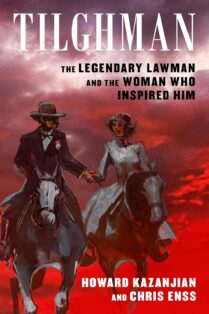
The Legendary Lawman and the Woman Who Inspired Him


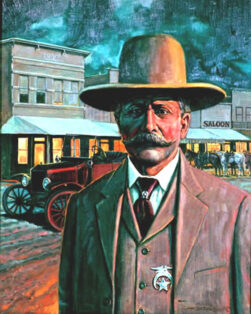
In addition to being a legendary marshal, Tilghman was a father of seven children and a faithful companion to his second wife Zoe for more than two decades. His violent death in November 1924 devastated Zoe and the three boys they had together. Tilghman had encountered numerous criminals over the course of his career and had come through the gun battles relatively unscathed.

When he took the job of bringing about stability in the untamed oil town of Cromwell, Zoe anticipated he’d take care of the work and return home to live out his days with her and their boys. She never imagined he would be gunned down in the line of duty. Now a widow at forty-three, Zoe was faced with how to continue without the man she cherished and admired. Not only would she be responsible to make sure nineteen-year-old Tench, seventeen-year-old Richard, and twelve-year-old Woodie were cared for on her own, but the debts the couple had accumulated fell solely to her to pay.

Tilghman was buried on November 5, 1924, and on November 10, 1924, creditors came calling. Zoe was the literary editor of the newspaper Harlow’s Weekly. Her salary alone would not cover the family’s needs and outstanding bills. She had been pondering the situation for weeks, in between reading Tilghman’s detailed memoirs of the various manhunts, posse rides, shootouts, and arrests in which he participated over the course of his life as a sheriff or marshal. She reviewed with considerable pride the newspaper clippings he had kept about the outlaws he apprehended.

Although he’d stayed on the job longer than any of his colleagues and squared off against more renegades than lawmen such as James Butler Hickok, Seth Bullock, or Virgil Earp, Tilghman’s name wasn’t as recognizable as most of the others in the field. Among the correspondence Zoe had received from men and women expressing their sorrow over Tilghman’s death were newspaper articles about Wyatt Earp’s work in motion pictures, his friendship with film star William S. Hart, and the biography in the works about the lawman and his gunfighter life. Zoe had never personally met Earp but knew of him from her husband.

She believed Tilghman’s experiences were at least as daring and exciting as anything Wyatt Earp had done, and spanned a far greater number of years. The idea to write a book about Tilghman’s adventures wearing a badge began forming in Zoe’s mind a month after his passing and was rekindled after reading of a possible volume on Earp. She was convinced readers would appreciate the tales of Marshal Tilghman’s efforts to tame the territory beyond the Mississippi.

According to Zoe, “My husband was one of the West’s greatest peace officers. He hunted down famous outlaws and killed when he had to. But Tilghman was more than an expert gunman who fought on the side of the law. He and other men who held dangerous jobs as sheriffs and marshals did the work of civilization along the whole frontier.”


Tilghman

I'm looking forward to hearing from you! Please fill out this form and I will get in touch with you if you are the winner.

Join my email news list to enter the giveaway.

"*" indicates required fields

Your Name
Please add me to your email news list*

To learn more about Zoe Tilghman and her husband read

Tilghman: The Legendary Lawman and the Woman Who Inspired Him



This Day…

1850 – Swedish soprano Jenny Lind, whose purity of voice and natural singing style earned her the nickname “the Swedish nightingale,” made her American debut at the Castle Garden Theatre in New York City on September 11, 1850. The appearance inaugurated a ninety-three-stop American tour which was arranged by showman and entertainment entrepreneur Phineas T. Barnum. The tour came on the heels of a fantastically successful string of appearances in England where the large packed-in crowds gave rise to the term, “Jenny Lind crush.”

Tilghman in Dodge

Enter now to win a copy of

Tilghman: The Legendary Lawman and the Woman Who Inspired Him


Late in the summer of 1884, a pair of wild-eyed, trail-stained strangers wandered into Dodge City, Kansas. Both were heavily armed when they entered the Long Branch Saloon. The bartender noticed their guns and informed the men the weapons weren’t allowed in town. The men announced to all in earshot that they hadn’t any intentions of surrendering their guns and defied the law to take their six-shooters from them.

The two grabbed a bottle of whiskey and a couple of glasses and proceeded to a nearby table where they started drinking. In between drinks the pair loudly threatened to kill anyone with a badge who came near them. Marshal Tilghman’s reputation as an effective peace officer had reached beyond Dodge City, and the belligerent customers dared the well-known lawman to square off against them. “We hear tell he’s fast on the draw,” they shouted. “He’s got a chance now to prove it. Somebody go tell him that if he’s tired of living, we’re ready to help him end it.”

A man named Sampson let the marshal know what was going on and, in spite of the informant’s warning to stay away, Tilghman picked up his pistols and headed out of his office. As he left, he told Sampson if he didn’t go, gunslingers from all over the Territory would ride into Dodge ready to oppose him.

When Marshal Tilghman entered the saloon, patrons and employees scattered. The resolute lawman made his way to the mouthy drifters and instructed them to give up their guns. “They’re not allowed in town,” he told them. The three men eyed one another for a few brief moments and then one of them quickly drew his weapon. Before he could get off a shot, Tilghman had drawn and fired his gun at the man.

The second of the duo pulled his pistol but he didn’t get far. He was on the floor with a bullet in his chest before the smoke from Tilghman’s first shot had cleared. The marshal retrieved the dead men’s weapons and ordered a handful of cowboys who were taking refuge behind the bar to help carry the bodies to the mortician’s office.


Tilghman

I'm looking forward to hearing from you! Please fill out this form and I will get in touch with you if you are the winner.

Join my email news list to enter the giveaway.

"*" indicates required fields

Your Name
Please add me to your email news list*

To learn more about Marshal Tilghman and his wife Zoe read

Tilghman: The Legendary Lawman and the Woman Who Inspired Him

Tilghman and the Kiowas

Enter now to win a copy of

Tilghman: The Legendary Lawman and the Woman Who Inspired Him


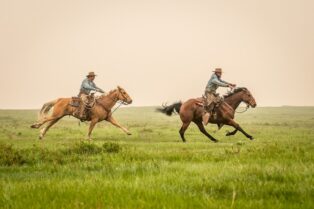
The Kiowas kicked their horses into a gallop toward the cowboys. Tilghman and the man with him took off in the direction they came. The packhorses they had with them as well as the stray cattle raced to keep up. The Indians divided into two parties, both hurrying after the cowhands as fast as their rides would take them. Tilghman and his coworker urged their horses to go even faster, and the animals did. The chase continued for several minutes with the Kiowas closing the gap on the exhausted cattle and pack-animals trying to keep up. Eventually the braves captured the cows and horses. Some stayed behind with the livestock while others maintained the pursuit of Tilghman and his companion.

The gap between the Kiowas, Tilghman, and the other cowhand widened and narrowed throughout the chase. Tilghman considered stopping to shoot the pursuers but was convinced killing one or several of the warriors would only cause more problems in the long run. The cowboys believed their only option was to outrun the Kiowas. The Indians doggedly followed the two men into a canyon, forcing the pair up a steep hillside. When the cowhands reached the top, they realized they were trapped. Far below them on the other side was a stream that was swollen from the recent rains. Tilghman quickly surmised they would have to jump if they hoped to survive.

The cowboys dismounted and coaxed their horses to make the leap first. They watched the animals plummet forty feet into the water. The dazed and slightly confused horses emerged unhurt from the death-defying jump. They swam to the bank of the stream, stumbling over rocks until they got their footing where they stood huddled together, shaking from the experience.

Tilghman and the cowhand with him leapt from the precipice minutes after making sure the horses had made it through the ordeal. The pair hit the water hard and popped to the surface moments later. Tilghman looked at the cliff towering over them to see if the warriors were at the summit. Seeing no one, the cowhands pulled themselves out of the rampaging stream and hurried to their horses. The still shaking animals could barely move beyond a walk. Tilghman and his cohort managed to lead the horses to an outcropping of rock. By then, the Kiowas were lined along the ridge. Tilghman removed his Sharps rifle from the holster on his saddle and fired a shot in the warrior’s direction. The Kiowas quickly climbed off their horses and flattened themselves on the ground. They didn’t return fire or attempt to follow the cowhands down the embankment.


Tilghman

I'm looking forward to hearing from you! Please fill out this form and I will get in touch with you if you are the winner.

Join my email news list to enter the giveaway.

"*" indicates required fields

Your Name
Please add me to your email news list*

To learn more about Marshal Tilghman’s life and times read

Tilghman: The Legendary Lawman and the Woman Who Inspired Him
Marshal of the Last Frontier

Enter now to win a copy of

Tilghman: The Legendary Lawman and the Woman Who Inspired Him


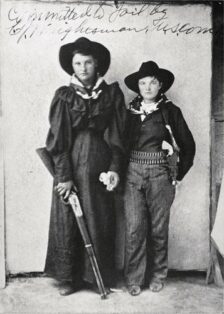
Deputy marshal Bill Tilghman nudged his galloping horse in the side with his spurs to encourage the animal to run faster. The lawman was after a fugitive who had gotten a bit of a head start and whose ride was swift and agile. The horse’s ability to keep up with the outlaw’s mount had a great deal to do with the rider in the saddle. Tilghman was a solid, broad-shouldered man in his early forties and the desperado he was pursuing was a petite, seventeen-year-old woman. Jennie Metcalf, known in the Oklahoma Territory as Little Breeches, led her horse across the prairie around the town of Pawnee with ease. The ride was so fluid she managed to remove her Colt six-shooter from the waistband of the oversized trousers she was wearing, turn around in her seat and fire a volley of shots at Tilghman.

The marshal grimaced as he spurred his horse on and lifted his Winchester out of the saddle holster. It was August 18, 1895, and the sun was a ball of fire. The wind at his face was like the breath of a furnace. He was hot and tired and in no mood to take part in a gun battle with a teenager. Tilghman hadn’t anticipated the young woman would make a run for it when he set out to arrest her and her cohort, Annie McDoulet alias Cattle Annie, for stealing horses.

The pair’s misdeeds extended far beyond horse thievery. For several months, the women had been working with the Doolin Gang. In 1893, William “Bill” Doolin organized the group comprised of some of the most ruthless criminals in the region. They robbed banks, stagecoaches, and trains. Marshal Tilghman and two other deputy marshals, Heck Thomas, and Chris Madsen had been on their trail for years, but the gang was always one step ahead of them. It was clear someone was helping them to navigate around law enforcement’s efforts to apprehend the felons.

After the Doolin Gang robbed the United States Army payroll near Woodward, Oklahoma, in March 1894, the three officers discussed what they knew about each crime and what dubious characters seemed to always be in the general vicinity. Little Breeches and Cattle Annie were the prime suspects. The three men believed the women had been scouting for the gang, acting as their lookout, and keeping them in supplies. Tilghman was convinced the key to the Doolin Gang’s demise was to capture the misguided youth who were aiding and abetting them.


Tilghman

I'm looking forward to hearing from you! Please fill out this form and I will get in touch with you if you are the winner.

Join my email news list to enter the giveaway.

"*" indicates required fields

Your Name
Please add me to your email news list*

To learn more about Marshal Tilghman and his time chasing Cattle Annie and Little Breeches read Tilghman: The Legendary Lawman and the Woman Who Inspired Him