
1938 – President Franklin Roosevelt dedicates the Eternal Light Peace Memorial and lights the eternal flame at Gettysburg Battlefield
The Woman Chief
Enter now to win a copy of
Soldier, Sister, Spy, Scout: Women Soldiers and Patriots on the Western Frontier
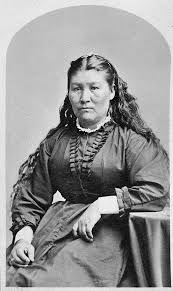
Mrs. Frank “Tobey” Riddle, better known as Winema, was a mediator for the Modoc people, other Indian tribes in the area of Klamath Lake, Oregon, and the United States Army in early 1878. With her skills she was able to negotiate treaties that kept the land of her ancestors in peace. Whenever that peace was threatened, her job was to set things straight. On February 1873, she rode into hostile Modoc territory to persuade the chief to surrender to the cavalry.
Chief Keintpoos, or Captain Jack (a named given to him by the settlers because of his liking for brass buttons and military medals on his coat), was Winema’s cousin. In 1863 the U.S. government forced his people from their land onto a reservation in Oregon. Conditions on the reservation were intolerable for the Modoc people. They were forced to share the land with the Klamath Indians of the region. The Modoc and the Klamath did not get along. The Modoc struggled to live in this hostile environment for three years. Modoc leaders appealed to the U.S. government to separate the tribes, but officials refused to correct the problem. In 1869, Captain Jack defied the laws of the white man and led his tribe off the reservation and back to the area where their forefathers had first lived.
The cavalry and frustrated members of the Indian Peace Council wanted to use force to bring Captain Jack and his followers back to the reservation. Winema persuaded them instead to give her a chance to talk with the chief.
When Winema reached the Modoc camp, Captain Jack’s men gathered around her. A dozen pistols were drawn upon her as she dismounted. She eyed the angry tribesmen as they slowly approached her. Then walking backward until she stood upon a rock above the mobs, she clasped her right hand upon her own pistol, and with the other on her heart she shouted aloud, “I am a Modoc myself. I am here to talk peace. Shoot me if you dare, but I will never betray you.” Her bravery in the face of such difficulty won the admiration of her people, and instantly a dozen pistols were drawn in her defense.
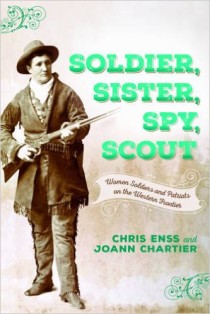
Soldier, Sister, Spy, Scout
I'm looking forward to hearing from you! Please fill out this form and I will get in touch with you if you are the winner.
Join my email news list to enter the giveaway.
"*" indicates required fields
To learn more about Winema and other women loyalists read
Soldier, Sister, Spy, Scout: Women Soldiers and Patriots on the Western Frontier
This Day…
1776 – 1st vote on Declaration of Independence for Britain’s North American colonies
Frontier Patriots
Throughout the month of July enter to win a copy of
Solider, Sister, Spy, Scout: Women Soldiers and Patriots on the Western Frontier
From the earliest days of the western frontier, women heeded the call to go west along with their husbands, sweethearts, and parents. Many of these women were attached to the army camps and outposts that dotted the prairies. Some were active participants in the skirmishes and battles that took place in the western territories. Each of these women-wives, mothers, daughters, laundresses, soldiers, and shamans-risked their lives in unsettled lands, facing such challenges as bearing children in primitive conditions and defying military orders in an effort to save innocent people.
Soldier, Sister, Spy, Scout tells the story of twelve such brave women-Buffalo Soldiers, scouts, interpreters, nurses, and others-who served their country in the early frontier. These heroic women displayed a depth of courage and physical bravery not found in many men of the time. Their remarkable commitment and willingness to throw off the constraints of nineteenth-century conventions helped build the west for generations to come.
This Day…
1838– Coronation of Queen Victoria aged 19 during a five-hour ceremony at Westminster Abbey, London [1]
The Widowes Ones Available at The Little Bighorn
After such a long time trying to get The Widowed Ones on the shelf at
the Little Bighorn Museum,
I learned yesterday that the book is indeed for sale at the famous location.
Next year at this time, I’ll be in Montana signing copies of book.
Thank you Friends of the Little Bighorn Battlefield.
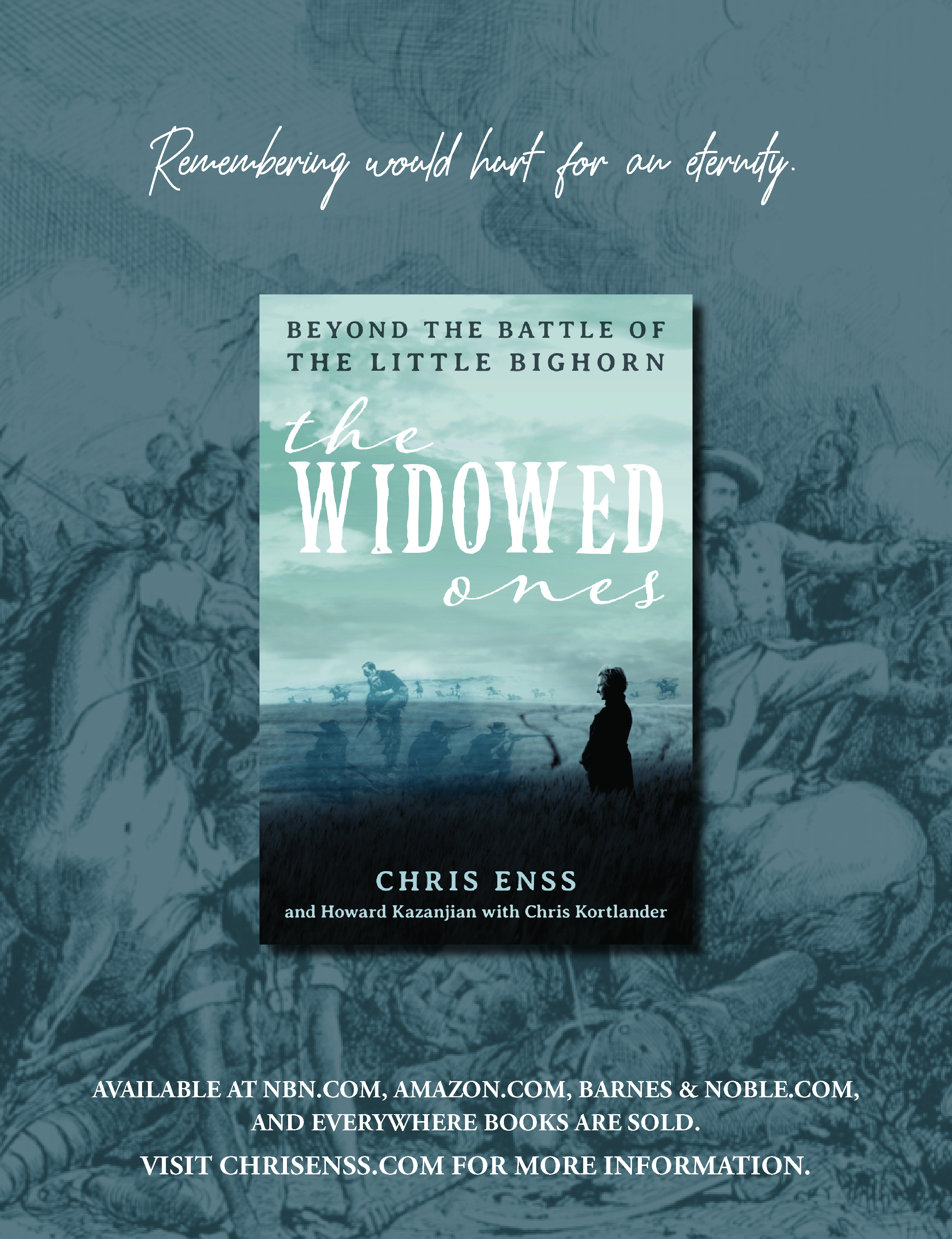
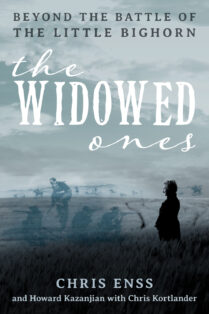
Enter now to win a copy of The Widowed Ones: Beyond the Battle of the Little Bighorn
The Widowed Ones 3
I'm looking forward to hearing from you! Please fill out this form and I will get in touch with you if you are the winner.
Join my email news list to enter the giveaway.
"*" indicates required fields
This Day…
1955 – LPGA Western Open Women’s Golf, Maple Bluff CC: Patty Berg wins her 5th WO title by 2 strokes from Louise Suggs and Fay Croker; first WO played at stroke play
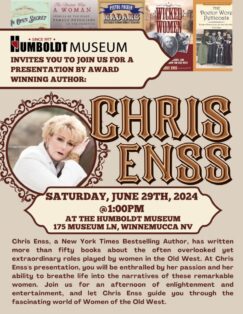
Heading to the Humboldt Musuem
This Day…
1916 – Mary Pickford becomes the first female film star to get a million dollar contract
The Widowed Moment
Enter now to win a copy of
The Widowed Ones: Beyond the Battle of the Little Bighorn
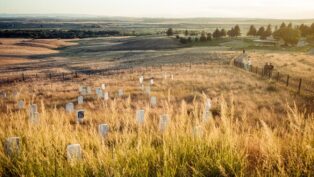
Molly Garrett McIntosh declined to attend the burial of her husband, First Lieutenant Donald McIntosh, at Fort Leavenworth on August 3, 1877. She left Fort Abraham Lincoln in the Dakota Territory in late July 1876, a broken woman with no idea how she would go on without her beloved. First Lieutenant McIntosh, the thirty-seven-year-old commander of the Seventh Cavalry’s Company G, fell with the other officers at the Battle of the Little Bighorn. His remains had been identified by his brother-in-law, Lieutenant Frank Gibson. Gibson was with the Seventh’s Company H and part of the detail dispatched to the scene to recover and bury the bodies of his fellow soldiers. According to a report from Lieutenant Charles F. Roe who rode with Gibson on the detail, Donald’s body was found close to the banks of the Little Bighorn River. He had been stripped and scalped; his head was “pounded to jelly.” His remains were identified by the special sleeve buttons found near where his body lay. The “gutta-percha” buttons had been a present from Molly and presented to him just before he had ridden out with General Custer to Montana.* She secretly had had them sewn on his uniform.
Not long after leaving Fort Abraham Lincoln to return to Baltimore to live with her mother, Molly learned of the condition of her husband’s body. She was desperate to find out what had happened to Donald. She knew he kept a journal of his activities. It was a small, dark book he always kept tucked in the pocket of his uniform. Molly wanted to know if the journal had been located. She also wanted to know if his wedding ring had been taken by the Indians after the battle. The ring, gold with a small diamond, bore the initials inside of both Donald and Molly along with the number sixty-six for 1866, the year the two were married. Neither his journal nor his wedding ring was located. Molly’s sister Katherine, wife of Lieutenant Frank Gibson, thought it was cruel not to let her know the truth and gently explained what Frank had shared with her about Donald’s death. Molly was grateful but imagining how her husband suffered drove her to her parents’ home where she shut herself away.
Molly’s father, Milton Garrett, had passed away in 1869, and her mother Mary was alone and in poor health. Molly was there to take care of her. Apart from Mary, Molly saw no one. She isolated herself from the world to grieve the loss of her spouse alone.
The Widowed Ones 3
I'm looking forward to hearing from you! Please fill out this form and I will get in touch with you if you are the winner.
Join my email news list to enter the giveaway.
"*" indicates required fields