The Notorious Lola Montez

Enter now to win a copy of

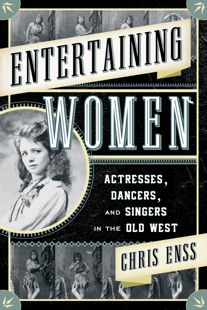
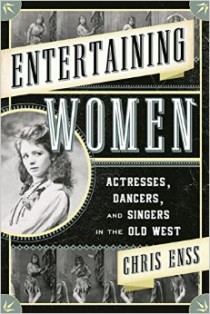
Entertaining Women: Actresses, Dancers, and Singers in the Old West
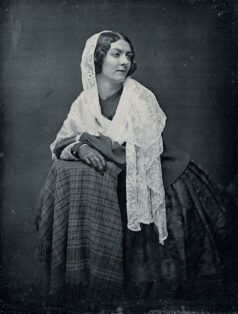
 

Lola Montez


More than a hundred-sixty years ago citizens in New York were discussing with avid interest the approaching theatrical engagement in the city of a woman with a romantic Spanish name – and a titled one, no less – who had caused one monarch to lose his throne and had left a trail of affairs in her wake after a hectic zig-zag career of adventure and amour which had taken her pretty much all over the map of Europe.

This woman, who had been described as the most beautiful woman in Europe, whose comeliness, flashing, black eyes, crimson lips, intelligence and ready wit, few men had been known to resist, was now in the United States and was slated to appear in New York before traveling to California.  Small wonder, then, that honest housewives shook their heads when their husbands and sons displayed too much interest in “that adventuress” and suggested that they had better stay at home that evening.

Nevertheless, a well-filled house greeted the celebrity from overseas. Enough New Yorkers passed their cash into the box office till to make her engagement well worthwhile.

Lola Montez was the attraction. The Countess of Landsfeld, as Lola was also known, may not have been the best dancer in the world in fact, one New York newspaperman reported that, in his opinion she was quite the worst, but the former uncrowned queen of Bavaria could hardly have been accused of being dull.

The audience had come to taste optically an exotic dish and Lola added a liberal dash of paprika.  She included in her Iberian repertoire the “spider dance” a creation of her own, based on the most exotic of foreign sources, but watered down a bit for American consumption.

The “spider dance” was simple and titillating. Lola started the dance routine from the wings of the stage. She would twirl her way in front of the audience dressed in a pair of multicolored tights and a skirt cut just above her knee. After another few twirls she would end up under a canopy of corks hanging from the ceiling that had been painted black. The corks represented spiders falling from the sky. As the music reached fever pitch, she would spin around and around until she was tangled in the corks. Lola would spend the remainder of the dance twirling around trying to free herself from the corks.


Entertaining Women 4

I'm looking forward to hearing from you! Please fill out this form and I will get in touch with you if you are the winner.

Join my email news list to enter the giveaway.

"*" indicates required fields

Your Name
Please add me to your email news list*

To learn more about Lola Montez and other performers like her read

Entertaining Women: Actresses, Dancers, and Singers in the Old West


The Self-Made Star

Enter now to win a copy of

Entertaining Women: Actresses, Dancers, and Singers in the Old West


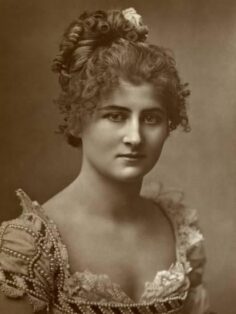
The angry hawk clenched its talons on the heavy leather gauntlet, stabbing the delicate wrist beneath.  Wings batting, the half-wild bird glared fiercely into the large, gray eyes of his captor.  Mary Anderson stared back with steely determination.  This unruly bird would be tamed, she resolved, and would become a living prop for her performance of the Countess in Sheridan Knowles’ comedy, Love.  A stuffed bird would not provide the realism she intended, and what Mary Anderson intended usually came to be.

“There is a fine hawking scene in one of the acts,” Mary wrote in her memoirs, “which would have been spoiled by a stuffed falcon, however beautifully hooded and gyved he might have been; for to speak such words as:  ‘How nature fashion’d him for his bold trade, / Gave him his stars of eyes to range abroad, / His wings of glorious spread to mow the air, / And breast of might to use them’ to an inanimate bird, would have been absurd,” she declared.  Always absolutely serious about her profession, Mary procured a half-wild bird and set to work on bending its spirit to her will.

“The training,” she explained, “started with taking the hawk from a cage and feeding it raw meat hoping thus to gain his affections.”  She wore heavy gloves and goggles to protect her eyes.  The hawk was not easily convinced of her motives, and “painful scratches and tears were the only result.”

She was advised to keep the bird from sleeping until its spirit broke, but she refused to take that course.  Persevering with the original plan, Mary continued to feed and handle the hawk until it eventually learned to sit on her shoulder while she recited her lines, then fly to her wrist as she continued; then, at the signal from her hand, the bird would flap away as she concluded with a line about a glorious, dauntless bird.

The dauntless hawk and Mary Anderson were birds of a feather.


Entertaining Women 4

I'm looking forward to hearing from you! Please fill out this form and I will get in touch with you if you are the winner.

Join my email news list to enter the giveaway.

"*" indicates required fields

Your Name
Please add me to your email news list*

To learn more about Mary and other performers like her read

Entertaining Women: Actresses, Dancers, and Singers in the Old West
 

The Divine Sarah

Enter now to win a copy of

Entertaining Women: Actresses, Dancers, and Singers in the Old West


The pliant figure leaned over the ship’s rail, expressive eyes intent on the blue-green waters of the harbor.  A mass of wavy, light brown hair with tints of gold lifted and curled with every breeze, its arrangement a matter of complete indifference to the angler.  Suddenly the slender form froze, breath held, and then, with a quick yank and a breaking smile, lifted the rod and hauled a wriggling fish aboard the Cabrillo.  Exclaiming in French, dark eyes sparkling with pleasure, Sarah Bernhardt ordered her catch, small as it was, to be prepared for dinner.

It was May 19, 1906, and the farewell production of Camille was scheduled for a few hours later at the ocean auditorium built on the water at Venice, California. Sarah stayed, and fished, at the hotel built like a ship, and performed in the adjacent theater on the wharf at the seaside resort, Venice of America. Having caught a fish, Sarah wended her way to her quarters. Piled high in her dressing room were the results of a recent shopping trip to the Oriental bazaar nearby:  silk and crepe matinee coats of pink and pale blue and mauve, all embroidered in butterflies and bamboo designs.

The tiny window in the dressing room provided a sparkling view of the ocean, and the streaming sunshine picked out details of the furnishings: a repoussé silver powder box, containers of pigment, eyebrow pencils, silver rouge pots, and scattered jewelry twinkling in the light. The tragedienne who attracted huge audiences wherever she went swooped up a small tan and white fox terrier, wriggling with joy at her return, and snuggled it close for a moment as she related the happy details of her fishing venture to a visiting reporter.  Then, she put down the small dog and closed her mind to the fun waiting outside the porthole.

Within moments Sarah became Marguerite Gautier, filled with the sadness and torment of the beautiful French courtesan in Camille. The play, written by Alexandre Dumas, became her signature role. She performed Camille more than 3,000 times all over the world. Sarah’s ability to sink fully into the character of the play made the tragic death scene so convincing that it became a trademark for “the Divine Sarah.”

No one played tragedy with such believable intensity as Sarah Bernhardt, and no one brought as much passion and enthusiasm to the pursuit of pleasure.  From fishing on the southern California coast to bear hunting in the woods outside Seattle, on every western tour the French actress indulged in some kind of adventure.  Sarah Bernhardt threw herself into life with the same characteristic energy she put into her stage appearances.  Yet she often slept in a coffin, preparing for that final sleep.


Entertaining Women 4

I'm looking forward to hearing from you! Please fill out this form and I will get in touch with you if you are the winner.

Join my email news list to enter the giveaway.

"*" indicates required fields

Your Name
Please add me to your email news list*

To learn more about Sarah and other performers like her read

Entertaining Women: Actresses, Dancers, and Singers in the Old West
One of America’s First Great Actresses

Enter now to win a copy of

Entertaining Women: Actresses, Dancers, and Singers in the Old West


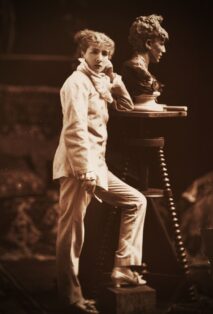
It was a cold evening in the early spring of 1859 when the well-known actress Charlotte Cushman debuted in Shakespeare’s Hamlet at the Metropolitan Theatre in San Francisco.  The city’s most wealthy and influential people arrived by carriage.  Throngs of curious bystanders eager to see the aristocrat hovered around the walkway leading into the building.  The fine, brick edifice rivaled the most notable on the East Coast.

Inside, the grand hall was fitted with the most ornate fixtures and could seat comfortably upwards to a thousand people.  From the private boxes to the gallery, every part of the immense building was crowded to excess.  Charlotte Cushman was recognized by theatre goers as the “greatest living tragic actress,” and everyone who was anyone wanted to see her perform.   Several women had won fame with their impersonations of male characters in various dramas, but critics and fans alike regarded Charlotte as the best of them all.

In 1845, a theatrical reviewer in London had written about one of Charlotte’s performances in glowing terms.  “Miss Cushman’s Hamlet must henceforth be ranked among her best performances.  Every scene was warm and animated, and at once conveyed the impression of the character.  There was no forced or elaborate attempt at feeling or expression.  You were addressed by the whole mind; passion spoke in every feature, and the illusion was forcible and perfect.”

The audience that flocked to see the exceptionally talented Charlotte in California was not only treated to a “forcible and perfect” interpretation of Hamlet, but that evening they were also treated to a display of the actress’ temper.

Charlotte and her supporting cast played to an enraptured house for the first half of the production.  Actors maneuvered themselves in and out of the elaborate set consisting of a castle and turrets standing on the right side of the stage and imposing cliffs rising out of the fog on the left side of the stage.  The simulated sounds of wind wailing through the crevices of stone and of the sea crashing against the rocky shore added to the drama.  During a particular scene between Hamlet and Ophelia, Hamlet’s intended wife, a man in the audience sneezed loudly and with a long drawn out cach-oo!

Charlotte stopped and stared at the man.  Then, quietly leading the actress playing Ophelia off the stage, she approached the footlights and said in a loud tone, “Will someone put that person out”?  Everybody sat still.  “If some gentleman doesn’t, I will,” Charlotte announced rolling up her sleeves.  The individual got up and sneaked out the theatre.  Only after the audience had turned its full attention back to Charlotte did she proceed with the play.


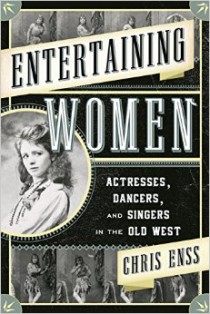
Entertaining Women Book Cover


Entertaining Women 4

I'm looking forward to hearing from you! Please fill out this form and I will get in touch with you if you are the winner.

Join my email news list to enter the giveaway.

"*" indicates required fields

Your Name
Please add me to your email news list*

To learn more about Charlotte and other performers like her read

Entertaining Women: Actresses, Dancers, and Singers in the Old West