1921 – Eugene O’Neill’s play “Anna Christie” premieres in NYC
Publishers Weekly Review of The Doctor Was A Woman
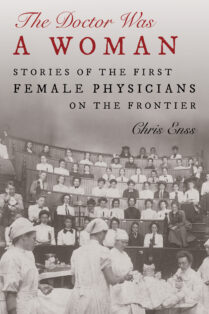
The Doctor Was A Woman: Stories of the First Female Physicians on the Frontier
Coming February 2024
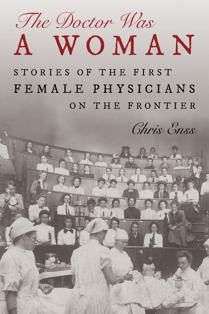
Historian Enss (The Widowed Ones) profiles in this colorful account 10 of the first female physicians on America’s Western frontier. She portrays them as highly determined individuals, whose resolve not only saw them through the medical schools that resisted admitting them, but also through the treatment of recalcitrant patients (“Doctors were few and far between in the unsettled land,” she writes, and yet “for a time it seemed most trappers, miners, and merchants would rather suffer than consult a woman doctor”).
Among the “lady physicians” and “hen medics,” there was Lilian Heath, a pioneer of plastic surgery who in 1886 mended the face of a man who’d shot himself in despair (she told him he looked better after her 30 surgeries than before); Emma French, the 16th wife of a Mormon who received the midwifery training common among her sister wives; and Bessie Efner, who was seduced to Wyoming by boosters of the Union Pacific Railroad Company, only to find that the men were unwilling to see her—her first patient was a horse she cured of colic.
Between the brief biographies are insightful notes on topics such as treating influenza, sterilizing patients, and extracting bullets. Readers who enjoyed Campbell Olivia’s Women in White Coats will want to check this out. (Feb.)
Praise for Tilghman Book
Early Comments about the Bill Tilghman book scheduled for release in fall 2024.
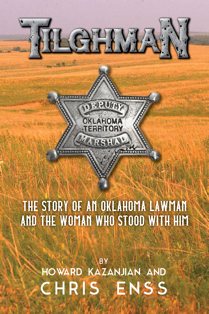
Zoe Tilghman, my grandmother, was a truly remarkable woman – a pioneer, horsewoman, musician, linguist, student, educator, writer, poet, wife, mother. When she married Bill Tilghman she also became an eyewitness to the important part he played in Oklahoma and the developing West. Chris Enss and Howard Kazanjian have done an excellent job of capturing her life.
Suzie Baerst
This unique “story within a story” reveals the challenges and triumphs of being married to one of America’s most prominent western lawmen. The colorful exploits of William “Bill” Tilghman, as told through the equally fascinating story of his wife Zoe, present the reader of this book with an exciting and insightful “edge of your seat” experience!
Wyatt McCrea – Actor/Producer
“Gritty, violent, magnificent and noble describes America and the early lawmen who made the frontier safe for expansion. The authors do a masterful job of unpacking the life of revered lawman Bill Tilghman through the words and prose of his second wife, Zoe Tilghman a scholar, mother, poet and remarkable woman in her own right. This husband and wife team were one of America’s early power couples.”
Eileen O’Neill – Former Head of Discovery Channel and TLC
Who was lawman Bill Tilghman? He did not have the dime novels that made Wild Bill and Buffalo Bill famous, nor Stuart Lake who spun the life of Wyatt Earp into fame. But he was one of the greatest lawmen of all. Tilghman now has history documentarians Chris Enss and Howard Kazanjian to show us details about the man from his own notebooks and from his talented wife Zoe’s own hand.
Wayne Tilman – Bestselling Author and Bill Tilghman’s Relative
This Day…
1866 – Jesse James‘ gang robs bank in Lexington, Missouri ($2000)
They Went That-A-Way
The Went That-A-Way
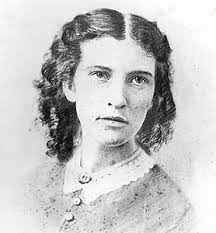
In celebration of the new book coming out entitled The Doctor Was a Woman: Stories of the First Female Physicians on the Frontier and the impending holiday, this tale of Dr. Elizabeth Blackwell’s demise seemed fitting.
On Wednesday, January 25, 1911, physicians across the world gathered at the great hall at the Academy of Medicine in New York to honor America’s first woman doctor, Elizabeth Blackwell. The tenacious pioneer in the fight for the right of women to study and practice medicine had died nine months prior to the event honoring the contributions she made to the field. The audience was composed largely of women all of whom owed a debt of gratitude to Elizabeth Blackwell.
Born in Bristol, England on February 3, 1821, Elizabeth immigrated to America in 1832 with her parents. Her desire to attend school and study medicine began at an early age. Elizabeth was twenty-six years old when she was admitted to New York’s Geneva College in 1847. She had applied to twenty institutions before being accepted as a medical student at the prestigious university. The male students there believed Elizabeth’s request was a joke and agreed to let her attend the classes based on that idea, but the daring young woman was not playing around. She prevailed and triumphed over taunts and bias while at school to earn her degree only two years after enrolling.
While in her last year of school, she treated an infant with an eye infection. As she was washing the baby’s eye with water she accidentally splattered the contaminated liquid in her own eye. Six months later she had the eye removed and replaced with a glass eye. Hospitals and dispensaries refused to admit her to practice at their facilities and she was denounced by the press and from the pulpit.
After graduating in 1849, Elizabeth found herself socially and professionally boycotted. Public sentiment was so against her for pursuing a career in a field deemed unladylike that she could not find a place to live anywhere in New York. Using funds given to her by her family she built her own home.
In 1854, she borrowed the capitol needed to build the first hospital for women in the country. Most of the patients she worked with were poor. Patients were charged a mere $4 a week for services that would cost them $2,000 at another facility. Elizabeth also founded the Women’s Medical College of New York and when the Civil War broke out she assisted in launching the Sanitary Aid Association. In addition to maintaining her practice and creating benevolent community services, Elizabeth also wrote a number of books on the subject of medicine. Two of her most popular titles were Pioneer Work in Opening the Medical Profession for Women and Essays in Medical Sociology.
By the turn of the century Elizabeth Blackwell had retired from medicine and returned to England. In the spring of 1907 she was injured in a fall from which she never fully recovered. She died on May 31, 1910 from a stroke. The epitaph below the Celtic cross which marks her grave at Kilmun Churchyard on the Holy Loch, near Clyde, includes these words: “The first woman in modern times to graduate in medicine (1849) and the first to be placed on the British Medical Register (1859).
This Day…
1914 – American physician and medical researcher Jonas Salk, who developed the first safe and effective vaccine for polio, was born.
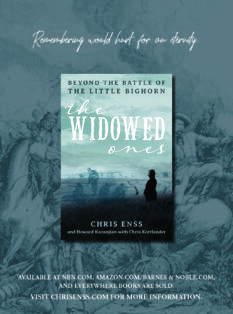
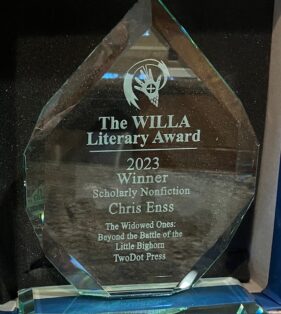
Willa Cather Award for The Widowed Ones
This Day…
1929 – “Black Thursday”, start of stock market crash, Dow Jones down 12.8%
Will Rogers Medallion Awards 2023
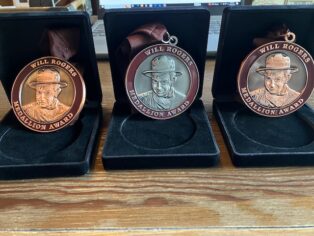
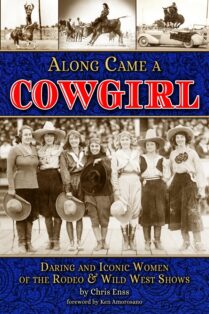
What a great weekend at the Will Rogers Medallion Award program! Seeing good friends, spending time with accomplished Western authors, poets, and filmmakers, listening to Craig Johnson, NY Times bestselling author and creator of the Longmire series, share tales of his early days in the business, and the announcement that the Will Rogers Medallion Award will officially be moving to the Will Rogers Museum in Oklahoma made the event complete. I returned to California late last night with these items and feeling grateful for the recognition The Widowed Ones and Along Came a Cowgirl received.