
1941 – Elizabeth Holtzman, youngest woman elected to U.S. Congress, (D-NY, 1973-81), first woman District Attorney in New York City
Indie Short Magazine Reviews According to Kate
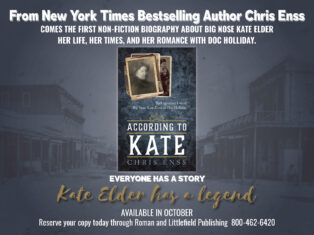
“Chris Enss’ According to Kate, an adaptation of her 2019 book According to Kate: The Legendary Life of Big Nose Kate, Love of Doc Holliday, tries to reimagine its titular character’s life and time in the wild West as a woman who valued adventure and independence over security.
Curiously aged up but without the accompanying behavioural evolution, Kate’s (Manuela Schneider) existence for at least the first half of the film is defined by Doc Holliday (Craig Hensley). The whole premise—in 1899, a reporter hunts Kate down to get her story of the gunfight at the O.K. Corral—rests on it. But as protagonist of the film, Mary Katherine Horony Cummings, aka Big Nose Kate or Kate Elder, replaces the primacy of Doc Holliday’s presence with her experience of his life—a way to locate the women within and beyond the myths of the American frontier.
Simultaneously developing is the equation of understanding and compassion between the two women, Kate and the reporter, Lucy Evans (Enss). By the time the two women have met, Kate is fifty. She has matured over the years into a self-assured woman with her share of regrets, memories, and nostalgia. Lucy, similarly aged, speaks Kate’s language despite having lived a very different life. It is one of the film’s highlights, the whispers of a bond in active formation.
In comparison, the time with Doc Holliday is marked by longing and dissatisfaction. Homosociality takes precedence for Doc over the domestic pleasures of a romance. Rivals for his attention, the Earps, remain a consistent sore point. Interestingly, we never see them, as though so aggravating to Kate that she excises their visual existence from her memory. And because the film emphasises memory, specifically that of a woman destined to the confines of the sidelines, it also portrays the O.K. Corral gunfight using those limitations as a statement.
Kate’s life separate from Doc is woven into their sporadic time together, allowing the introduction of a new character, Johnny Ringo (Curt Lambert). The resulting conflict is unsurprising, and yet the film also demonstrates the relative insignificance of the conventional life. Doc or Johnny, their presence is subordinate to Kate’s determination for independence. Even in the throes of love, Kate retains her selfhood. The framing of the story—a conversation between two middle-aged women about a rough, adventurous time now preserved only in memory—allows Kate to remain both the lens and the subject.
At forty-one minutes, According to Kate works on an ambitious scale for its protagonist’s worthwhile tale. Yet, the pacing and tone do not reach for a high-octane pitch; instead, it is pensive, making room for unaired grievances and withered hopes. It is the story of a woman who would not betray herself.”
According to Kate the film festival is currently making rounds and will premiere on October 17, 2026 at the Tombstone Courthouse in Tombstone, Arizona.
The book According to Kate: The Legendary Life and Times of Big Nose Kate Elder, Love of Doc Holliday is available everywhere.
This Day…
Lone Star Literary Life Review of The Last Ride
Enter now to win a copy of
The Last Ride: Outlaw Laura Bullion and the Wild Bunch
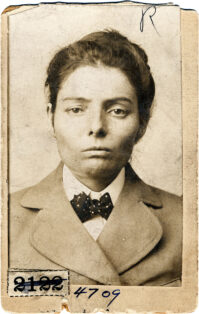
“Chris Enss’s newest nonfiction work, The Last Ride, is Old West crime biography at its finest. The well-written, smoothly paced book brings fresh light and new life to the little-known story of Laura Bullion, now considered “America’s first female train robber.”
Enss’s wide-ranging research not only uncovered intriguing new details about Laura Bullion and the outlaw she loved, “Tall Texan” Ben Kilpatrick. It also explains how Laura was able, after her 1905 release from prison, to outwit the sensationalist media and deliberately escape into obscurity.
Born in tiny Mertzon, Texas, in 1876, Laura grew up nearby in Knickerbocker, in an area that soon became known as a haven for criminals. (A huge blizzard in 1887 killed countless cattle and left many cowboys and ranch hands desperate for work; some turned to crime.) Laura’s parents had died while she was still young, and the unsupervised wild-child eventually became a “green-eyed, five-foot-four woman with prominent cheekbones and a reputation for being able to ride like a jockey and shoot like Annie Oakley,” Enss writes.
By age 16, Laura already had met up, through shady friends, with Butch Cassidy and the Sundance Kid. Then she joined the notorious bandits known as the Wild Bunch, “a criminal syndicate that terrorized railroads and banks across the West at the turn of the twentieth century.” Enss quotes Laura recalling: “Horses and cowboys was all I ever knew.”
During their final train robbery in July 1901, the Wild Bunch took Laura along for her “ability to charm, distract, and deceive” people they encountered along the way, and she was dressed as a cowboy, Enss notes. The gang, including Kilpatrick, successfully robbed the train in Montana’s Missouri Breaks badlands, then split up and escaped when pursuing law enforcement grew close.
Enss describes how Kilpatrick and Laura fled to Texas and kept moving through other states, too, including Arizona and Arkansas, posing as man and wife. They spent lavishly, openly enjoying their new wealth, before Pinkerton detectives tracked them down and apprehended them in St. Louis in November 1901.
Kilpatrick received a life sentence. And, when Laura was sent to prison for seven years, Enss writes chillingly: “The iron door to the women’s ward clanged shut, sending a metallic shiver through the stone corridor of the Missouri State Penitentiary.”
The heart of The Last Ride is its focus on the hopeful love letters Laura and Kilpatrick wrote to each other while incarcerated and continued penning after Laura’s release. She had served only half of her original sentence. Now, intense media scrutiny and social shaming quickly and relentlessly followed the still-young woman everywhere she went.
Nonetheless, she kept trying to get fresh starts. And she continued seeking ways to have Kilpatrick’s sentence shortened so they could live together. She even changed her name several times and moved from town to town and state to state—until she finally found peaceful obscurity working as a seamstress in a big city, Memphis.
As Enss makes clear, “Laura Bullion left behind no explanation for the choices she made, only a life lived in fragments and shadows.” The author has described her latest book as “an attempt to gather those fragments” and “give shape to a woman long obscured by the men beside her….”
However, The Last Ride “seeks neither to excuse her crimes nor to romanticize them, but to understand how and why a woman once hunted by the law managed to outlive her legend and what it cost her to do so,” Enss emphasizes.
America’s first female train robber is now no longer lost among the still-frequent barrages of images, legends, articles, and books focused only on male outlaws of the Old West. Enss, who has written more than fifty books about unusual and pioneering women in the Old West, clearly portrays not only who Laura Bullion was and what she did. She reveals how Laura managed to create an uncommon new life in her final decades, while surviving longer than all others in the Wild Bunch.”
—Lone Star Literary Life
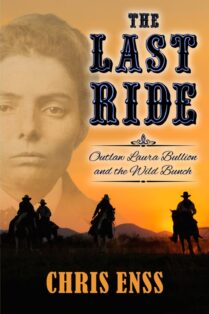
Enter now to win a copy of The Last Ride.
Available everywhere books are sold on August 15.
#TheLastRide #LauraBullion #WildBunch #WesternHistory #AmericanWest #WesternBooks
First Chapter Friday
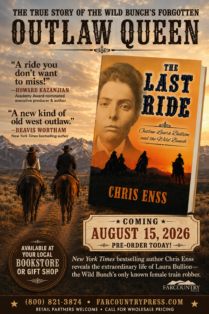
Ever wonder what it’s like to step into the world of the Wild Bunch?
Beginning this Friday, you can read the first chapter of The Last Ride: Outlaw Laura Bullion and the Wild Bunch absolutely free.
Meet Laura Bullion, the woman history nearly forgot, and discover how she became part of one of the most notorious outlaw gangs in the American West.
Simply visit my website, sign up with your email address, and I’ll send the opening chapter directly to your inbox.
If the story leaves you wanting more, you’ll also find links to order the book and learn about upcoming author appearances.
The adventure begins with a single chapter. I hope you’ll join me for the ride.
#TheLastRide #LauraBullion #WildBunch #TrueWest #WesternHistory #OutlawHistory #AmericanWest #BookExcerpt #HistoricalNonfiction
This Day…
No Women Need Apply
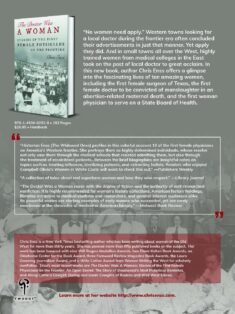
“No women need apply.” That was the message many frontier towns sent when advertising for a physician. Fortunately, a remarkable group of determined women ignored those words and forever changed the history of medicine in the American West.
The Doctor Was A Woman: Stories of the First Female Physicians on the Frontier introduces readers to ten extraordinary women who overcame prejudice, treated gunshot wounds, battled epidemics, pioneered new medical techniques, and proved that skill—not gender—made a great doctor. Their courage helped shape communities across the frontier and opened doors for generations of women who followed.
Publishers Weekly called the book “a colorful account” of pioneering physicians, while Library Journal praised it as “a collection of tales about real superhero women and how they won respect.”
Email gvcenss@aol.com between now and midnight to request a copy of the book.
#WomenInHistory #WomenInMedicine #AmericanWest #FrontierHistory #HistoryMatters #FemalePhysicians #WesternHistory #ChrisEnss #BookGiveaway
This Day…
Midwest Book Review of The Last Ride: Outlaw Laura Bullion and the Wild Bunch
“The Last Ride: Outlaw Laura Bullion and the Wild Bunch tells the true-crime story of outlaw Laura Bullion, the Wild Bunch’s only known female train robber, who rode with outlaws and became notorious for participating in a high-stakes robbery. Her name was renowned for decades until she disappeared.
Chris Enss embarks on a wild ride through the West to uncover Bullion’s story, life, motivations, and ultimate fate, bringing readers into a world documented not by the usual memoir, but through fragments of reports and contemporary accounts. From these, she reconstructs Bullion’s world with an eye toward vividly portraying the Wild Bunch in a different light, revealing Bullion and the other women whose lives swirled around uncommon choices.
Enss purposely shifts the timeline of events back and forth, opening with a 1949 Memphis seamstress and moving back to the Wild Bunch years, contrasting and profiling the lives of Bullion and the other women, their motivations and choices for becoming female bandits, and their return to more socially acceptable lives.
The first chapter outlines these women and Pinkerton Detective Agency records regarding them, while the second returns to 1887, when a great blizzard wreaks havoc on the Texas longhorn cattle industry and prompts changes in cattle roundups along with the emergence of rustlers and thieves in its wake. From these roots emerges the Ketchum Gang of train robbers, who find newfound success in something much easier than cattle rustling.
As the chapters fill in the myths, realities, and history of the Wild Bunch, they also create background on the men and women who pioneered the West in a very different manner, participating in outlaw activities that thwarted the Pinkertons in different ways.
Laura Bullion’s story intersects with these events, which are heavily footnoted and accented with vintage black-and-white photos and illustrations throughout. The exceptionally lively “you are there” form of reporting also provides general readers an inviting narrative of action and reaction that brings this world to life.
Especially notable is the critical thinking Enss applies to her subject. Not content with simply unearthing and reproducing newspaper accounts, she consistently peppers her findings with auxiliary research and points out inconsistencies in reporting and what most likely truly happened. This will especially satisfy history readers who know that not every newspaper account, even from that era, can be relied upon as intrinsically accurate.
The result is a vivid blend of mystery, history, women’s issues, and fact-based analysis that expands our understanding of the subjects, motivations, and choices these individuals made during this turbulent period of Western history.
Librarians seeking additions to their Western or women’s history holdings that encourage critical thinking about the American West, promote book club discussions, or support classroom study of women who chose nontraditional lives before eventually returning to conventional society will find The Last Ride: Outlaw Laura Bullion and the Wild Bunch unusually accessible to a wide audience.”
Midwest Book Review
Available everywhere August 15, 2026. Enter now to win a copy of The Last Ride.
The Last Ride
I'm looking forward to hearing from you! Please fill out this form and I will get in touch with you if you are the winner.
Join my email news list to enter the giveaway.
"*" indicates required fields