
1941 – American actress Doris Day (19) weds trombonist Albert Jorden
We Owe it All to Ma

This Day…
1865 – US President Abraham Lincoln is shot in the head by John Wilkes Booth at Ford’s Theater in Washington; he dies a day later
Barker Gang Kidnaps Bank President
Enter now to win a copy of
Ma Barker: America’s Most Wanted Mother along with a New Kindle
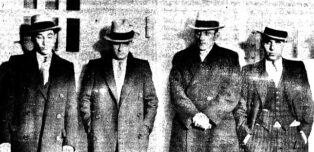
When the suggestion to kidnap Edward Bremer was presented to Ma, she ordered her crew to meet and discuss the proposal. In the summer of 1933, the Barker-Karpis Gang had kidnapped William Hamm, Jr., the president of Hamm’s Brewing Company. The caper was successful, yielding the gang $100,000 in cash for the return of the millionaire. News of the kidnapping was reported throughout the country. “Money or death was the ultimatum laid down by the culprits that absconded with Hamm’s Brewing Company executive,” the June 17, 1933, edition of the Albert Lea Evening Tribune read.
William had been captive near the same location in Bensenville, Illinois, where Edward Bremer was secured away. The police had withdrawn from the case at the request of the family. They were frightened of what might happen to William if law enforcement interfered. The ransom note from the abductors warned the Hamms that William would be shot and killed if the police were allowed any involvement. A note sent to William’s father instructed him to deliver the ransom money in “$5, $10, and $20 bills.” Payment of the ransom for the release of William, the kidnappers directed, was to be made using one of the company’s beer trucks. Not only did the Barker-Karpis Gang get the full amount they were asking in ransom, but when the authorities did begin investigating the kidnapping, a rival gang was arrested for the crime.
“J. Edgar Hoover himself announced from Washington that his men had put together a solid case against the Touhy gang,” Alvin Karpis wrote in his memoirs. “The scientific evidence left no doubt at all,” Hoover said, “that the Touhys were behind the kidnapping of William Hamm.”
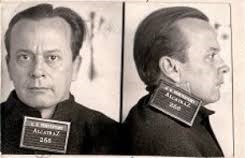
The ease with which the Barker-Karpis Gang was able to get away with taking William and collecting the ransom was an argument for kidnapping Edward Bremer. In late December 1933, Ma’s boys convened at William Weaver’s apartment in St. Paul to talk through the details of the abduction. Who would trail Edward to learn about his habits, routine, friends, and work associates, who would write the ransom notes, who would deliver those notes to what contact, and when the job would be done were all determined. With the exception of Arthur, whom Ma suggested might have been a little too rough with the victim, everyone performed his duties as planned.
This Day…
1926 – Alfred Hitchcock releases his first film as director “The Pleasure Garden”, in England; the silent drama was made in Germany.
Mother Knows Best
This Day…
Ma Barker’s First Born
Enter now to win a copy of
Ma Barker: America’s Most Wanted Mother
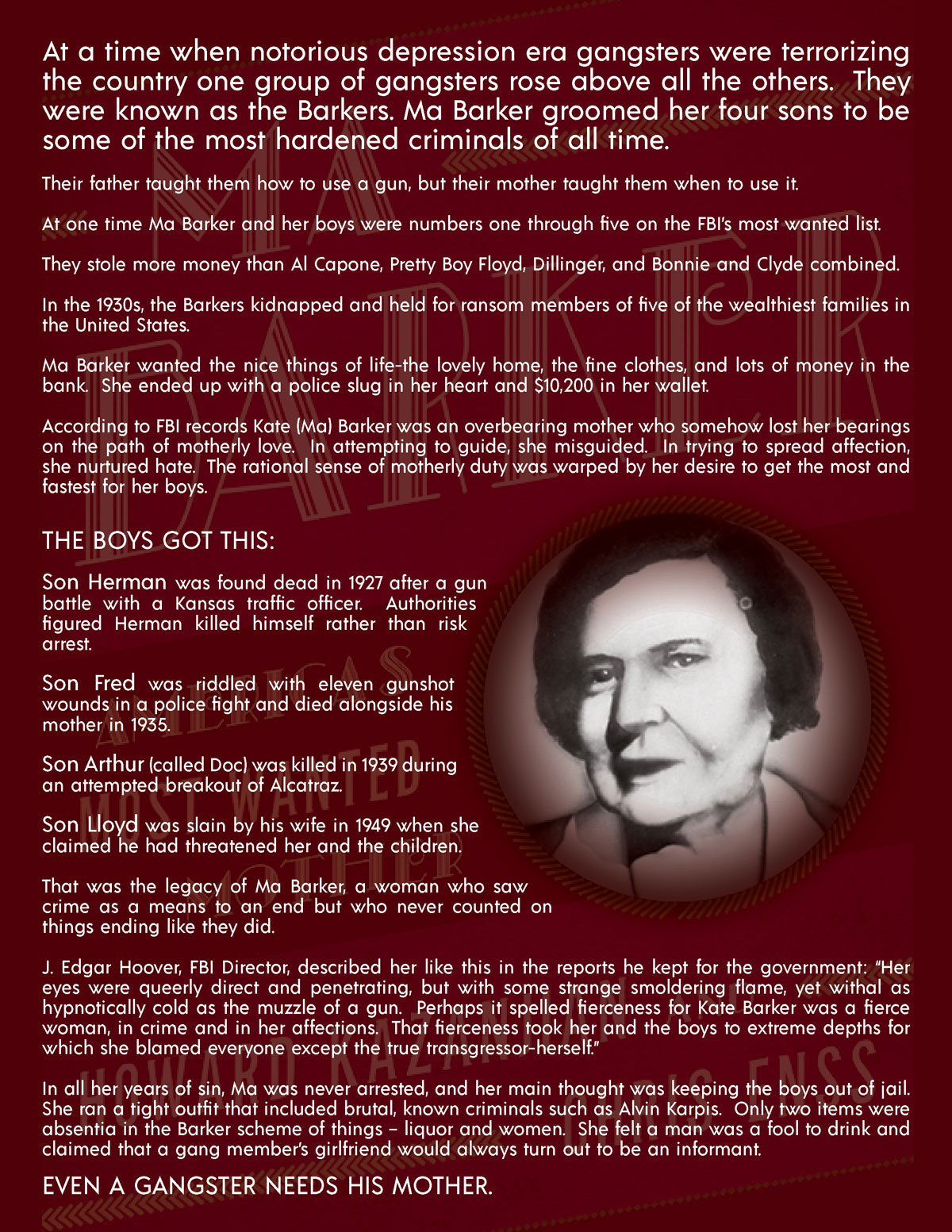
In a time when notorious Depression-era criminals were terrorizing the country, the Barker-Karpis Gang stole more money than mobsters John Dillinger, Vern Miller, and Bonnie and Clyde combined. Five of the most wanted thieves, murderers, and kidnappers by the Federal Bureau of Investigation (FBI) in the 1930s were from the same family. Authorities believed the woman behind the band of violent hoodlums that ravaged the Midwest was their mother, Kate “Ma” Barker.
Ma Barker removed a tattered handkerchief from the navy–blue pocketbook cradled in her lap and dabbed away a fake tear. The guards on duty at the Oklahoma prison were disinterested in her supposed grief. Their job was to make sure the inmates at the facility moved efficiently from the visitor’s area back to their cells. Ma watched a pale-faced, stupefied guard escort her son Arthur out of the room. It was mid-February 1920, and mother and son had concluded a short visit. A thick, long glass separated the convicts from the civilized world. Here, communication was done using plain, black phones minus a dial wheel, wired from one side of the glass to the other. Arthur and Ma each had their own receiver to talk through, as did several other families and friends visiting their loved ones through the glass partition.
The iron-barred doors clanged shut as the last prisoner was ushered out of the room. Ma sat stock-still until she heard the guard lock the door behind the inmates. As she turned to get up from her assigned seat, a heavyset guard approached her, and with flinty eyes, looked her up and down. She looked more frumpy than menacing. The coat she wore was big and bulky, frayed in spots, and a few buttons were missing. The tan, bell-shaped hat on her head had seen better days, and her hair underneath it was pinned back in a haphazard fashion. “My boys would be all right if the law would leave them alone,” she told the guard. He had no response and simply led her to the exit of the room, and she shuffled along as little old ladies do.
Two short siren blasts issued from the main building of the jail as Ma exited the complex. She glanced back at the other visitors following her and at the stone walls topped with snaky concertina wire overhead. Once every guest had left the jail, the heavy steel doors were closed behind them.
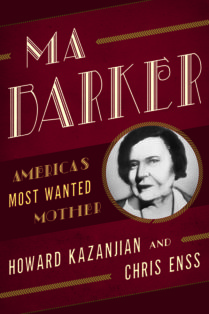
To learn more about the Barker boys read
Ma Barker: America’s Most Wanted Mother
This Day…
1889 – George Eastman begins selling his Kodak flexible rolled film for the first time
Even A Gangster Needs His Mother
Enter now to win a copy of
Ma Barker: America’s Most Wanted Mother
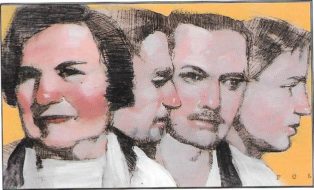
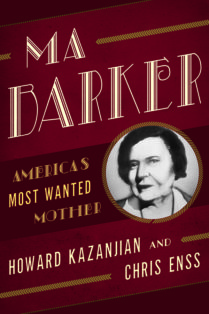
Ma Barker: America’s Most Wanted Mother tells of the notorious mother of several criminals who oversaw the Barker gang during the Depression years. Kate Barker’s thirst for the finer things in life was challenged by the economic pressures of her times, and her image has been virtually set in stone from FBI records depicting her as a controlling mother figure. Was she really as terrible as history claims? Two entertainment industry writers survey the real facts of not only Ma Barker’s life and participation in family and crime, but the milieu of her era, and the reality of her situation. History and biography readers will find this a lively and different exploration.
Midwest Book Review