Good Run of Bad Luck

Take a chance. Enter now to win a copy of the new book

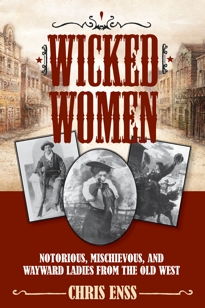
Wicked Women: Notorious, Mischievous, and Wayward Ladies from the Old West.

Poker Alice running a card game in Deadwood

Poker Alice running a card game in Deadwood

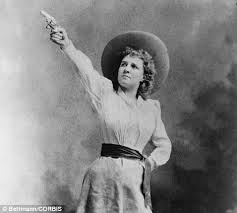
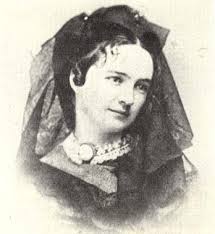
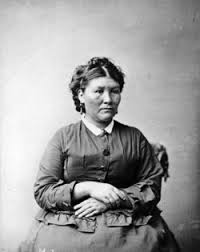
Polite society in the 1800s referred to women who owned and operated their own gambling dens as “wicked.” But America’s oldest diversion deteriorated into a vice without the help of lady gamblers. In the turn of a card or the roll of a dice for all or nothing, there was a kind of daring that touched the American spirit. “The lust for work is matched…by the lust to gamble.” The affluent risked thousands in comfort; the poor risked bread money on gaming tables in slum taverns.

The gambling fever produced two opposing species. First were the predatory card sharps and confidence men and women who understood human weakness and how to exploit it; second were the masses, eternally gullible to the lure of something for nothing. Throughout the nation these adversaries met – in lotteries, over tables, at racetracks, in casinos, cockpits – and the result was nearly always the same. The suckers lost.

In 1870, San Francisco had an estimated 2,500 gambling houses, which produced as they did elsewhere, crime and degradation. And while these are hardly the by-products one would expect of a leisure activity, it should be remembered that vice can become a pastime for people who had little alternative resources.

To learn more about the wicked women on the wild frontier read

Wicked Women: Notorious, Mischievous, and Wayward Ladies from the Old West.

National Book Launch on February 21, 2015.


Good to be Bad

WomanGambler

It’s a wicked giveaway. Enter now to win a copy of the new book

Wicked Women: Notorious, Mischievous, and Wayward Ladies from the Old West.

Early review of Wicked Women from NetGalley.com. When one thinks of the Wild American West, one likely thinks of names like Wyatt Earp, Doc Holliday and Wild Bill Hickock. Only slightly less remembered are names like Calamity Jane and Big Nose Kate. In most saloons across the Western States women called many of the shots at the card tables and many ran the brothels as Madams. In Chris Enss’ new book, Wicked Women: Notorious, Mischievous and Wayward Ladies from the Old West the tales of some of the most scandalous women of the day come forward to take their place at the table.

Enss compiles tales from San Francisco to Deadwood, and all the places in between. Women like Squirrel Tooth Alice (named for her pet prairie dogs), Tessie Walls and Belle Cora lead houses of ill repute and gambling better than any man of their day. What they all seemed to succumb to was the love of a wicked man. Many of the women started out as mothers and homemakers, only to be left completely alone when their man skipped out on them or died at the hands of the law. These women took matters into their own hands, and by doing so their incomes.

Enss’ writing is comprehensive, as well as sympathetic. While she never hides the crimes of these women, she does tell of them in an entertaining way that finds the reader nose deep in the book and unable to turn away. It is difficult to put down Wicked Women and even more difficult not to talk to those around you about it.

Wicked Women: Notorious, Mischievous and Wayward Ladies from the Old West is a delightful look into the Old American West for those who want to read a history that isn’t just menfolk at the OK Corral.

To learn more about the wicked women on the wild frontier read

Wicked Women: Notorious, Mischievous, and Wayward Ladies from the Old West.

National Book Launch on February 21, 2015.


Bad to the Bone

Something wicked is on the way.  Enter now to win a copy of the new book

Wicked Women: Notorious, Mischievous, and Wayward Ladies from the Old West.

cover58301-mediumWicked

“A man dressed in overalls and heavy shoes, with faded hat and bony hands are not to be feared unless he is drunk. Such a man will not steal and will work if he has work to do. It is the slick gentlemanly sneak, who tries to dress well, smokes cigarettes and opium, gambles when he has a stake, associates with soiled doves by day, living off their shameful earnings, and burglarizing residence by night. A proper distribution of muscle and a little birdshot would be the best treatment for such depraved men and their wicked women.”

The Daily Californian – October 29, 1882

To learn more about the wicked women on the wild frontier read

Wicked Women: Notorious, Mischievous, and Wayward Ladies from the Old West.

National Book Launch on February 21, 2015.


And the Winners Are…

Roy&Dale

Congratulations to James Darnell, Melissa Mitchell, and Sheryl Kirksey.

All are winners of a copy of the book

The Cowboy and the Senorita:  A Biography of Roy Rogers and Dale Evans.


King of the Cowboys Marries Queen of the West

Last chance to enter to win a copy of The Cowboy and the Senorita:

A Biography of Roy Rogers and Dale Evans and

Happy Trails: A Pictorial Celebration of the Life and Times of

Roy Rogers and Dale Evans.

Roy&DaleWedding

In the fall of 1947 Roy proposed to Dale as he sat on Trigger. The pair was performing at a rode in Chicago, and moments before their big entrance Roy suggested they get married. The date set for the wedding was New Year’s Eve. Gossip columnists predicted that Trigger would be the best man and that Dale would wear a red-sequined, cowgirl gown. The prediction proved to be false.

Roy and Dale’s wedding was a simple affair held at a ranch in Oklahoma, which happened to be the location for the filming of their seventeenth movie, Home in Oklahoma. The couple’s agent, Art Rush, served as best man and his wife, Mary Jo, was the matron of honor.

To learn more about Roy Rogers, Dale Evans, and Trigger enter to win now and Happy Trails.

Box-Office Star

Time is running out! Enter to win a copy of The Cowboy and the Senorita:

A Biography of Roy Rogers and Dale Evans and

Happy Trails: A Pictorial Celebration of the Life and Times of

Roy Rogers and Dale Evans.

Trigger&Roy

On July 12, 1943, Roy Rogers and his trusty palomino, Trigger, appeared on the cover of Life magazine. The overwhelming success of Roy’s movies had made him the biggest box-office draw in the country.

On average, Roy made eight pictures a year, and in between productions he traveled around the country promoting his work. He sometimes made six appearance a day at various theatres where his movies were playing. Audiences would fill the seats of the movie houses, Roy and the Sons of the Pioneers would sing a few songs, and then his film would run.

Trigger accompanied Roy on all his promotional trips. Roy had acquired Trigger in 1938 when the horse was a yearling and, with the aid of a professional trainer, he brought the animal into prominence.

Along with information about his home life, the origin of the singing cowboy’s name was revealed in the Life article. Studio executives had given Leonard Slye, also known as Dick Weston (a name Leonard picked himself and used as his professional name for a short time), the handle of Rogers in 1937, after the famous humorist Will Rogers, and Roy, which means “king.” The two stage names fit together perfectly.

To learn more about Roy Rogers, Dale Evans, and Trigger enter to win now and Happy Trails.


The Smartest Horse in Movies

Enter to win a copy of The Cowboy and the Senorita:

A Biography of Roy Rogers and Dale Evans and

Happy Trails: A Pictorial Celebration of the Life and Times of

Roy Rogers and Dale Evans.

Roy&Trigger

There’s almost nothing more important to a cowboy than his horse. He depends on his reliable steed to help him with his job and to be his friend and all-around partner through thick and thin. Throughout the 1930s, 40s’, and 50s, Roy Rogers was the quintessential cowboy, but a big part of this heroic appeal was his palomino, Trigger. Billed as “the smartest horse in movies,” Trigger was Roy’s riding partner in eighty films and one hundred television shows.

Roy purchased Trigger in 1938 from Hudkins Stables in Los Angeles for $2,500. He knew Trigger was a special horse the moment he saw him trotting through a field. With the help of expert horse trainer Glenn Randall, Roy worked with Trigger to teach him a myriad of tricks, including counting, writing, and bowing to an audience.

Trigger’s fame grew with every new Roy Rogers movies. The horse was a star with four stand-ins. He made $750 a week and received 200 fan letters a month. In 1940 Roy insured the valuable animal for $100,000.

To learn more about Roy Rogers, Dale Evans, and Trigger enter to win now and Happy Trails.


Becoming Roy Rogers

Act now! Enter to win a copy of The Cowboy and the Senorita:

A Biography of Roy Rogers and Dale Evans and

Happy Trails: A Pictorial Celebration of the Life and Times of

Roy Rogers and Dale Evans.

RoyRogers

Roy Rogers was born Leonard Franklin Slye on November 5, 1911, in Cincinnati, Ohio. His parents owned a farm near the small town of Duck Run, and it was there that he developed his love fore music. By the age of ten he was playing the guitar and calling square dances.

In 1929 Leonard left the Midwest and headed for Hollywood. In between occasional singing engagements with the various bands, he helped form (including the Sons of the Pioneers), he worked as a truck driver and a fruit picker.

His big break came in 1937, when he snuck onto the lot of Republic Pictures and landed a contract paying seventy-five-dollars a week. Republic Studios’ president Herbert Yates was looking for a musical actor to go boot-to-boot with singing-cowboy sensation Gene Autry. Renamed Roy Rogers, Leonard had the integrity, the talent, and the look the studio was hoping to find.

Three short years after singing with Republic, Roy Rogers would be the number-one-box-office draw in the country and be crowned the King of the Cowboys.

Enter to win now and Happy Trails.


This Day…

1883-Newt Boyce got out of jail and went right back to drinking and making threats on Brown and Wheeler.  When confronted by Brown, Newt went for a gun and Brown had to drill him with a round from his Winchester.  Boyce lingered a few hours before he died.

Becoming Dale Evans

Take a chance! Enter to win a copy of The Cowboy and the Senorita: A Biography of

Roy Rogers and Dale Evans and

Happy Trails: A Pictorial Celebration of the Life and Times of

Roy Rogers and Dale Evans.

DaleEvans

Dale Evans described her upbringing in Uvalde, Texas as “idyllic.” As the only daughter of Walter and Betty Sue Smith, she was showered with attention and her musical talents were encouraged with piano and dance lessons.

While still in high school, she married Thomas Fox and had a son, Thomas Jr. The marriage, however, was short-lived. After securing a divorce, she attended a business school in Memphis and worked as a secretary before making her singing debut at a local radio station. In 1931 she changed her name to Dale Evans.

By the mid 1930s, Dale was a highly sought-after big-band singer performing with orchestras throughout the Midwest. Her stage persona and singing voice earned her a screen test for the 1942 movie Holiday Inn. She didn’t get the part, but she ended up singing with the nationally broadcast radio program the Chase and Sanborn Hour and soon after signed a contract with Republic Studios. She hoped her work in motion pictures would lead to a run on Broadway doing musicals.

Enter to win now and Happy Trails.