Brigham Young became an explorer and hero to many when he embarked on the best-organized westward migration in U.S. history in 1847. Motivated by a vision to find a safe haven for his religious ideas, he brought the Mormon Church to Utah and, in so doing, helped shaped the American West. When he came upon the Great Salt Lake Valley, he said, “It is enough, this is the right place.” For thirty years he supervised Mormon settlements in Utah, Nevada, Idaho, Wyoming, Arizona, and California. Before Young died at the age of seventy-six in 1877 of acute appendicitis, he had more than fifty wives.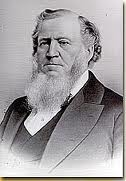
Journal Notes
Pioneer Hero
Daniel Boone, America’s most famous pioneer hero, had set off into a hostile world without roads, toting only a flintlock musket and a knife; the region was so wild he reportedly killed over ten thousand bears while he surveyed and settled vast virgin wildernesses of Kentucky, West Virginia, and Missouri. In 1820, at the age of eight-five, Boone west on his final hunting trip near his home in St. Charles, Missouri, caught pneumonia, and died. Although he spent his life in the woods and claimed a lot of property for himself and family, he lost it all to the slick dealings of investors using issues of unclear titles and creditor’s liens to strip him of all but his name. His funeral was held in his son’s barn instead of the house; hundreds showed up unexpectedly to pay their respects. Many remember a TV show that portrayed Daniel Boone wearing a coonskin cap. He actually wore a felt-brim hat in the Quaker style now seen on boxes of oatmeal. The TV theme song: “Daniel Boone was a man. Yes a big man. With an eye like an eagle and as tall as a mountain was he,” was also a stretch. Boone was 5 feet 8 and weighed about 175 pounds. He did have a keen and active mine and stayed physically fit, a fact that kept him alive long after what he currently considered retirement age.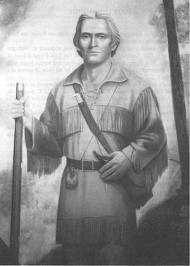
Missing Bronson
You’re walking home from Jamba Juice one evening, you’re stopped by a young drifter who wants directions-and a smoke, if you have one. You don’t. You’re sorry, but you don’t smoke. Okay, he says. And as you walk away, he shoots you in the back of the head, your half-eaten, strawberry-banana smoothie with the shot of vitamin Q and your left eye spattering a young man twenty yards across the street. Shortly thereafter, the police happen to pick up the drifter for jaywalking, and find him with the still-warm gun in his pocket and your still-cold smoothie in his hand. He is then identified by the young man and arraigned. But then, as you watch-perched on a fluffy cloud in heaven-the legal system starts to kill you all over again. The gun isn’t admissible as evidence because it was found without probable cause. After all, they had only stopped him for jaywalking at that point. And the young man is discredited as an eyewitness because he usually wears glasses, and that dusky night he wasn’t wearing them, the truth being, he just needs them for reading. Besides, the defense attorney reveals, he lives in a neighborhood with an abortion clinic, and what does that make him? Plus, this fellow who shot you-his attorney will tell you he was once taken advantage of by one of the employees at Jamba Juice and you were taunting him with your smoothie. Now, as you stand there next to Charles Bronson in the great beyond (that’s one of the first souls I hope to meet there) and watch this cruel and ironic Catch-22 unfold – this insane sequence of events that leads up to the dismissal of all charges against the drifter who ended your life on that fine summer evening-as you watch this bizarre, almost synaptic set of occurrences fall into place like a chain of perverse dominoes that has been kicked over by Eric Holder-all you can think to yourself is, “Hey, I know where I’ve seen this before! Mouse Trap! And if you think I am stretching it with that little parable, well just look at the newspaper this past week. Most of the population thinks the only thing that’s happening in the world is the Trayvon Martin case, but last Tuesday, two hundred forty pounds of cocaine was disallowed as evidence in a drug case because the trooper who found it stopped the suspects’ car for failure to display a front license plate. The case was thrown out because, legally, Pennsylvania only requires a rear plate. Well you know something? That’s just exquisite bologna. And I know. I eat a lot of bologna for lunch. I also know that every ACLU hysteric who might be reading this is now jumping up on their desk screaming, “Rules of evidence! Rules of evidence!” But I think I speak for the general public when I say, “Take your nit-picking neurotic little rules of evidence and stick them up your understanding noses,” because quite frankly, I haven’t seen judgment this bad since I lost to that petite, Meg Ryan look-a-like on “Search for America’s Funniest Person.” Yeah, yeah, not that I dwell on that. The frightening reality is every day this society seems to make its legal decisions in much the same way the Archies picked their vacation spots-blindfold Jughead, give him a dart, and spin the globe. The whole system is maddening! And I know some of you are thinking, “doesn’t she usually write about the Old West?” Hey, I mentioned Charles Bronson. 
The Big Trail
Several years ago I was given the opportunity to do an interview with a production company that provided the ‘extras’ on the DVD release of The Big Trail. The book I had written about John Wayne entitled The Young Duke had been released a few months prior to the DVD hitting the market and that’s what led to the opportunity to speak about Wayne and The Big Trail. In 1930, Raoul Walsh was preparing his wagon train epic, The Big Trail. In the lead roles of scout Breck Coleman, Walsh cast 23-year-old unknown prop man and bit-part player, Duke Morrison, after Tom Mix and Gary Cooper had turned it down (Cooper starred as scout Clint Belmet in Paramount’s almost identical Fighting Caravans the following year). The Big Trail tells the story of a wagon train of pioneers who trekked from the banks of ‘The Big River’ – the Mississippi – to the Promised Land of Oregon, 2,500 miles away, and details their surmounting of hazards en route. Scout Breck is also looking to exact ‘frontier justice’ on the killers of his best friend – the train’s bullwhacker Red Flack and his sidekick Lopez are the culprits. Flack is a memorable characterization by Tyrone Power Snr., a snaggled-toothed, bullwhipping monster with a face like a bear trap. The making of The Big Trail was chaotic, with filming taking place across Arizona, California, Utah, Wyoming and Montana. For part of the shoot, Morrison had dysentery. Marguerite Churchill, his beautiful leading lady, remained only intermittently beautiful between bouts of chronic acne; and most of the cast got drunk. The logistics for such an epic $2 million production involved coordinating hundreds of extras and props, including dozens of heavy, ox-drawn Conestoga ‘prairie schooners’ (so called because of their boat-shaped hulls). In one scene the wagons descended sheer cliffs on primitive pulleys (filmed at Hurricane Bluffs, Zion National Park); in another, they ford a swollen, muddy, storm-lashed river. The film was shot in two different formats – 35 mm and 70 mm widescreen “Grandeur”. The 70 mm print of The Big Trail was exhibited at 158 minutes in only two cinemas in Hollywood and New York, while everywhere else showed the 125-minute version in 35 mm. Unfortunately, The Big Trail was a big flop. Wayne was soon dropped by Fox and the action from the film was sold to Republic, where many a B-movie hero subsequently fell under stock footage Indian attack. Viewed today, with its impressive sweep and scope, The Big Trail remains one of the great early westerns. For more information about The Young Duke visit www.chrisenss.com. 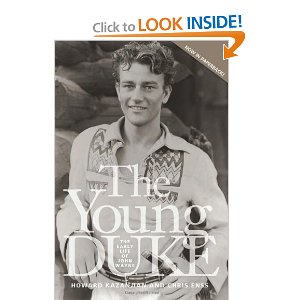
With Their Boots On
Old West outlaws were usually buried unceremoniously in a local “boot hill,” so called because most of those who were buried therein died with their boots on, and were even buried with them on. However, some had funerals: and tombstones with epitaphs marked their graves for some time, usually until souvenir hunters demolished them. On Sam Bass’ tombstone was engraved, “A brave man reposes in death here. Why was he not true? On Seaborne Barnes’ gravestone (Seaborne was a train robber and member of Sam Bass’ gang) was written, “He was right bower to Sam Bass.” Besides his name and dates, Cole Younger’s tombstone had the words, “Rest in Peace, Our Dear Beloved.” Jesse James’ complete epitaph reads: “In Loving Remembers of My Beloved Son, Jesse W. James, Died April 3, 1882. Aged 36 Yeas, 6 Months, 28 Days Murdered by a Traitor and Coward Whose Name is Not Worthy to Appear Here.” The coward referred to was Bob Ford who, as most recall, shot Jesse in the back while he was hanging a picture on the wall, very unusually unarmed. Other than biographical information, Langford Peel’s tombstone (Langford was born in Liverpool and was a gunman who spent a lot of time in Montana) bore the inscriptions: “In Life, Beloved by his Friends, and Respected by his Enemies. Vengeance is Mine. Saith the Lord. I Know The My Redeemer Liveth. Erected by a Friend.” Most unusual of the epitaphs of various Old West outlaws was that of Lame Johnny (a cattle rustler and horse thief who worked primarily out of South Dakota), of the enormous mouth, hanged by impromptu vigilantes and awarded the epitaph: “Lame Johnny, Stranger, pass gently o’er this sod. If he opens his mouth, you’re gone, by God.” 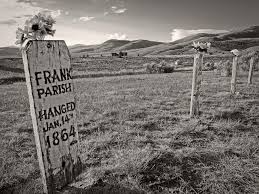
Grandma Mason
Bridget “Biddy” Mason, born a slave in 1818, claimed her freedom and found opportunity on the American frontier. In 1891, she died a rich and free woman who had stared adversity in the face-and had come out swinging. When Biddy was young, she was the property of Robert and Rebecca Smith, plantation owners in Georgia or Mississippi. In 1847, the Smiths became Mormon converts and left for Salt Lake City, Utah, with slaves in tow. Four years later, the Smiths brought their slaves with them to southern California. Among them were Biddy and her three daughters, Ellen, Ann, and Harriet. (Biddy may have been married, or Smith may have fathered the children. No one knows for sure.) Biddy and her children traveled with a wagon train, but they didn’t ride. Instead, they walked mile after mile, herding their owner’s sheep. Biddy arrived in Los Angeles and learned that California had recently joined the Union as a free state. That meant slavery was prohibited, yet Biddy and her family remained enslaved for five more years. When officials at last began enforcing the California law, Smith hastily made secret plans to move Biddy, her sister, Hannah, and their eleven children to Texas, which permitted slavery. Biddy wasn’t about to let that happen, though. On the sly, she visited a free black man who owned a successful livery stable. Charles Owens was a leader among a dozen free blacks living in Los Angeles, then a small town of 1,600. The fee blacks had bought or been given their freedom and settled in California after it was admitted to the Union as a free state in 1850. Although slavery was illegal in California, blacks were far from equal. Most held low-wage jobs, including being laundresses and maids. Blacks (and Native Americans) could not testify against whites in criminal or civil court. They could, however, file lawsuits and be present in court, which was a good thing for Biddy. Biddy had some pull with Owens, whose son was in love with Biddy’s teenage daughter Ellen. To save his son’s girlfriend and her family, Charles got busy thwarting Smith’s flight. Charles Owens contacted his friend – the sheriff! “Smith’s been keeping slaves for five years, and he’s sneaking them out through the Santa Monica Mountains tonight,” Owens told the sheriff. It’s time to act. That night deputies swooped down on Smith’s wagons and rescued Biddy, Hannah and their eleven children. The case to determine what should happen to Biddy and her family went to court in 1856. In court, Biddy’s owner claimed that he was merely a transient passing through California with his slaves, which the law allowed. Biddy could easily have refuted that, but could not testify against Smith in court. Thankfully, the judge was sympathetic. He called Biddy into his chamber and left her speak on her own behalf. “I’ve been kept in slavery against my will in California, and slavery is not allowed here,” Biddy said firmly. “I want to be free.” The judge listened, nodded then returned to his bench in the courtroom. There he banged his gavel and proclaimed, “Biddy Mason, you and your family are free from the shackles of slavery, in the great state of California. Biddy then rented a house and began working as a midwife and nurse. She settled in Los Angeles, where Dr. John Strother Griffin hired her, and she was soon in high demand among his pregnant patients. Biddy also worked as a nurse for prisoners in the county jail and patients in the county hospital. During a smallpox epidemic, she risked her own life nursing the sick. With her earnings, Biddy bought two lots just outside of town on Spring Street, then two more. The lots became prime downtown real estate that was worth a fortune. Making a good living wasn’t Biddy’s main goal in life, however. Her house on Spring Street became a shelter for stranded ex-slaves and travelers in need. Long lines of poor people of all races found a helping hand at “Grandma Mason’s” home. After local flooding wiped out area homes, she opened grocery store accounts for the victims, then paid the bills. There was no end to Biddy’s generosity, for her philosophy was “If you hold your hand closed, nothing good can come in. But the open hand is blessed, for it gives in abundance, even as it receives.” Biddy died in 1891 at the age of 73. Today, at Biddy Mason Park near the site of her Spring Street home, a mural honors Biddy’s legacy as a powerful black woman who never gave up and never stopped giving.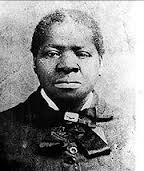
The Killer Among Them
James Jenkins was a professional criminal having a long history of highway robberies and murders. It was reported that he had killed eight white men and ten Indians throughout Missouri, Texas, Iowa, and California. While living in Napa, California, Jenkins became acquainted with Patrick O’Brien, in order to establish a sexual liaison with O’Brien’s wife. Mrs. O’Brien, a lusty, attractive woman with a strong will, goaded Jenkins into murdering her husband, or so he later said, although Jenkins’ willingness to murder needed no encouragement. Jenkins got drunk, marched in O’Brien’s home, and shot him, but he was caught almost immediately and quickly confessed. Mrs. O’Brien denied having anything to do with the murder and was released. Jenkins was convicted and sentenced to death. Before he was hanged, Jenkins lamented his sloppy habits and the fact that he had gotten drunk, believing that if he had been meticulous in his killing of O’Brien, he never would have been caught. His last words on the scaffold were: “That whiskey that I drank the morning before I shot O’Brien was what caused me to do it when I did, and in so careless a matter.” To learn more about Jenkins and other bad guys in the Gold Country read Outlaws Tales of California. For more information visit www.chrisenss.com.
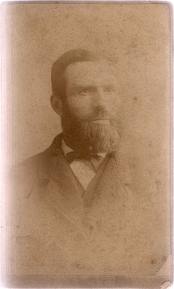
Outlaw James Jenkins
The Human Wildcat
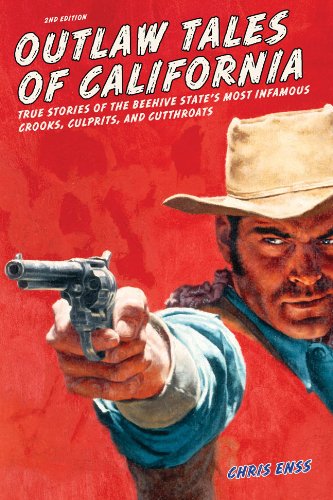
The notoriety that earned Juan Soto a place in the history of the U.S. West came at the end of his life. Soto was of mixed Indian and Mexican heritage and became notorious in California as a thief and murderer. Soto and two other men robbed a store in Sunol, California, on January 10, 1871, killing a clerk and shooting a number of rounds into the living quarters of the store owners, apparently for no purpose at all. Soto and his men were then tracked by Sheriff Harry Morse and a deputy. The lawmen followed the outlaws into the Sausalito Valley about fifty miles outside the town of Gilroy. Morse and the deputy found Soto and a dozen of his followers inside a makeshift hideout. Soto drew his gun on the sheriff when the lawman told him he was under arrest. After a short and uneventful skirmish, Morse broke free and pursued Soto outside. Arriving outside ahead of the lawman, Soto had attempted to mount a horse. But the animal spooked and ran away leaving the hapless gunfighter behind with nowhere to hide. Soto ran for some 150 yards before Morse was able to draw a bead on the outlaw. Even at this significant distance the sheriff’s aim was true, as he nailed the bandit with a single shot. As Soto, now wounded, ran back toward the sheriff, Morse fired a second shot. This time, the bullet found its mark, striking the “Human Wildcat” in the head. Soto died almost instantly. Read more about Soto and other California bandits in the book Outlaw Tales of California. Go to www.chrisenss.com for more information.
Writing the West
E.B. White, the author of Charlotte‘s Web once said “It is not often that someone comes along who is a true friend and a good writer.” I have the good fortune to report that many of the people I spent time with at the Western Writers of America convention this past week in Las Vegas are not only good writers, but true friends. It was a thrill to share the same space with author Nancy Plain, Will Bagley and Lucia St. Clair Robson. The Western Writers of America convention was held in Las Vegas this year. Prior to leaving the hotel for the airport I heard two men outside the event center say the following: “Dude! I’m telling you my bad streak is over. Let’s get back in there and get our money back.” I’m sure that had a happy ending. Attending a WWA event inspires one to want to be a better writer. That’s the attitude I have today as I prepare to continue working on the projects I’ve been assigned. My hope is that at the next WWA convention I can be satisfied with the writing I’ve done and not feel compelled to tell people, “I just wrote a book, but don’t go out and buy it yet, because I don’t think it’s finished yet.”
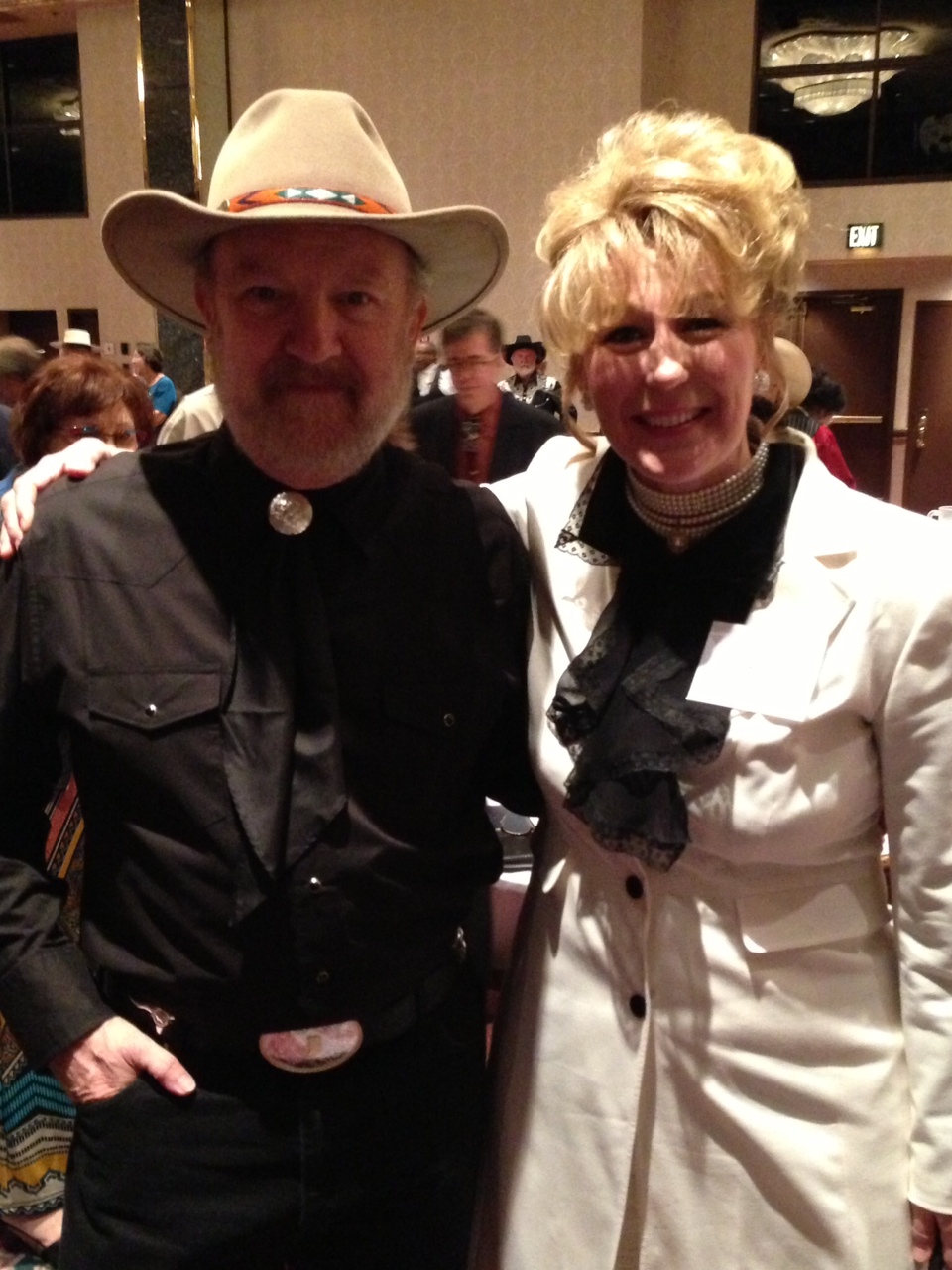
With Jim Beaver, one of the stars of Justified, at the WWA convention.
A Happy Ride
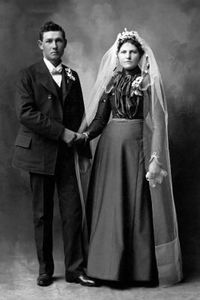
An excerpt from a newspaper in Northern California describes a controversial event that took place at a gentlemen’s club meeting in Nevada County. A group of prominent men, convinced that being single was better than being married, met on a regular basis to discuss the benefits of remaining unattached. The organization’s commitment to that belief was challenged when one member dared to follow through with plans to marry his mail-order bride. “One of the many devious ways in which the course of true love can be made to run was illustrated in Grass Valley recently – showing how by a chance buggy ride, a man saved $2000 and gained a wife. A certain young bachelor of Grass Valley paid his “distresses” to one of the beautiful young ladies so numerous in this grassy vale, and matters were rapidly progressing towards a matrimonial entanglement, when for some reason best known to himself the wooing swain “flew the track.” The deserted mail-order maiden was a girl of spirit, and she immediately commenced suit for breach of promise to marry. The trial commenced January 11, 1881, and the contest waxed hot for three days, resulting in a verdict for the fair plaintiff, with $2000 damages. Consternation was carried into the camp of the bachelors by their threatening results. A meeting of the Bachelor’s Club of Grass Valley was instantly called to discuss the situation and deliberate upon precautionary measures, to protect others of the fraternity from the fate that had overtaken their brother. Among other things, it was proposed that all members who were in dangerous habit of calling upon marriageable ladies should supply themselves with a receipt book, and have a release signed at the termination of each visit, stating that no matrimonial engagement had been entered into, and that all was square to date. In an earnest speech and with a voice trembling with emotion, the president besought the members to specially avoid osculation, as in law a kiss was regarded as seal to an implied contract making it binding upon the parties. The club adjourned without taking final action, and the members departed to their homes with a deep-rooted apprehension lurking in their bosoms, and resolved to spend their money on billiards and fast horses and let the girls severally alone. And now comes the romantic termination. About three months later a heavily loaded stage was on its way from Nevada City to Grass Valley, when it was met by a gentleman in a buggy, who offered to relieve the stage of one of the passengers, provided the person was willing to return to Nevada City while he was transacting a little business. The innocent driver gazed down into the stage and asked a lady if she desired to accept the gentlemen’s offer. She did desire and did accept, and alighted from the stage which immediately drove away. Then it was that the old-time lovers and recent litigants found that they were destined to take a ride. What was said during that ride we know not, but when they arrived in Nevada City, they went before Judge Reardon, the same who had presided at the trial, and were quickly made one. Indignant at this defection of a member whom they had considered their staunchest adherent, the Bachelor’s Club called another meeting and expelled him with imposing ceremonies.”
The Daily Transcript – May 10, 1881