Condensed milk was invented by Gail Borden in 1853. After one bad invention followed by another, he finally hit on the idea of food concentrates as an economical way to safeguard the food supply. He once said he conceived the notion by observing his wife adding sugar to her milk to keep her full-figured voluptuousness, a sign of beauty and wealth at the time. (It would solve a lot of problems for me if we could just return to that time as my full-figured look is considered neither a sign of beauty or wealth, simply a sign that I adore cherry pie). Before, milk was shipped in unsanitary oak barrels, and it spoiled quickly. Although he didn’t invent the tin can, his marketing skills in effect launched the canned food industry. Canning food diminished the possibility of food-storage spoilage, subsequent short supplies from the whims of natural elements, contamination by vermin. He died in Borden, Texas of gastrointestinal flu (possibly from drinking from a dented container) in 1874 and had his body packed in a tin can of a railroad car to be buried in Woodlawn Cemetery in New York. 
Journal Notes
Sitting Bull
In an earlier time Sitting Bull might have been a great and prosperous Indian chief. But in the second half of the 19th century he was the last ruler of a dying breed. His victory over General Custer at Little Big Horn in 1876 was but a glitch in the United States drive to corral the Sioux Indians onto reservations. A medicine man and never actually a chief, Sitting Bull led a dwindling number of Sioux away from federal troops for five more years, until finally in 1881, he and fewer then 200 remaining followers surrendered. They were held in custody for almost two years before they were placed on the Standing Rock Reservation in South Dakota, near where Sitting Bull was born. Sitting Bull, a tall, solid Indian with long, black, braided hair, was put on parade in several cities and in 1885 he toured with Buffalo Bill’s Wild West Show along the East Coast. But when he was on the reservation Sitting Bull stubbornly continued to stir up unrest. Even after federal authorities prohibited the ceremony, Sitting Bull encouraged Indians to perform the new Ghost Dance, which the Indians had come to believe would lead to a rebellion and would bring a savior to defeat the White Man. At dawn on December 15, 1890, about forty members of an Indian police force commissioned by federal authorities descended on Sitting Bull’s cabin to arrest him. They pulled the 59-year-old naked man from his bed and ordered him to get dressed and go with them. Sitting Bull gathered his things, but he took a long time to do it, which allowed time for restless crowd of Indians to gather outside. By the time Sitting Bull was roughly pushed out of his cabin into the freezing weather, the crowd was angry. Sitting Bull stood waiting for his horse to be brought up. But then suddenly he yelled in the Sioux language-which the Indian officers, too, understood – “I am not going. Do with me what you like. I am going. Come on! Come on! Take action! Let’s go!” Another leader of unrest on the reservation, Catch the Bear, pulled out a gun and fired at the top Indian officer. Lieutenant Bullhead was hit in the leg and as he fell he fired at Sitting Bull, shooting him in his left side. Another officer also shot the Indian leader, killing his instantly. The gun battle escalated, and when it was over fourteen men were dead, all Sioux, including six Indian police officer. Hundreds of others fled the reservation. Most were soon caught and sent to Wounded Knee, where, on December 29, an anonymous gunshot touched off the massacre of 300 Sioux.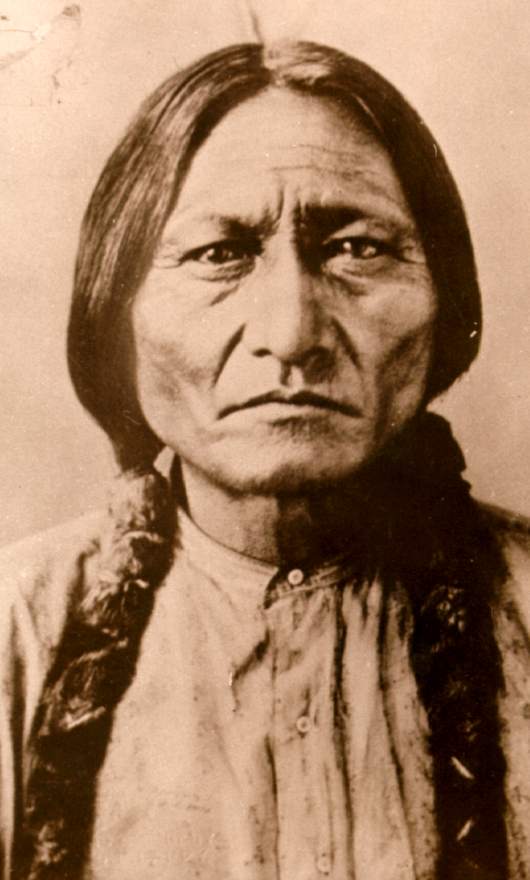
Women of the Old West

The Trials of Elizabeth Blackwell
America’s first woman doctor was admitted to New York’s Geneva College in 1847 as a joke, and was expected to flunk out within months. Nevertheless, Blackwell prevailed and triumphed over taunts and bias while at medical school to earn her degree two years later. While in her last year of medical training, she was cleaning the infected eye of an infant when she accidentally splattered a drop of water into her own eye. Six months later she had the eye taken out and had it replaced with a glass eye. Afterward, American hospitals refused to hire her. She then borrowed a few thousand dollars to open a clinic in New York City, which she called the New York Infirmary for Indigent Women and Children. She charged patients only four dollars a week, if they had it, for full treatment that might cost at least two hundred dollars a day at the going rate. During the Civil War she set up an organization to train nurses, Women’s Central Association of Relief, which later became the United States Sanitary Commission. In 1910 at age eighty-nine she died after a fall from which she never fully recovered. 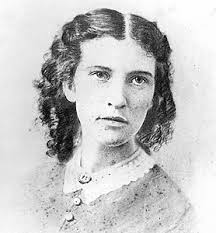
Riding With An Outlaw
James Gilbert Jenkins was a professional criminal having a long history of highway robberies and murders. It was reported that he had killed eight white men and ten Indians throughout Missouri, Texas, Iowa, and California. While living in Napa City, California, Jenkins became acquainted with Patrick O’Brien in order to establish a sexual liaison with O’Brien’s wife. Mrs. O’Brien, a lusty, attractive woman with a strong will, goaded Jenkins into murdering her husband, or so he later said, although Jenkins’ willingness to murder needed no encouragement. Jenkins got drunk, marched into O’Brien’s home, and shot him, but he was caught almost immediately and quickly confessed. Mrs. O’Brien denied having anything to do with the murder and was released. Jenkins was convicted and sentenced to death. Before he was hanged, Jenkins lamented his sloppy habits and the fact that he had gotten drunk, believing that if he had been meticulous in his killing of O’Brien, he never would have been caught. His last words on the scaffold were: “That whisky that I drank the morning before I shot O’Brien was what caused me to do it when I did, and in so careless a manner.” To learn more about James Gilbert Jenkins and other bad guys of the Old West pick up a copy of Outlaw Tales of California. For more information visit www.chrisenss.com.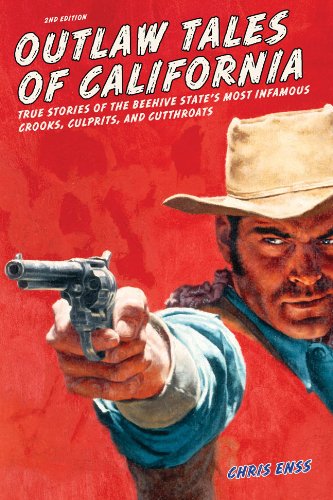
The Dream
Outlaw Talk in Dodge City
I returned from Dodge City and other towns in Kansas yesterday. I had been traveling around the state promoting two books, one of which was The Bedside Book of Bad Girls: Women Outlaws of the Midwest. Outlaw Alice Ivers was one of many bad girls I had a chance to talk to readers about. Alice was born in Sudbury, Devonshire England in 1851. She immigrated with her family to the U.S., settling in Virginia first, then moving to Fort Mead, Colorado where her father was a school teacher. She married a mining engineer, who introduced her to the fast world of the gamblers and their known haunts. Ivers greatly admired the car sharps and high-hatted gamblers that traveled the cow towns and soon she learned their card-playing wiles. While in her teens, Ivers went to Deadwood, South Dakota, where she became a dealer, specializing in poker and soon earning the sobriquet “Poker Alice.” After her husband died, she devoted the rest of her life to gambling; traveling through Arizona, Oklahoma, Kansas, South Dakota, Texas, and New Mexico, or wherever the stakes were high and the whisky smooth. She smoked thick, black cigars, and during the 1870s and 1880s, became a well-known and successful gambler in all the famous cow towns, from Deadwood to Tombstone, Arizona. In her heyday, she would spend $6,000 in the fancy New York run shopping stores buying the finest garments, but later, in old age, Ivers took to wearing army surplus clothing. Poker Alice would not tolerate a cheat and was never challenged by other gamblers. She was known to carry sever guns, one in her purse and one in a pocket of her dress. On occasion, she would practice her marksmanship by shooting knobs off the frames of pictures hanging in bars to warn gambler gunmen that she was capable of defending herself. Wild Bill Hickok reportedly asked Poker Alice to sit in with him and others during the game of poker in Saloon No. 10 in Deadwood on the day he was shot by Jack McCall; she declined, saying that she had already agreed to play with another group down the street in Mann’s Saloon. When hearing that Wild Bill had been shot in the back, Ivers rushed to Saloon No. 10 and saw Hickok sprawled dead on the floor and McCall fleeing out the back door. “Poor Wild Bill,” she said of Hickok, peering down at his corpse, “he was sitting where I would have been if I had play with Wild Bill on that fateful day because she “had a queer feeling that all would not be right that day.” Alice Ivers later married Frank Tubbs, a gambler who did not possess half her playing talents and one who took to drink early in their marriage. Poker Alice was forever getting her husband out of trouble. Tubbs was knifed one night by a disgruntled player, and Poker Alice stormed into the bar and shot the man in the stomach, wounding him from a distance of thirty feet. She and Tubbs moved on to Silver City, Nevada, where she broke the bank in the biggest saloon, winning an estimated $150,000. She and Tubbs then brought a huge Colorado ranch which Poker Alice later lost. Following her husband’s death, Poker Alice moved to Rapid City, South Dakota, where she ran a small poker club. She died there, a grand old lady of western lore, on February 27, 1930. 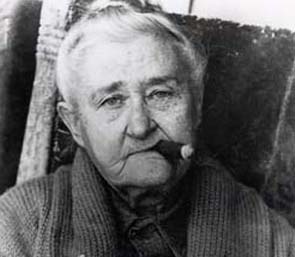
The Hazards of Cowpunching
Stampede! This one word, more than the warning cry that Indians or outlaws were attacking, made any cowpuncher’s blood turn cold. There was no way of foretelling it; the sudden bark of a coyote, a rumble of a summer storm, lightning, the rearing of a horse, or the scream of a panther could all start a disastrous stampede. Sometimes there was no apparent reason; it seemed as though a half-wild but dormant instinct of flight had suddenly flared up in the brain of one of the steers. As many memoirs recall, it was a terrifying experience. There would be a sudden rumble like that of a far-off cannon; then the herd would bolt. Like an army of modern steam-rollers, the steers would move across the open prairie with the speed of an express train. No one could tell what direction they would take. Sometimes they plunged off cliffs, filling whole canyons with their broken bodies, or choked a river with their thrashing. The task of the cowpunchers was to divert that terrifying, fast-moving animal mass into a gigantic circle. To do that, cowboy and pony became as one. Sometimes the stampede went on for days. No one got any sleep. There was only time for a quick drink of scalding hot coffee and then back into the saddle. “I didn’t sleep for three days,” one puncher recalled. “The heard ran for miles…” 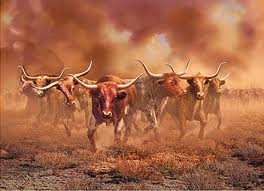
The Hanging of Lewis Holder
Lewis Holder was an outlaw. After hearing the news from Judge Isaac Parker that he was going to die on the gallows, Lewis left forth a piteous scream then collapsed to the floor, paralyzed with fear. There was an immediate concern that Holder had died from fright, but the defendant was still very much alive. Holder, who had been convicted of murdering his partner George Bickford in the San Bois Mountains in Oklahoma on December 28, 1891, vowed that he would return to Fort Smith in spirit form and would haunt Judge Parker and the jury men if he were indeed hanged. No one paid much attention to the desperate warnings of a condemned man. Holder was executed as scheduled on Nov. 2, 1894. About one month later, jailer George Lawson was startled by a moaning sound coming from the direction of the jail yard gallows. Upon further examination, a thoroughly inebriated man was found lying prone on the wooden gallows. 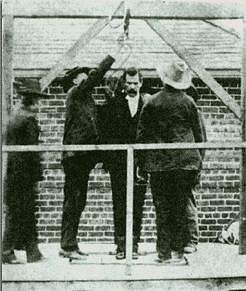
To Hell and Back
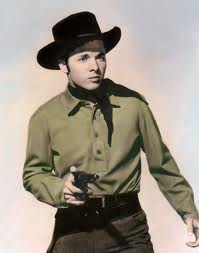
The most decorated American war hero in World War II, Audie Murphy returned home with no place to go but down. What could top his spectacular battle feats? After lying about his age to join the army at 17, he had been wounded three times and credited with killing 240 Germans. Of 235 men in company, Murphy was one of two who survived. Not yet 21, he won twenty-seven medals, including three from the French and one from Belgium. After the war, Murphy was recruited to Hollywood by James Cagney, and in 1955 he starred in a movie version of his autobiography, To Hell and Back. He said it was “the first time, I suppose, a man has fought an honest war, then come back and played himself doing it.” Murphy joked about his lack of talent, but in twenty years his boyish face and freckles appeared in forty movies, mostly war films and Westerns in which he played eager fighters. It was a far cry from his youth as one of eleven children of a Texas cotton sharecropper-and from the battlefields of Europe-and the transition was not smooth. Murphy said the war left him with nightmares for years. He slept with a loaded automatic pistol under his pillow, and when he was asked how people survive a war, he said, “I don’t think they ever do.” One of Murphy’s friends, cartoonist Bill Maudlin, said “Murphy wanted the world to stay simple so he could concentrate on tidying up its moral fiber wherever he found himself.” Murphy became a quasi law-enforcement officer in the 1960s. He was made a special officer of a small California police department and rode around with police during drug busts. In 1970, he and a bartender friend beat up a dog trainer in a dispute over treatment of the friend’s dog. Murphy was acquitted of attempted murder. Though he had earned more than $2.5 million in his film career, Murphy was forced by too many bad business ventures to declare bankruptcy in 1968. Three years later, hounded by creditors and still trying to rebuild financial security for his wife and two teenage sons, he became interested in a company in Martinsville, Virginia, that manufactured prefabricated homes. He was on a small charter flight from Atlanta to see about making an investment when the plane crashed in a wooded mountain area during a light drizzle. The region, northwest of Roanoke, was so isolated that the wreckage, including the bodies of Murphy and five company officials, was not found for three days. The was hero was laid to rest in Arlington National Cemetery.