
Family loyalties involve certain obligations. They are duties we perform out of love, as this simple story illustrates: One of two brothers fighting in the same company in France fell by a German bullet. The one who escaped asked permission of his officer to go and bring his brother in. “He is probably dead,” said the officer, “and there is no use in your risking your life to bring in his body.” But after further pleading the officer consented. Just as the soldier reached the lines with his brother on his shoulders, the wounded man died. “There, you see,” said the officer, “you risked your life for nothing.” “No,” replied Tom. “I did what he expected of me, and I have my reward. When I crept up to him and took him in my arms, he said, ‘Tom, I knew you would come – I just felt your would come.’” There you have the gist of it all; somebody expects something fine and noble and unselfish of us; someone expects up to be faithful. Merry Christmas to my brother Rick. I won’t forget you. Merry Christmas to all.
Journal Notes
Grief Turned Around
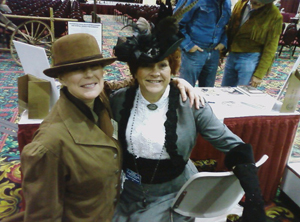
By 1030pm on Friday evening I finally completed the additional chapters needed for the mail-order bride book and sent them off to the publisher. I hope that’s the last on that subject for a while. I need to concentrate on completing the book about women outlaws of the Mid-west. I’m woefully behind on that book and it is due March 10. It would appear I’ve been playing catch up all year. Writing is my passion however and I can’t imagine doing anything else. No matter how far behind on a deadline I slip. This week promises to be as busy as they last 40 plus have been. Today I shall attempt to move the shell of a Volkswagen vehicle into the church sanctuary. We are doing a play entitled A Ride with a Perfect Stranger and need the vehicle as a prop. Months ago I thought it would be quite impactful for the congregation to see a car in the church. The play does in fact take place inside the vehicle. Now I’m having second thoughts. I just pray it all goes well as I have no backup plan. Looking back on this year I can see how the situation with my brother has deeply affected me. The toll it’s taken on friendships I was once able to nurture and the toll it’s taken on my health have been substantial. This ordeal has changed me so and I’m almost unrecognizable to myself. I pray for a bright outcome but never sense the Holy Spirit is giving me confirmation on that – perhaps because in this case there is no real positive outcome. Hearts will still be broken over all that was lost. Rick will never be the same physically or emotionally. None of us will ever be the same. “This world breaks everyone,” Hemingway once said, “and afterward, some are strong at the broken places.” Hope the readers of this post will take a look at the featured video posted. There will be more to come in 2012.
Sierra Lady
Desperate brides, dental surgery and death threats…the last two days have involved a bit of all three areas and then some. Every time I submit the new book about mail order brides I am told by the editor that I’m 4 or 5 thousand words short. So I write a few more chapters and turn those in and another word count shows that I’m still 4 or 5 thousand words short. I’ll be back at it again today. I am going to submit a chapter about the Harvey Girls. If I’m still 4 or 5 thousand words short you’ll hear a scream of frustration from coast to coast. Yesterday’s visit to the dentist was a treat. And by treat I mean horrifying. I’m not a good patient during a simple cleaning removing several fillings and replacing them with new ones to save my molars really sends me over the edge. After poking my gums with a sharp instrument for several hours the doctor pointed out to me that my gums were bleeding. I felt the need to mention that they weren’t bleeding when I came in and that maybe the problem was him. I feel better today. The death threats have eased up somewhat. For a couple of days I was receiving emails that explained that “my days were numbered.” Whose days aren’t number? In the midst of the hate mail and name calling I received an email of encouragement I want to share. I do this not to suggest I’m deserving of such kindness but to point out that there are angels disguised as human beings who offer encouragement when it feels all hope is lost. “Hi, I attended some of your wonderful seminars at the SASS convention and I was deeply moved by your terrible experience with “Missouri Justice” and I applaud and pray for you, for what you are doing to help your brother. His story is tragic and needs to be told as there are so many men out there who have been unfairly incarcerated by terrible women who use the law to warehouse their husbands or boyfriends in hellish conditions, just because they can. You are brave and a woman of incredible strength, I feel the Lord is working through you to not only help your brother but to help others, and to get recognition to change the law into a process that reveals the offenders and champions the innocent. You go girl!!! Best wishes Sierra Lady S.A.S.S.” God bless you, Sierra Lady and thank you. Now it’s time to return to Object Matrimony, which is the title of the mail-order bride book due to be released next year.
Sydney Lindsay
The hardest aspect of writing is writing. I spend the day reviewing the research I’ve done on a particular individual and desperately try to create an original way to tell their story. That’s what I hope to do with Victoria Woodhull today. My goal is eight pages by the days end. I am anxious to speak with a gentleman who emailed me this weekend who is a relative of Harvey Logan from the Wild Bunch. Maybe there’s an untold story there. I’m excited to start digging. Of course nothing I write can compare to the pithy, succinct, hate-ridden emails I received this weekend. One example of such an email read, “Die, Die, Die, B___, B___,B____ for sticking up for your brother.” My personal favorite was “You should be repeatedly raped and thrown in a grave for defending your brother.” What started it all was the following email – complete with a bogus email address so there was no way to respond. All subsequent emails contained a fake email address as well. The tracking device on my computer system and the one built into the website quickly traced the author of the letters to a home in Norborne, Missouri. They initially tried to hide their location at a spot in Dallas, Texas, but again…the tracking devise. As I’m focusing on writing this morning I have to applaud the author of the hate mail. They decided not to be long winded with their thoughts. They were brief, to the point, and guilty. I can smell their fear all the way in California. In spite of the hate mail I’m going to continue to champion my brother. The emails make me believe we are on the right track. If the false accuser of my brother was secure in her testimony there would be no need to write such letters. Here is a copy of one of the first emails – certainly the only one tame enough to share.
Your Name
Sydney Lindsay
Your Email
syd.linds99@gmail.com
Message
You are seriously an awful person for continuing to defend your brother. Shame on you.
Apart from the fact the email address is a fraud (which given the author I’m not surprised) the use of the word “seriously” makes one believe the author is under the age of 20. As a published author I’d edited this piece by removing the word “seriously”. It’s not needed. I wish I could critique the other emails in this journal entry but they were too graphic to include here. And now it’s time to continue with my own writing. I’m overwhelmed with work and I’m grateful for that.
The Mighty Pen
I am amazed sometimes how much life can be crammed into a week. Work, Bible study, rehearsals for the Christmas play at church, phone calls and emails with the lawyers involved in Rick’s case, lunch meetings about the condition of today’s prison system, private investigating assignments… I’d love some down time but need to be at an architectural committee meeting first thing this morning. I’m going to make plans to go to Monterrey soon and spend some time on Cannery Row. I don’t think I’ll have time to visit historic Monterrey for a few months but I can dream. I’ve been working on a book about women outlaws of the Mid-West and focusing on a lady named Victoria Woodhull. When she was arrested in 1872 for obscenity, she was one of the most notorious female outlaws at the time. And what was considered obscene at that time consisted of Woodhull sharing with readers of her newspaper the notion of “free love.” She believed women should be able to select her own lovers – such a controversial idea in the late eighteen hundreds. A few times during the day I check to see how many people have visited my website. I average about 65 visitors a day. Yesterday however I had 209 visits. I was very excited until I did a check and found out the hits came from one location in Lees Summit, Missouri. The user is a repeat visitor to the site who works at a hospital. I guess it’s to be expected. As Voltaire once said, “Fear follows crime and is its punishment.” That fear will only intensive as the year progresses. I’ve been waiting a long time for justice to be served – even longer to write about it. The Plea will be the full story of what happened to Rick and I’m more anxious to write about that than I’ve been about writing anything in a long time. It almost seems as though the desire to write at all was leading to this pivotal point. Amazing how God works.
Never Forget
“No bastard ever won a war by dying for his country. He won it by making the other poor dumb bastard die for his country.” General George S. Patton, Jr.,in Patton by Francis Ford Coppola. Patton never was one for tact, but this quote reminds me of the events that took place today seventy years ago. I’m grateful to the men and women who fought for my freedom. I’m thankful for those souls in faraway countries today that are protecting this nation. I pray that the people in this country never forget the price that was paid for freedom. WWII Vets are passing away at an alarming rate and with them goes the history of that time. My grandfather served in WWII, my father in Vietnam, my brother Corey in the Gulf War, and my brother Rick served in Desert Storm. I spoke a bit about Rick and his service to our country last night at a women’s ministry mixer. Rick was one of the most patriotic men I ever met. His pride in country, as have mine, eroded away when we saw how the justice system really works. Part of the lesson at last night’s event was to write down the name of one person who was hindering you in your walk with the Lord. We were challenged to write down the name of one or two people we couldn’t forgive. I know who they are. I see their faces every day in my mind’s eye but I couldn’t bring myself to write their name on a paper. These two women have taken so much – more than they will ever realize. I have my own war against them that will hopefully come to a close in the New Year. I will not rest until they pay for the lives they have ruined. They grossly underestimated the devotion to what is decent and right. As Admiral Isoroku Yamamoto said to his superiors upon learning of the success of the attack on Pearl Harbor, “I fear all we have done is awaken a sleeping giant and filled him with a terrible resolve.” The war rages on.
Want Ads
With any luck I’ll be able to turn in the last chapter for the second edition of the mail-order bride on the frontier book. The publisher hasn’t decided on a title yet, but they are always good at coming up with great titles so I have no doubt they will do the same for the next book. I met a gentleman a few days ago that had appeared on an episode of the program History Detectives and spoke about mail-order brides. He and his wife found several photographs of mail-order brides at an antique store and used them in the episodes. It seems like many great historical pieces are in private hands. I’d love to find such a collection in my travels – some wonderful artifact hidden behind a velvet photo of Dogs Playing Poker maybe. There was quite a bit of interest expressed in mail-order brides among the readers at the convention I attended this past week. I thought I’d share a bit of what I learned about the subject and included in the introduction of the new book. When gold was discovered in the far west during the 18th century, a billowing mass of humanity swept toward the setting sun with the swiftness of a tidal wave. Prospectors, businessman, and explorers came seeking a better way of life and the hope of amassing a fortune. No matter what riches were to be had or the endless territories yet to be conquered, unattached settlers who made the journey longed for a companion to share the new land. Due to the rigors of the frontier the males were in the vast majority. The few women that did migrate to points beyond the Mississippi were laundresses, cooks, or adventurers with no desire to wed, pioneers with children, or soiled doves. The need for marriageable women in the west immediately following the Gold Rush was great. According to the October 6, 1859 edition of the Daily Alta California newspaper, it was estimated that there were 200 men to every women. At the close of the Civil War the need for men in the East was as pronounced. Capitalizing on that need on both sides of the country were mail order bride publications. Women and men in search of a spouse placed advertisement and corresponded with individuals they hoped would agree to marry them. The couples could exchange as few as three letters before accepting a proposal. Others choose to write one another for several years before committing their lived to the interested party. Prior to 1865, the cost to mail a letter more than four-hundred and fifty miles was $.22 from where the correspondence originated. Many of the mail order brides were at least that far away. Women en route to the place where their future husbands were located carried the few personal belongings they owned in a trunk or satchel. An additional dress, bed clothes, lace collars and cuffs, (used to wear over an old dress for a Sunday church service), a family Bible, photographs, and a book or two were all they usually brought with them.
Brides who consented to move west to wed endure a difficult journey whether traveling by stage, with a wagon train or by steamship. The desire to be a wife and have children was so overwhelming women happily agreed to make the strenuous one hundred and twenty nine day trip from Independence to San Francisco. Wagon trains and stagecoaches were hot and crowded and the vehicles easily overturned. Sea travels wasn’t any more comfortable and could be dangerous as well. Mail order brides boarding steamships on the East Coast ventured up the Pacific for a trip that lasted more than three months. Between 1852 and 1867, one hundred and sixty steamships burned, two hundred and nine blew up, and more than five hundred and seventy vehicles hit an obstruction in the water and sank. The popularity of two mail order bride catalogues, Matrimonial News and the New Plan, sparked entrepreneurs to tap into the market and create their own publications. All were devoted to the proposition that every man should have a mate. Traditionalists criticized the patrons that employed the unconventional method of selecting a spouse. Prospective brides and grooms defended their decision to court via mail with a quote all the matrimonial newspapers and magazines carried. “Correspondence between intelligent young ladies or gentlemen cannot fail to sharpen the wits and brighten the intellect and is an excellent discipline for the mind. It is an educator in many ways, and the practice of friendly letter writing should be encouraged.”
More than one hundred and sixty years after the first mail order bride was sent for, the method of choosing a life partner is still being used. Hearts West II contains stories of the origin of the practice, the romantic unions that came about as a result, as well as the disappointments and desertions. As I mentioned, the title of the book will not be Hearts West II. I’ll keep visitors to the site updated on the change.
No Place Like Home
Saturday night and I can’t wait to be home. Although I met some wonderful people at the SASS Convention in Vegas, I’m not a Vegas fan. It’s been a long trip. It’s been a long year. Watching It’s A Wonderful Life while I wait to leave for the airport. I love the movie but George Bailey is never able to leave Bedford Falls. Happy ending not withstanding I always felt badly for him because of that. People at this conference were incredibly long suffering and let me prattle on about the books. At some point, and for reasons that escape me at the moment, I talked to the audience about my brother. He’s always at the forefront of my thoughts especially so at this time of year. Each man’s life touches so many other lives and when they aren’t around it leaves an awful hole. I’m on the lookout for a miracle.
An Excerpt From Cowboy True’s Christmas Adventure
Cowboy True worked at the Rocking R Ranch. He was tall and thin and always wore a big smile. His hair was messy and his cowboy boots were always dusty. He spent his days rounding up cattle and taming wild stallions. Cowboy True was a friendly fellow. He liked to make up games and play with the children who lived down the road in a small town called Sweet Water. He had a way of making folks laugh and feel happy, and he never passed up a chance to do a good deed or help out any of the townspeople who might have needed it.
Cowboy True did a lot of helpful things for people. One day he would carry the Widow Martin’s groceries home for her. On another day, he might sweep the steps out in front of the Sweet Water Mercantile for the store’s owner, Mister Hamilton. Cowboy True seemed to be the most helpful around Christmas time. He liked the holidays best of all because the town would be full of happy people needing help carrying Christmas gifts from store to store.
Every Christmas Eve, the people of Sweet Water would have a Christmas barn dance. Everyone in town and at the Rocking R Ranch would get dressed up and go to the dance. The townspeople would sing Christmas carols, exchange presents, and eat a lot of Christmas cookies and cakes. People would come from miles around to celebrate the Christmas season.
One Christmas Eve, Cowboy True finished up his chores, washed his face, tried to comb his messy hair, saddled up his horse, placed his special Christmas gifts in his saddlebags, and rode off of for the barn dance.
An Excerpt From Outlaw Tales of California
Four teams of tired, uninspired horses pulled a line of buckboards filled with coffins over the dry, dusty terrain twelve miles outside of the village of San Juan Capistrano. The wagon drivers and a dozen other men riding with them stared soberly out at the land. Ahead in the near distance they could see a smattering of dead bodies strewn across the semi-desert floor. Misshapen dead horses, bloating in the heat, lay beside their lifeless owners.
As the buckboards inched closer to the carnage, the vehicle’s wheels cut through clotted blood pools spread over the ground. The drivers slowed the teams to a halt and without speaking the men on board the wagons began unloading the wooden crates. Their busy hands then lifted the bodies off the hard earth and placed them in the caskets. All of the corpses were wearing badges, five of the men were deputies and one was Los Angeles Sheriff James R. Barton. Each of the lawmen were riddled with bullets, they had been stripped of their belongings and their right eyes had been shot out.
The objective of the slain posse, dispatched on January 22, 1857, was to track down a cattle rustler and horse thief named Juan Flores. Flores’s criminal activities began in 1855. He had run rough shot over a stretch of Southern California that extended from Sacramento to the San Joaquin Valley. Along the way he recruited more than 50 outlaws to assist him in the looting and killing of ranchers and their families. When Sheriff Barton learned of Flores’s hideout he wasted no time organizing volunteers. The experienced lawman believed he could apprehend the murderous bandit. He had no idea when he was riding hard towards the area where Flores was last seen that he was riding into an ambush.
Once the Sheriff’s body and that of his deputies were secured in the coffins the boxes were stacked inside the buckboards. Another posse was sent out to find Flores and bring him to justice, now not only for his existing sins, but for the brutal slaying of Barton and his men. The search for Flores was the largest manhunt in Old West history.
Juan Flores was born in 1835 in Santa Barbara, California. His parents were well respected members of the community and proud of the handsome son they believed would grow up to be an exceptional man. It is not known what prompted Flores to abandon the high hopes his mother and father had for him and embark on a life of crime. Historians suggest that the Floreses were a struggling family of farmers and that Juan aspired for a more affluent lifestyle. He was not opposed to achieving his goal illegally either. He left home at 17 and joined a gang of ruthless cattle rustlers made up of American drifters, Mexican bandits, ex-convicts, fugitives and army deserters.
Cattle was a critical element of the West’s economy. California grown beef used to supply the growing population of prospectors and immigrant families and it increased daily in price. Because of the escalated cost the territory was infested with bands of cattle thieves committing depredations upon the ranges. Ranchers not only had to worry about bandits stealing from them, but hungry and desperate Native Americans as well. Some cattle owners lost their entire herds to either the Indians or the rustlers. Flores rode with a bandito bunch that raided cattle farms around the area of Rancho Santa Margarita. He primarily focused on stealing horses and was eventually arrested for the offense in 1856. He was tried and convicted and was ordered to serve his time in the jail at San Quentin. Flores was bitter over his circumstances and restless with the wait inside a cell. Anxious to be free, he teamed up with a hundred other inmates in a massive jailbreak. The plans were thwarted before the prisoners were able to flee the premises, however.
Flores was discouraged, but not defeated. With the help of several fellow outlaws, his second attempt to bust out of prison was a success. The elaborate escape involved overtaking the crew onboard a ship docked at the wharf at Point San Quentin. The inexperienced bandit sailors steered the vessel out of the harbor amidst a barrage of gunfire from prison guards and law enforcement. The lawless crew navigated the ship through the open waters, making it to the Contra Costa shoreline where they docked. The men then split up and went their separate ways.
Law enforcement combed the hills around Santa Barbara looking for Flores and the others, but the felons could not be found. Flores had managed to allude the lawmen making his way to San Luis Obispo. Once he reached the picturesque town, the ambitious renegade immediately began enlisting a host of like-minded criminals to join him in his illegal ventures.
The most savage of all of Flores’s recruits was 20 year-old Andres Fontes. Fontes claimed he was driven to a life of crime by Sheriff James Barton. The two had been in love with the same woman when Barton accused Fontes of stealing a horse to get rid of him. Fontes spent two years in prison and vowed to kill Barton when he was released. His hatred for law enforcement and bent toward lawbreaking made he and Flores natural allies.
Bandits were drawn to Flores’s charm and criminal vision. He organized and led more than 50 men on numerous cattle rustling raids. It was an easy transition from cattle rustling to robbery for Flores. He organized the looting of small towns, stage holdups, and the ransacking of prospector’s camps. He and his men also kidnapped lone travelers and held them for ransom. Dead bodies were often times left in the wake of the mayhem. Residents in mining communities throughout the state were petrified of the fugitive. Flores fueled the fear with bold, public acts of violence. In late 1856, the bandit and his gang snatched a German settler off a trail outside of San Diego. They demanded the victim pay a hefty sum for his release, but the settler refused. Flores made an example of the man in the town square. With hundreds looking on, he shot the stubborn emigrant to death.
With the help of his love interest, Chola Martina, Flores and his desperados invaded the homes and businesses of two well-known mercantile owners in San Juan Capistrano. One of the men was murdered trying to protect his property. News of the outlaw’s continual vicious attacks prompted Los Angeles Sheriff Barton to form a posse and set out after the murderers and thieves. Barton had been informed that Flores’ band was some 50 men strong, but he believed the number had been exaggerated by hysterical crime victims. The Sheriff’s underestimation of the strength of Flores’s gang resulted in his death. One of the men that gunned down Barton was Andres Fontes. At last he had his revenge.
General Don Andres Pico, a prominent Los Angeles land owner, ranger and the brother of the last Mexican Governor of California, took charge of forming a posse after the slaughter of Barton and his deputies. Pico pulled together a 51 man army of Mexicans and Americans to go after Flores. Pauma Indian leader, Manuelito Cota in Temecula, joined the General in his efforts. Manuelito recruited 43 Indians for the task. A group of enraged citizens in the San Diego area made up a third posse out to track down Flores. Pauma scouts ventured ahead of the posses to look for clues as to where the bandit might have fled. The location of Flores camp was finally narrowed down to the mountains around El Cariso. With the assistance of one of Flores’s former gang members, Pico’s Californians, as they were known, were able to find the exact location of Flores’s cabin hideout. The Californians attacked the shelter under the light of a full moon. The desperados inside fired on the posse killing or wounding many of their pursuers. Some of the bandits were shot while trying to make a run for their horses, others were captured unharmed and some managed to get away. Juan Flores and Andres Fontes were two who escaped.
Flores and Fontes were lost in the smoke of gunfire and vanished into the tangled mountain thicket. General Pico sent for reinforcements and shortly after his supply of guns, ammunition and men were replenished, he continued the pursuit of the outlaw. On February 1, 1857, a faction of the posse headed by Doctor J. Gentry from Los Angeles, cornered Flores and two of his companions near Santiago Mountain. The bandits shot it out with the posse members, but realizing they were outnumbered they surrendered. Flores and his diminished band of followers were escorted to a nearby ranch were they were placed under guard in a weathered adobe building. The prisoner’s stay was meant to be temporary. Given Flores’s previous success at escaping his captures, the authorities wanted more law enforcement on hand to escort the criminal to the Los Angeles jail.
In spite of the precautions taken, Flores wriggled out of his cuffs and broke out of the crumbling, clay holding cell. Posse member’s tempers flared at the news that Flores had gotten away. General Pico ordered his deputies to immediately put to death the members of Flores’s gang that were arrested with him. Pico then helped enlist more than 120 men to join the manhunt to find Juan Flores. For eleven days, one of the largest posse assembled in the Old West searched the territory along the Los Angeles River between San Juan Capistrano and Temecula.
Almost 24 hours after Flores had escaped he was stopped by two armed sentinels patrolling the grounds at a Simi Valley ranch. He lied about his identity, but his suspicious behavior led the guards to take him to the ranch owner to be questioned further. The land baron recognized the bandit and informed his men that the scoundrel in custody was none other than Juan Flores. Flores was taken to Los Angeles where he was tried and sentenced to death. After his trial ended on February 14, 1857, a hostile crowd surrounded the jail demanding the notorious outlaw be turned over to them. They wanted Flores hung at that moment. On February 21st the criminal was turned over to the enraged mob and they led him to the gallows.
Before the noose was placed around his neck, Flores’s arms and legs were bound and his eyes were covered with a white handkerchief. He whispered a few last words and then the trap door was sprung. He did not die instantly. The fall was shorter than planned and the rope was a bit too long. After a gruesome six minute struggle it was over. Flores was 22 years-old when he died.