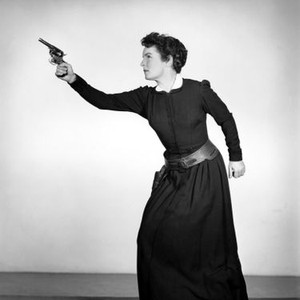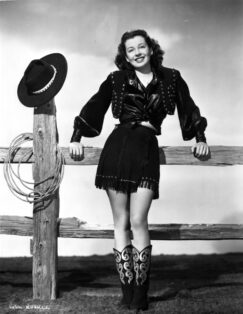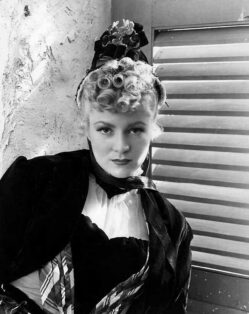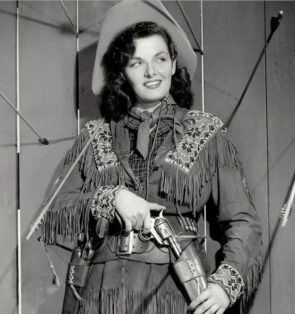
Rules for Teachers 1872

Enter now to win a copy of

Frontier Teachers: Stories of Heroic Women of the Old West


Teachers each day will fill lamps, clean chimneys.

Each teacher will bring a bucket of water and a scuttle of coal for the day’s session.

Make your pens carefully. You may whittle nibs to the individual taste of the pupils.

Men teachers may take one evening each week for courting purposes, or two evenings a week if they go to church regularly.

After ten hours in school, the teachers may spend the remaining time reading the Bible or other good books.

Women teachers who marry or engage in unseemly conduct will be dismissed.

Every teacher should lay aside from each pay a goodly sum of their earnings for their benefit during their declining years so that they will not become a burden on society.

Any teacher who smokes, uses liquor in any form, frequents pool or public halls, or gets shaved in a barber shop will give good reason to suspect their worth, intention, integrity, and honesty.

The teacher who performs their labor faithfully and without fault for five years will be given an increase of twenty-five cents per week in their pay, providing the Board of Education approves.


To learn more about the rules teachers had to follow in the Wild West read

Frontier Teachers: Stories of Heroic Women in the Old West


Don’t Smoke Em’ If You Got Em’

Enter now to win a copy of

Frontier Teachers: Stories of Heroic Women of the Old West


Walk into any saloon in the mid-1800s and chances were good a thick cloud of cigarette smoke stood between patrons and the bar. Smoking was prevalent in the Old West. It’s hard to imagine a cowboy on the trail without a cigarette in his hand or a wad of chewing tobacco in his mouth.

The effects of tobacco have been a topic of discussion among physicians since 1888 when Doctor Robert Koch, the leading authority on infectious diseases at the time, argued that the spitting of chewing tobacco was leading to a spread of tuberculosis.

A quartet of doctors from Dartmouth and Harvard weighed in on the subject of cigarette smoking in 1889. According to the October 4, 1889, edition of the Monroe Daily Independent physicians studying the proliferation of smoking in locations such as San Francisco, California and Denver, Colorado determined that “tobacco should be used moderately, if used at all.”  The four doctors involved in the study concluded that laborers and artisans could smoke all they want without injury, but that “brain-workers” exposed themselves to the risk of nervous collapse if they indulged in more than one cigarette a day.  The reasoning was that the life of a “brain-worker” tended to be sedentary and therefore their internal organs were not as strong as those who earned a living working with their hands.  Laborers were sturdy individuals whose heart could withstand the strain.

The physicians all agreed that the habit of smoking tobacco was a very pernicious one if indulged in by boys. “A complication of nervous disorders is produced by excessive tobacco smoking and boys ought not to smoke,” the doctors concluded in their findings. “Many boys started smoking when they were eleven or twelve years old. They began by picking up their father’s half-smoked cigar or by stealing his tobacco. When these boys come to be seventeen or eighteen years of age they are thin, pale-faced, short and their vitality is seriously impaired.”

In 1905, Doctor Sara B. Chase spoke to the issue of women smokers. “Tobacco in any shape has no good qualities at all in it for women. I found that women not only smoke, but chew tobacco. Many of the women that smoke today are teachers. The most injurious form of smoking is cigarettes.  It is the most injurious because tobacco is put right into the mouth and the nicotine poison in the tobacco is absorbed that way through the paper.”

The physician’s study concluded with the following warning, “A man would be a great deal better off if he would let tobacco alone. I know he would have more money because it is an expensive habit. Exactly how much nicotine is needed to poison a man is not known. A man who is a heavy smoker would probably require much more nicotine to poison him than a man who doesn’t smoke at all or one of nervous temperament.”

The results of numerous other studies would be posted in newspapers throughout the Old West from 1888 to 1912, but it didn’t stop a cowboy from rolling his own cigarette in corn shucks and smoking.


To learn more about some of the teachers that smoked and why, read

Frontier Teachers: Stories of Heroic Women of the Old West

Sister Blandina, The Outlaw’s Teacher

Enter now to win a copy of

Frontier Teachers: Stories of Heroic Women of the Old West


Sister Blandina stood over the pale, bullet-ridden body of a young gunman and mopped the sweat off his brow with a white cloth. He smiled benignly up at her, then turned his attention to the outlaws surrounding his bed. The renegades stared back at him quietly, all wearing grave expressions that reflected the severity of his physical condition.

Sister Blandina’s eyes shifted from the injured youth to the teenage boy standing next to him, tapping his holstered gun with his hat. “Sister Blandina,” the weak patient began, “Billy, our captain . . . .” Teenage outlaw Billy the Kid nodded politely to the nun. “We are glad to see you, sister, and I want to say, it would give me pleasure to be able to do you any favor.” For more than a month Sister Blandina had been caring for the wounded member of Billy the Kid’s gang known only as Happy Jack.

After being shot in the thigh he had been dumped in an abandoned adobe hut near Trinidad, Colorado, and left for dead. A boy from the school where Sister Blandina taught had found him and brought her to the location to help. In addition to fresh bandages and water, she had furnished the hurt desperado with food and linens. She had tended to his spiritual as well as physical needs, and for that she was rewarded with an audience with Happy Jack’s partner in crime. “He has steel-blue eyes and a peach complexion,” she recalled later in her journal. “. . . One would take him to be seventeen— innocent looking, save for the corners of his eyes, which tell a set purpose, good or bad.”

The purpose Sister Blandina had learned for one of Billy’s upcoming rides was definitely bad. According to Jack, the gang was going to kill the four physicians living in the area who had refused to call on the gunshot gang member. She was thinking of those men when she exchanged cordialities with Billy. “Yes, there is a favor you can grant me,” she said responding to his offer. “He reached his hand toward me,” she recounted later. “The favor is granted,” the Kid promised.


Frontier Teachers Cover


To learn about the favor Sister Blandina asked of Billy the Kid read

Frontier Teachers: Stories of Heroic Women of the Old West

Olive Mann, The Mission Teacher

Enter now to win a copy of

Frontier Teachers: Stories of Heroic Women of the Old West


Twenty-two-year-old Olive Isbell cradled a loaded rifle in her arms and scanned the hilly landscape surrounding the adobe school where she taught at the Santa Clara Mission in California. From far off she could hear a gun spit in swift five-syllable defiance, and she readied herself for a potential attack on the building. Twenty preoccupied students toiled away at the books and lessons in front of them. The exchange of gunfire was so routine it barely disturbed their studies. The mission was under fire from the Mexican Army, which was trying to reclaim land it believed belonged to Mexico.

Settlers scattered throughout the area had converged on the site for protection. More than 195 people with their wagon trains and pack animals spread out over various sections of the mission were busy loading weapons and preparing themselves for a fight. A number of those people had contracted typhoid fever. They were weak and at times unable to work, and they desperately needed medical attention.

Olive had gathered the healthy children together at a stable on the far side of the compound. It was her way of keeping the youngsters occupied and safe during the uprising. The one-room, makeshift schoolhouse was 15 feet square, thick with flies and fleas, with dirt floors and the stench of manure. A few crude tables and benches made from scraps of wood were used as desks and chairs for the pupils, who ranged in age from six to fourteen years old. A fire pit in the center of the room kept the class warm, and the smoke from the hearth escaped through a large hole in the roof.

Olive vowed to educate the pioneer class to the best of her ability and protect them from any harm. The gun that swung from the belt of her gingham dress when it wasn’t in her arms assured her students they were safe.


Frontier Teachers Cover


To learn all the dangers Olive had to protect the children from read

Frontier Teachers: Stories of Heroic Women of the Old West


Sarah Herring Sorin, Teacher in Tombstone

Enter now to win a copy of

Frontier Teachers: Stories of Heroic Women of the Old West


Tombstone is a historic western city in Cochise County, Arizona, United States

Among the many short news articles included in the October 5, 1886, edition of the Daily Tombstone was the announcement of a new teacher to the well-known Arizona town.  Miss Sarah Herring, her four siblings, and mother, Mary, arrived in Tombstone in 1882 to join her father, mine owner and lawyer Colonel William Herring.  Born on January 15, 1861, in New York, Sarah acquired her father’s desire to teach.  The colonel was employed as a public schoolteacher for many years prior to moving his family West.  She believed teaching children reading, writing, and arithmetic was crucial to providing stability and opportunity to their lives, and by extension bringing respectability to wild frontier communities.  A year prior to Sarah riding into Tombstone, the boomtown witnessed its most notorious event, the gunfight near the O.K. Corral.  She was convinced Tombstone’s rough and rugged reputation would improve by educating the youngsters who lived there.

Sarah was among several aspiring teachers summoned by the Board of School Examiners in December 1885 to take a test to determine their qualifications.  She was one of four teachers that day who obtained a territorial certificate necessary to work at the school.  Sarah began her career at the Tombstone school teaching first grade.  The February 21, 1886, edition of the Tombstone Daily Epitaph included a brief note about her accomplishment.  “Miss Herring is an excellent teacher,” the article read, “who has been tried in this city, and in her selection the Board of Trustees have acted wisely, and their appointment will be approved by every parent in this city.”

The Tombstone school board provided Sarah with the books she was to use in her classroom.  Among the limited materials supplied were Appletons’ School Readers, the Elementary Spelling Book by Noah Webster, and Ray’s New Primary Arithmetic.

If not for the sudden tragedy that struck Sarah and her family in October 1891, she might have been content to remain an educator for the rest of her life. To learn what caused Sarah to leave the teaching profession, pursue another endeavor, and make history read Frontier Teachers: Stories of Heroic Women of the Old West.


Mary Graves Clarke, the Sorrowful Teacher

Enter now to win a copy of

Frontier Teachers: Stories of Heroic Women of the Old West


Mary Graves Clarke, a dark-haired woman with a pale face and deep age lines marking her high cheekbones and small mouth, sat behind a wooden desk staring out a window that was slightly tinged around the edges with frost. The view of the distant snow-covered mountains that loomed over Huntington Lake in Tulare County held her attention for a long while.

The eleven students in the one-room schoolhouse where Mary taught pored over the books in their laps, quietly waiting for their teacher to address them. The pupils ranged in age from six to fifteen years. The majority of the class were girls, a few of whom couldn’t help themselves from whispering while casting worried glances at their distracted teacher. Finally, one of the children asked, “Mrs. Clarke, are you all right?” Mary slowly turned to the pupils and nodded. “I’m fine,” she assured them. “I was just remembering.”

According to the journal kept by one of Mary’s students, her “expression was one of sadness.” In spite of her melancholy spirit, she led the students through a series of lessons then dismissed them for recess. She followed them outside and for a moment was content simply to watch them play. A cool breeze drew her attention back to the mountains and drove her thoughts back to a time when she was a teenager, hopeful and happy.

If she had stayed in Indiana where she was born on November 1, 1826, she might have married the boy next door, taught students to read and write at a schoolhouse in her hometown, and lived out her days watching her children and grandchildren grow up on the family farm. Her life, however, took a different course when her family joined the Donner Party in 1846 and headed west.


Frontier Teachers Cover


To learn about Mary Graves and what she did to help save the survivors of the Donner Party read Frontier Teachers: Stories of Heroic Women of the Old West


Gertrude Simmons, The Yankton Sioux Teacher

Enter now to win a copy of

Frontier Teachers: Stories of Heroic Women of the Old West


Twenty-one-year-old Gertrude Simmons sat in a stiff-backed chair in her small room at the Carlisle Indian School in Carlisle, Pennsylvania, and stared out at the students hurrying to class.  The young men and women attending the institution were from Native American communities across the country.  None of them were wearing the traditional clothing of their people; all were dressed in suit jackets, pressed trousers, or high collar dresses with ruffled bottoms and matching tights.  The Indian children of various ages from six to sixteen had been transported to the facility as an “experiment in educating and assimilating Native American young people.”

Brigadier General Richard Henry Pratt, founder and superintendent of the boarding school was convinced his method of “civilizing” the Indian was the best.  “A great general has said that the only good Indian is a dead one, and that high sanction of his destruction has been an enormous factor in promoting Indian massacres,” General Pratt told those in attendance at the Nineteenth Annual Session of the National Conference of Charities and Correction held in Denver, Colorado, in June 1892.  “In a sense, I agree with the sentiment, but only in this: that all the Indian there is in the race should be dead.  Kill the Indian in him, and save the man.”

When Gertrude had been lured to General Pratt’s institutions at eight years old, she had no idea she would be forced to abandon the language she grew up speaking, have her long hair cut off, and made to dress like non-Indian children.  More than a decade after being enrolled at the White’s Manual Labor Institute in Wabash, Indiana, Gertrude applied to teach school to Native American boys and girls.  She had mixed feelings about her duties.  She wanted her pupils to learn how to read and write English but not at the expense of sacrificing their own culture.

Born in 1876, in Yankton, South Dakota, Gertrude was a Sioux Indian and was given the name Zitkala-Sa.  Her father was a white trader named Felker Simmons and her mother a Nakota Sioux called Tate I Yohin Win or Reaches for the Wind.  Her father passed away when she was still a toddler, and her mother became her sole support.


Contact

We would love to hear from you! Please fill out this form and we will get in touch with you shortly.

"*" indicates required fields

Email Confirmation

To learn more about Gertrude Simmons and her career in teaching read

Frontier Teachers: Stories of Heroic Women of the Old West


Eliza Stewart Boyd, the History Making Teacher

Enter now to win a copy of

Frontier Teacher: Stories of Heroic Women of the Old West


A half-dozen rosy-cheeked children, bundled in heavy coats and wearing woolen hats and gloves, tromped over the frozen ground toward the new schoolhouse in Laramie, Wyoming, on February 15, 1869.  Their teacher, thirty-six-year-old Eliza Stewart, happily greeted the pupils as they hurried into the building.  Their cold lips stretched into a smile as she ushered them toward a potbellied stove dutifully warming the room.  Seven other students would arrive before Eliza asked everyone to take their seats and the day’s lessons began.  She was excited to teach the boys and girls the fundamentals that would better their lives.  Her teaching style was friendly and inviting, and the class was eager to be educated.

Eliza had been practicing her trade for more than a decade before becoming the first public schoolteacher in Albany County, Wyoming.  A tragedy in her life at the age of thirteen dictated her future calling.  Her mother had died shortly after giving birth to her eighth child.  Eliza, who was the oldest, took on the responsibility of caring for her brothers and sisters.  Part of that care involved teaching her siblings how to read and write.  She realized then she had a talent for teaching and decided to pursue her passion when she got older.

Eliza was born on September 8, 1833, in Crawford County, Pennsylvania.  She excelled in school, and, after she graduated, she attended the Washington Female Seminary in Washington, Pennsylvania.  Eliza ended her four years there in 1861 as class valedictorian.  The speech she gave to her fellow students at the graduation ceremony was written in the form of a poem and aptly expressed the principles that guided her life.

“We, too, go forth at duty’s call, knowing there’s much to do; the harvest truly plenteous is, while laborers are few.  For anyone who in this world would well perform her part must strive not only to do good but must be good at heart.”

With a degree in hand, Eliza returned to Crawford County to teach students in her hometown.  After seven years, she decided she wanted to move west to help educate the influx of children settling in the new frontier with their ambitious parents.  Eliza arrived in Laramie, Wyoming, on December 16, 1868.  When news that a teacher had come to the wild town, leaders sought her out to offer her a position at the school which was soon to be built.  She gladly accepted and less than three months later started work.  Her students barely had time to fully appreciate her flair for teaching when she was selected to take part in a history making event.


To learn more about the history making event Eliza was asked to take part read

Frontier Teachers: Stories of Heroic Women of the Old West

Madam Benny Fowler’s Open Secret

Enter now to win a copy of

An Open Secret:

The Story of Deadwood’s Most Notorious Bordellos along with a Kindle!


In late 1907, Madam Benny Fowler was in her room at the Mansion Hotel and Bar preparing for an evening out. She and one of her friends had plans to go to dinner and attend a party afterward. Benny had traveled to Deadwood from Belle Fourche where she operated a brothel at the location. The reason for the trip was twofold. Benny wanted to check on her Deadwood bordello and she wanted to get away from a man who had been bothering her.

Prentice Bernard, alias Vinegar Rowan, a cowpuncher and sheepherder from Montana, had spent time with Benny in Belle Fourche and become infatuated with her. He challenged customers who visited her, threatening to beat the men if they didn’t stay away. She hoped when he passed through Belle Fourche again and learned she wasn’t there he would ride on and forget her. That wasn’t the case, however. When Vinegar learned where Benny had gone, he followed her. He was in trouble with the law in Deadwood a few times because he wouldn’t leave her alone. He was crazy with jealousy over the men she met and, on December 7, 1907, pulled a knife on a bartender whom he overheard talking about Benny and assaulted a cook named Dick Moran for the same thing.

Frustrated with Vinegar’s actions and his relentless pursuit, Benny hurried back to Belle Fourche. Again, she hoped her clear rejection would persuade him to drop his fixation and move on with his life. After a day with no sign of Vinegar, Benny thought the coast was clear and returned to Deadwood to continue her visit with friends there. She had no way of knowing that Vinegar had never left Deadwood. He was so distressed over the way Benny had treated him he decided to get drunk and stay drunk. The manager of the Mansion Hotel and Bar where Vinegar was doing most of his drinking demanded the rancher give him his gun while he was there. Vinegar did so but asked several times for the weapon to be returned. His request was denied because he was considered too drunk to handle a weapon.


An Open Secret

To learn more about soiled doves like Benny Fowler read

An Open Secret: The Story of Deadwood’s Most Notorious Bordellos

Jessie Haymen’s Open Secret

Enter now to win a copy of

An Open Secret:

The Story of Deadwood’s Most Notorious Bordellos along with a Kindle


Jessie Hayman turned the flame down in the gas lamp sitting on a giant fireplace mantle in the parlor of her well-known brothel. Apart from the lit, red lantern hanging off the porch, the room was blanketed in darkness. It was approaching four in the morning and all of the home’s boarders were settled in their rooms with their overnight guests. Madam Hayman’s palatial bordello was one of the most popular businesses in San Francisco in 1906. Thirty attractive women of various ages and nationalities worked for Jessie. The income earned from the stable of employees was more than $4,000 a night. Consequently, Jessie was one of the wealthiest madams in the city.

As Jessie went about the routine of closing up shop, a heavy knock on the front door startled her. It was too late for callers but not out of the realm of possibility. As she made her way to the foyer she removed a pistol from a pocket of her dress. She cocked the gun just as she opened the door and raised it even with the face of an overweight man standing opposite her. The stunned man threw his hands up and took a step back. “If you’re a gentleman caller who got a late start, please forgive me,” Jessie stated firmly. “But if you’ve come to rob the place you’ve got to get past me first.”

After apologizing for the intrusion and assuring Jessie that he was merely interested in the company of one of her ladies, she let the frazzled man inside. Before Jessie had an opportunity to ask about his preferences he hurried off up the stairs. He seemed to know exactly where he was going. “Guess he’s been here before,” she said aloud to herself. “Wouldn’t do to shoot a regular,” she added playfully.


An Open Secret and Kindle Giveaway


To learn more about women like Jessie Haymen read

An Open Secret: The Story of Deadwood’s Most Notorious Bordellos