One of the first stops on the book tour at the end of the month is Scottsdale’s Museum of the West.
Thanks to Jeffrey White and David Scholefield for the invitation.
The talk and signing is scheduled for February 24 at 2:30 P.M.


Not too long ago, According to Kate: The Legendary Life of Big Nose Kate, Love of Doc Holliday won gold at the Will Rogers Medallion Awards for Best Western Biography. It was also honored with a New Mexico/Arizona Book Award and the Elmer Kelton Book Award from the Academy of Western Artists. I’d like to think Kate would be proud. I know I’m grateful to have been able to have written her story. There are others who see value in Kate’s tale and the makers of Big Nose Kate’s Whiskey falls into that category. They recently purchased several copies of According to Kate to distribute with their drink. I’ll be promoting Big Nose Kate’s Whiskey along with According to Kate on an upcoming book tour.

Hanging on the wall in my office is a framed article I wrote for True West magazine about Kate Elder. I didn’t have it framed because of the article, I had it framed because of the artwork done by Bob Boze Bell. Bell’s work has always been awe-inspiring to me and the artwork he did for the article is mesmerizing with its technical confidence. It suits Kate.
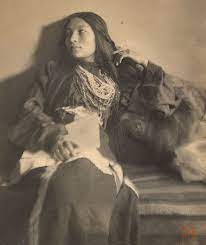
Over the last fifteen years, I’ve had the pleasure of being able to write a handful of articles for True West about women of the American frontier. The magazine is a treasure. I’m looking forward to contributing another article about legendary lawman Bill Tilghman and his wife author Zoe Tilghman. I walked away from my visit with the Tilghman’s family last month with information no one has seen before. I’ll be sharing what I learned in the new book about the pair scheduled to be released in the winter of 2024. I hope Bob Boze Bell provides the artwork for the future True West article. I should be so lucky.
In the meantime, enter now to win a copy of According the Kate: The Legendary Life of Big Nose Kate, Love of Doc Holliday.

1859 – One of the oldest known copies of the Bible, “The Codex Sinaiticus” (Sinai Bible), is seen in Egypt by Constantin von Tischendorf who takes the manuscript home with him.

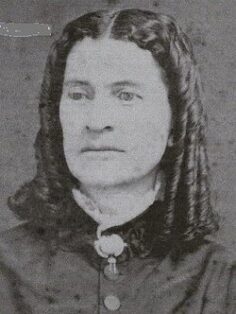
According to Kate: The Legendary Life of Big Nose Kate, Love of Doc Holliday is writer Chris Enss’ latest exploration of the lives of women who shaped the West. Mary Kate Cummings, known as Big Nose Kate among many other aliases, claimed to witness the shoot-out at the OK Corral as well as other famous moments in history alongside her longtime paramour, the dentist-turned-gunfighter John Henry “Doc” Holliday. For years, Cummings collected letters, her own written musings on her life of adventure, and her accounts of the men she knew and the events she claimed to have witnessed. She always hoped that a publisher would pay her to tell the story of her life — but no book emerged while she was alive. In this biography, Enss delves into Cummings’ archives, allowing her version of events to shine.
Big Sky Journal


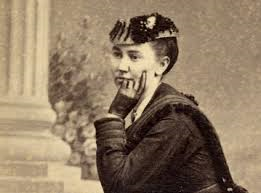
Doc Holliday’s paramour Kate Elder could never get a publisher to give her the big bucks she demanded to tell the story of her life, but that didn’t mean she didn’t collect material she wanted to use in a biography. Over the fifty years Mary Kate Cummings-Elder, alias Big Nose Kate, traversed the West she saved letters from her family, musings she had written about her love interests, and life with the notorious John Henry Holliday. Using rare, never-before published material Big Nose Kate stockpiled in anticipation of writing the tale of her days on the Wild Frontier, the definitive book about the famous soiled dove has finally been told.
Kate claims to have witnessed the Gunfight at the OK Corral and exchanged words with the likes of Wyatt Earp and Josephine Marcus. There’s no doubt she embellished her adventures, but that doesn’t take away from their historical importance. She was a controversial figure in a rough and rowdy territory. What she witnessed, the lifestyle she led, and the influential western people she met are fascinating and represent a time much romanticized.

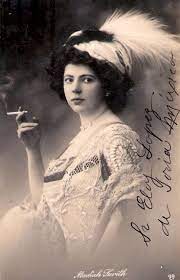
In 1849, women of easy virtue found wicked lives west of the Mississippi when they followed fortune hunters seeking gold and land in an unsettled territory. Prostitutes and female gamblers hoped to capitalize on the vices of the intrepid pioneers.
More than half of the working women in the California during the 1850s were prostitutes. At that time, madams – those women who owned, managed, and maintained brothels – were generally the only women out west who appeared to be in control of their own destinies. For that reason alone, the prospect of a career in the “oldest profession” – at least at the outset – must have seemed promising.
Often referred to as “sporting women” and soiled doves,” prostitutes mostly ranged in age from seventeen to twenty-five, although girls as young as fourteen were sometimes hired. Women over twenty-eight years of age were generally considered too old to be prostitutes.
Rarely, if ever, did working women use their real names. In order to avoid trouble with the law as they traveled from town to town, and to protect their true identities, many of these women adopted colorful new handles like Contrary Mary, Little Gold Dollar, Lazy Kate, and Honolulu Nell. The vicinities where their businesses were located were also given distinctive names. Bordellos and parlor houses typically thrived in that part of the city known as “the half world,” “the badlands,” “the tenderloin,” “the twilight zone,” or the red-light district.”
The term “red-light district” originated in Kansas. As a way of discouraging would-be intruders and brazen railroad workers around Dodge City began hanging their red brakemen’s lanterns outside their doors as signal that they were in the company of a lady of the evening. The colorful custom was quickly adopted by many ladies and their madams.
Generally speaking, a prostitute’s class was determined by her location and her clientele. High-priced prostitutes plied their trade in parlor houses. These immense, beautiful homes were well furnished and lavishly decorated. The women who worked at such posh houses were impeccably dressed, pampered by personal maids, and protected by the ambitious madams who managed the business. In general, parlor houses were very profitable. Madams kept repeat customers interested by importing women from France, Russia, England, and the East Coast of the United States. These ladies could earn more than $25 a night. The madams received a substantial portion of the proceeds, which were often used to improve the parlor house or to purchase similar houses.
The lifestyle was, without a doubt, a dangerous one, and many women despised being a part of the underworld profession. As Nebraska madam and prostitute Josie Washburn noted in 1896: “We are there because we must have bread. The man is there because he must have pleasure; he has no other necessity for being there; true if we were not there the men would not come. But we are not permitted to be anywhere else.”
Entertaining numerous men often resulted in assault, unwanted pregnancies, venereal disease, and even death. Some prostitutes escaped the hell of the trade by committing suicide. Some drank themselves to death; others overdosed on laudanum. Botched abortions, syphilis, and other diseases claimed many of their lives as well.
In the late 1860s, a concern for the physical condition of prostitutes – and moreover, for the effect their poor health was having on the community at large – was finally addressed. Government officials, alerted to the spread of infectious illnesses, decided to take action against women of ill repute. At a public meeting in New York City, a bill was introduced that was aimed at curtailing the activities of prostitutes who did not pass health exams. The goal of the bill was to stop the advance of what morally upright citizens termed the “social evil.”

Last week at this time I was manning an author’s table at Art of the Cowgirl in Queen Creek, Arizona. The night before I was in Prescott. I’d been invited to give a presentation at the Western Heritage Center and it was a wonderful experience. In addition to meeting my dear friends Kat and Larry Martin at the event and staying the night at their place, I had an opportunity to meet some of the most kind and generous people at the museum. Prior to giving lectures about women of the American frontier, I was a standup comic. I worked my way through college doing standup at a strip club. Don’t ask me why they needed a comic at a strip club. I have no idea who thought that would work. But it did. Not a night went by that I didn’t hear, “Hey, get those naked women off the stage and bring up a comedian.” And then I would come out.
The good people of Prescott allowed me to work a few bits of comedy into my talk about the Old West. It was a grand time and I was grateful for the opportunity. True West magazine’s senior editor Stuart Rosebrook was instrumental in gaining the Western Heritage Center invite. Rosebrook is one of those people I count on for sound advice when it comes to the subject matters I tackle in the books I write. Had it not been for him I probably wouldn’t have written According to Kate: The Legendary Life of Big Nose Kate, Love of Doc Holliday nor would I have agreed to write Zoe Tilghman’s tale. There are a lot of so-called historians out there who don’t want you to write on certain subjects and they aren’t shy about letting you know. I wish everyone had someone in their corner like Stuart Rosebrook. And I wish everyone could travel to Prescott and meet the fine people who support the Western Heritage Center. What a time I had!