The Doctor Who Make Housecalls

Enter the Holiday Giveaway now for a chance to win a copy of

The Doctor Wore Petticoats: Women Physicians of the Old West


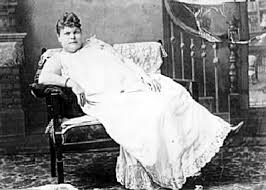
Nellie Mattie MacKnight

The Beloved California Physician

“Taken as a whole they will probably never amount to much unless the experience of the past belies that of the future. While this is so, yet no person of extended views or liberal ideas can desire to see the doors of science closed against them.”

Doctor R. Beverly Cole, prominent male physician in a speech delivered to members of the California Medical Society -1875Eighteen year-old Nellie Mattie MacKnight stepped confidently into the spacious dissecting room at San Francisco’s Toland Hall Medical School. Thirty-five male students stationed around cadavers spread out on rough board tables, turned to watch the bold young women enter. The smell of decomposing corpses mixed with tobacco smoke wafting out of the pipes some of the students were puffing on assaulted Helen’s senses. Her knees weakened a bit as she strode over to her appointed area, carrying a stack of books and a soft, rawhide case filled with operating tools.


To her fellow students Nellie was a delicate female with no business studying medicine. Determined to prove them wrong she stood up straight, opened her copy of Gray’s Anatomy and removed the medical instruments from the case.

It was the spring of 1891. She nodded politely at the future doctors glowering at her. A tall, dapper, be speckled professor stood at the front of the classroom watching Nellie’s every move. The sour look on his face showed his distain for a woman’s invasion into this masculine territory. “Do you expect to graduate in medicine or are you just playing around,” he snarled? The blood rushed to Nellie’s face and she clinched her fists at her side. She had expected this kind of hostile reception when she dared to enroll, but was taken aback just the same. “I hope to graduate,” she replied firmly. Disgusted and seeing that Nellie could not be intimidated, the professor turned around and began writing on a massive chalk board behind him. The students quickly switched their attention from Nellie to their studies. Nellie grinned and whispered to herself, “I will graduate…and that’s a promise.”

Nellie got her resolute spirit from her mother. Olive Peck MacKnight raised her daughter virtually alone, enduring many trials while providing for her only child.

Nellie was born to Olive and Smith MacKnight on December 15, 1873 in Petrolia, Pennsylvania. She was one of three children for the MacKnights. Their son and first daughter died shortly after they were born.

Olive was very protective of her surviving child and Smith, a land surveyor by trade, constantly showered his “only little girl” with attention. According to her autobiography Nellie’s early years were happy ones. She was surrounded by the love and affection of her parents and numerous extended family members.

In 1878, Smith MacKnight contracted a contagious case of gold fever that drove him to leave his wife and child and head West. Before he left he sent Olive and Nellie to live with his mother and father in New York. He promised to send for the pair once he had found gold. Olive was distraught about having to move from their home and the prospect of being without her husband. It was a heartbreaking experience from which Olive never fully recovered.

By the time Smith’s first letter from California arrived, five year-old Nellie and her mother had settled into life on the MacKnight farm. The absence of Smith made Olive quiet, withdrawn and despondent. Outside of her daughter she seemed content to be left alone. Nellie on the other hand was outgoing and cheerful. She was particularly close to her grandmother whose character was much like her own. Grandmother MacKnight taught Nellie how to cook and quilt and how to prepare homemade remedies for certain illnesses.

Her grandfather and uncle taught her how to ride a horse and care for animals.

As Olive slipped further into depression, Nellie became more attached to her grandparents. A letter from Smith announcing that he had purchased a mine with “great potential” momentarily lifted Olive’s spirits and gave her hope that they might be together soon. Several days later news that Olive and Nellie would have to wait for the mine to pay off before Smith sent for them left devastated all over. The dispirited woman nightly cried herself to sleep.

The stability Nellie had come to know at her grandparent’s home ended abruptly one evening in October of 1880. Her grandmother contracted typhoid fever and died after a month of suffering with the illness. Helen watched pallbearers carry her grandmother’s wooden coffin into the cemetery. She wept bitterly wishing there had been something she could have done to save her. The subsequent death of her favorite Uncle, suffering from the same ailment, served as a catalyst for her interest in healing.

Fearing for the physical well being of her daughter, Olive moved Nellie to her father’s home in Madrid, Pennsylvania. Any hopes the two had that their circumstances would improve at their new location were dashed when Olive became sick and collapsed. The high temperature from the typhoid fever mad Olive delirious. She didn’t recognize her surroundings, her family or her child and cried out constantly for her husband.

Olive recovered after several weeks, but the fever and the sadness of being separated from Smith, had taken its toll. Her dark hair had turned gray and the dark hollows under her eyes were a permanent fixture.

Smith’s mine in Bodie, California had still not yielded any gold and he was unable to send any money home to support his family. In order to keep herself and Nellie fed and clothed, Olive took a job at the Warner Brothers’ Corset Factory. Nellie attended school and excelled in all her subjects, showing an early aptitude in medicine. She poured over books on health and the human body.

When Nellie wasn’t studying she spent time trying to lift her mother’s melancholy spirit. Letters from Smith made Olive all the more anxious to see her husband again and even more broken hearted about having to wait for that day to come.

She began using laudanum, a tincture of opium used as a drug, to ease the pains she had in her hands and neck. The pains in her joints was a lingering effect of the typhoid fever. Olive developed a dependence on the drug and one night overdosed. She left behind a note for her daughter that read, “Be a brave girl. Do not cry for Mamma.” Smith was informed of his wife’s death, and although he was sad about the loss, he opted to continued working his claim.

The day after Olive was laid to rest, ten year old Nellie was sent back to New York to live with her father’s brother and his wife. Nellie’s uncle was kind and agreeable, but her aunt was not. She was resentful of Nellie being in the home and treated her badly. Nellie endured her aunt’s verbal and physical abuse for two years until her mother’s sister invited Nellie to live with her at her farm four miles away.

Nellie adapted nicely to the congenial atmosphere and learned a great deal from her aunt about primitive medicine. After a short time with her aunt, Nellie finally received word from her father. Smith was now living in Inyo County, California and working as an assayer and surveyor. Nine years of searching for gold had turned up nothing. Smith decided to return to his original line of work and he wanted his daughter by his side.

Fourteen year-old Nellie met her father on the train in Winnemucca, Nevada. Smith agreed to meet with her there and escort her the rest of the way to his home. Although his face was covered with a beard and his eyes looked older, Nellie knew her father when she saw him. Smith, however, did not instantly recognize his child. He wept tears of joy as she approached him. “You’re so grown up!” he told her. Little time was spent before the pair were made to take their seats to continue their journey. Father and daughter had a long way to travel before they reached Smith’s cabin in Inyo County. As the train sped along the tracks, Nellie was in awe of the purple blossoming alfalfa that grew along the route and of the grandeur of the Sierra Mountains.

Nellie continued to be impressed with the sights and people she encountered during their two day trip to the homestead in Bishop. Smith promised his daughter a happy life among the beauty and splendor of the California foothills. Nellie recorded in her journal how exciting, gay, and carefree she found her new home to be.

“The streets of the town were like a country road, lined with tall poplars and spreading cottonwoods – quick growing trees marked boundary lines and gave shelter to man and beast. Their leaves were pieces of gold in the sunshine.”

Nellie MacKnight – 1887


Go Back to School…Way Back

Visit www.chrisenss.com and enter the Holiday Giveaway for a chance to win a copy of the first edition of

Frontier Teachers: Stories of Heroic Women of the Old West


The brand-new edition of Frontier Teachers: Stories of Heroic Women of the Old West is scheduled to be released soon.

Between 1847 and 1858, more than six hundred women teachers traveled across the untamed frontier to provide youngsters with an education, and the numbers grew rapidly in the decades to come, as women took advantage of one of the few career opportunities for respectable work for ladies of the era. Enduring hardship, the sixteen women whose stories are movingly told in the pages of Frontier Teachers demonstrated the utmost dedication and sacrifice necessary to bring formal education to the Wild West. As immortalized in works of art and literature, for many students their women teachers were heroic figures who introduced them to a world of possibilities―and changed America forever.

Spend Christmas with the Lady and the Mountain Man

Enter the Holiday Giveaway now for your chance to win a copy of

The Lady and the Mountain Man:

Isabella Bird, Rocky Mountain Jim, and their Unlikely Friendship


Isabella Bird Cover


Isabella Bird is one of Colorado’s favorite historical figures. The fearless Englishwoman rode all over Colorado’s mountains in 1873, in bad weather and by herself. “The Lady and the Mountain Man” is a definitive treatment of Bird’s life.

Bird was an invalid, and doctors recommended sea voyages to improve her health. She was intrigued with the American West, and once healed, she came here by herself to explore the mountains. She settled in Estes Park where she met infamous mountain man Jim Nugent. Mauled by a grizzly, Mountain Jim was scarred and missing an eye, but Bird found him handsome. He had a reputation for violence, particularly when he was drunk, and Bird was warned against him.

The two fell in love, but a future together was not to be.

In this detailed account of the star-crossed lovers, the author — who is known for her books on Western women — plumbs both Colorado and British resources. In Enss’ hands, Bird is not a female oddity, but a woman of strength, courage, and loyalty.

The Denver Post – September 2022


Wanted: A Good Teacher

Visit www.chrisenss.com and enter the Holiday Giveaway for your chance to win a copy the

Doctor Wore Petticoats:  Women Physicians of the Old West.


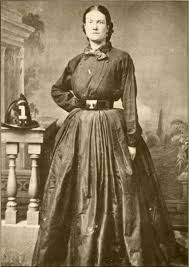
On Wednesday, January 25, 1911, physicians across the world gathered at the great hall at the Academy of Medicine in New York to honor America’s first woman doctor, Elizabeth Blackwell.  The tenacious pioneer in the fight for the right of women to study and practice medicine had died nine months prior to the event honoring the contributions she made to the field.  The audience was composed largely of women, all of whom owed a debt of gratitude to Elizabeth Blackwell.

Born in Bristol, England on February 3, 1821, Elizabeth immigrated to America in 1832 with her parents.  Her desire to attend school and study medicine began at an early age.  Elizabeth was twenty-six years old when she was admitted to New York’s Geneva College in 1847.  She had applied to twenty institutions before being accepted as a medical student at the prestigious university.  The male students there believed Elizabeth’s request was a joke and agreed to let her attend the classes based on that idea, but the daring young woman was not playing around.  She prevailed and triumphed over taunts and bias while at school to earn her degree only two years after enrolling.

While in her last year of school, she treated an infant with an eye infection.  As she was washing the baby’s eye with water, she accidentally splattered the contaminated liquid in her own eye.  Six months later she had the eye removed and replaced with a glass eye.  Hospitals and dispensaries refused to admit her to practice at their facilities, and she was denounced by the press and from the pulpit.

After graduating in 1849, Elizabeth found herself socially and professionally boycotted.  Public sentiment was so against her for pursuing a career in a field deemed unladylike that she could not find a place to live anywhere in New York.  Using funds given to her by her family she built her own home.

In 1854, she borrowed the capital needed to build the first hospital for women in the country.  Most of the patients she worked with were poor.  Patients were charged a mere $4 a week for services that would cost them $2,000 at another facility.  Elizabeth also founded the Women’s Medical College of New York, and, when the Civil War broke out, she assisted in launching the Sanitary Aid Association.  In addition to maintaining her practice and creating benevolent community services, Elizabeth also wrote a number of books on the subject of medicine.  Two of her most popular titles were Pioneer Work in Opening the Medical Profession for Women and Essays in Medical Sociology. 

By the turn of the century, Elizabeth Blackwell had retired from medicine and returned to England.  In the spring of 1907, she was injured in a fall from which she never fully recovered.  She died on May 31, 1910, from a stroke.  The epitaph below the Celtic cross which marks her grave at Kilmun Churchyard on the Holy Loch, near Clyde, includes these words: “The first woman in modern times to graduate in medicine (1849) and the first to be placed on the British Medical Register (1859).


Christmas with a Cowgirl

Visit www.chrisenss.com and enter the Holiday Giveaway for your chance to win a copy of

Along Came a Cowgirl:

Daring and Iconic Women of the Rodeos and Wild West Shows

Trick Rider Dorothy Morrell

“I rode my first horse on a bet,” admitted World Champion cowgirl Dorothy Morrell in 1917. “That I am champion woman rider of the world today was due to an accident, or rather a dare.” At the age of twenty-four Dorothy attended a wild west exhibition in Fresno, California, and was mesmerized by the women bronc riders. A cowboy spectator named Skeeter Bill Robbins, who was seated next to her at the event, bet she could ride one of the broncs. Skeeter had met Dorothy in Montana and witnessed her extraordinary riding skills. Even after she told him she’d never ridden a bucking horse in her life, Skeeter insisted she had what it took and dared her to try it. Dorothy reluctantly agreed.

The mustang’s name was Lillian Russell. “When I was fairly seated someone gave a whoop and the horse bowed its back and began to lunge,” she told a newspaper reporter years later. “With every impact there was a terrific jolt and I thought that every bone in my body would be thrown out of joint. Had it not been for Skeeter though, I think I surely would have been thrown. ‘Every time that cayuse hits the ground,’ he told me, ‘Raise your hat high and when he comes up hit him between the ears.’ The advice saved the day, for it kept me erect and well forward and going with the animal when he was in the air. That’s all there is to riding a bronc.”

Born Caroline Eichhorn in Russia in 1888, Dorothy immigrated to Canada with her family in 1889 and settled in Winnipeg. She came to the United States in 1912 and for several years lived near Helena, Montana. She learned to ride working as a mounted mail carrier for the Blackfeet Indians.

Shortly after accepting Skeeter’s bet and realizing she could indeed ride bucking broncos, Dorothy embarked on a career with the rodeo. She signed on with the 101 Ranch show and there perfected the art of riding fractious horses. In 1914, she won the title of Women’s World Champion Bucking Horse Rider at the Cheyenne Frontier Days rodeo and married Skeeter Robbins. Skeeter was also a bronc rider and the couple traveled together participating in rodeos from Dallas to London.

Dorothy and Skeeter spent time in Hollywood during the mid-1920s, where they worked as horseback riding extras and stunt doubles on several Western films. They also performed in vaudeville acts and in circuses. Skeeter was killed in a car accident in 1933. Dorothy was in the vehicle with him and was seriously injured. She returned to the rodeo circuit the following year winning awards in trick riding and roping and relay racing.

When Dorothy retired from professional riding, she returned to Canada where she enrolled in college and eventually became a nurse.

“I love being a cowgirl,” she told a reporter when she first started riding in rodeos. “That, perhaps, is because I love horses – horses, and babies. I often wish I could be a horse. Of course, I have been a baby once and therefore have no desire to be a baby again. But I would dearly love to be a horse!”

Dorothy Morrell died in Ontario in 1976 at the age of eighty-eight


For the Love of Margaret Dumont

Enter the Christmas giveaway now for a chance to win a copy of

Straight Lady:

The Life and Times of Margaret Dumont, “The Fifth Marx Brother”


Straight Lady Book Cover


“I’ve been a longtime Marx Brothers fan for 50 years. I’ve always been curious about Groucho’s foil, the great Margaret Dumont. Was she in on the jokes? Did she understand the jokes? All of them? ANY of them? Straight Lady: The Life and Times of Margaret Dumont, “The Fifth Marx Brother,” by Chris Enss and Howard Kazanjian set my mind at rest with everything I’d been curious about for years. In addition to giving me the “story-behind-the-story” on Dumont, I also learned along the truth behind several rumors and falsehoods regarding this grand dame of film. After all, she appeared in fifty-some movies between 1917 and 1964. Then, there was Groucho! Oh my, if you’re any kind of Marx Brothers fan, and who in their right mind is not, you’ll love and cherish this book. It’s one of those reads that when you put it away, you’re done knowing full well you’ll want to read it again, and again…”

Jerry Puffer, KSEN Radio


Bring a Western Legend Home for the Holidays

Bring a Western Legend Home for the Holidays


For the book lover on your Christmas list, select from the many stories about heroic women of the American frontier by New York Times bestselling author Chris Enss.  Whether it’s tales about the first female detectives with the Pinkterton Detective Agency, the ladies who helped build the railroad, comic actresses on stage and screen, or Western film stars John Wayne, Roy Rogers and Dale Evans, there’s something in the Enss catalog of books to interest everyone.

All the titles are available at bookstores everywhere, on Amazon.com, Barnes & Noble.com, and nbnbooks.com, and farcountrypress.com.

Starting Monday, December 5th, visit www.chrisenss.com and participate in the book giveaway contest.  Find the holiday decorated cowgirl boots within the site to register to win any two books of your choice from the catalog of Chris Enss books.


Merry Christmas!