Launching Straight Lady

Join NY Times author Chris Enss, and Raiders of the Lost Ark and Revenge of the Jedi producer Howard Kazanjian, as they launch their new book Straight Lady: The Life and Times of Margaret Dumont, “The Fifth Marx Brother.” Refreshments will be served, and Marx Brothers’ films will be shown.

The launch will be held on Friday, October 14 at the Lamanda Park Branch Library at 140 South Altadena Drive Pasadena, CA. 91107 from 6 P.M. to 8 P.M.


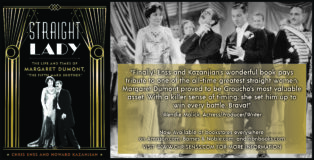
Straight Lady Book Cover

Arizona Daily Star Review of Straight Lady

Enter now to win a copy of

Straight Lady:

The Life and Times of Margaret Dumont, “The Fifth Marx Brother”


“The Marx Brothers exploded on the scene and screen in the 1930’s. Their vaudevillian antics brought needed comedic relief during the crushing weight of the Great Depression. The boys took the usual slapstick routines and amped up their deliveries with snide comments, slurs and sarcasm. Groucho and the boys needed a foil for their routines. Veteran actress Margaret Dumont was brilliant in that role.

Her portrayals of oblivious dowagers were a perfect fit for the madcap Marx Brothers, in particular, the ad libbing sardonic Groucho. She appeared in all of their biggest hits; ie., “Duck Soup”, “A Day at the Races”, A Night at the Opera”. Her role was to be oblivious to the taunts hurled at her character. In other words, a straight lady.

Collier magazine featured Margaret in 1937. She had received an Actor’s Guild Award for Best Actress for her performance in “A Day at the Races”, which grossed 5 million, an astonishing figure at the time.  The headline for the article was “Lady Who Assists the Homicidal Comedy of the Marx Brothers”.

Margaret Dumont had a complete life; Enss and Kazanjian’s research fill in all the voids. “The Straight Lady” digs deep and produces an revealing chapter in the amazing early success of the movie business. For those readers who enjoy a fascinating story, this book will fit the bill. For those who love Hollywood history, it is a must read.


Straight Lady Book Cover


To learn more about Margaret Dumont read Straight Lady


Library Journal Review of Straight Lady

Enter now to win a copy of

Straight Lady:

The Life and Times of Margaret Dumont, “The Fifth Marx Brother”


Straight Lady Book Cover


PERFORMING ARTS

Straight Lady: The Life and Times of Margaret Dumont, “the Fifth Marx

by Chris Enss & Howard Kazanjian

Lyons: Globe Pequot. Oct. 2022. 208p. ISBN 9781493060405. $30. FILM

COPY ISBN

Frequent collaborators Enss and Kazanjian (authors of the Roy Rogers and Dale Evans joint biography The Cowboy and the Señorita and The Young Duke: The Early Life of John Wayne) offer film buffs an engaging biography of Brooklynite Margaret Dumont, born Daisy Baker (1882–1965). She is most famously remembered as the deadpan comic foil—a stereotypical stately dowager whom Groucho played off of—in seven of the 13 movies by the Marx Brothers. Enss and Kazanjian argue that Dumont’s Marx Brothers roles were characterized by the actress’s dignity, even as the films poked fun at her age and weight. Dumont, often bedecked in an opera-length necklace, trained in and performed opera before transferring to stage, film, and TV variety shows. She had retired in 1910, after marrying a millionaire industrialist, but when he died during the 1918 flu pandemic, she returned to acting and worked until her death.

VERDICT While comedy fans will enjoy the reprised storylines and biographical vignettes, this multileveled work also offers media scholars a deeper look into Marx Brothers films in which Dumont was epochal and reflective of the era’s gender standards and mannerisms.

Groucho Marx & Straight Lady Margaret Dumont

Enter now to win a copy of

Straight Lady:

The Life and Times of Margaret Dumont, “The Fifth Marx Brother”

“Emily, I have a confession to make. I really am a horse doctor. But marry me, and I’ll never look at another horse.” Groucho Marx to Margaret Dumont in A Day at the Races.

Introducing Straight Lady Margaret Dumont

Enter now to win a copy of

Straight Lady:

The Life and Times of Margaret Dumont, “The Fifth Marx Brother”


Straight Lady Book Cover


“In the world of comedy, being a ‘Straight man’ isn’t easy. You have to set up the comedian for his next joke and give the proper reactions but being a ‘Straight Woman’ is the toughest job there is. A woman must tower over the comedian in attitude, deflecting the insults, and be his perfect foil. In movie after movie, Margaret Dumont was Goliath to Groucho Marx’s David; imperious, with just the right touch of snobbery for Groucho to deflate, but always standing her ground against his barbs while being wonderfully funny. Groucho actually claimed that Miss Dumont never understood his jokes, thinking it was all nonsense. And those straight-faced, dismissive reactions made her all the funnier. They were the perfect team, and now this book gives this superb comic actress a long over-due tribute to her talents.”

C. Courtney Joyner, Award-winning film historian and screenwriter

Along Came a Cowgirl and Mamie Francis

Enter now to win a copy of

Along Came a Cowgirl:

Daring and Iconic Women of the Rodeo and Wild West Shows


Cowgirl Mamie Francis sat atop her horse, Babe, waiting for the director of California Frank Hafley’s Wild West show to let her know when the program began. Mamie and Babe were perched on a wooden platform thirty feet in the air over Coney Island, New York, looking down at the audience in the grandstands. Directly below the platform was a forty-foot tank filled to overflowing with water. It was the summer of 1908.

Mamie gently urged Babe to the edge of the platform, both stood like a beautiful statue surveying the landscape before them. After receiving the signal, Mamie coaxed Babe forward. The horse pushed away from the boards and lunged outward into space. Moments later, rider and horse entered the water in the tank with a giant splash. When they came to the surface, the audience erupted in applause. Mamie patted Babe’s neck as the horse carried her up the ramp and out the tank.

Born in Nora, Illinois, on September 8, 1885, to Charles and Anna Ghent, and given the name Elba Mae, Mamie was an accomplished equestrienne by the time she turned sixteen. Her parents moved from Illinois to Wisconsin when she was a baby. Her mother worked for a farmer who owned several horses, and it was there she learned how to ride and use a gun to hunt. When Pawnee Bill’s Wild West show stopped in Kenosha, Wisconsin, for a two-night performance, Mamie was in the audience to take in the excitement. Before the show left town, she had signed on to be one of the entertainers.

As Mamie excelled at riding and shooting, that’s what Pawnee Bill had her do in the show. In time, she would be billed the greatest horseback and rifle shot in the world. Mamie met her first husband, trick rider Herbert Skepper, shortly after joining the show. The pair was married on July 7, 1901.

By 1905, Mamie had left the Pawnee Bill’s Wild West show and divorced Skepper. Charles Francis Hafley and his wife, trick shooter Lillian Smith, were familiar with Mamie’s talents and sought her out to join Hafley’s Wild West show. She happily agreed to be a part of the troupe. During her time with the experienced group, Mamie perfected her own sharpshooting routine, tried her hand at bronc riding, and even mastered a few rope tricks.

In late 1907, she added horse diving to her repertoire. Known as the Diving Equestrienne, she and Babe made over six hundred jumps between 1907 and 1914.  When Mamie stopped horse diving, she turned her attention solely to sharpshooting, trick riding, and training horses to compete in dressage* events. Mamie married Charles Hafley in November 1909, a year after he and Lillian Smith divorced. The two managed the Wild West show for thirty-one years.

Mamie Francis Hafley died on February 15, 1950. She was sixty-four years old. The National Cowgirl Museum and Hall of Fame honored Mamie for her equestrienne skills in 1981.

*The art of riding and training a horse in a manner that develops obedience, flexibility, and balance.


along came a cowgirl cover


To learn more about talented riders like Mamie read Along Came a Cowgirl: Daring and Iconic Women of the Rodeo and Wild West Shows. Visit www.chrisenss.com to enter to win a copy of the new book.

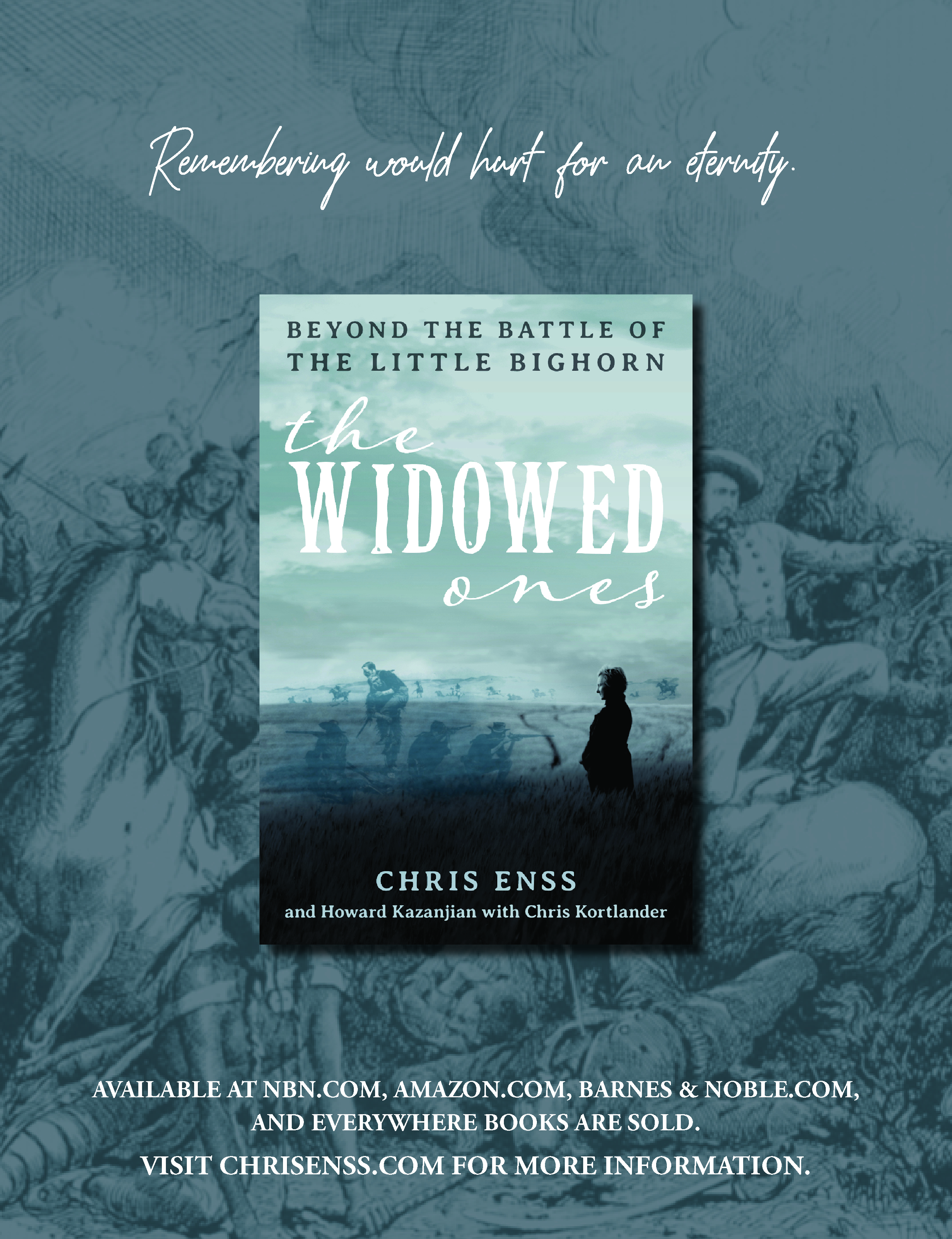
Praise for The Widowed Ones

“Historian Chris Enss is at the top of her craft with The Widowed Ones: Beyond the Battle of the Little Bighorn (TwoDot, $26.95), one of the most poignant biographies published in 2022.”

Stuart Rosebrook, Senior Editor of True West Magazine


Widowed Ones Book Cover

Along Came a Cowgirl and Bea Kirnan

Enter now to win a copy of

Along Came a Cowgirl:

Daring and Iconic Women of the Rodeo and Wild West Shows


Broadside flyers posted around major cities from Amarillo, Texas, to Cheyenne, Wyoming, in 1929 invited rodeo fans to come and see trick roper and bronc rider Bea Kirnan and “gasp with amazement and wonder at her daredevil talent.”  Audiences were promised to be “thrilled and mesmerized” by Bea’s work in the saddle.

Born on October 9, 1903, in South Dakota, Beatrice Brosseau Kirnan was a champion relayer and Roman rider.  Roman riding involved two horses – the rider would stand with each foot on the back of the pair of horses and race around the arena.  The balance and leg strength required to perform the act was daunting, and Bea was one of the best Roman riders in the country.  She perfected the dangerous trick while working with the Ringling Brothers Circus.

Bronzed and self-reliant, Bea was a rodeo favorite, endowed with beauty that came with perfect physical fitness.  From the age of sixteen, she began devoting her every waking hour to competing for riding and roping prizes held between Calgary, Canada, and El Paso, Texas, and between California and Kansas.

Bea held her own against more than a score of young women who made their livings bronco riding, trick riding, fancy roping, and even wrestling steers at rodeos.  She shared the headlines with such well-known cowgirls as Mabel Strickland, Rene Shelton, Velda Tindell, and Tad Lucas.

While performing in the Miller Brothers 101 Ranch Wild West show in 1915, Bea met an accomplished trick rider named Tommy Kirnan.  The two fell in love and married on November 25, 1915, in Chicago, Illinois.  Bea and Tommy combined their talents, performing together in rodeos from coast to coast, including such famous venues as Madison Square Garden.  The couple was recognized as one of the most famous rodeo duos of the era.

From atop her horse, Rubio, Bea entertained crowds with a variety of difficult tricks, including hanging from her saddle by one heel with her other foot pointing toward high noon while riding full speed across the arena to retrieve a handkerchief off the ground.  Bea attributed her successful career as a trick rider to her horse.  Rubio had been a gift from a fan who saw her ride in a Wild West show in Latin America.  In an article in the August 9, 1919, edition of the Hutchinson Gazette, she doted on Rubio.  “Do you know, I think Bea thinks more of that pony than she does of her man,” the article joked.  “Why she was actually seen washing its teeth with a toothbrush.”

In July 1922, Bea was injured while performing in a Roman Standing race in Oklahoma.  She was riding a pair of spotted ponies when she fell from the steeds as they took a sharp turn.  She suffered a broken wrist and was bruised slightly.  To make matters worse, someone stole her boots while the doctor was treating her.

Bea retired from roping and riding shortly after her husband passed away in 1937.  She found work in a variety of areas including operating a restaurant, designing western costumes, running a commercial fishing venture, and working in an aircraft plant.

Bea Kirnan was killed in a car accident on December 3, 1960.  She was fifty-seven years old.


To learn more about talented ladies like Bea Kirnan read Along Came a Cowgirl: Daring and Iconic Women of the Rodeo and Wild West Shows. 

Along Came a Cowgirl and Mildred Douglas

Enter now to win a copy of

Along Came a Cowgirl:

Daring and Iconic Cowgirls of the Rodeos and Wild West Shows


When twenty-four-year-old Mildred Douglas rode a steer in the Garden City, Kansas, rodeo in 1919, it was a big deal. Never before had a woman ever ridden a steer in competition, but Douglas was no ordinary woman.  Born in Philadelphia on August 21, 1895, Mildred knew at the age of seven what she wanted to be when she grew up. Her parents had taken her to the Barnum & Bailey Circus in Franklin Field, Pennsylvania, and she sat at the end of a row where she could look over the canvas and see the animals and performers as they entered. Mildred knew she had to be part of such a show and work with animals of all kinds. She dedicated herself to making her dream come true. At the age of twenty-two, she won the title of World Champion Girl Bronc Rider, was proficient as a trick rider and shooter, and was destined for stardom in the type of shows she saw as a child.

Though Mildred May Douglas was a champion bronc rider and a star of Wild West shows, she wasn’t born to the life of a cowgirl roughrider. According to the National Museum and Hall of Fame in Fort Worth, Mildred Douglas left an East Coast finishing school to join the 101 Ranch Wild West show. She spent years touring the country in rodeos, circuses, and other popular western shows.

Mildred met her first husband, Pat Chrisman, while performing with the 101 Ranch Wild West show. Pat was a horse trainer for silent film star Tom Mix’s ride. Mildred was captivated with motion pictures. Her fascination for the medium, along with her incredible talent and versatility in the saddle, led to a studio contract. Mildred was hired to appear in several films with Tom Mix himself. In addition to her onscreen duties, Mildred trained and worked with horses, lions, leopards, and other animals scheduled to appear in motion pictures and in circuses.

Pat Chrisman died in 1953, and Mildred then decided to pursue another dream she’d had – that of becoming a nurse. At the age of fifty-nine, she officially entered the profession and took a position at the Comanche County Memorial Hospital in Lawton, Oklahoma. In 1954, she traded in her fringed leather riding outfits for a white uniform and a starched nurse’s cap. Her life as a Wild West performer was never far from her mind, however. She often brought her scrapbooks to the hospital and showed photographs from her other life to interested coworkers and patients. She always spoke fondly of the animals she trained and the audiences she entertained. Mildred eventually donated those scrapbooks, saddles, movie photos, rawhide ropes, and other memorabilia to the Museum of the Great Plains in Lawton, Oklahoma.

Mildred Douglas Chrisman died in September 1982 at the age of eighty-seven. She was inducted into the National Cowgirl Museum and Hall of Fame in 1988.


To learn more about Mildred Douglas and other amazing women like her read

Along Came a Cowgirl:

Daring and Iconic Women of the Rodeos and Wild West Shows

Along Came a Cowgirl and Alice Sisty

Enter now to win a copy of

Along Came a Cowgirl:

Daring and Iconic Women of the Rodeo and Wild West Shows


A hush fell over the large crowd at the rodeo arena in Salt Lake City, Utah, in July 1938 as daredevil rider Alice Sisty raced into the arena atop two English jumpers. She was standing on the backs of the animals with one foot on one horse and the other foot on the second mount, known as Roman riding. Alice led the horses into a gallop around the arena as the audience cheered and applauded. She expertly handled the jumpers named Whale and Brownstone.  Alice had performed the Roman standard jump a number of times and was confident the trick would come off perfectly.

The trick involved the excited horses leaping over a parked automobile. It was an outstanding feat that, when executed well, brought rodeo fans out of their seats shouting for joy. Alice did not disappoint. Her signature jump was flawlessly carried out. She waved to the wildly cheering audience as she urged her horses into another pass at the stunt.

Born in Netcong, New Jersey, in January 1913, Alice first broke into national headlines when, at twenty years of age, she rode an Indian pony from Reno, Nevada, to the steps of New York City Hall.  It was a three- thousand-mile journey, and, when she arrived in New York, mayors from coast-to-coast celebrated Alice’s accomplishment with letters of congratulations. The Cheyenne, Wyoming, Chamber of Commerce helped defray Alice’s expenses on the journey, and she helped advertise the Cheyenne Frontier Days by wearing a cowboy suit with the Cheyenne inscription on its back.

Alice had been riding horses since the age of six. Her grandfather owned a racetrack, and the love of horses was undoubtedly born in her. One of Alice’s first rodeo appearances was in Asbury Park. It was followed by well received appearances in such places as Des Moines, Iowa; Cheyenne, Wyoming; Omaha, Nebraska; and Billings, Montana. She performed at the Chicago World’s Fair and at Madison Square Garden.

Billed as a trick and fancy rider, Alice won numerous cowgirl championships. She was one of the highest paid, female rodeo performers in the 1930s. Friends and fans seldom, if ever, saw her without her makeup and hair done to perfection and adorned in beautiful cowgirl clothing. The dark-haired, blue-eyed Alice had decided to become a cowgirl when she was nineteen and signed to ride in Colonel Zack Millers’ 101 Ranch.

In addition to the prized English jumpers with which she used to perform the Roman standard jump trick; she owned a white Arabian horse named Chopa. Chopa was a highly intelligent animal who responded to every command of Alice’s voice. The pair were seen together in rodeo shows from coast to coast.

Alice passed away from an unnamed illness on September 11, 1953, in Crescent City, California, where she lived with her second husband, Hennie Sommer. Alice was forty years old when she died.


To learn more about talented women like Alice read Along Came a Cowgirl: Daring and Iconic Women of the Rodeos and Wild West Shows.  Visit www.chrisenss.com to enter to win a copy of the new book.