Magaret Dumont, Chief Fall Guy

Enter now to win a copy of

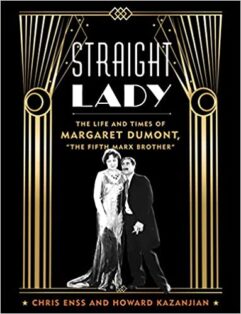
Straight Lady:

The Life and Times of Margaret Dumont, “The Fifth Marx Brother”


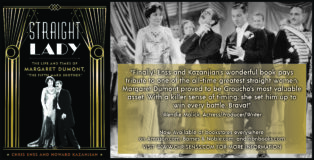
“As Variety film critic Cecelia Ager once wrote: “There ought to be a statue erected, or a Congressional Medal awarded, or a national holiday proclaimed, to honor that great woman, Margaret Dumont, the dame who takes the raps from the Marx Brothers. For she is of the stuff of which our pioneer women were made, combining in her highly indignant Duse, stalwart oak, and Chief Fall Guy—a lady of epic ability to take it, a lady whose mighty love for Groucho is a saga of devotion, a lady who asks but little gets it.” Thankfully, there is now STRAIGHT LADY by Chris Enss and Howard Kazanjian to properly celebrate the underrated Margaret Dumont. Chris has such a gift for telling fascinating tales about fascinating women, but this is my favorite. Delightful surprises in store for the fortunate reader. Marx Brothers’ and MGM fans are going to love this book!”  Michael Troyan, author MGM; HOLLYWOOD’S GREATEST BACKLOT


Meet the Kellys

It’s official!  Proud to announce I’ll be writing a book for Kensington Publishing entitled Meet the Kellys: The Life and Times of Gangsters Machine Gun Kelly and Kathryn Thorne Kelly.  All the world likes an outlaw.  For some darn reason they remember them.  Thank you, Gary Goldstein!


American gangster George Kelly Barnes (1895 – 1954), aka Machine Gun Kelly, with his wife Kathryn at their trial for the kidnapping of businessman Charles F. Urschel, at the Federal Court in Oklahoma City, 9th October 1933. Kelly has a bump on his head after being hit with a pistol butt during an altercation on his arrival at court. Kelly and his wife pleaded guilty and were sentenced to life imprisonment. (Photo by FPG/Archive Photos/Getty Images)


Playing It Straight

Enter now to win a copy of

Straight Lady:

The Life and Times of Margaret Dumont, “The Fifth Marx Brother.”


The wheels on the Southern Pacific’s Coaster pounded along the railroad tracks on a sixteen-hour journey from Los Angeles to San Francisco, California. It was late in the evening, and most of the passengers on board were asleep in their berths. Among those lost in slumber was Margaret Dumont. Margaret and the rest of the The Cocoanuts cast were on their way north to plan an engagement at the Columbia Theatre in the City by the Bay. They had just finished a three-week run of the show at the Biltmore Center in Los Angeles. It was January 9, 1928, and the musical comedy that had opened at the Lyric Theatre in New York on December 8, 1925, had been performed more than two hundred times.

The Cocoanuts, starring the Marx Brothers, had been well received everywhere it played. Critics praised the production, calling it “tuneful” and “full of beauty and uproariously funny.”  Margaret, a seasoned Broadway veteran, had been singled out in reviews which called her a “stately dowager with refined acting and singing gifts.”  Now, resting comfortably in her sleeping quarters, the actress hoped to be well rested for the next series of performances awaiting them in San Francisco.

At 12:15 in the morning, the sound of an alarm clock blaring jarred Margaret awake, and she glanced around her berth to see from where the offensive sound was coming. She located the clock on a small shelf next to her head and tapped it until it silenced. Within a few short moments, she had rolled away from the alarm clock and dropped back to sleep. Harpo ever so gently opened the curtains on her quarters and peered inside. Confident Margaret had fallen asleep again he reset the alarm on the clock and sat it back down. He closed the curtains and disappeared from sight. At 1:15 in the morning the alarm sounded again. Margaret stirred, lifted her head off her pillow, and then reached for the alarm clock. She turned the alarm off and, within a few moments, was asleep again.

Chico appeared shortly thereafter, stealthily reset the alarm on the clock, and vanished quietly. The alarm sounded at 2:15, and this time Margaret examined the clock to try and discover why it kept going off every hour. Satisfied she had resolved the issue, she put the clock back in its place, straightened her covers, and again went to sleep.

Moments passed, and Harpo dared to peer into the curtains a third time. Margaret did not stir. Once more the alarm was reset, and at 3:15 the alarm went off. The scene was repeated with Harpo and Chico alternating setting the alarm until 5:15 in the morning. At that point, Margaret had abandoned the idea of being able to sleep for more than an hour at a time. She got up, got dressed, and spent the rest of the train ride dozing over her coffee in the dining car.

When the cast and crew of The Cocoanuts arrived in San Francisco, all but one emerged refreshed and ready to go to work. Margaret stepped off the train yawning and looking a bit disheveled. Harpo and Chico raced over to her, flanking her on either side. “Rough night, Maggie?”  Chico asked, wearing an impish grin that let her know he had a part in what had happened the prior evening. “I know it was the both of you,” she noted sharply. “I wasn’t born yesterday.”  Harpo grabbed her around the waist and gave her a hug. “That’s a shame,” Chico told her. “We could have started your personality from scratch.”  He pinched her cheek playfully, and he and Harpo hurried along their ways.

“Working with the Marx Brothers is an art both on and off stage,” Margaret told reporters waiting at the Third and Townsend Depot to interview the show’s players. “I adore them,” she added sincerely.


Launching Straight Lady

Join NY Times author Chris Enss, and Raiders of the Lost Ark and Revenge of the Jedi producer Howard Kazanjian, as they launch their new book Straight Lady: The Life and Times of Margaret Dumont, “The Fifth Marx Brother.” Refreshments will be served, and Marx Brothers’ films will be shown.

The launch will be held on Friday, October 14 at the Lamanda Park Branch Library at 140 South Altadena Drive Pasadena, CA. 91107 from 6 P.M. to 8 P.M.


Straight Lady Book Cover

Arizona Daily Star Review of Straight Lady

Enter now to win a copy of

Straight Lady:

The Life and Times of Margaret Dumont, “The Fifth Marx Brother”


“The Marx Brothers exploded on the scene and screen in the 1930’s. Their vaudevillian antics brought needed comedic relief during the crushing weight of the Great Depression. The boys took the usual slapstick routines and amped up their deliveries with snide comments, slurs and sarcasm. Groucho and the boys needed a foil for their routines. Veteran actress Margaret Dumont was brilliant in that role.

Her portrayals of oblivious dowagers were a perfect fit for the madcap Marx Brothers, in particular, the ad libbing sardonic Groucho. She appeared in all of their biggest hits; ie., “Duck Soup”, “A Day at the Races”, A Night at the Opera”. Her role was to be oblivious to the taunts hurled at her character. In other words, a straight lady.

Collier magazine featured Margaret in 1937. She had received an Actor’s Guild Award for Best Actress for her performance in “A Day at the Races”, which grossed 5 million, an astonishing figure at the time.  The headline for the article was “Lady Who Assists the Homicidal Comedy of the Marx Brothers”.

Margaret Dumont had a complete life; Enss and Kazanjian’s research fill in all the voids. “The Straight Lady” digs deep and produces an revealing chapter in the amazing early success of the movie business. For those readers who enjoy a fascinating story, this book will fit the bill. For those who love Hollywood history, it is a must read.


Straight Lady Book Cover


To learn more about Margaret Dumont read Straight Lady


Library Journal Review of Straight Lady

Enter now to win a copy of

Straight Lady:

The Life and Times of Margaret Dumont, “The Fifth Marx Brother”


Straight Lady Book Cover


PERFORMING ARTS

Straight Lady: The Life and Times of Margaret Dumont, “the Fifth Marx

by Chris Enss & Howard Kazanjian

Lyons: Globe Pequot. Oct. 2022. 208p. ISBN 9781493060405. $30. FILM

COPY ISBN

Frequent collaborators Enss and Kazanjian (authors of the Roy Rogers and Dale Evans joint biography The Cowboy and the Señorita and The Young Duke: The Early Life of John Wayne) offer film buffs an engaging biography of Brooklynite Margaret Dumont, born Daisy Baker (1882–1965). She is most famously remembered as the deadpan comic foil—a stereotypical stately dowager whom Groucho played off of—in seven of the 13 movies by the Marx Brothers. Enss and Kazanjian argue that Dumont’s Marx Brothers roles were characterized by the actress’s dignity, even as the films poked fun at her age and weight. Dumont, often bedecked in an opera-length necklace, trained in and performed opera before transferring to stage, film, and TV variety shows. She had retired in 1910, after marrying a millionaire industrialist, but when he died during the 1918 flu pandemic, she returned to acting and worked until her death.

VERDICT While comedy fans will enjoy the reprised storylines and biographical vignettes, this multileveled work also offers media scholars a deeper look into Marx Brothers films in which Dumont was epochal and reflective of the era’s gender standards and mannerisms.

Groucho Marx & Straight Lady Margaret Dumont

Enter now to win a copy of

Straight Lady:

The Life and Times of Margaret Dumont, “The Fifth Marx Brother”

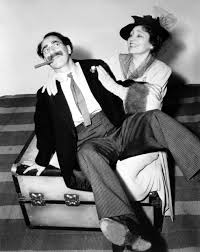
“Emily, I have a confession to make. I really am a horse doctor. But marry me, and I’ll never look at another horse.” Groucho Marx to Margaret Dumont in A Day at the Races.

Introducing Straight Lady Margaret Dumont

Enter now to win a copy of

Straight Lady:

The Life and Times of Margaret Dumont, “The Fifth Marx Brother”


Straight Lady Book Cover


“In the world of comedy, being a ‘Straight man’ isn’t easy. You have to set up the comedian for his next joke and give the proper reactions but being a ‘Straight Woman’ is the toughest job there is. A woman must tower over the comedian in attitude, deflecting the insults, and be his perfect foil. In movie after movie, Margaret Dumont was Goliath to Groucho Marx’s David; imperious, with just the right touch of snobbery for Groucho to deflate, but always standing her ground against his barbs while being wonderfully funny. Groucho actually claimed that Miss Dumont never understood his jokes, thinking it was all nonsense. And those straight-faced, dismissive reactions made her all the funnier. They were the perfect team, and now this book gives this superb comic actress a long over-due tribute to her talents.”

C. Courtney Joyner, Award-winning film historian and screenwriter

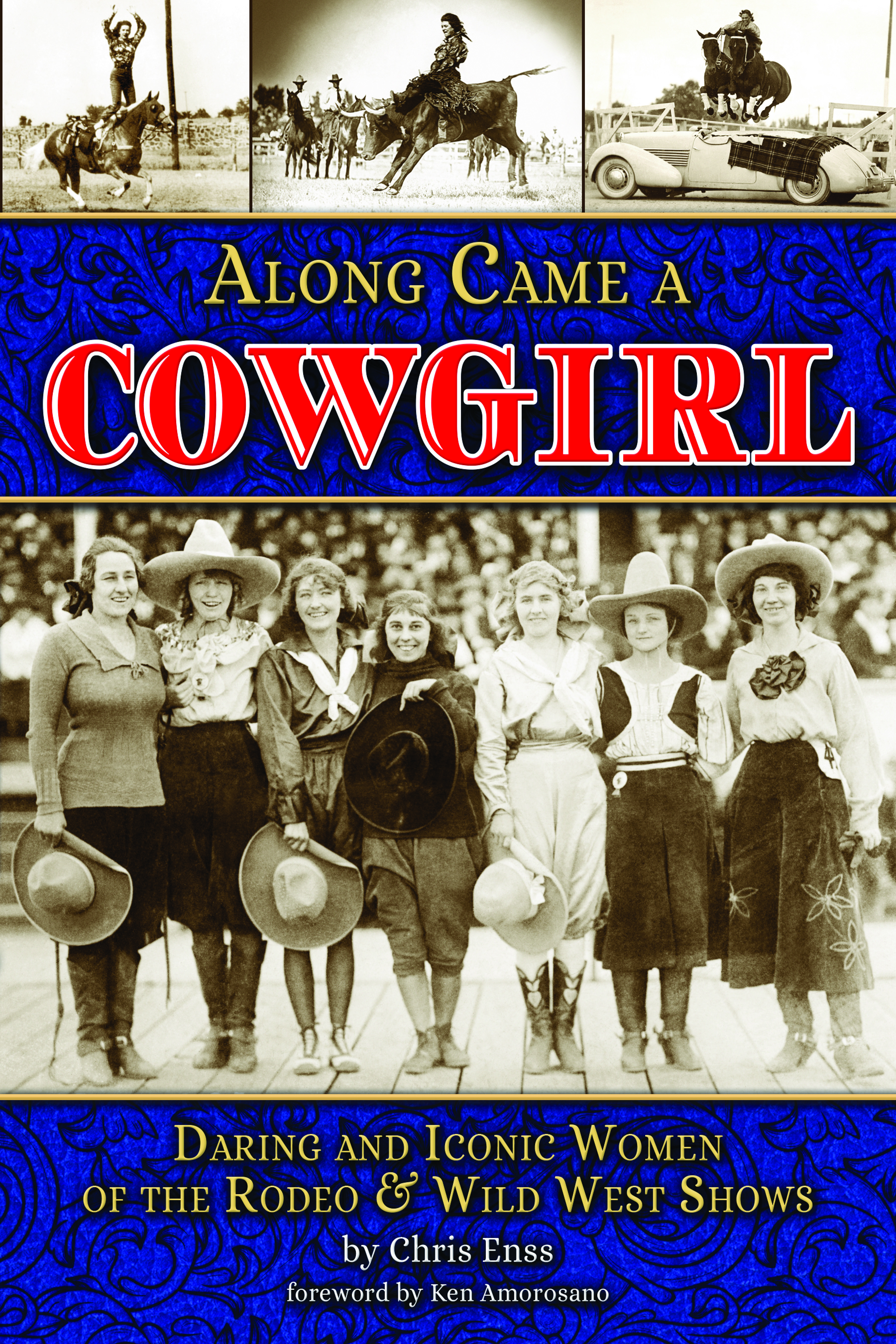
Along Came a Cowgirl and Mamie Francis

Enter now to win a copy of

Along Came a Cowgirl:

Daring and Iconic Women of the Rodeo and Wild West Shows


Cowgirl Mamie Francis sat atop her horse, Babe, waiting for the director of California Frank Hafley’s Wild West show to let her know when the program began. Mamie and Babe were perched on a wooden platform thirty feet in the air over Coney Island, New York, looking down at the audience in the grandstands. Directly below the platform was a forty-foot tank filled to overflowing with water. It was the summer of 1908.

Mamie gently urged Babe to the edge of the platform, both stood like a beautiful statue surveying the landscape before them. After receiving the signal, Mamie coaxed Babe forward. The horse pushed away from the boards and lunged outward into space. Moments later, rider and horse entered the water in the tank with a giant splash. When they came to the surface, the audience erupted in applause. Mamie patted Babe’s neck as the horse carried her up the ramp and out the tank.

Born in Nora, Illinois, on September 8, 1885, to Charles and Anna Ghent, and given the name Elba Mae, Mamie was an accomplished equestrienne by the time she turned sixteen. Her parents moved from Illinois to Wisconsin when she was a baby. Her mother worked for a farmer who owned several horses, and it was there she learned how to ride and use a gun to hunt. When Pawnee Bill’s Wild West show stopped in Kenosha, Wisconsin, for a two-night performance, Mamie was in the audience to take in the excitement. Before the show left town, she had signed on to be one of the entertainers.

As Mamie excelled at riding and shooting, that’s what Pawnee Bill had her do in the show. In time, she would be billed the greatest horseback and rifle shot in the world. Mamie met her first husband, trick rider Herbert Skepper, shortly after joining the show. The pair was married on July 7, 1901.

By 1905, Mamie had left the Pawnee Bill’s Wild West show and divorced Skepper. Charles Francis Hafley and his wife, trick shooter Lillian Smith, were familiar with Mamie’s talents and sought her out to join Hafley’s Wild West show. She happily agreed to be a part of the troupe. During her time with the experienced group, Mamie perfected her own sharpshooting routine, tried her hand at bronc riding, and even mastered a few rope tricks.

In late 1907, she added horse diving to her repertoire. Known as the Diving Equestrienne, she and Babe made over six hundred jumps between 1907 and 1914.  When Mamie stopped horse diving, she turned her attention solely to sharpshooting, trick riding, and training horses to compete in dressage* events. Mamie married Charles Hafley in November 1909, a year after he and Lillian Smith divorced. The two managed the Wild West show for thirty-one years.

Mamie Francis Hafley died on February 15, 1950. She was sixty-four years old. The National Cowgirl Museum and Hall of Fame honored Mamie for her equestrienne skills in 1981.

*The art of riding and training a horse in a manner that develops obedience, flexibility, and balance.


along came a cowgirl cover


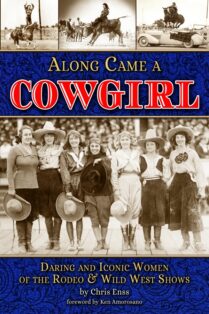
To learn more about talented riders like Mamie read Along Came a Cowgirl: Daring and Iconic Women of the Rodeo and Wild West Shows. Visit www.chrisenss.com to enter to win a copy of the new book.

Praise for The Widowed Ones

“Historian Chris Enss is at the top of her craft with The Widowed Ones: Beyond the Battle of the Little Bighorn (TwoDot, $26.95), one of the most poignant biographies published in 2022.”

Stuart Rosebrook, Senior Editor of True West Magazine


Widowed Ones Book Cover