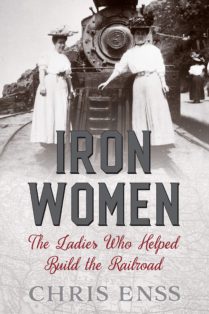
Iron Women: The Ladies Who Helped Build the Railroad has been recognized with a
Spur Finalist Award from Western Writers of American and
two finalist awards from Foreword Review magazine.

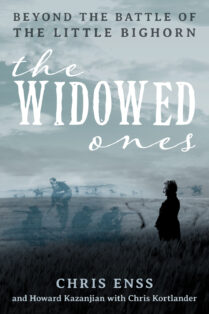
“Most readers are familiar with the 1876 Montana Territory battle in which Gen. George Armstrong Custer’s 7th Cavalry was soundly defeated by warriors from the Lakota Sioux, Northern Cheyenne, and Arapaho Nations. A neglected element of the narrative is the stories of the wives of the commanding Army officers who died that day. Those seven women—the most famous of whom was Elizabeth Custer—were dubbed “the widowed ones” by a Minneapolis newspaper editor, and in these pages, nonfiction author Enss, film and TV producer Kazanjian, and Western American collector Kortlander meticulously characterize them as a tight-knit group who, in the midst of their grief, communicated with one another for the remainder of their lives. They also point out that the women contended with dire financial straits, as the pensions they received were not enough to live on in the long term, and employment wasn’t easy for the women to secure. Also, as part of the extensive criticism of Custer’s actions, people expressed the opinion that his men all blindly followed his reckless lead, which deeply upset the widows. However, the authors show how the shared loss provided a source of healing: “Elizabeth’s affections and sympathy for the widows of the Seventh Cavalry helped pull her ever so slowly out of the pit of despair—a pit so deep her friends feared for her sanity….A tragic event had banded them together and formed the nexus of a friendship that would last for a lifetime.” The rigor of the scholarly research on display here is quite simply astonishing, as the authors seem to leave no stone unturned.”
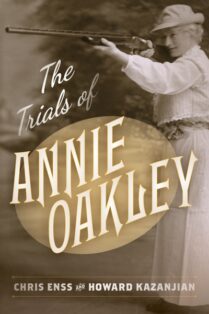
Highly recommended pick for history collection. Howard Kazanjian and Chris Enss’ The Trials of Annie Oakley (9781493017461, $24.95) provides a biographical coverage that focuses on the feisty independent woman who advanced the image of women in American history both through her performances in Buffalo Bill Cody’s Wild West show and in her advocacy efforts. The latter – which included advocating for the US military and fighting for orphans – may be lesser-known episodes in her life, but here they are brought to the forefront in an account that reads with the lively immediacy of fiction but gathers a range of facts about Oakley’s performances and life.
Three dozen, fresh-faced young men jockeyed for position behind a row of windows on a train leaving Poughkeepsie, New York, bound for Camp Mills on Long Island. The new Army recruits waved goodbye to those on the railroad platform; they wore happy expressions and cheered as the car lurched forward. The men were excited and blissfully naïve about the journey ahead of them. Family and friends on the platform offered last minute farewells as the train slowly began to move ahead. Some people cried as the vehicle left the station and blew kisses to the courageous souls who had answered the call to serve their country when America announced it would join Britain, France, and Russia to fight in World War I.
The United States entered the war on April 6, 1917, and by the end of that same month thousands of men had eagerly flooded recruiting stations, enlisted in the Army and Navy and promised to defend the nation in time of peril.
On July 6, 1917, newspapers, and unofficial dispatches from Canadian army headquarters in Europe documented when America went into battle for the first time during the World War. A young Texan who had traveled to Ontario to enlist had the honor of being the first to carry the American flag in the European war. He was carrying the Stars and Stripes on his bayonet when he was wounded and subsequently transported to a medical unit.
According to the July 20, 1917, edition of the Democrat and Chronicle News the Texan’s brave action prompted even more patriotic men to join a branch of the service. Men did not have a moratorium on devotion to country. Women also wanted to do their part. Annie Oakley was among them. From the time the Spanish American War began in 1898, Annie had desired to recruit and train women to be expert shots and fight for the United States. She offered her unique services to President William McKinley.
“Dear Sir,” her letter dated April 5, 1898, began, “I for one feel confident that your good judgment will carry America safely through without war. But in case of such an event I am ready to place a company of fifty lady sharp shooters at your disposal. Every one of them will be an American and, as they will furnish their own arms and ammunition, will be little if any expense to the government. Very Truly, Annie Oakley.”
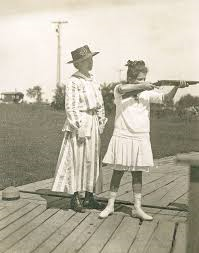
President McKinley politely declined her offer, but Annie never abandoned the idea. More than nineteen years after the initial proposal, Annie again offered to raise a regiment of women volunteers to fight. She received more than 1,000 letters from women throughout the United States anxious to join the regiment. Three thousand women had participated in Annie’s shooting school in Pinehurst, North Carolina, during the 1916-1917. If necessary, she could call on the best students from her classes to take part in the program. Many of the women were willing to serve as well.
1868 – 1st US professional women’s club, Sorosis, forms in NYC.
Fans of Annie Oakley sought the famous shooter out after ever performance. In addition to granting requests for autographs, she took time to speak with her followers who wanted to know all about her. As a courtesy to her devotees, she supplied them with a concise list of facts about herself.
Answers to Ten Questions I Am Asked Every Day.
I was born in Woodland, Ohio.
I learned to shoot in the field.
I do not think I inherited my love of firearms from my parents, for they were Quakers, and were very much opposed to my using such weapons.
Having traveled in fourteen countries, and having hunted in almost all of them, I have shot nearly all kinds of game.
While I love to shoot in the field, I care very little for exhibition shooting, and only do it as a matter of business.
I never use the word “champion” in connection with my name and always request my friends not to address me as such.
My guns weigh about six pounds each and are of many different makes. There is no such thing as the best gun maker. The best gun is the gun that best fits the shooter.
I use pistols, rifles, and shotguns. I do not believe in using cheap guns. To me, the use of a cheap gun is like driving Star Pointer with a clothesline – you never know when the line is going to give way.
I like pigeon shooting when the birds are first-class flyers, but I am very much opposed to shooting pigeons from the trap during the three summer months.
I use thirty-nine grains of Schultz Smokeless Powder and one ounce of shot, loaded in the U.M.C. Smokeless shells. I don’t say that this is the only load, but it is good enough for me.
On August 8, 1903, a drifter named Charles Curtis made his way to the Harrison Street Police Station in Chicago and filed a complaint to Justice of the Peace John R. Caverly about a woman named Little Cody. Curtis had befriended the woman he supposed was down on her luck and provided her a place to stay for a few days. During her visit with Charles, she stole a pair of pants and made herself a nuisance. The complaint charged her with having “made an improper noise, riot, and disturbance.” A warrant for the woman’s arrest was issued, and “Little Cody” was arrested and escorted to jail. The fee she was to pay was $100. She didn’t have the money to give the court and was to be held until she produced the funds.
The prisoner did not give the clerks or the jail matrons a difficult time. She was chatty during the intake process, but polite. Her appearance was slovenly, clothes were torn and unwashed, and she was obviously under the influence of drugs. She told officials at the facility about her work as a crack rifle shot and of the days, she spent with Buffalo Bill Cody’s Wild West show. The curious matron couldn’t help but pursue the matter further. “You are the noted Annie Oakley, I guess.” The woman proudly announced that she was indeed the famed sure shot.
Charles Curtis came to visit the woman once she was behind bars and seeing her distressed state decided not to press charges.
When arraigned before the justice on Monday morning August 10, the police officer who had booked her into jail stated she was the famous Annie Oakley who had exhibited with Buffalo Bill Cody. The officer informed the court that if she were allowed to go free, she would only spread disease and implored the judge to send her to a women’s asylum where she could be taken care of. The judge agreed and instructed the court to send the woman to Bridewell Prison Farm. Her fine was reduced to $25.
After her day in court, she was taken downstairs to the lock up again. Several people were waiting for her to arrive so they could talk with her. One of those individuals was George W. Pratt, a reporter for the Chicago American. Pratt had visited Buffalo Bill’s Wild West show many times and was acquainted with several acts associated with the program. He wanted to get the woman’s full story and spent hours with her asking questions about what brought her to such a lowly state. Her answers contained specific information about who performed in Cody’s shows with her, when, and the exhilarating experience she had at the Chicago World’s Fair in 1893. Pratt and other reporters were convinced this woman was the real Annie Oakley. Pratt wrote a story about his first-hand experience with the accused. As many reporters did at that time, he elaborated and sensationalized the account.

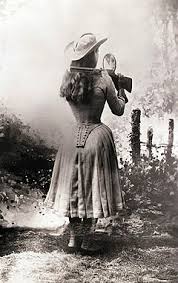
Say the name Annie Oakley and the image of a young woman who could shoot targets out of the sky without a miss and rode across the frontier with Wild West showman Buffalo Bill Cody comes to mind. Annie Oakley was a champion rifle shot and did perform alongside well-known riders, ropers, and Indian chiefs in Colonel Cody’s vaudevillian tour, but there was more to Annie Oakley’s fame than her skill with a gun. The diminutive weapons wonder was a strong proponent of the right to bear arms, a noted philanthropist, and warrior against libel who fought the most powerful man in publishing and won.
The native Ohioan astonished the world with her almost unbelievable feats of rifle marksmanship. She could pepper a playing card sailing through the air, puncture dimes tossed into the sky, and break flying balls with her rifle held high above her head. She once shot steadily for nine hours, using three sixteen-gauge hammer shotguns which she loaded herself, breaking 4,772 out of 5,000 balls.
Annie Oakley fell in love with and married the first man she defeated in a rifle match. Frank E. Butler was one of the most noted marksmen in the West and he and Annie were married for more than fifty years. The couple never had any children of their own. The reasons they were childless are varied and speculative at best. What is not without question is how Annie helped fund the care and education of orphaned children from coast to coast.
Annie Oakley was a combination of dainty, feminine charm, and lead bullets, adorned in fringed handmade fineries and topped with a halo of powder blue smoke. She had a reputation for being humble, true, and law abiding and was careful with her character at all times. When powerful, newspaper magnate William Randolph Hearst challenged her honor and questioned her respectability in his publication in 1903, Annie filed a lawsuit against him that’s still discussed at universities today.
Annie’s experience with Hearst wasn’t the only trial she encountered in her celebrated life. A couple of motor vehicle accidents left her in constant pain, subjected her to numerous back surgeries, and resulted in Annie having to wear a leg brace. There were other struggles as well, some just as stifling as a leg brace.
Although Annie’s position on what women should be allowed to do was progressive for the time (she believed in equal pay and in women’s right to carry a gun) she was not for women’s suffrage. Her chief concern was that not enough “good” women would vote. Annie wasn’t political in that sense. She tried for years to convince the government to allow her to recruit a team of women sharpshooters to fight for the country but was never successful. Public servants dismissed the firearms expert’s idea outright, but Annie never fully abandoned the notion.
The incomparable Annie Oakley suffered through numerous heartaches in her lifetime, the death of her father in 1866, her mother in 1908, her beloved dog, Dave in 1923, and her dear friend, Buffalo Bill Cody in 1917. She was also forced to deal with reports of her own death in 1890. “I am, indeed, very grateful for your many kind words in my obituary,” she wrote the editor at a Cincinnati, Ohio, magazine. “How such a report got started I do not know. I am thankful to say I’m in the best of health.”
Annie and Frank battled imposters trying to use Oakley’s famous name to gain work at theaters and rodeos and endeavored to tolerate brash rivals like Lillian Smith, who was hired by Buffalo Bill Cody to appear in the Wild West show. Lillian was younger than Annie and she was braggadocios and flirtatious with the male cast members of the Wild West show. Her unladylike behavior contributed to Annie’s eventual departure from the program, a way of life that had been a constant for her for more than sixteen years.
Only those close to Annie were aware of the difficulties she experienced. She managed every trial that came her way with such dignity and grace it was easy for the public to believe she never had a worry, but nothing could have been further from the truth.
The Trials of Annie Oakley describe the hardships the peerless lady wing shot overcame, from her early life using her marksmanship as a means of providing food for her widowed mother, brother, and sisters, to her final days dealing with all the symptoms associated with pernicious anemia. It is the story of a young woman who survived scandal and misfortune to become a true American hero.
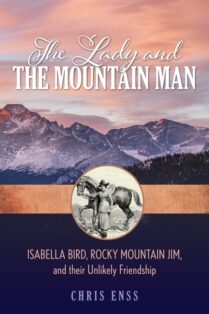
Isabella considered the criticism Evans had about Jim. She believed some of the animosity was born out of the fact that he was a popular character and articles about him frequently appeared in Colorado newspapers. He was a man to be envied, and Evans and others hoping to drive Jim out of the park were consumed with jealousy. “Ruffian as he looks,” Isabella elaborated on Jim in her memoirs, “the first word he speaks – to a lady, at least – places him on a level with educated gentlemen, and his conversation is brilliant, and full of the light and fitfulness of genius.”
Isabella always keenly felt Jim’s absences. On one hand she admired him greatly, and on the other she grieved the life she felt he wasted because of his unruly past. “What good could the future have in store for one who has for so long chosen evil,” she asked herself in her memoirs. After each encounter, she was consumed with the notion if Jim surrendered all to the Lord his path would be set straight again. Only then could there be hope for “a most painful spectacle.” Only then could there be hope the two might find happiness together. Thoughts of Jim and his restoration crowded her mind to the exclusion of all else. She couldn’t write. Distractions were necessary. Fortunately, the day after her exhilarating ride with Jim and the Deweys, Griff Evans provided one. Once again, he needed another hand to help with a cattle drive. Isabella gladly agreed.
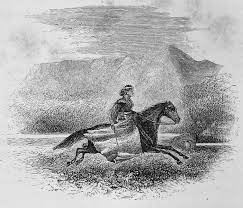
The bronco Isabella was given to ride was quick and resilient. The pair traveled over rocks and inclines, driving the herds out of canyons and tree lines. While riding fast and pushing the cows forward, Isabella reflected on her days riding in Hawaii. That challenge had provided her with the experience needed to round up Texas steers.