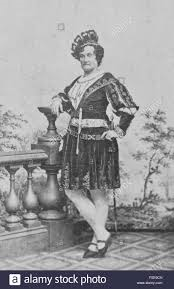
The Tale Behind Stephen Foster’s Tombstone

Enter now to win a copy of More Tales Behind the Tombstones:

More Deaths and Burials of the Old West’s Most Nefarious Outlaws, Notorious Women, and Celebrated Lawmen


“Now the nodding wild flow’rs may wither on the shore.  While her gentle fingers will cull them no more.  Oh! I sigh for Jeannie with the light brown hair.  Floating like a vapor, on the soft summer air—from “Jeannie with the Light Brown Hair” by Stephen Foster

Songwriter and composer Stephen Collins Foster was lying face down in a pool of his own blood when a housekeeper at a cheap New York boarding house found him on the morning of January 13, 1864. The man who had penned such popular tunes as “Oh! Susanna” and “Jeannie with the Light Brown Hair” collapsed from a fever while walking to a wash basin to get some water. He struck his head on the porcelain bowl and cut a large gash in his face and neck. He was taken to Bellevue Hospital where he was pronounced dead.

Stephen Foster was born on July 4, 1826, in Lawrenceville, Pennsylvania. He was the youngest of eleven children and from an early age displayed exceptional musical talent. At seven years old his parents gave him a flageolet, a sixteenth-century woodwind instrument. Within a short time, Stephen mastered the flute-like whistle and expanded his abilities to include harmonica, piano, and guitar. Although his talent captivated family and friends, he did not have a desire to perform. Stephen preferred to write and wanted to study music as a science.

In 1841, Stephen’s mother hired a tutor to teach her son the fundamentals of music as well as how to speak French and German. Stephen composed his first published song, entitled “Open Thy Lattice Love,” in 1842 at the age of seventeen. A short time later he moved to Cincinnati, Ohio, and took a job working for his brother as an accounting clerk. He wrote many more songs during this time, all of which were published, but the money he received for his work was next to nothing.

By 1850, he decided to abandon the accounting business and devote himself full-time to writing music. His gift for harmony and poetry led to the creation of such well-known tunes as “Camptown Races” and “My Old Kentucky Home.” During this time, he met Jane McDowell, the daughter of a physician from the Pittsburgh area. The two fell in love and were married on July 22, 1850. Stephen continued writing songs that were published and well received, but he realized very little financially for his music at the onset of his career because he allowed his work to be published without thought of compensation.  He earned $15,000 for the song “Old Folks at Home,” and many of his other tunes were equally as profitable.  Unfortunately, multiple publishers often printed their own competing editions of Stephen’s songs, paying him nothing and eroding any long-term monetary benefits.

Stephen’s struggles with managing his money and the loss of his parents as well as many of his siblings in a short time period proved more than he could bear. Consequently, he sought comfort in drinking. The alcohol soon became all-consuming and quickly became an issue in his marriage. Stephen became addicted and after numerous ultimatums and attempts to get him to stop drinking, Jane decided to take their daughter back to her parents’ home in Pittsburgh.

Stephen sank into a deep depression and continued drinking. He spent all his income on alcohol, and when he ran out of money, he sold his clothing to buy more to drink. He wore rags and went days without eating. His brothers and sister would step in to help, but Stephen would not and could not change. On Saturday evening, January 9, 1864, the thirty-seven-year-old man passed out in a drunken stupor in his hotel room. When he awoke, he was violently ill from liver failure and in his weakened condition he fell and hit his head.

Stephen’s wife Jane and one of his brothers came to the hospital to claim his body. Nurses gave his family his clothes along with 38 cents that were found in his pocket and a scrap of paper upon which he had written the words, “Dear Friends and Gentle Hearts.”

He was buried in Alleghany Cemetery in Pittsburgh, beside his mother. Upon his plain marble headstone is the simple inscription: “Stephen Foster of Pittsburgh. Born July 4, 1826. Died January 13, 1864.”


To learn more about the deaths of the legendary characters of the

Old West read More Tales Behind the Tombstones.

The Tale Behind John Chisum’s Tombstone

Enter now to enter to win a copy of More Tales Behind the Tombstones: More Deaths and Burials of the Old West’s Most Nefarious Outlaws, Notorious Women, and Celebrated Lawmen


“No matter where people go, sooner or later there’s the law. And sooner or later they find God’s already been there.”

—John Wayne as John Chisum in Chisum (1970)


Cattle barons of the vast frontier such as John Chisum once held undisputed sway over the great public domain. He ruled like a lord of old over the Pecos country in New Mexico where desperate battles were fought between rival cattle barons for more grazing land.

Rancher John Simpson Chisum was born into an affluent family in Tennessee on a plantation on August 16, 1824. His parents relocated their five children to Red River County, Texas, in 1837. John was thirteen when his family settled in Paris, Texas. He worked a series of odd jobs before becoming the county clerk in 1852.

At the age of thirty, John ventured into cattle ranching with Stephen K. Fowler, a businessman from New York. The Half Circle P brand, owned by Chisum and Fowler, was seen on livestock across a great expanse of the land John purchased in Denton County, Texas. Stephen’s original investment of $6,000 resulted in a $100,000 profit in ten years.

Chisum used his portion of profitable shares to buy more land and cattle. In addition to running his own spread, which included five thousand head of cattle, John also managed livestock for other ranchers and ambitious investors. By 1861, John Chisum was recognized as one of the most important cattle dealers in North Texas.

When the Civil War started, John contracted with the military to supply beef to soldiers in the Trans-Mississippi Confederate Army Department. After the war he drove his cattle into eastern New Mexico to sell to the government for the cavalry and the Indian reservations. In 1867, John moved his base of operation to Roswell, New Mexico, where he already had more than one thousand head of cows. He established a series of ranches along a 150-mile stretch of the Pecos River. John’s empire grew to eighty thousand head of cattle and he hired more than one hundred cowboys to work the livestock.

John Chisum was involved tangentially with the Lincoln County Range War in 1878. The dispute initially began as a fight between cattlemen and two store owners over who rightfully controlled the trade of dry goods in the county. Cattlemen John Tunstall and his business partner, Alexander McSween, owned one of the stores, and they were being threatened by the owners of the competing establishment who had an economic stranglehold on the area. Each store owner organized his own men to protect his enterprises and homes from being overrun. Tunstall and McSween had in their employ Billy the Kid and his associates. John Chisum supported Tunstall’s efforts. His exact role in the dispute is unknown.

After Tunstall was murdered, Billy the Kid took Chisum to task over money he insisted John owed him for protection. Chisum disagreed, and Billy resented him for it. In 1880, Chisum helped get Pat Garrett, the sheriff who shot Billy the Kid, elected to office.

John Chisum’s cattle operations continued to thrive, and he shared his good fortune with his brother, James. John gave James his own herd of cattle to manage.

John contracted throat cancer in late 1883 and had surgery to remove the growth in 1884. He died on December 22, 1884, in Eureka, Arkansas, where he had been recuperating from the operation. His giant cattle empire was worth $500,000. Chisum never married, but it is believed he fathered two children with one of the slave women he owned named Jensie.

John Chisum’s body was laid to rest in Paris, Texas. He was sixty years old when he passed away.


To learn more about how some of the Old West’s most legendary characters died read More Tales Behind the Tombstones: More Deaths and Burials of the Old West’s Most Nefarious Outlaws, Notorious Women, and Celebrated Lawmen


The Tale Behind Seth Bullock’s Tombstone

Enter to win a copy of More Tales Behind the Tombstones: More Deaths and Burials of the Old West’s Most Nefarious Outlaws, Notorious Women, and Celebrated Lawmen


“[Seth Bullock is a] splendid-looking fellow with his size and subtle strength, his strongly marked, aquiline face with his big mustache, and the broad brim of his soft hat drawn down around his hawk eyes.”

—President Theodore Roosevelt


It wasn’t a bullet from an outlaw’s six-shooter or an enemy soldier in the Spanish-American War that claimed the life of one of the fiercest lawmen in the history of the Dakotas. Seth Bullock died of colon cancer. The accomplished businessman, rancher, politician, and lawman suffered with the disease for years and he died in September 1919 at the age of sixty-two. Born in Amhertberg, Ontario, Canada, in August 1876, six decades later he was remembered for his strength of character as well as the influence he had on the wild frontier.

According to the September 28, 1919, edition of the Kansas City Star, before Seth Bullock made his mark on the Black Hills of Dakota, he was a pioneer in Montana. He was the first sheriff in Helena, Montana, and a member of a famous vigilance committee that rid the region of a desperate band of horse thieves.

Upon hearing that gold had been discovered in the Black Hills, Seth and some of his friends decided to go to that area of the country in the summer of 1876. In March 1877, he became Lawrence County, Dakota’s first sheriff. The gold camp contained some of the most notorious, cutthroat criminals in the country. Many were intimidated by the lawman.

Seth dressed like a minister, had the stare of a mad cobra, and was silent as a confidential clerk working for Rockefeller. In the beginning, his ability to effectively do his job in Lawrence County was challenged by an outlaw who intensely disliked the lawman. He gave orders that Seth should leave the camp and never return. The man threatened to shoot Seth if he didn’t go. After being warned by friends, the sheriff borrowed a squirrel gun from an old hunter and proceeded down the street to the saloon where the desperado was waiting. When the man saw Seth unafraid and coming right for him, he backed down and fled the scene.

As a representative of law and order, the Dakota lawman tracked down a number of stage robbers, gamblers, and murderers, and, according to the October 1, 1919, edition of the Fort Wayne Journal Gazette, killed more than twenty-five lawbreakers who refused arrest.

In addition to his career in law enforcement (Seth also served as a United States marshal in Western Dakota Territory) he co-owned and operated a hardware store and warehouse in Deadwood with his business partner Sol Star. It was one of the most prosperous companies in the Black Hills.

Seth met Theodore Roosevelt in 1884. Roosevelt was a deputy sheriff in Medora, North Dakota, and had tracked a criminal to Seth’s jurisdiction. The two lawmen became fast friends. He became one of Roosevelt’s Rough Riders in the Spanish-American War and was named captain of one of the future president’s troops.

Seth was an elected representative to the Senate and introduced the resolution to set aside Yellowstone as a national park. He was the first forest supervisor of the Black Hills and the cofounder of the mining town Belle Fourche.

Seth was serving his third term as United States marshal for the District of South Dakota when he was diagnosed with cancer. Friends and family noted that in spite of his health he refused to be complacent. He continued on with his work regardless of the debilitating illness.

When President Roosevelt died in January 1919, Seth decided to erect a monument in his friend’s honor. He oversaw the building of a stone tower known as Mount Roosevelt on Sheep Mountain located five miles from Deadwood. The tower was completed in June 1919. Seth died on September 23, 1919, at his home surrounded by his loved ones. He was buried at Mount Moriah Cemetery in Deadwood. His grave faces Mount Roosevelt.


To learn more about tales behind the tombstones read

More Tales Behind the Tombstones.

The Tale Behind Elizabeth Blackwell’s Tombstone

Enter now to win a copy of More Tales Behind the Tombstones:

More Deaths and Burials of the Old West’s Most Nefarious Outlaws, Notorious Women, and Celebrated Lawmen


“A lady, on his invitation, entered, whom he formally introduced as Miss Elizabeth Blackwell. A hush fell upon the class as if each member had been stricken with paralysis. A death-like stillness prevailed during the lecture, and only the newly arrived student took notes.”

—1911 recollection by a former classmate of Elizabeth Blackwell


On Wednesday, January 25, 1911, physicians across the world gathered at the great hall at the Academy of Medicine in New York to honor America’s first woman doctor, Elizabeth Blackwell. The tenacious pioneer in the fight for the right of women to study and practice medicine had died nine months prior to the event honoring the contributions she made to the field. The audience was composed largely of women, all of whom owed a debt of gratitude to Elizabeth Blackwell.

Born in Bristol, England, on February 3, 1821, Elizabeth immigrated to America in 1832 with her parents. Her desire to attend school and study medicine began at an early age. Elizabeth was twenty-six years old when she was admitted to New York’s Geneva College in 1847. She had applied to twenty institutions before being accepted as a medical student at the prestigious university. The male students there believed Elizabeth’s request was a joke and agreed to tolerate her presence in class, but the daring young woman was not playing around. She prevailed and triumphed over taunts and bias while at school to earn her degree only two years after enrolling.

While in her last year of school, she treated an infant with an eye infection. As she was washing the baby’s eye with water, she accidentally splattered the contaminated liquid in her own eye. Six months later she had the eye removed and replaced with a glass eye. Hospitals and dispensaries refused to admit her to practice at their facilities because of her partial blindness, and she was denounced by the press and from the pulpit because she was a woman who dared to practice medicine.

After graduating in 1849, Elizabeth found herself socially and professionally boycotted. Public sentiment was so against her for pursuing a career in a field deemed unladylike that she could not find a place to live anywhere in New York. Using funds given to her by her family, she built her own home in New York City.

In 1854, she borrowed the capital needed to build a small dispensary for women in the country.   Most of the patients she worked with were poor. Patients were charged a mere $4 a week for services that would cost them $2,000 at another facility. Elizabeth also founded the Women’s Medical College of New York, and, when the Civil War broke out, she assisted in launching the Sanitary Aid Association.  The Sanitary Aid Association was established to promote hygiene and campaign for better preventive medicine.  In addition to maintaining her practice and creating benevolent community services, Elizabeth wrote a number of books on the subject of medicine. Two of her most popular titles were Pioneer Work in Opening the Medical Profession for Women and Essays in Medical Sociology.

By the turn of the century, Elizabeth Blackwell had retired from medicine and returned to England. In the spring of 1907, she was injured in a fall from which she never fully recovered. She died on May 31, 1910, from a stroke. The epitaph below the Celtic cross which marks her grave at Kilmun Churchyard on the Holy Loch, near Clyde, includes these words: “The first woman in modern times to graduate in medicine (1849) and the first to be placed on the British Medical Register (1859).” Elizabeth’s courage and determination led the way for many other women to enter the field of medicine and several of those women traveled west to work in their chosen profession and bring healing to the frontier.


To learn more tales behind the tombstones read

More Tales Behind the Tombstones:

More Deaths and Burials of the Old West’s Most Nefarious Outlaws, Notorious Women, and Celebrated Lawmen


Tales Behind James Beckwourth’s Tombstone

Enter now to win a copy of More Tales Behind the Tombstones: More Deaths and Burials of the Old West’s Most Nefarious Outlaws, Notorious Women, and Celebrated Lawmen


James Beckwourth was one of the most legendary mountain men of the early 1800s. He was the son of a Maryland Irishman and a slave girl, and he was born in Virginia in 1798. When he was very young, his family moved to St. Charles, Missouri. James worked as an apprentice to a blacksmith until the age of nineteen, when he left the anvil and the forge to sign on as a trapper with the Missouri Fur Company, then challenging Hudson Bay trappers working the rich beaver streams beyond the crest of the Rockies.

In 1824, Beckwourth joined William H. Ashley and Andrew Henry on a fur-trapping expedition in the Rocky Mountains; he was one of the first trappers to go into the new country. During various expeditions, he participated in skirmishes with the Blackfeet and other Indians. He became skilled in the use of the bowie knife, tomahawk, and gun.

In 1828, he was adopted into the Crow Indian tribe. He packed his traps and buckskin shirts on his horses and moved to the headwaters of the Powder Rivers and into a new life among the ancient people. He proved himself quickly among his adopted people and rose to the position of war chief. His skill as part of a raiding party to steal Comanche horses was masterful. His prowess and bravery in battle against the hated Blackfoot Indians earned him the name Bloody Arm.

James Beckwourth helped make the Crow a more powerful nation. No more would they give away a tanned buffalo hide for a pint of trade whiskey. Bloody Arm knew the value of hides and the wiles of the whites. He knew the worth of powder and ball and traps and horses and finery for Crow women.

When a fur company opened a trading post among the feared Blackfeet, Beckwourth got the same company to make him its agent among the Crow to see that his adopted people were treated fairly in the trade of pelts for guns. When the beaver trade began fading, Beckwourth went to the Southwest and joined with another ex–mountain man to lead a war party of Utes to raid Spanish ranches in Southern California. They headed east with three thousand head of California horses.

He spent a while in Taos, moved onto Colorado to become a contract hunter supplying meat in places like Bent’s Fort, and then became a trader among Indians. Showing up again in Southern California, he raised a company of Yanquix to fight Governor Micheltorena of Mexico in a quickie revolution.

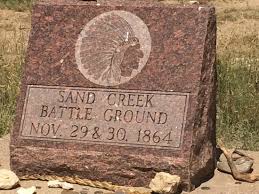
By the time of the California Gold Rush and the westward movement of hundreds of wagon trains over the worst passes of the Sierra, James, then in his fifties, led a wagon train over a sizable mountain pass that was to be named after him. He still had years of adventure before him. He scouted for the Third Colorado Cavalry tracking Black Kettle to Sand Creek and turned away in disgust at the massacre.

At the age of sixty-eight, Beckwourth embarked on another venture, this one in a bid for peace. The Oglala Sioux were pressing the Crow to join against the whites. The US Army sent for Beckwourth to advise his adopted tribe. He thwarted the alliance.

Mystery surrounds James Beckwourth’s death in Colorado in 1866 in a Crow village. Some historians note he was poisoned by a Crow warrior who caught him cavorting with his wife. The most reliable account of his passing reports that he was poisoned by order of the Crow’s tribal council because he would not accept their offer to go on the warpath with them again. If they could not keep him as a chief, they decided to have the honor of burying him in their burial ground near Laramie, Wyoming. Beckwourth was seventy-eight when he died.


Read More Tales Behind the Tombstones.


More Tales Behind the Tombstones

Enter now to win a copy of

More Tales Behind the Tombstones:

More Deaths and Burials of the Old West’s Most Nefarious, Outlaws, Notorious Women, and Celebrated Lawmen


Visitors walking through the graveyards often find themselves stepping over weeds that have grown around fallen headstones. Sadly, the final resting place for many small families and communities has been left unattended or even forgotten. The seasons have taken with them the names chiseled in the granite, nearly erasing all memory of those mourned beneath the dilapidated tombstones.

Aside from the normal life and death cycle in New England, it is estimated that one in every seventeen people died on the journey west from 1847 to 1900. Oftentimes the men, women, and children who died en route to the gold hills of California and Colorado, or the fertile farmlands of the Pacific Northwest, were buried on the spot where they died. A proper burial and lengthy funeral were forfeited in favor of pushing on to the far-off destination. Traveling across the plains demanded that sojourners be constantly on the move. The threat of bad weather, hostile Indians, wild animals, or desperados kept pioneers from staying too long in one area.

Contrary to popular belief, the thousands of settlers who perished on the trail west did not solely die in gunfights or Indian attacks. Scorching deserts, starvation, and dehydration claimed many lives. Poor sanitation bred typhoid, cholera, and pneumonia. Blood poisoning brought on by a cut or scrape from a sharp object, or shock from an accident, such as a wagon spilling over with travelers inside, brought about numerous deaths as well.

There were pioneers, though, who could not be persuaded to forgo a ceremonial funeral if they lost a loved one. Nothing could keep them from burying the deceased in a plot where they could be remembered. A section of ground in a scenic location with trees to shade the grave was the preferred spot. To leave someone dear in an unmarked plot was impossible for some to accept.

As pioneers established homesteads and built towns around their farms and ranches, the dead were buried either in family cemeteries near where they had lived or next to churches where they worshipped. For nineteenth-century ancestors, it was important to remember death. The fact of death served as a reminder to those who continued on to persevere and do good works as preparation for a final judgment by a righteous God.

Whatever the cause of death or wherever it occurred, the need to take care of a deceased person’s remains was a necessity. Until the discovery of formaldehyde in 1867, and the subsequent introduction of the product and its use as an acceptable embalming method in America in 1872, there were limited ways to deal with the dead. Immediate burial was preferred. If a person died in the winter and the ground was frozen and a grave could not be dug, the body was stored in a barn or woodshed until the earth thawed and the departed could be buried.

As in the cities, carpenters in mining camps or cattle towns were usually the undertakers, since they had the tools and supplies to build coffins. The wooden caskets might be lined with white linen if it was supplied by the deceased’s family or friends. Sextons, people who looked after a church and churchyard, would determine where in the cemetery a person was to be buried. They would also dig the grave and fill it again.

People who lived in small towns would often gather at the graveyard where the coffin was placed atop two sawhorses. For those who lived in less rural areas, there were hearses to rent to transport the dead from the undertaker’s office to the cemetery. The vehicle had glass sides and was decorated with elaborate carvings and brass ornaments. On top were tall, shako-like plumes, one on each corner.

While cemeteries house the dead, the tombstones record not only their pleasures, sorrows, and hopes for an afterlife, but also more than they realize of their history, ethnicity, and culture. In this book are true stories about thirty real people who are buried in marked and unmarked graves throughout the frontier and elsewhere. How these famous and infamous individuals lived and then exited this world is reflected on their headstones. Tales of their demise add details of their courage, adventure, hardship, and joy not included on those tombstones.

The dead included in the book More Tales Behind the Tombstones will never exhaust their potential to enlighten.


Whiskey & Wild Women


In Dodge City, Kansas, the important men made their headquarters at the Long Branch Saloon, opening in 1883 by Charles Bassett, Ford County’s first Sheriff, and A. J. Peacock.  The Long Branch offered a high-toned sporting atmosphere, with only top-grade liquor served at the bar.  Its customers included railroad men, cattle kings, buffalo hunters, and travelers.  The saloon took its name from the celebrated sporting resort on the Atlantic seaboard, since many of the men in Dodge came from the Eastern states.  There was no “Miss Kitty” and no dancing in the original Long Branch.  In 1876, there were nineteen placed licensed to sell liquor in Dodge.  Other well-known saloons on Front Street were Beatty and Kelley’s Alhambra; A. B. Webster’s Alamo; Muellar and Straeter’s Old House Saloon; the Opera House Saloon; the Junction Saloon; and the Green Front.  Of course, all the dance halls and most of the hotels had bars, and no one in Dodge was more than one hundred yards from some place of liquid refreshment, open seven days a week, twenty-four hours a day.  When a new saloon was opened or a new management took over, a magnificent free lunch was laid out and the men were expected to come to the joint to celebrate.

As railroad service improved and Dodge became more prosperous, carload after carload of beer rolled in every summer.  In July 1879, a facetious note appeared in the Dodge City Times:

“A young lady, Miss Ann Heiser, is stopping the city at present.  A great many gentlemen have called upon her and express themselves well pleased with her general appearance.  The early criticism we have heard made is that the length of her neck is a little out of proportion to that of her body. The ‘out of proportion’ is to enable the fellows to embrace the neck.  Ann Heiser is a delusion too many persons hug.  It brings them to their beer.”

To learn more about sporting women like Miss Ann Heiser read the book Wicked Women.

A Sporting Woman in Dawson City


In 1898, Dawson City in the Yukon Territory was the heart of the richest gold country on the continent.  To its theaters and dance halls the miners came for relief from the long, lonely hours spent working on their claims.  They laughed, drank, and threw their gold dust recklessly about.  The amenities offered in Dawson City were few, but basic:  drink, a woman, and a place to unload his gold dust.  Every other building carried the sign, “Gold Dust Bought,” while the rest catered to his sensual needs.

Mattie Silks, the notorious Denver courtesan, was on board the Susie on the last down-river trip of the 1898 season.  She was leaving Dawson because her gambler-lover, Cortez Thompson, could not stand the bitter rain and snot of the Klondike.  Mattie and Cortez had come to Dawson City figuring that the special merchandise Mattie offered was in far greater demand in the northern reaches than in Denver.  The Dawson City Mattie found looked much the same as the towns of the American prairie and Rockies.  Built on a flat in a bend of the river, Dawson was a collection of hastily erected log and frame shanties, a little larger than its neighbor, Lousetown.

Jenkins, proprietor of the Sour Dough saloon, rented Mattie a good-sized frame building on Second Street for $350.00 a month.  Her leading competitor was Beatrice Larne.  Mattie’s expenses were high, but her total receipts were enormous.  Each of her girls was earning about fifty dollars a day, even after paying Mattie her fifty per cent of the take plus board.  Mattie’s sales of liquid refreshments brought huge profits, for she sold champagne for thirty dollars a quart with the boarder’s cut on each being only five dollars.  Whiskey was fifty cents a shot, but there was no beer or gin in Dawson.  Most of the whiskey was made from grain alcohol which cost sixty dollars a gallon; when diluted and colored and sold by the drink, the gallon brought in over $130.

Mattie brought along the old gold scales she once used at Georgetown and a little square of thick carpet to catch the dust which spilled from the scales.  As usual, Cortez was no help with the business, because he spent most of his time playing faro at Joe Cooper’s Dominion Saloon.  Late in the summer, Cortez developed a heavy cold and treated it with his favorite remedy, whiskey.  Mattie, too, couldn’t stand the constant downpour which left Dawson’s streets ankle-deep in mud.  All around her, Mattie saw evidence of colds which developed into pneumonia, and she dreaded the approach of the long Artic winter.  She wanted to go home to Denver, so she squared up Cortez’s gambling debts and booked passage on the Susie, taking back a net profit of $38,000 for her ninety days at Dawson City.

To learn more about Mattie Silks and other sporting women in the

Old West read Wicked Women.

Big Alice Shot by Bessie Colvin


It wasn’t uncommon in the Old West for sporting women to fight with one another over territory or money.  In El Paso, Texas, competition was especially keen between two popular madams, Big Adam Abbott and quick-tempered Etta Clark across the street.  The continuous argument finally erupted in a fight, the mention of which brought uproarious guffaws in the saloons for months to come.  Around 9:30 on the warm spring evening of April 18, 1886, a police squad was sent to investigate a disturbance at one of the houses on Utah Street.  The whole area was in an uproar as a huge woman lay shot and bleeding in the dusty street, while a petite redhead, cruelly beaten, sobbed hysterically in one of the houses.

The officers somehow pieced together the story.  Bessie Colvin, one of Big Alice’s in-residence girls, owed her $125 “back rent,” but refused to pay up.  Bessie, full of whiskey and false courage, stood firm as she and Alice put on a screaming and cursing match which awed all passersby.  Bessie flounced out, dashed across to Etta Clark’s brothel, and offered her services.  Redheaded Etta promptly accepted, so Bessie tore back to her former home, told Big Alice she was leaving, then promptly took off again.  Big Alice, with her girls Nina Ferrall and Josie Connaly at her heels, huffed and puffed across the street.  Alice yelled and pounded on Etta’s door until it was opened a crack.  Big Alice flung herself against the door, ripping it from the hinges and mashing Etta’s face in the process.  At this moment, Alice spied her former girl walking out of Etta’s sitting room.

Enraged, Alice stomped on through the broken door, shoving Etta violently aside.  The redheaded Etta, deciding she needed protection, reached for a brass gas-lighter.  (This was a heavy wick-tipped rod 2 ½ feet long and ½ inch in diameter, used to light the gas burners.)  The tiny Etta drew herself up and shook the lighter in Big Alice’s face.  Bessie was whimpering in the corner.  Now Alice, blind with anger, raised her huge fist and hit Etta in the face as hard as she could.  Bessie ran to help Etta, but was grabbed by Alice, who ran out the door, pulling Bessie along with her.

Etta ran to her room and came back with a Colt .45 in her hand.  She pointed the weapon at Big Alice, who was facing her on the porch.  The gun went off, enveloping both women in a cloud of smoke.  Alice looked down in horror at the blood spreading from a spot between her thighs.  She staggered to the center of the street as Etta fired again and missed.

It took six strong men to carry the big woman to her house.  It made a dramatic scene:  the helpless female, the girls weeping and wailing, and the men straining and stumbling under their mammoth burden.  Doctor A. L. Justice was called and, upon arriving at the scene, reported that Big Alice was seriously wounded.  Etta Clark was put in jail pending a hearing.

By April 27, nine days later, Big Alice was out of danger and the preliminary trial was held in her room.  Justice L. H. Clark bound Etta over to the Grand Jury under $2,000 bond.

Nothing funny about this, you say?  True enough-but it was the aftermath of this unfortunate incident that sent El Paso rocking with laughter.  The Herald’s story was printed under a banner headline with all the details in typically turgid prose.  The reporter, trying to be precise in pinpointing Alice’s wound, wrote that Big Alice had been shot in the “public” arch.  In Alice’s case, this anatomical description was precise, indeed.

To learn more about soiled doves of the Old West read Wicked Women.


Madame Moustache

Enter to win a copy of any book in the catalog of books written

by Chris Enss when you play Snowman Hunt on this very website.


One of the many fabulous and colorful characters of the California gold rush was Eleanore Dumont, known as Madam Moustache, who made her headquarters in Nevada City, California, for a while.  According to the legend, Eleanore was a beautiful French woman who bore a slight growth of fuzz over her upper lip.  One evening, a tired and thoroughly drunk miner made the trip to town to see the much-talked-of beauty.  He took a look and yelled, “She’s pretty, for sure, but look at her moustache.”  From that time on, Eleanore Dumont was laughingly called Madam Moustache.

The Nevada City establishment of Madam Moustache was a bit plusher than the average gold-camp bar.  It contained a long, rough-boarded room which was fully fifty feet in length.  The walls were draped with colored cloth and imported from France.  The Madam boasted the fanciest bar in California, behind which the gin slingers served fifty men at a time.  At one end of the room was a cleared space for dancing and an orchestra of fifteen pieces.  The rest of the space was taken up by twelve or more tables for poker, twenty-one, or monte.

When Nevada City’s boom collapsed, so did Madam Moustache’s parlor house.  Eleanore began moving from one camp to another, her fortunes gradually declining.  Her beauty faded, she drank too much, and a darker shadow of down was growing on her upper lip.  The Madam’s gaming skills began slipping too – ever so slightly, but an extra drink or two can make all the difference at cards.  In 1859, with the discovery of the rich diggings of Nevada’s Comstock Lode, she joined the Washoe rush.  By 1860, it was common knowledge the Madam was no longer deigned to make money other than at the vingt-et-un table.

Eleanore roamed across the West, following the new mining camps to Idaho and then the Black Hills.  As her fortunes continued to plummet, she resumed the sale of her own flesh, offering her services in the construction camps along the route of the Union Pacific Railroad.  In 1877, Madam Moustache was running a small-time brothel in Eureka, Nevada; two years later, the Sacramento Union of September 9, 1879, ran a brief dispatch from Bodie, California: “A woman named Eleanore Dumont was found dead today about one mile out of town, having committed suicide.”

To learn more about Eleanore Dumont and other soiled doves just like her enter to win a copy of the book Wicked Women

Play Snowman Hunt here on this very site and enter to win!

Follow Me

facebook twitter youtube instagram
History of the Old West | Wild West Costume | Great Women in History | Wild West Outlaws | Famous Women Biologists | American Old West | What Was the Role of the Pioneer Women | American History West | American Gold Rush 1800s California | 1800's West | Wyatt Earp Biography

© 2026 Chris Enss | Privacy Policy | Design by Winter Street Design Group | Login