Last to Go

Enter now to win a copy of

The Widowed Ones:  Beyond the Battle of the Little Bighorn
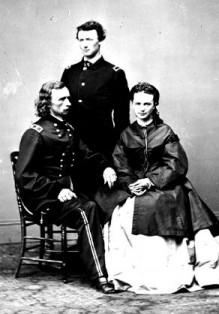
 

George & Elizabeth Custer seated.


Persistent raindrops tapped against the windows of Elizabeth Custer’s Park Avenue apartment in New York City.  The prim, eight-four-year-old woman, clad in a black, Edwardian dress, stared out at the dreary, foggy weather.  She wore a pensive expression.  Her graying hair was pulled back neatly into a tight bun, although a few loose tendrils had escaped and gently framed her small face.  Her throat was modestly covered with lace.

The room around Elizabeth was grand in size and filled with items she had collected during her days on the Western Plains.  Framed drawings of the Kansas prairie, a trunk with George’s initials across the top, photographs of friends and family at various outposts, and an assortment of books on subjects ranging from travel beyond the Mississippi to the types of wildflowers that lined the Oregon Trail were among her treasures.  The sparse furnishings in the apartment were covered with newspapers and journals.  A small desk was littered with hundreds of letters.

Elizabeth glanced at the clock on a nearby table and then clicked on a radio housed in the gigantic cabinet beside her.  As she tuned the dial through static and tones, a bright, maroon light from the console of the radio sifted into the hollow of the dark room.  At the same time, the fog outside the window lifted a bit, and the vague, misty outlines of palatial apartment buildings, museums, and churches came into view.

Elizabeth found the radio station she was looking for and leaned back in a plush chair as a voice described upcoming programming.  She pulled a shawl around her shoulders and sat, patiently waiting.  After a few moments, an announcer broke in with pertinent information about the broadcast to which Elizabeth planned to listen:  an episode of Frontier Fighters entitled “Custer’s Last Stand.”  The airdate was June 26, 1926, fifty years after the Battle of the Little Bighorn.
 

Widowed Ones Book Cover


To learn more about Elizabeth Custer’s life after her husband death read

The Widowed Ones:  Beyond the Battle of the Little Bighorn

None Missing, None Wounded, All Dead

Enter now to win a copy of

The Widowed Ones:  Beyond the Battle of the Little Bighorn


Thirty-four-year-old Elizabeth Bacon Custer filed into the Methodist church in Monroe, Michigan, on August 13, 1876, with hundreds of others attending the memorial service of her husband of twelve years, General George A. Custer, and five of his officers killed at the Battle of the Little Bighorn.  She was adorned in a black bombazine (silk) dress with black fringe and a black bonnet with a black crepe veil.  The mourning outfit would be her standard wardrobe for years to come.  She walked mechanically, but purposefully, down the center aisle, her eyes focused on a reserved seat in the front pew.  Friends and acquaintances smiled piteously at her as she passed; some refrained from looking at her at all.  Those who knew of her and her well-known husband by reputation only stood on tiptoe and craned their necks to watch her every move.
The heat that afternoon was sweltering.  Members of the Baptist and Presbyterian churches had joined the Methodists to pay tribute to the slain soldiers who were raised in the town located on the western shores of Lake Erie.  The combination of congregants along with the other funeral goers made the atmosphere in the house of worship oppressive.  Halftones from the bright sun diffused through the stained-glass windows cast a colorful light on the portrait of General Custer sitting on the organ next to a magnificent podium in the very front where the pastor delivered his weekly sermons.  Custer’s picture was surrounded with an evergreen wreath, and two sabers crossed underneath the picture.  The names of Captain Yates and Henry Armstrong Reed were scrawled across ribbons encompassing another display in evergreen.


The Widowed Ones Cover


 To learn more about the Elizabeth Custer and the other widows read

The Widowed Ones: Beyond the Battle of the Little Bighorn. 


Left Behind

Enter now to win a copy of

The Widowed Ones: Beyond the Battle of the Little Bighorn


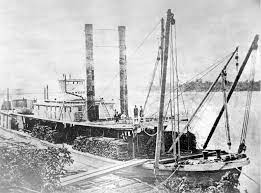
On Saturday, May 27, 1876, Henrietta “Nettie” Smith, her good friend Elizabeth Custer, and several other soldiers’ wives made their way to the steamship Far West, docked in the waters near Fort Abraham Lincoln.  They were excited and filled with purpose.  They planned to persuade the ship’s captain, Grant Marsh, to transport them up the Missouri to the Yellowstone River near where their husbands were camped. The wives of the Seventh Cavalry officers had met with their spouses in the field before, some living in tents with them while they performed their duties; so, the request wasn’t out of the ordinary.  When the troops had marched away from the fort a mere nine days prior, the goodbyes had been emotional and touching.  Nettie Smith, who had been married to First Lieutenant Algernon Smith for more than nine years, was desperate to see him again.  A sense of fear and foreboding over his safety had overtaken her, and letters he had written assuring her he was fine could not convince her he was well.

Far West crew members welcomed the women aboard the vessel and as per the custom, Captain Marsh ordered a meal prepared for them.  Nettie, Elizabeth, and the other wives were escorted to the ship’s dining room where they were served “as dainty a luncheon as the larder of the boat could afford.”  Elizabeth requested the captain join them, and he reluctantly did so.  He was busy preparing the steamship to rendezvous with the Seventh Cavalry.  He and his thirty-man crew were loading the vessel with food, ammunition, and other supplies the troops would need.  There wasn’t a moment to spare.

After listening patiently to the officers’ wives request, Captain Marsh explained that in the best of circumstances “he did not wish to be burdened with many passengers for whose safety and comfort he would be responsible.”  He went on to inform the women that the anticipated voyage to the Yellowstone River would be “both dangerous and uncomfortable.”  This revelation did not cause the women to change their minds about their objective.  They believed their places were with their husbands wherever they were and whatever peril might lie ahead.  Captain Marsh complimented their devotion to their loved ones but, nonetheless, refused to take them on the voyage.  He suggested they wait for the steamboat Josephine.  Josephine was scheduled to travel from Bismarck to the Yellowstone River in the coming weeks and was much more suitable for polite passengers than the Far West.  The women didn’t want to wait for another boat and appealed again to Captain Marsh.  There was no changing his mind.


To learn more about the women left to carry on without their husbands read

The Widowed Ones: Beyond the Battle of the Little Bighorn

This Day…

1936 – The novel “Gone with the Wind” is published Margaret Mitchell’s story set in the American South during the American Civil War became one of the United States’ biggest best-sellers. The 1939 movie version starring Vivien Leigh and Clark Gable was similarly successful.

Forlorn at Fort Lincoln

Enter now to win a copy of

The Widowed Ones: Beyond the Battle of the Little Bighorn


While Elizabeth and the other widows were preparing for their moves from Fort Lincoln, reporters were swarming around the home of the Custer men.  All were hoping for a statement about the charge circulating in Washington, D. C., and in many newspapers that Custer’s ego and desire for fame had placed his men in danger, men that would have blindly followed him anywhere, and ultimately cost them their lives.

“They should not have said so,” the distressed Reverend Custer stated.  “I am his father, and shouldn’t a father know the characteristics of his own son?  He was neither proud nor vain.  He fought to whip and not for praise.  He was not reckless.  He had much to live for, and he would not throw his life away.  They shouldn’t have said so.”

When newspapers carrying the reverend’s comments reached the post, Elizabeth and the other widows were upset.  The insinuation that Custer was impetuous and reckless and that those officers who served with him were incapable of independent thought was infuriating and disrespectful to the memory of their late husbands.  The officers’ widows occasionally gathered on the porch of the Custers’ home to discuss the way the press was reporting on the tragic event.  Weeks after the battle, none of the women had been told the specifics of the deaths of their spouses.  No military official who had that information considered it necessary to share.  It was determined by the post commander that Eliza Porter did not need to know just yet that her husband James’ body had been horribly mutilated and that his head had not been recovered.  For the time, Grace Harrington, one of the officers’ widows at Fort Rice, was spared the news that her husband Henry’s body could not be identified and was presumed missing.  Nettie Smith had no idea her husband Algernon had been wounded prior to the final battle on what would become known as Last Stand Hill.  Molly McIntosh did not know her husband Donald was wrestled from his saddle and tomahawked to death, then dragged to the riverbank and scalped from forehead to neck.  Maggie Calhoun and Annie Yates were unaware the bodies of their husbands, James and George, were badly decomposed by the time they were buried in a shallow grave.  Elizabeth had yet to know that Custer suffered several gunshot wounds, including one to the left temple.


Widowed Ones Book Cover


To learn more about the officer’s wives who lost their husbands at the Last Stand read

The Widowed Ones: Beyond the Battle of the Little Bighorn

This Day…

June 25, 1876 – A dawn, Lt. Varnum and his Indian scouts, who are located on a high promontory called the “Crow’s Nest,” observe the Sioux camp and its large horse herds 15 miles to the west of the Little Bighorn.  They report this discovery to Custer, and note that several Sioux had been observing the cavalry column.