
1904 – Woman arrested for smoking a cigarette in a car on 5th Avenue, NYC.
Under Western Stars
Enter now to win a copy of
Happy Trails:
A Pictorial Celebration of the Life and Times of Roy Rogers and Dale Evans
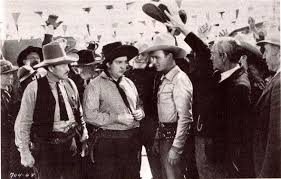
Under Western Stars
An Essay for the National Film Registry
By
Howard Kazanjian and Chris Enss
King of the Cowboys Roy Rogers made his starring motion picture debut in Republic Studio’s engaging western musical Under Western Stars. Released in 1938, the charming, affable Rogers portrayed the most colorful Congressman ever to walk up the steps of the nation’s capital. Rogers’ character, a fearless, two-gun cowboy and ranger from the western town of Sageville, is elected to office to try to win legislation favorable to dust bowl residents.
Rogers represents a group of ranchers whose land has dried up when a water company controlling the only dam decides to keep the coveted liquid from the hard-working cattlemen. Spurred on by his secretary and publicity manager, Frog Millhouse, played by Smiley Burnette, Rogers campaigns for office. The portly Burnette provides much of the film’s comic relief and goes to extremes to get his friend elected. His tactics include pasting stickers on the backs of unsuspecting citizens he engages in conversation and helping to organize a square dance to highlight Rogers’ skill and dedication to solving the constituent’s crisis. Using his knowledge of land and livestock and his talent for singing and yodeling, Rogers wins a seat in Congress.
The sweep of this picture, which moves rapidly from physical action on the western plains to diplomatic action in Washington and back again, is distinctively thrilling. The surging climax in the dust-stricken cattle country makes for one of the most refreshing films of its kind. The politicians Rogers appeals to about the drought are not convinced the situation is as serious as they are led to believe and decide to inspect the scene for themselves. The investigation committee is eventually trapped in a real dust storm. The shots of the storm and the devastation left in its wake are spectacular.
Roy Rogers came to Hollywood from Duck Run, Ohio. He made a name for himself as a member of the successful singing group the Sons of the Pioneers. Reigning box office cowboy Gene Autry’s difficulties with Herbert Yates, head of Republic Studios, paved the way for Rogers to ride into the leading role in Under Western Stars. Yates felt he alone was responsible for creating Autry’s success in films and wanted a portion of the revenue he made from the image he helped create. Yates demanded a percentage of any commercial, product endorsement, merchandising, and personal appearance Autry made. Autry did not believe Yates was entitled to the money he earned outside of the movies made for Republic Studios. He refused to include Yates in the profits and threatened to leave the studio if Yates did not reconsider. Autry was also demanding a raise in pay.
Yates decided it was time to begin grooming another talent to take Autry’s place should the need arise. Rogers was a contract player with the studio making $75 a week. Billed as Leonard Slye he appeared in a handful of films with Gene Autry singing along with the Sons of the Pioneers. Rogers even had a part as a bad guy in one of Autry’s films. When Autry caught up with Rogers in the picture, instead of taking him to jail he demanded the wily character yodel his way out of his troubles.
Yates had been looking for a musical actor to go boot-to-boot with Autry and Rogers was to be the heir apparent. His sweet, pure voice and wholesome image made him a natural for the hero in Under the Western Stars. Whether regaling the audience with a song about fighting the law entitled Send Our Mail to the County Jail or delivering a stump speech via a tune called Listen to Rhythm of the Range, Rogers makes the most of his leading role.
The Maple City Four, the well-known quartet who made the number Git Along Little Dogies popular, added their talents with Rogers harmonizing on the film’s most important song entitled Dust. Written by Johnny Marvin, a recording artist from Oklahoma, Dust was nominated for an Academy Award for Best Original Song. It was the first song from a B-western to be Oscar nominated.
According to the February 24, 1938, edition of the Hollywood Reporter, Dust was purchased by Republic Studios from the composers, Gene Autry, and Johnny Marvin, for use in Under Western Stars. A subsequent news item in Hollywood Reporter on April 13, 1938, just prior to the film’s release, noted that Autry was suing the studio for $25,000 for unauthorized use and dramatization of the lyrics with Dust. According to contemporary sources, the suit over Dust was settled out of court and Johnny Marvin is listed as sole writer of the song.
Audiences made Under Western Stars a box office success and critics called its star “the new Playboy of the Western World.”
Director Joseph Kane, Republic’s top director of westerns delivered a film with a slight new slanting to make it different from all other B-westerns before it. In addition to the political intrigue in Under Western Stars there is a fair number of gunfights, fast horses, and unforgettable stunts. What makes Kane’s film unique is that the fight is not over horse thieves, but the rights of man. Critics at the Brooklyn Daily Eagle newspaper sited Kane’s “sensitive directing eye with giving the horse opera a social consciousness.”
Actors Carol Hughes, Guy Usher, Tex Cooper, Kenneth Harlan, Curley Dresden, Bill Wolfe, Jack Ingram, Jack Kirk, Fred Burns, and Tom Chatterton round out the exciting cast of players and no happy ending would be possible at all if not for Roy’s magnificent Palomino horse Trigger. Brothers and veteran western writers Dorrell and Stuart McGowan penned the screenplay for Under Western Stars along with actress and screenwriter Betty Burbridge.
The film was shot in the Alabama Hills of Lone Pine, California. The scenic location has been used for the backdrop in hundreds of motion pictures and television programs. The high desert surroundings are integral to the story line of Under Western Stars and could be billed as a supporting role in the film.
Roy Rogers’ first starring vehicle solidified his place as a rising star in B westerns. Film writer and critic Louella Parsons likened Rogers to “Gary Cooper in personal appeal.” According to her report with the International News Service on November 29, 1938, she called Rogers an “upstanding young American who made the picture Under Western Stars a delight.”
This Day…
1920 – Chicago grand jury convenes to investigate charges that 8 White Sox players conspired to fix the 1919 World Series.
King of the Cowboys Marries the Queen of the West
Enter to win a copy of
The Cowboy and the Senorita: A Biography of Roy Rogers and Dale Evans and
Happy Trails: A Pictorial Celebration of the Life and Times of Roy Rogers and Dale Evans.
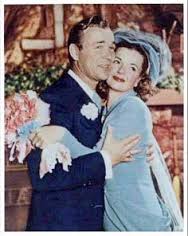
In the fall of 1947 Roy proposed to Dale as he sat on Trigger. The pair was performing at a rode in Chicago, and moments before their big entrance Roy suggested they get married. The date set for the wedding was New Year’s Eve. Gossip columnists predicted that Trigger would be the best man and that Dale would wear a red-sequined, cowgirl gown. The prediction proved to be false.
Roy and Dale’s wedding was a simple affair held at a ranch in Oklahoma, which happened to be the location for the filming of their seventeenth movie, Home in Oklahoma. The couple’s agent, Art Rush, served as best man and his wife, Mary Jo, was the matron of honor.
To learn more about Roy Rogers, Dale Evans, and Trigger enter to win now
The Cowboy and the Senorita and Happy Trails.
This Day…
1969 – Virtual band Archies’ single “Sugar Sugar” hits #1
This Day…
The Roy Rogers Show
Enter now to win a copy of
Happy Trails: A Pictorial Celebration of the Life and Times of Roy Rogers and Dale Evans
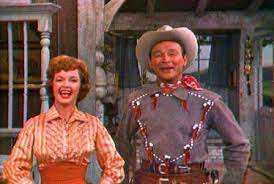
On December 30, 1951, The Roy Rogers Show debuted on NBC. Children across the country were poised in front of their parents’ television sets on Sunday nights at 6:30 to watch their favorite singing cowboy fight for law and order in the contemporary West. The theme song for the program, written by Dale Evans, was “Happy Trails.”
Dale joined Roy in the series, as did actor-singer Pat Brady, who played a bumbling sidekick. In addition to the human actors, the show featured Roy Roy’s horse, Trigger; Dale’s horse, Buttermilk; her dog, Bullet; and Pat’s cantankerous jeep, Nellybelle.
Critics believed the show was popular not only because audiences loved the mix of action and comedy, but also because of the high morals it brought to light. Roy and Dale’s faith in God and their desire to live according to His ways were evident in each episode. (Roy read the Cowboy’s Prayer at the Riders Club meetings at theatres that featured his movies and television shows.) The programs struck a positive chord with children and parents alike. The show remained on the air for seven years.
Evangelist Billy Graham invited Roy and Dale to perform at his crusades and give their testimony. New attendance records were established wherever they appeared. Dale went on to record her testimony in a series of books about her life and faith. Each one was a popular seller for the publishing house, the Revell Company.
To learn more about the talented cowboy duo read Happy Trails!
The Cowgirl’s Lament Wins!
This Day…
1847 – American-Mexican war: US General Winfield Scott captures Mexico City.
A Time for Heroes
Enter now to win a copy of
Happy Trails:
A Pictorial Celebration of the Life and Times of Roy Rogers and Dale Evans
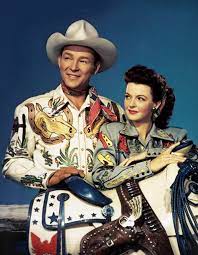
Hundreds of excited children, with hard-earned nickels and dimes clutched tightly in their fists, exchanged their money for a ticket at Saturday matinees across the country in the 1940s. The chance to see singing cowboy Roy Rogers, his horse, Trigger, and leading lady Dale Evans come up against the West’s most notorious criminals brought young audiences to theatres in droves. And, in the process, it elevated western musicals to one of the most popular film genres in history.
Roy Rogers and Dale Evans were the reigning royalty of B-rated westerns for more than a decade. They helped persuade moviegoers that good always triumphs over evil in a fair fight and that life on the open range was one long, wholesome sing-along. Together, the King of Cowboys and the Queen of the West appeared in more than 200 films and television programs.
Roy and Dale made their first picture together in 1944. The film, The Cowboy and the Senorita, brought an estimated 900,000 fans to movie houses in America and began a partnership for the couple that lasted fifty-two years. The chemistry between Roy and Dale was enchanting, and together they were an entertaining powerhouse. In addition to their films, they had popular radio programs, comic book series, albums, and a long list of merchandise (including clothes, boots, and toys), all bearing their names.
Roy and Dale were successful individually, as well. Dale, a talented singer-songwriter, performed with big band orchestras, shared the stage with Edgar Bergen and Charlie McCarthy, and penned many popular tunes, including the song that would be Roy and Dale’s theme, “Happy Trails.” Roy was a co-founder and member of the group the Sons of the Pioneers. The band made a name for itself singing original country music songs, including “Cool Water” and “Tumblin’ Tumbleweeds.”
To learn more about the cowboy duo read Happy Trails