1960 – Nationwide release (US) of Alfred Hitchcock‘s “Psycho” starring Anthony Perkins and Janet Leigh
For the Love of Roy Rogers and Dale Evans
Enter now to win a copy of
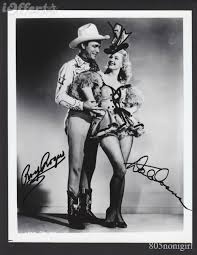
Happy Trails: A Pictorial Celebration of the Life and Times of Roy Rogers and Dale Evans
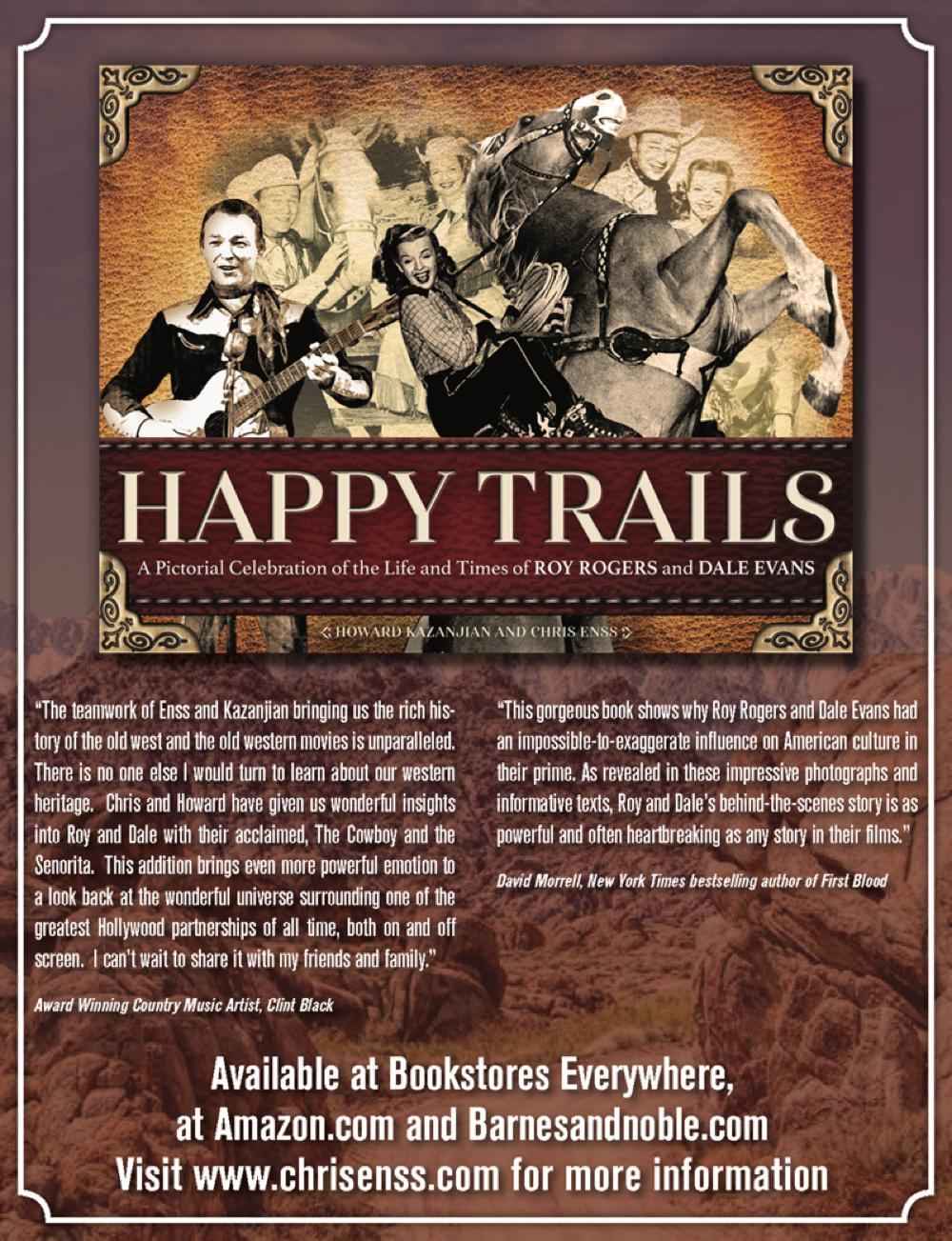
Hundreds of excited children, with hard-earned nickels and dimes clutched tightly in their fists, exchanged their money for a ticket at Saturday matinees across the country in the 1940s. The chance to see singing cowboy Roy Rogers, his horse, Trigger, and leading lady Dale Evans come up against the West’s most notorious criminals brought young audiences to theatres in droves. And, in the process, it elevated western musicals to one of the most popular film genres in history.
Roy Rogers and Dale Evans were the reigning royalty of B-rated westerns for more than a decade. They helped persuade moviegoers that good always triumphs over evil in a fair fight and that life on the open range was one long, wholesome sing-along. Together, the King of the Cowboys and the Queen of the West appeared in more than 200 films and television programs.
Roy and Dale made their first pictures together in 1994. The film, The Cowboy and the Senorita, brought an estimated 900,000 fans to movie houses in America and began a partnership for the couple that lasted fifty-two years. The chemistry between Roy and Dale was enchanting, and together they were an entertainment powerhouse. In addition to their films, they had popular radio programs, comic book series, albums, and a long list of merchandise (including clothes, boots, and toys), all bearing their names.
Roy and Dale were successful individuals, as well, Dale, a talented singer-songwriter, performed with big band orchestras, shared the stage with Edgar Bergen and Charlie McCarthy, and penned many popular tunes, including the song that would be Roy and Dale’s theme, “Happy Trails.” Roy was a co-founder and member of the group the Sons of the Pioneers. The band made a name for itself singing original country music songs, including “Cool Water” and “Tumblin’ Tumbleweeds.”
Roy Rogers and Dale Evans were married in 1947. As a couple they were consistently ranked in the top ten among the western stars at the box office. They costarred in twenty-nine movies and recorded more than 200 albums together. In 1951, they parlayed their fame to the small screen, appearing in a half-hour television show aptly called The Roy Rogers Show.
When they weren’t working, the western icons spent a great deal of time visiting children in hospitals and orphanages. They were dedicated Christians who sought to serve the hurt and needy. They would later be recognized by national civic organizations for their humanitarian efforts.
Roy and Dale’s off-screen life was filled with a great deal of love and happiness. They had nine children, whom they adored and showered with affection. Their family was no stranger to tragedy though. One child, Robin, died of complications associated with Down syndrome. An adopted daughter, Debbie, died in a church bus accident when she was twelve; their adopted son, Sandy, suffered as accidental death while serving in the military in Germany. Robin’s death inspired Dale to write Angel Unaware, the first of her more than twenty books.
After the couple was semi-retired from the entertainment industry, they greeted fans at the museum in Victorville, California, and enjoyed life with their children, grandchildren, and great-grandchildren. Thousands of western enthusiasts and fans alike now make the pilgrimage to Branson, Missouri, where the Roy Rogers-Dale Evans Museum is currently located. They come to get a glimpse of their heroes’ six-shooters, boots, costumes, and other personal artifacts on display.
The Rogers family’s collection of priceless items elicits fond memories of an inspirational pair who used their immense talent to encourage moral and spiritual strength. The artifacts draw visitors back in time to when knights of the American plains yodeled, wore white hats and fancy boots, and thrived on defeating the outlaws and rescuing the defenseless.
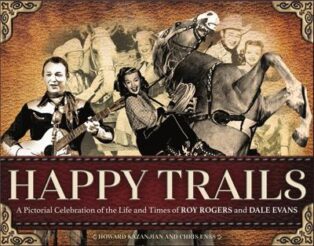
To learn more about the cowboy duo read Happy Trails
This Day…
1944 – Holocaust diarist Anne Frank sent to Auschwitz concentration camp
Who Wrote the Song Happy Trails?
Like to win? Now’s your chance. Enter to win a copy of
The Cowboy and the Senorita: A Biography of Roy Rogers and Dale Evans and
Happy Trails: A Pictorial Celebration of the Life and Times of Roy Rogers and Dale Evans
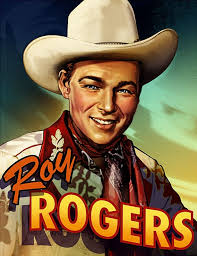
Elected to the Country Music Hall of Fame in 1980 as a member of the Sons of the Pioneers and elected again in 1988 as Roy Rogers.
Roy got his horse Trigger in 1938 and rode him in every one of his films and TV shows after that. He had appeared in one earlier movie, ridden by Olivia de Havilland in The Adventures of Robin Hood (1938). Trigger died in 1965 at age 33.
Roy’s theme song, “Happy Trails”, was written by Dale Evans.
Inducted (as a member of the Sons of the Pioneers) into the Hall of Great Western Performers of the National Cowboy and Western Heritage Museum in 1995.
Enter now to win
Happy Trails: A Pictorial Celebration of the Life and Times of Roy Rogers and Dale Evans
This Day…
1878 – 1st female telephone operator starts work, Emma Nutt for the Edwin Holmes Telephone Despatch Company in Boston.
King of the Cowboys, Queen of the West
This month Roy Rogers and Dale Evans fans can enter to win a copy of Happy Trails: A Pictorial Celebration of the Life and Times of Roy Rogers and Dale Evans. Visit www.chrisenss.com to learn more.
Roy Rogers and Dale Evans ruled the West from the silver screen as the King of Cowboys and Queen of the West. Off screen, this husband-and-wife duo raised a family and lived the “Code of the West.” Now, in this new book, the Rogers family shares their memories of Roy, Dale, and Trigger, along with their other sidekicks and more than a hundred never before seen, behind-the-scenes photographs.
This Day…
Traveling with Rocky Mountain Jim
Enter now to win a copy of
The Lady and the Mountain Man:
Isabella Bird, Rocky Mountain Jim, and their Unlikely Friendship
The Greeley stage arrived by mid-morning and came to a stop at the stables not far from the inn. A male passenger dressed in tailored clothing from his head to his boots stepped out of the vehicle. He was wearing light colored, woolen breeches, a white shirt, silk bandana, a heavy, double-breasted, lined flannel coat, and a black woolen-lined driving cap with ear flaps. Isabella recognized him as the Englishman William Haigh. She’d had occasion to meet him once in Estes Park while he was visiting with Griff Evans. Carrying a few of her belongings, she walked to the stage. Jim followed alongside her, clutching her bags in each hand.
Ever the polite dandy, Haigh bowed briefly at the waist when he saw Isabella. The two exchanged cordialities, and then she introduced him to Mountain Jim. After expressing how honored he was to make his acquaintance, he told Jim his reputation had proceeded him and how much he would enjoy going on a hunting trip with him. Jim was courteous and thanked the Englishman for his thoughtfulness. Haigh extended his hand to shake Jim’s. It was a scene Isabella recalled vividly. “…[H]e put out a small hand cased in a perfectly fitting lemon colored kid glove,” she wrote in her memoirs. “As the mountain man stood there in his grotesque rags and odds and ends of apparel, his gentlemanliness of deportment brought into relief the innate vulgarity of a rich parvenu.”
Once the stage driver secured Isabella’s bags on the vehicle, it was time to go. Haigh helped Isabella into the coach while regaling her with news of England, his trip to the Rockies, and the influential people he’d come to know during his time in the American West. The driver cracked the whip, and the team of horses lit out. Isabella looked back to wave goodbye to the desperado she had come to know and dared to love. Jim had mounted his ride and was trudging through the mud and snow in the opposite direction. The dazzling sunlight broke through the thick tree line and danced on the renegade mountain man’s golden yellow hair. Slowly, his image faded into the snowy terrain.
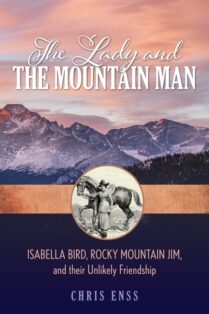
To learn more about Isabella Bird and her time with Rocky Mountain Jim Nugent read
The Lady and the Mountain Man
The Widowed Ones
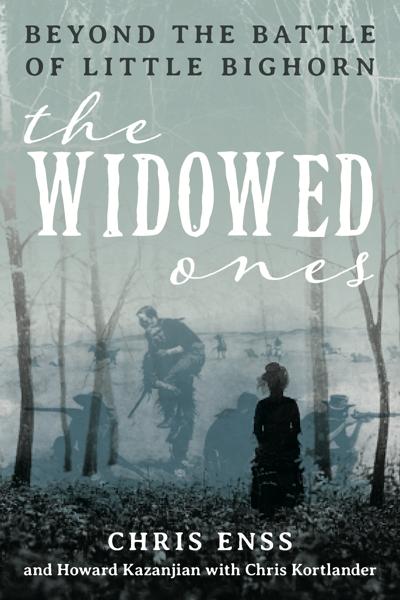
There weren’t many women in the late 1800s who had the opportunity to accompany their husbands on adventures that were so exciting they seemed fictitious. Such was the case for the women married to the officers in General George Armstrong Custer’s Seventh Cavalry. There were seven officers’ wives. They were all good friends who traveled from post to post with one another along with their spouses.
Of the seven widows, Elizabeth Custer was the most well-known. In the twelve years the Custers were together, Elizabeth lived history. She saw the surrender of Lee to Grant at Appomattox and was given the table at which the terms of surrender were drafted. After the Civil War, Custer was sent to Texas to fight the Indians which began another thrilling chapter of Elizabeth’s life, one that lasted until the memorable day when Custer and his comrades made their immortal stand against the Sioux Indians at the Battle of the Little Bighorn on June 25, 1876. During that last battle of Custer’s men, Elizabeth was less than four hundred miles away at Fort Abraham Lincoln, waiting bravely for word of the outcome. Later, it was Elizabeth’s duty to tell the officers’ wives at the post that their husbands had been killed.
The women were overwhelmed with letters of condolence. Most people were sincere in their expressions of sorrow over the widows’ loss. Others were ghoulish souvenir hunters requesting articles of their husbands’ clothing and personal weapons as keepsakes. The press was preoccupied with how the wives of the deceased officers were handling their grief. During the first year after the tragic event, reporters sought them out to learn how they were coping, what plans they had for the future, and what, if anything, they knew about the battle itself. The widows were able to soldier through the scrutiny because they had one another. They confided in each other, cried without apologizing, and discussed their desperate financial situations.
The friendship the bereaved widows had with one another proved to be a critical source of support. The transition from being officers’ wives living at various forts on the wild frontier to being single women with homes of their own was a difficult adjustment. Without one another to depend upon, the time might have been more of a struggle. The Widowed Ones: Beyond the Battle of the Little Bighorn tells the stories of these women and the unique bond they shared through never-before-seen materials from the Elizabeth Custer Library and Museum at Garryowen, Montana, including letters to and from politicians and military leaders to the widows, fellow soldiers and critics of George Custer to the widows, and letters between the widows themselves about when the women first met, the men they married, and their attempts to persevere after the tragedy.