The Railroad Civil Engineer

Enter to win a copy of

Iron Women:  The Ladies Who Helped Build the Railroad


By the beginning of the nineteenth century, with independence won and the Indians largely subdued, the great tide of western movement across the North American continent was gaining momentum.  One of the first railroad lines that transported people from the East to the West was the Baltimore and Ohio Railroad.  Construction on the Baltimore and Ohio Railroad began in July 1828, and the first stretch of rails was completed in 1830.  More than ninety years later, the rail line was still carrying passengers to destinations beyond the Missouri River and still establishing themselves as leaders in the industry.  In 1920, Baltimore and Ohio Railroad executives made the bold decision to hire a woman in their engineering department.  Not only was Olive Dennis the first female professional engineer hired by the Baltimore and Ohio Railroad, but she was also the first female ever to be hired in that field for a major rail line.

As a child growing up in Baltimore, Olive enjoyed working with tools.  She frequently borrowed her father’s tools to disassemble her mechanical toys.  Olive was born on November 20, 1885, in Thurlow, Pennsylvania, and at the age of eleven decided to build her own playhouse.  She spent days watching the construction of a new home across the street from where she lived and was convinced she could duplicate the work she saw being done.  Using recycled wood from an old shed her father had torn down, Olive designed and built a playhouse complete with windows, shutters, doors, and a full porch with stairs.

Olive excelled scholastically, graduating from Western High School with honors and a scholarship to attend Goucher College.  She was elected to Phi Beta Kappa there and achieved a Bachelor of Arts degree.  From Goucher she went on to Columbia in New York where she received a master’s degree in mathematics.  While teaching school in Wisconsin, she decided to study civil engineering at Cornell University.  Olive was only the second woman in the school’s history to pursue such a degree.
 

iron women book cover


To learn more about Olive Dennis and other women who helped build the railroad read Iron Women

This Day…

1916 National Board of Censorship made up of film fans representing movie studios that served as an industry watchdog to help studios avoid government censorship, says it will not accept nudity in films.

Working on the Railroad

Enter now to win a copy of

Iron Women:  The Ladies Who Helped Build the Railroad


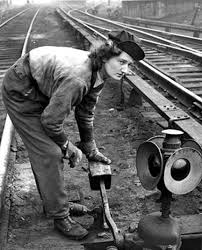
Although the physical task of building the railroad had been achieved by men, women made significant and lasting contributions to the historic operation.  The female connection with railroading dates as far back as 1838 when women were hired as registered nurses/stewardesses in passenger cars.  Those ladies attended to the medical needs of travelers and also acted as hostesses of sorts, helping passengers have a comfortable journey.

Susan Morningstar was one of the first women on record employed by a railroad.  She and her sister, Catherine Shirley, were hired by the Baltimore and Ohio Railroad in 1855 to keep the interior of the cars clean and orderly.  The feminine, homey touches they added to the railroad car’s décor attracted female travelers and transformed the stark, cold interior into a more welcoming setting.

Miss E. F. Sawyer became the first female telegraph operator when she was hired by the Burlington Railroad in Montgomery, Illinois, in 1872.  The following year, Union Pacific Railroad executives followed suit by hiring two women to be telegraph operators in Kansas City, Missouri.

Inventress Eliza Murfey focused on the mechanics of the railroad, creating devices for improving the way bearings on the rail wheel attached to train cars responded to the axles.  The device, or packing as it was referred to, was used to lubricate the axles and bearings.  Murfey held sixteen patents for her 1870 invention.

In 1879, another woman inventor named Mary Elizabeth Walton developed a system that deflected emissions from the smokestacks on railroad locomotives.  She was awarded two patents for her pollution reducing device.

A cattle rancher’s daughter, Nancy P. Wilkerson, from Terre Haute, Indiana, created the cattle car in 1881.  Using a rack and pinion mechanism, she devised sliding partisans that separated the livestock from the food compartments and water troughs.


iron women book cover


To learn more about the women who helped build the railroad read Iron Women


This Day…

1886 – Modern hockey is born – The foundation of The Hockey Association in England formalized a modern version of the game that had already been played in ancient times.

The Railroad President

Enter now to win a copy of

Iron Women:  The Ladies Who Helped Build the Railroad


The Nevada County Narrow Gauge Railroad operated as it usually did on April 10, 1901.  It ran as though nothing out of the ordinary had occurred.  The wood burning engine proceeded along its customary route without delay or interruption, giving no indication that the line’s president and owner had passed away.

John Flint Kidder had taken charge of the Nevada County Narrow Gauge Railroad in 1884.  He was a construction engineer with both the vision to maintain the line and the business sense to manage it.  The twenty-five-mile route connected the gold mines in northern California to the outside world.  The tracks threaded the canyons and rolling countryside between Nevada City and Grass Valley and the Central Pacific main line in Colfax.  The route included steep grades, two tunnels, and several trestles, the highest being ninety-five feet above the Bear River.  Kidder’s Narrow Gauge carried more gold (some $300 million) than any other short line in the state.  He was well respected and admired by a community that owed its progress to him.

Concern over the economic impact Kidder’s passing would have on the area was so great it’s surprising the railroad ran at all the day he died.  Business owners whom benefitted from the railroad worried there would be an interruption in service that would threaten their livelihood.  Rumors about who would take John Kidder’s place as head of the rail line did not immediately set the minds of those businessmen at ease.

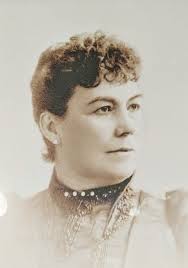
John Kidder’s widow, Sarah, was aware there were those who doubted she was the right one to assume control of the Narrow Gauge Railroad, but she was determined to prove she was up to the task.  Less than a month after her husband’s death, stockholders chose Sarah as John’s successor.  According to an article in the September 20, 1901, edition of the Oakdale Leader, when Sarah Kidder accepted the job “she had the distinction of being one of the very few women, if not the only one, who ever held such a bona fide position and title.”


iron women book cover


To learn more about Sarah Kidder and other women who helped build the railroad read Iron Women

Julie Bulette: The Madam Honored by the Railroad

Enter now to win a copy of

Iron Women:  The Ladies Who Helped Build the Railroad


The cold, gray January sky above Virginia City, Nevada, in 1867 unleashed a torrent of sleet on a slow-moving funeral procession traveling along the main thoroughfare of town.  Several members of the volunteer fire department, Virginia Engine Company Number One, were first in a long line of mourners following after a horse drawn carriage transporting the body of soiled dove Julia Bulette.  Playing “The Girl I Left Behind Me”, the Nevada militia band shuffled behind the hearse.  Black wreaths and streamers hung from the balconies of the buildings along the route which the remains of the beloved thirty-five-year-old woman were escorted.  Miners who knew Julia wept openly.  Out of respect for the deceased woman, all the saloons were closed.  Plummeting temperatures and icy winds eventually drove the majority of funeral-goers inside their homes and businesses before Julia was lowered into the ground.

Julia Bulette was murdered on January 19, 1867 at 11:30 in the evening in her home on North D Street in Virginia City.   The fair but frail prostitute told her neighbor and best friend Gertrude Holmes she was expecting company but did not specify whom the company might be.  Twelve hours later Gertrude discovered Julia’s lifeless body in bed.  She had been beaten and strangled.  Gertrude told authorities that Julia was lying in the center of the bed with the blankets pulled over her head and that the sheets under her frame were smooth.  She told police that it appeared as though no one had ever been in the bed with Julia.


iron women book cover


To learn more about women who helped build the railroad read Iron Women

The Railroad Civil Engineer

Enter now to win a copy of

Iron Women:  The Ladies Who Helped Build the Railroad


By the beginning of the nineteenth century, with independence won and the Indians largely subdued, the great tide of western movement across the North American continent was gaining momentum.  One of the first railroad lines that transported people from the East to the West was the Baltimore and Ohio Railroad.  Construction on the Baltimore and Ohio Railroad began in July 1828, and the first stretch of rails was completed in 1830.  More than ninety years later, the rail line was still carrying passengers to destinations beyond the Missouri River and still establishing themselves as leaders in the industry.  In 1920, Baltimore and Ohio Railroad executives made the bold decision to hire a woman in their engineering department.  Not only was Olive Dennis the first female professional engineer hired by the Baltimore and Ohio Railroad, but she was also the first female ever to be hired in that field for a major rail line.

As a child growing up in Baltimore, Olive enjoyed working with tools.  She frequently borrowed her father’s tools to disassemble her mechanical toys.  Olive was born on November 20, 1885, in Thurlow, Pennsylvania, and at the age of eleven decided to build her own playhouse.  She spent days watching the construction of a new home across the street from where she lived and was convinced, she could duplicate the work she saw being done.  Using recycled wood from an old shed her father had torn down, Olive designed and built a playhouse complete with windows, shutters, doors, and a full porch with stairs.


iron women book cover


To learn more about the women who helped build the American railroad read

Iron Women