Zip Wyatt’s Gang

Enter to win a copy of the

Bedside Book of Bad Girls: Outlaw Women of the Midwest


On August 2, 1895, two women bandits, Mrs. Belle Black and Mrs. Jennie Freeman, were captured in the Glass Mountains, in the western part of the Cherokee Strip, and were place in the Unites States jail in Guthrie, Oklahoma.  They belonged to the notorious gang of desperados led by Zip Wyatt, an outlaw guilty of at least a dozen murders.  So skillful was his performance and that of his two female deputies that they defied the vigilance of the Sheriff for more than a year.

According to the arresting officers neither of the women was “appealing in any way.”  “Mrs. Black was small and heavy with dark hair and blue eyes and an expression that was not only criminal, but very unpleasant.  Her husband was one of the outlaw members of the gang.  Mrs. Freeman was tall, thin and malignant.  She left her husband in 1894 to elope with Zip Wyatt.  The women dressed as ordinary farmers’ wives and their appearance and manner enabled them to get away with a good deal of plunder unsuspected.  They sit in their cells chatting with the other prisoners or playing a game of cards with those who have been allowed the freedom of the corridors with them.”


For more information about the women highway robbers who eluded law enforcement read the Bedside Book of Bad Girls


Flora Mundis: Lady Horse Thief

Enter now to win a copy of

The Bedside Book of Bad Girls:  Outlaw Women of the Midwest


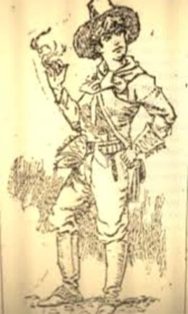
Tom King followed five, spirited, fast-moving horses into a dense line of trees seven miles outside the town of Fredonia, Kansas. It was a stifling hot, August day in 1894. The ground the criminal’s horse’s hooves pounded into was cracked and dry. Sweat foamed around the animal’s neck and hind quarters. Low hanging branches on brown, thirsty trees slapped at them as they passed by. King, dressed in worn trousers, chaps, flannel shirt, a large brimmed hat, and a tan duster, skillfully maneuvered his ride around limbs that had fallen and lay about on the path they raced along.

King and his roan were directly beside the five horses as they broke through the other side of the copse of trees. His horse leapt over a cluster of large boulders standing between the rider and the open prairie. Tom leaned back in the saddle as his horse jumped to let the wind strip off his coat. In that moment Tom and the horse were in mid-air, and the coat trailed behind him like leather wings.

From a crude camp in the far distance, Fredonia Sheriff H.S. McCleary watched Tom and his mount keep pace with the horses. The lawman cast a glance at the deputies standing on either side of him. Their eyes were fixed on King. If not for the fact that the authorities were there to arrest King for horse stealing, they might have felt compelled to congratulate him on his equestrian skills. They had apprehended King’s partner, Ed Bullock, at the thieve’s camp, placed a gag around his mouth, and handcuffed him to the back of a wagon. The ground around the vehicle was strewn with provisions that had once been packed inside the wagon. One of the items was a large trunk. The sheriff and his men had been searching for something, and the hunt appeared to have concluded with the trunk. The lock on it had been busted; the trunk was opened, and an assortment of stolen jewelry, resting on a long tray, gleamed in the sunlight.

Bullock tugged at the handcuffs in a desperate attempt to break free. He wanted to warn King about what was waiting for him. King led the ill-gotten horses into the camp, realizing too late the law had found him. The sheriff leveled his gun at the outlaw, and King slowly dismounted. He surrendered his weapon without having to be asked. The sheriff took a few steps toward King, studying his face as he walked. The sun and wind had darkened King’s complexion, and at first glance he appeared to be a mixed-blood Cherokee Indian. Sheriff McCleary asked him how old he was, and King told him his age was twenty-five. The sheriff scrutinized King’s face then told him to remove his hat. In that moment it was clear that the notorious Tom King was really the woman named Flora Mundis. Her lashes and small features gave her away.


To learn more about Flora Mundis read The Bedside Book of Bad Girls

Bad Girl Kate Bender

Enter now to win a copy of The Bedside Book of Bad Girls


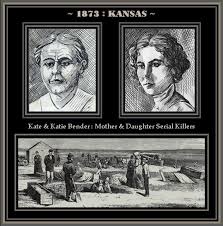
A fierce wind filled with alkali dust blew past Silas Toles, a Labette County, Kansas farmer, as he made his way to his neighbor’s seemingly vacant home.  Three other farmers followed tentatively behind him.  An endless prairie stretched out on either side of the weather-beaten building.  A hungry calf languished in a nearby fenced enclosure bawled pitilessly for something to eat.  A handful of dead chickens lay scattered about the parched earth leading to the house.  The front door was ajar and creaked back and forth.  Silas cautiously walked to the main entrance of the building and glanced inside.  Light from the late afternoon sun filtered through partially drawn curtains onto the sparse, shabby, and torn furnishings in the center of the one room home.

Silas pushed the door open and stood in the dirt entryway.  The home was in complete disarray; clothing, books, paper, and dishes were on the floor; bugs covered bits of food on a broken table, chairs were overturned, and a pungent smell of death hung in the air.  The three men with Silas held back waiting for him to motion them forward.  The sound of fast approaching horses distracted the quartet and they watched with rapt attention as several riders hurried to the spot and quickly dismounted.  Colonel A. M. York, a distinguished, bearded man dressed in the uniform of an army officer, led a team of Civil War veterans and lawmen to the entrance of the home.  They pushed past Silas and the others and boldly entered.

Colonel York surveyed the room and kicked away the debris at his feet as he walked around.  He wore a determined, yet forlorn expression.  The group with the Colonel examined the area along with him and inspected the items underfoot carefully.  One of the men noticed a collection of Pagan artifacts including a pentagram and Tarot cards in the corner of the room.  Some of the articles were covered with dried blood.  Colonel York followed a trail of blood from the artifacts to a mound of fresh earth under a pile of soiled sheets.  Kneeling down in the dirt he scooped the earth out until he reached a crude door.  The men around stared wide-eyed at the oddity waiting for the Colonel to make the next move.  One of the lawmen brushed dirt away from a round handle attached to the door.  Before giving it a pull, he glanced over at the Colonel to see if he wanted to continue the search.  The Colonel was quietly transfixed by the scene.  The lawman interpreted his silence as an affirmative answer and quickly pulled the door open.  The foul stench that wafted out of the dark hole hit the men like a punch in the face.  There was no question the source of the odor that had offended their senses from the moment they entered the home was coming from this location.


To learn more about bad girls like Kate Bender read The Bedside Book of Bad Girls

Losing George

Enter now to win a copy of the book

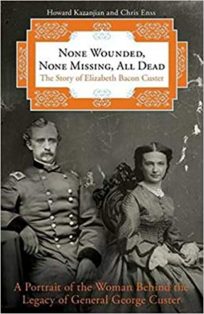
None Wounded, None Missing, All Dead: The Story of Elizabeth Bacon Custer


“Indescribable yearning for the absent, and untold terror for their safety, engrossed each heart.”

Elizabeth Custer on waiting to hear news about the fate of George and the members of his command – 1885


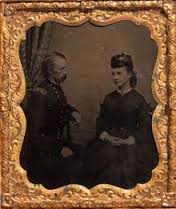
It was almost two in the morning. Elizabeth couldn’t sleep. It was the heat that kept her awake, the sweltering, intense heat that had overtaken Fort Lincoln earlier that day and now made even sleeping an uncomfortable prospect. Even if the conditions for slumber were more congenial, sleep would have eluded Elizabeth. The rumor that had swept through the army post around lunchtime disturbed her greatly and until this rumor was confirmed she doubted that she’d ever be able to get a moment’s rest.

Elizabeth walked her anxious frame over to the window and gazed out at the night sky. It had been more than two weeks since she had said goodbye to her husband. She left him and his troops a few miles outside of Fort Lincoln. His orders were to intercept the Sioux and Cheyenne Indians in the territory, force them back to the reservation, and bring about stability in the hills of Montana.

Just before riding out she turned around for one last glance at General George Custer’s column departing in the opposite direction. It was a splendid picture. The flags and pennons were flying, the men were waving and even the horses seemed to be arching themselves to show how fine and fit they were. George rode to the top of the promontory and turned around, stood up in his stirrups and waved his hat. Then they all started forward again and, in a few seconds, they had disappeared, horses, flags, men, and ammunition – all on their way to the Little Bighorn River. That was the last Elizabeth saw of her husband alive.

Over and over again she played out the events of the hot day that made her restless. Elizabeth and several other wives had been sitting inside her quarters singing hymns. They desperately hoped the lyrics would give comfort to their longing hearts. All at once they noticed a group of soldiers congregating and talking excitedly. One of the Indian scouts, Horn Toad, ran to them and announced, “Custer killed. Whole command killed.” The woman stared back at Horn Toad in stunned silence. Catherine Benteen asked the Indian how he knew that Custer was killed? He replied: “Speckled Cock, Indian Scout, just come. Rode pony many miles. Pony tired. Indian tired. Say Custer shoot himself at end. Say all dead.”


To learn more about Elizabeth Bacon Custer and her marriage to

George Armstrong Custer read

None Wounded, None Missing, All Dead: The Story of Elizabeth Bacon Custer


This Day…

1918  – In the worlds worst flu epidemic in history (called Spanish Flu because the first major outbreak causing multiple deaths was in Spain), an estimated 30 million people died worldwide. Philadelphia was the hardest hit city in the United States. After the Liberty Loan parade on September 28, thousands of people became infected causing the death of 12,000 in the city.

Suddenly Alone

Enter now to win a copy of the book

None Wounded, None Missing, All Dead: The Story of Elizabeth Bacon Custer


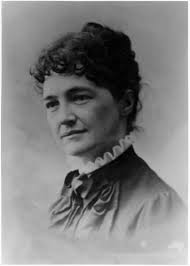
Persistent raindrops tapped against the windows of Elizabeth Custer’s Park Avenue apartment in New York. The prim, 74-year-old women, dressed head to toe in black, Victorian clothing, stared out at the dreary, foggy weather. She wore a pensive expression. Her graying hair was pulled back neatly into a tight bun, a few loose tendrils had escaped and gently framed her small face. Her throat was modestly covered with lace.

The room around Elizabeth was grand in size and filled with items she had collected from her days on the western plains. Framed drawings of the Kansas prairie, a trunk with George’s initials across the top, photographs of friends and family at various outposts, and an assortment of books on subjects ranging from travel beyond the Mississippi to the types of wild flowers that lined the Oregon trail were among her treasures. The sparse furnishings in the apartment were covered with newspapers and journals. A small desk was littered with hundreds of letters.

Elizabeth glanced at the clock on a nearby table then clicked on a radio housed in a gigantic cabinet beside her. As she tuned the dial through static and tones, a bright, maroon light sifted into the hollow of the dark room. At the same time the fog outside the window lifted a bit and the vague, misty outlines of palatial apartment buildings, museums, and churches came into view.

Elizabeth found the radio station she was looking for and leaned back in a plush chair as a voice described upcoming programming. She pulled a shawl around her shoulders and sat patiently waiting. After a few moments, an announcer broke in with pertinent information about the broadcast. The program Elizabeth was tuned in to was Frontier Fighters and the episode was entitled Custer’s Last Stand. The airdate was June 26, 1926, 50 years after the Battle at Little Bighorn.

As the reenactment unfolded, Elizabeth’s eyes settled on a photograph of George hanging on the wall above the radio and she remembered that awful moment. The devastated look on the faces of the 20 wives who lost their husbands the same day she lost hers would never be forgotten. “From that time the life went out of the hearts of the women who wept,” Elizabeth wrote in her memoirs, “and God asked them to walk on alone in the shadows.”


To learn more about Elizabeth Bacon Custer and her marriage to George Armstrong Custer read

None Wounded, None Missing, All Dead: The Story of Elizabeth Bacon Custer