A Husband Wanted

It’s a Pick-A-Book Giveaway.

This month enter to win any book from the catalog of books I’ve pinned.

Winners will be announced April 30.
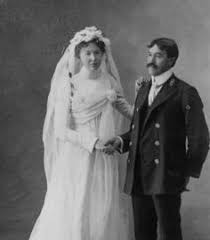


The Matrimonial News, a San Francisco matchmaking newspaper, was dedicated to “promoting honorable matrimonial engagements and true conjugal facilities” for men and women through personal advertisements and was a forerunner of the matchmaking clubs and personal ads in newspapers today.  Not all the matrimonial bureaus and agencies were legitimate, however, and many a disappointed bride or groom was left with empty pockets after contracting for a mail-order mate.

Here are a few of the ads posted in the January 8, 1887, edition of Matrimonial News.

283 – A gentlemen of 25 years old, 5 feet 3 inches, doing a good business in the city, desires the acquaintance of a young, intelligent and refined lady possessed of some means, of a loving disposition from 18 to 23, and one who could make a home a paradise.

287 – An intelligent young fellow of 22 years, 6 feet height, weight 170 pounds.  Would like to correspond with a lady from 18 to 22 years.  Will exchange photos:  object, fun and amusement, and perhaps when acquainted, if suitable, matrimony.

245 – I am 48, fat, fair, and plan on losing no weight.  Am a No. 1 lady, well fixed with no encumbrances:  am in business in city but want a partner who lives in the West.  Want an energetic man that has some means, not under 40 years of age and weight not less than 180.  Of good habits.  A Christian gentleman preferred.

241 – I am a widow, aged 28, have one child, height 64 inches, blue eyes, weight 125 pounds, loving disposition.  I am poor; would like to hear from honorable men from 30 to 40 years old:  working men preferred.
 

To learn more advertisements from frontier women seeking men read

Hearts West:  True Stories of Mail Order Brides on the Frontier.
 

Pocahontas and More Tales Behind the Tombstones

It’s a Pick-A-Book Giveaway.

This month enter to win any book from the catalog of books I’ve pinned.

Winners will be announced April 30.


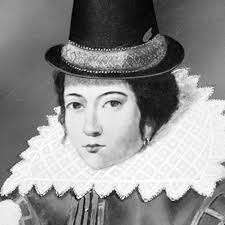
Pocahontas, a nickname meaning “little spoiled one,” was born Amonute, daughter of Chief Powhatan in 1595.  She was an extrovert from a young age, inquisitive and naturally good-natured.  At eleven years old she played a minor role in securing John Smith’s survival.  Later she was the go-between for trade among the settlers and Indians bartering at Jamestown.  A few years later she was betrothed to an Englishman named John Rolfe, only after she agreed to be baptized in 1614.  Two years later Rolfe took her to London, where she was received as a celebrity, billed as a real live Indian princess by high society, and held an audience with King James.  In 1617 she believed the smoky air of London was the cause of her coughs and bouts of weakness and wished to return to the forests she had known.  Along with Rolfe she boarded a ship to return to Virginia, but the vessel only made it to the end of the Thames River before it turned back.  Pocahontas died in London at age twenty-one of a disease called the king’s evil, a form of tuberculosis characterized by swelling of the lymph glands.


To learn more about women like Pocahontas read

More Tales Behind the Tombstones: More Deaths and Burials of the Old West’s Most Nefarious Outlaws, Notorious Women, and Celebrated Lawmen.

Available in bookstores everywhere. 


The Tale of Mary Ann Shadd Cary

It’s a Pick-A-Book Giveaway.

This month enter to win any book from the catalog of books I’ve pinned.

Winners will be announced April 30.


When times are tough, sometimes we need an encouraging voice

or uplifting story to help get us through. 


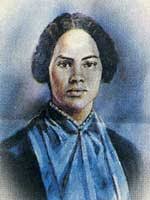
Mary Ann Shadd Cary was an educator and abolitionist.  She was the first black woman to graduate from Howard University Law School and the first black woman to vote in a federal election.  She helped President Lincoln enlist black men to fight in the Union and her house was frequently a safe haven in the Underground Railroad for slaves fleeing the South.  After the war she became a school principal, and then a lawyer in Washington, D. C., at the age of sixty.  She died in 1893 at age seventy from heart failure, with an estimated value at $150.


For more stories of encouragement from women in history read

Tales Behind the Tombstones.  

Available everywhere books are sold.  


Elizabeth Blackwell – Changing the Face of Medicine

It’s a Pick-A-Book Giveaway.

This month enter to win any book from the catalog of books I’ve pinned.

Winners will be announced April 30.


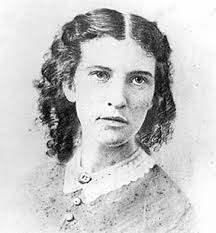
On Wednesday, January 25, 1911, physicians across the world gathered at the great hall at the Academy of Medicine in New York to honor America’s first woman doctor, Elizabeth Blackwell. The tenacious pioneer in the fight for the right of women to study and practice medicine had died nine months prior to the event honoring the contributions she made to the field. The audience was composed largely of women, all of whom owed a debt of gratitude to Elizabeth Blackwell.

Born in Bristol, England on February 3, 1821, Elizabeth immigrated to America in 1832 with her parents. Her desire to attend school and study medicine began at an early age. Elizabeth was twenty-six years old when she was admitted to New York’s Geneva College in 1847. She had applied to twenty institutions before being accepted as a medical student at the prestigious university. The male students there believed Elizabeth’s request was a joke and agreed to let her attend the classes based on that idea, but the daring young woman was not playing around. She prevailed and triumphed over taunts and bias while at school to earn her degree only two years after enrolling.

While in her last year of school, she treated an infant with an eye infection. As she was washing the baby’s eye with water, she accidentally splattered the contaminated liquid in her own eye. Six months later she had the eye removed and replaced with a glass eye. Hospitals and dispensaries refused to admit her to practice at their facilities, and she was denounced by the press and from the pulpit.

After graduating in 1849, Elizabeth found herself socially and professionally boycotted. Public sentiment was so against her for pursuing a career in a field deemed unladylike that she could not find a place to live anywhere in New York. Using funds given to her by her family she built her own home.

In 1854, she borrowed the capital needed to build the first hospital for women in the country. Most of the patients she worked with were poor. Patients were charged a mere $4 a week for services that would cost them $2,000 at another facility. Elizabeth also founded the Women’s Medical College of New York, and, when the Civil War broke out, she assisted in launching the Sanitary Aid Association. In addition to maintaining her practice and creating benevolent community services, Elizabeth also wrote a number of books on the subject of medicine. Two of her most popular titles were Pioneer Work in Opening the Medical Profession for Women and Essays in Medical Sociology.

By the turn of the century, Elizabeth Blackwell had retired from medicine and returned to England. In the spring of 1907, she was injured in a fall from which she never fully recovered. She died on May 31, 1910, from a stroke. The epitaph below the Celtic cross which marks her grave at Kilmun Churchyard on the Holy Loch, near Clyde, includes these words: “The first woman in modern times to graduate in medicine (1849) and the first to be placed on the British Medical Register (1859).


For more stories of hope from women in history read the New York Times Bestselling book The Doctor Wore Petticoats.

Available everywhere books are sold.

Visit www.chrisenss.com for more information.


Women Need Apply: Job Opportunities in the Wild West

Last Chance to Enter to Win a Copy of the book

No Place for a Woman:  The Fight for Suffrage in the Wild West.


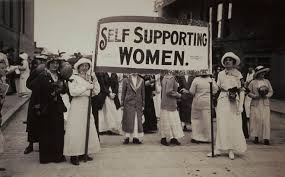
When Susan B. Anthony and Abigail Scott Duniway stood before the Women’s Rights Convention in Olympia, Washington, in 1871, they were joined by three women who had come west as “Mercer Girls,” young women recruited by Asa Shinn Mercer to come to the Pacific Northwest to work as teachers—and as prospective brides for the men who made up the vast majority of the population in Washington Territory. Women went west for a variety of reasons during the Great Migration of the nineteenth century, coming along with husbands and fathers, but also traveling solo for reasons that included job opportunities, homesteads in some places where they were allowed for single women, and the prospect of more freedom.

Myth and the historical record both place women in professions in the West, where there were shortages of doctors, dentists, lawyers, and journalists, when they might have been denied those same opportunities in the East. Bethenia Owens-Adair, for example, emigrated to Oregon with her family as a small child and then returned to the East to go to medical school, eventually setting up a practice in Portland, Oregon, where she participated in the suffrage movement in the 1880s. Martha Hughes Cannon was a doctor in Salt Lake City in the 1890s, when she also ran for—and won—a seat in the Utah legislature. May Arkwright Hutton went west to the silver camps of Idaho where she started out as a cook in a mining town and became a silver tycoon and philanthropist in her own right. Other women went west to be singers, other performers, photographers, social workers, restaurateurs, scouts, and homesteaders—as well as to take up less savory professions and to be mail-order brides.

Perhaps because educated women went west to practice their careers, perhaps because the mere fact that they were pioneers gave them the conviction that anything was possible, and perhaps because the nascent governments of the West offered pathways to reform that were simply more straightforward than those in more established states, the reforming zeal swept across the West, and by 1920, when the Nineteenth Amendment was ratified, the women of the West were already voting.


No Place for Woman Book Cover

To learn more about how women won the right to vote in the West read

No Place for a Woman

Visit www.chrisenss.com to enter to win a copy of No Place for a Woman.