
1870 – Utah becomes the second territory in the United States to pass a law allowing women the vote, after Wyoming in 1869.
Ester Hobart Morris & Woman Suffrage in Wyoming
Enter now to win a copy of the new book
No Place for a Woman: The Fight for Suffrage in the Wild West.
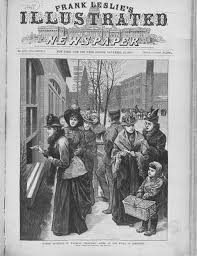
Esther Hobart Morris carefully arranged borrowed chairs and warmed, borrowed teacups as she prepared for her visitors to arrive. Her tiny mountain cabin, perched at seventy-five hundred feet of elevation in the mountains at South Pass City, Wyoming Territory, was cleaned, decorated, and full of all of the delectable morsels she could contrive for the important guests who would be arriving soon. Her husband, Jim Morris, was barely tolerant of the bustle as he nursed a foot swollen with gout, but he didn’t make his objections audible. The couple had only been in South Pass City a few months, and the time had not been easy for him, though Esther had leapt into local life with her usual enthusiasm. Her son from her first marriage, Archibald Slack, was soon to arrive to report on the afternoon’s event for the newspaper. His story would appear in time for the elections that were to be held the next day in the boomtown of two thousand men, women, and children. White men would be voting to send delegates to Wyoming’s Territorial Convention.
Everything about the scene Esther set that day in her tiny home was right by her standards and the standards of the day. The room was cozily domestic, and any Victorian in 1869 would have felt at ease with the ritual that was about to take place. The pouring of tea by a proper wife and mother, the gathering of friends over small plates of sandwiches and desserts, removed gently from cherished china with delicate tongs, the feathers and frills worn by the women and the ridges from hats just removed remaining in the hair of the gentlemen were both comforting and comfortable. But the gentle talk of community events and shared acquaintance of an elegant tea would give way to the talk that was dominating South Pass City on that fall day—the territorial elections of the next day and the future of Wyoming Territory itself. And that was exactly what Esther Morris intended.
To learn more about how women won the right to vote in the West read
No Place for a Woman
No Place for a Woman
In 1869, more than twenty years after Elizabeth Cady Stanton and Susan B. Anthony made their declaration of the rights of women at Seneca Falls, New York, the men of the Wyoming Territorial Legislature granted women over the age of 21 the right to vote in general elections. And on September 6, 1870, a grandmother named Louisa Ann Swain stepped up to a ballot box in Laramie, Wyoming, and became the first woman in the United States to exercise that right, ushering in the era of Western states’ early foray into suffrage equality. Wyoming Territory’s motives for extending the vote to women might have had more to do with publicity and attracting female settlers than with any desire to establish a more egalitarian society. However, individual men’s interests in the idea of women’s rights had their roots in diverse ideologies, and the women who agitated for those rights were equally diverse in their attitudes.
No Place for a Woman: The Struggle for Suffrage in the Wild West by Chris Enss and Erin Turner, explores the history of the fight for women’s rights in the West, examining the conditions that prevailed during the vast migration of pioneers looking for free land and opportunity on the frontier, the politics of the emerging Western territories at the end of the Civil War, and the changing social and economic conditions of the country recovering from war and on the brink of the Gilded Age. The stories of the women who helped settle the West and who ushered in voting rights decades ahead of the 19th Amendment and the stories of the country they were forging in the West will be of great interest to readers as the 100th anniversary of national woman suffrage approaches and is relevant in our current political climate. Through the individual stories of women like Esther Hobart Morris, Martha Cannon, and Jeannette Rankin, this book fills a hole in the story of the West, revealing the real story of how the hard work and individual lobbying of a few heroines, plus a little bit of publicity-seeking and opportunism by promoters of the Wyoming Territory, ushered in a new era for the expansion of women’s rights.
This Day…
1942 – Glenn Miller awarded 1st ever gold record for selling 1 million copies of “Chattanooga Choo Choo”
First the West, Then The Rest of the Nation
Enter now to win a copy of the new book
No Place for a Woman: The Fight for Suffrage in the Wild West.
Never doubt that a small group of thoughtful, committed citizens can change the world; indeed, it’s the only thing that ever has.
Margaret Mead
July 9, 1848, Waterloo, New York. It was a hot Sunday afternoon, and Jane Hunt, wife to prominent Quaker Richard P. Hunt, was home tending her two-week-old daughter and awaiting the arrival of the guests she expected for afternoon tea. Hunt’s home, an elegant, federal-style mansion, was comfortable and well-appointed, though not overtly luxurious, as befit her Quaker faith. It was the perfect venue for a meeting between a group of local Quaker women and renowned speaker, minister, and champion of reform Lucretia Mott, who was in the area visiting from Philadelphia. Mott, a Quaker minister, had been speaking openly in public and advocating fiercely for the abolition of slavery since the 1830s.
Hunt likely looked forward to the tea party and to the lively discussion she expected with Mott; her friend and fellow Quaker Mary Ann McClintock; Mott’s sister, Martha Wright; and an acquaintance of Mott’s named Elizabeth Cady Stanton. Mary Ann McClintock was the wife of the local Quaker minister—both she and he were adherents to a branch of Quakerism called Hicksites, which promoted equality between the sexes. Martha Wright was well known for her intellect, her witty commentary, and for her support of her sister’s work and beliefs. Elizabeth Cady Stanton, who had first met Mott when the two were excluded from participation in the 1840 World’s Anti-Slavery Convention in London on the basis of their sex, was also in attendance as she was visiting from nearby Seneca Falls, New York. Stanton took the opportunity, while the women enjoyed tea and dainty treats in Hunt’s spacious and comfortable parlor, to unleash “a torrent of [her] long-accumulating discontent,” over the inequality of the sexes.
To learn more about how women won the right to vote in the West read
No Place for a Woman
No Place for a Woman Has Arrived
This Week in History
End of the Trail
Last Chance to enter to win a copy of
Thunder Over the Prairie:
The Story of a Murder and a Manhunt by the
Greatest Posse of All Time
A fresh mound of earth covered Dora Hand’s grave and a sweet breeze danced around the crudely fashioned marker stuck in the dirt where she had been buried. Several bouquets of wilted flowers encircled the wooden tombstone. Although their blooms had faded somewhat, they represented the only color in the soap weed infested cemetery. For a short time after James Kenedy’s acquittal in December 1878, mourners returned to Dora’s plot to deposit fresh flowers, remember the entertainer and reflect on the shooting that took her life.
The news of what James had done and the posse that pursued him followed the cattleman to Texas, and he reveled in the notoriety. Youth often wobbles dangerously, then steadies to follow the straight and narrow path, but not in his case. The injuries he sustained during his capture had left him a cripple, and he was anxious to prove that the disability had not affected his gunplay.
He learned to use his left arm to draw his weapon and rumors prevailed that he killed several men with his quick hand during a brief stay in Colorado in November 1880.
By 1882, James had settled down and married the daughter of a wealthy landowner. He focused on the family business and worked closely with his father, earning the man’s respect and confidence. Neighbors and acquaintances considered James to be a “man of industry with good business qualifications and a trusted manager of Mifflin’s large ranch and cattle business.”
James Kenedy died on December 29, 1884 of tuberculosis, shortly after his son, George Mifflin was born. News of his death was slow to reach Dodge City, but well received. Mayor Kelley was particularly pleased. He had taken the death of Dora Hand hard. His emotional attachment to her, combined with the fact that a bullet intended for him had killed her, had left him devastated. Like many Dodge City residents who had been fond of Dora, Mayor Kelley felt “the only punishment meted out to James had been the sickness he endured from being shot by the posse.” After James was apprehended, Mayor Kelley expected the gunslinger to be found guilty of murdering the songstress and subsequently hung. The mayor was disappointed with the judge’s ruling to acquit.
Mayor Kelley served four terms in office, stepping down from the position in March 1881. He left the job after being accused by his business partner of allowing a customer to pass a counterfeit dollar to him. In spite of the embarrassing incident, residents viewed him as an effective town leader. He helped pass ordinances outlawing houses of ill repute, increased licenses for taverns to help provide services to the community and organized a law enforcement team that eventually became known throughout the territory as the “toughest group of men in the west.”
With the exception of his daughter, Irene, there was no other significant woman in Mayor Kelley’s life. He consorted with very few ladies in public after the loss of Dora and focused much of his attention on his purebred greyhound dogs. In November 1885 a fire burned one of Mayor Kelley’s saloons to the ground. He rebuilt the saloon, but never fully recovered financially and was eventually forced to sell all of his real estate holdings to sustain himself. When his health began to fail in late 1910, he moved to the Soldier’s Home at Fort Dodge.
To learn more about the most intrepid posse of all time read
Thunder Over the Prairie.
This Day…
1857 – National Association of Baseball Players founded in New York
Captured!
Enter now to win a copy of
Thunder Over the Prairie:
The Story of a Murder and a Manhunt by the
Greatest Posse of All Time
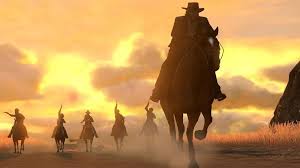
James squirmed uncomfortably in the saddle and slowed his horse from a fast trot to a walk. The renegade’s attention was fixed on the countryside that unrolled before him. There were miles and miles of open range as far as he could see. The sky directly above was clear with fuzzy pinches of cotton-like clouds scattered here and there, but dark thunderheads were piling up a few miles out. He led his ride around the bones of a buffalo that had fallen some time prior to his passing through the area, and the horse balked and snorted. The mount was apprehensive about moving forward. James strained his eyes over the rugged trail, but failed to see anything that warranted the horse’s obstinate behavior. He poked the animal with his spurs, and the horse continued on.
Bat peered over the mound of earth he and the other posse members were positioned behind and watched the fugitive they’d been pursuing draw slowly nearer. “We’ll stop him out here,” Wyatt announced. “I don’t think he’ll make a fight. Most likely he’ll run for it.” “If he does… I’ll drop him,” Charlie promised. “Kelley wants Kenedy alive,” Bill reminded the men.
Charlie looked around for their horses and noted that the animals were scattered about the vicinity – too far away for the lawmen to reach without being seen. “Damn-it,” Bat spat under his breath realizing along with Wyatt and Bill the location of the mounts. “I’ll attend to the man,” Bat told his fellow riders after contemplating the distance a bullet would have to travel to hit James. “If he runs, shoot his horse,” Bat ordered Wyatt.
James rode on lost in thought. The closer he got to the acres of pastureland outlining the sod house, the more nervous his horse became. The animal raised his head and neighed. James surveyed the region and again saw nothing out of the ordinary. He kept going, but stopped every few yards to make sure the way was clear. Seventy-five yards away from the posse’s location, James brought his ride to a stop. He could hear only the cold wind blowing over the withered grass.
He scrutinized the prairie for a third time and noticed four rider less horses milling about. Anxiety swelled to fear and broke out on him in a cold, clammy sweat. A charged silence descended on the spot as the outlaw and the posse held their positions like graven images, waiting for someone to make a move. James’s face was bloodless and in one quick simultaneous motion, he removed his gun from its holster and swung his horse around.
Wyatt, Bat, Charlie and Bill jumped up and leveled their weapons at James. “Halt,” Bat shouted, cocking his weapon. James was defiant. He fired a shot at the same time he dug his spurs into his mount’s sides. The animal launched into a hard gallop. “Halt,” Wyatt warned the killer again. James refused. “Last chance, Kenedy,” Wyatt warned, “Halt!” James raised his whip to strike his ride and urge the horse to go faster, but a bullet fired from Bat’s .50 caliber rifle struck his left arm and he dropped the quirt. Thoroughly spooked by the violent exchange, the horse hurried to escape the scene. The lawmen let loose a volley of shots. Wyatt took careful aim and fired at James’s horse. Three bullets brought the animal down. James fell out of the saddle just as his mount received the fatal blow and the horse landed hard on top of him, crushing the arm that had just been shot. Horse and rider lay motionless on the ground.
To learn more about the posse that tracked down
Spike Kenedy read Thunder Over the Prairie.