1877 – Thomas Edison completes 1st model for the phonograph, a device that recorded sound onto tinfoil cylinders.

1877 – Thomas Edison completes 1st model for the phonograph, a device that recorded sound onto tinfoil cylinders.
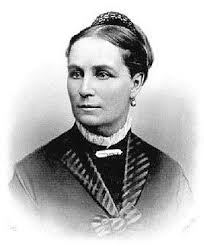
The memory of Ellen Clark Sargent’s arrival in Nevada City, California, stayed with her all her life. Long after she had left the Gold Country, she recalled: “It was on the evening of October 23, 1852 that I arrived in Nevada [City], accompanied by my husband. We had traveled by stage since the morning from Sacramento. Our road for the last eight or ten miles was through a forest of trees, mostly pines. The glory of the full moon was shining upon the beautiful hills and trees and everything seemed so quiet and restful that it made a deep impression on me, sentimental if not poetical, never to be forgotten.”
In the newly formed state of California, shaped by men and women who had endured unbelievable hardships to cross the plains, Ellen saw an opportunity to gain something she passionately wanted: the right to vote. Despite defeat after defeat, she never gave up.
Ellen Clark fell in love with Aaron Augustus Sargent, a journalist and aspiring politician, in Newburyport, Massachusetts, when they were in their teens. Both taught Sunday school in the Methodist Church. Upon their engagement, Aaron promised to devote his life to being a good husband and making their life a happy one. But several years passed before he had a chance to make good on that promise.
In 1847, Aaron left Ellen in Newburyport to go to Philadelphia, where he worked as a printer. His interest in politics intensified with the new friends he made. Aaron, an ardent opponent of slavery, closely followed arguments of free-soilers and antislavery forces.
He worked as a print compositor and as a newspaper writer. However, the trade paid poorly. With word of the gold strike in California, Aaron borrowed $125 from his uncle and sailed from Baltimore on February 3, 1849, leaving Ellen with a promise to return and make her his wife.
Aaron arrived in the gold camp called Nevada in the spring of 1849 and was moderately successful in his search for gold. He then became a partner with several others in the Nevada Journal newspaper. But with a promise to keep, Aaron obtained the help of a friend and built a small frame house near the corner of Broad and Bennett Streets, right in the center of town. In January 1852, he returned to Newburyport to claim his bride. Aaron and Ellen were married on March 15 and returned to Nevada City in October of that year.
Ellen Sargent had no notion of the home she would find, but she was agreeably surprised. She later wrote an account of her arrival in Nevada City: “My good husband had before my arrival provided for me a one-story house of four rooms including a good-sized pantry where he had already stored a bag of flour, a couple of pumpkins and various other edibles ready for use, so that I was reminded by them a part of the prayer of the minister who had married us, seven months before, in faraway Massachusetts. He prayed that we might be blessed in basket and in store. It looked like we should be.”
Ellen set up housekeeping in a town where the cost of everything was astonishing. Eggs sold for three dollars a dozen, chickens for five dollars apiece.
1914 1st electric traffic light installed in the USA on the corner of East 105th Street and Euclid Avenue in Cleveland, Ohio

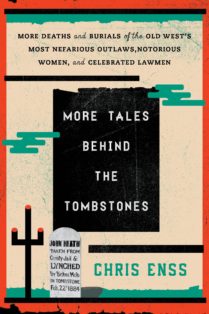
More Tales Behind the Tombstones tells the stories behind the deaths (or supposed deaths) and burials of even more of the Old West’s most nefarious outlaws, notorious women, and celebrated lawmen. Readers will learn the stories behind these legendary characters and visit the sites of tombs long forgotten while legends have lived on.
Read about the lives (and deaths) of fearless, famous lawmen such as Bass Reeves, Chalk Beeson, Bill Tilghman, and Pat Garrett; learn about the dauntless women who blazed new paths for their sex in medicine, journalism, entertainment, and voting rights; and discover the intriguing facts and myths that continue to circulate about these and other infamous characters long after their grave markers have become worn down or simply lost to time.
In the end, all you get is a few words.
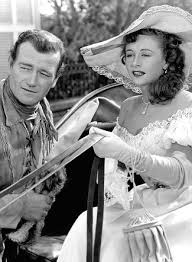
The most influential woman at Republic Pictures from the early 1940s to the studio’s demise in the early 1960s, was Vera Hruba. Born in Prague, Czechoslovakia, on July 12, 1919, the blonde beauty caught Republic Picture’s president Herbert Yates’ attention in 1939 when she toured the United States with an ice-skating show called Ice Vanities.
Vera was an exceptional ice skater, having placed 17th in the 1936 Olympics behind figure skater Sonja Henie. Yates was captivated with Vera’s talent and looks and believed she could be as successful as Ms. Henie who was one of the leading stars at 20th Century Fox. He cast Vera, and the entire company of the Ice Vanities, in a musical film entitled The Ice Capades. Critics called the picture “sheer enchantment on ice.” Vera was mentioned along with five other skaters as “spectacular”. Yates couldn’t have agreed more and in 1943 signed her to a long-term contract with the studio and added Ralston to her name. He added Ralston, a name borrowed from the cereal, because Hruba was difficult for moviegoers to pronounce.
The first movie Vera Hruba Ralston appeared as a star, minus the skates, was Republic Pictures’ 1941 horror film The Lady and the Monster. Her costars were Erich von Stroheim and Richard Arlen. Billed as “a picture from out of this world” the plot involves a millionaire whose brain is preserved after his death, and telepathically begins to take control of those around him. Von Stroheim portrays the diabolical Dr. Mueller who retrieves the brain of a financial genius who crashed to his death in an airplane mishap near the laboratory. The doctor carries out a fiendish plot to put the super brain to work for him. Richard Arlen plays the doctor’s assistant who falls in love with the doctor’s ward, Vera Ralston. The film reviewer for the Havre Daily News referred to Ralston’s debut as a dramatic actress as “the find of the season.”
Most did not agree with the critics who found the foreign ingénue to be a promising star. Many complained that her performance was wooden and that her accent was too thick. Yates ignored every voice but his own and quickly reteamed von Stroheim and Arlen with his discovery in another feature entitled Storm Over Lisbon. In this spy thriller Ralston played an allied operative in Lisbon and Arlen an American newspaper man who she helps get out of Portugal with important information. Audiences found Ralston attractive, but struggled to understand what she was saying.
Yates hired acting instructors and speech coaches for Ralston. While her English and her acting soon improved she could not lose her strong Czech accent. Yates felt that ticket buyers would eventually see how compelling the stunning blonde’s talent truly was and learn to embrace her way of talking in much the same way they did Marlene Dietrich. In order to help Ralston, gain a broader acceptance he paired her with an actor that had mass appeal – John Wayne.
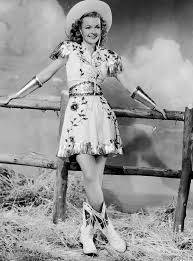
Dale Evans was one of Republic Pictures most popular western stars. The unlikely celluloid cowgirl, western star starred in tandem with singing cowboy Roy Rogers in most of her thirty-eight films and two television series. The undisputed Queen of the West was born Frances Octavia Smith on October 31, 1912, Uvalde, Texas. In her words, her upbringing was “idyllic.” As the only daughter of Walter and Betty Sue Smith, she was showered with attention and her musical talents were encouraged with piano and dance lessons.
While still in high school, she married Thomas Fox and had a son, Thomas Jr. The marriage, however, was short-lived. After securing a divorce, she attended a business school in Memphis and worked as a secretary before making her singing debut at a local radio station. In 1931 she changed her name to Dale Evans.
By the mid-1930s, Dale was highly sought-after big-band singer performing with orchestras throughout the Midwest. Her stage persona and singing voice earned her a screen test for the 1942 movie Holiday Inn. She didn’t get the part, but she ended up singing with the nationally broadcast radio program the Chase and Sanborn Hour and soon after signed a contract with Republic Studios. She hoped her work in motion pictures would lead to a run on Broadway doing musicals.
In August 1943, two weeks after signing a one-year contract with Republic Studios, Dale began rehearsals for the film Swing Your Partner. Although her role in the picture was small, studio executives considered it a promising start. Over the next year Dale filmed nine other movies for Republic, and in between she continued to record music.
When she wasn’t working, Dale spent time with her son, Tom, and her second husband, orchestra director Robert Butts. Her marriage was struggling under the weight of their demanding work schedules, but neither spouse was willing to compromise.
“I was torn between my desire to be a good housekeeper, wife, and mother and my consuming ambition as an entertainer,” Dale told the Los Angeles Daily News in 1970. “It was like trying to ride two horses at once, and I couldn’t seem to control either one of them.”
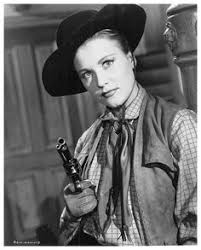
In many of the films actress Anne Jeffreys made for Republic Pictures she played a damsel in perilous situations. Neither the studio nor the performer could imagine how much those movies would affect the lives of young, ticket buyers. A letter from a fan written to the motion picture studio in the summer of 1945 expressed what many males were thinking about the talented Ms. Jeffreys.
“The first time I saw her [Anne Jeffreys] in a movie her lovely image was secured permanently,” the admirer wrote. “She was not only staggeringly beautiful, but kind and warm, and understanding. If she only knew how many times I’ve swept her off a teetering bridge just before it collapsed; how many hoodlums I flattened with my powerful fists as they tried to force you, kicking and screaming, into their black limousine or into a stagecoach, for God knows what evil purpose; how many times, as you cradled my head in your arms (after I just saved your life AGAIN) and tearfully asked ‘Are you all right?’ I’ve replied: ‘It’s nothing, just a bullet wound in the chest.’
Born Anne Carmichael on January 26, 1926, in Goldsboro, North Carolina, Anne was one of Republic Pictures most versatile leading ladies. She played everything from a mobster’s girlfriend to a singing cowgirl. As a child she displayed outstanding musical talent. Her first professional appearance was on a radio program of mixed songs at Durhum, when she was ten. Anne’s mother was encouraged to take her daughter to New York to audition for various theatre companies. There she sang before a number of vocal celebrities; all agreed Anne was an operatic find and offered to finance her further musical education. Anne preferred however, to pay her own way by becoming a John Powers model.
The young North Carolina girl studied her music diligently, ultimately winning a scholarship with the Municipal Opera Association.
The Metropolitan, goal of all opera singers, seemed just around the corner when Mrs. Jeffreys decided her hardworking child had earned a vacation. Mother and daughter boarded a bus for Hollywood.
Even in a community well people with charming blondes, Anne’s blonde beauty attracted the attention of cinema talent scouts. Carefully trained by Lillian Albertson, a studio drama coach, Anne Jeffreys began appearing in motion pictures in 1942. In the beginning she played a number of background characters in such popular Republic Pictures as Moonlight Masquerade and The Flying Tigers. In 1943 Anne finally got her chance to costar in two movies opposite Bill Elliott and Gabby Hayes. The pictures, Calling Wild Bill Elliott and The Man from Thunder River, were westerns. Newspapers across the country reported on the studio’s decision to cast Anne in the film’s main female role.
Anne’s debut in the Bill Elliott films was applauded by moviegoers everywhere and Republic Pictures was praised for the decision to use the gifted songstress in such an inventive role.
“Singing cowboys are not new to the Hollywood scene, but blonde and gorgeous Anne Jeffreys can honestly claim the distinction of being the first singing cowgirl,” an article in the August 7, 1943 edition of the Hollywood Reporter noted. “She is Wild Bill Elliott’s leading lady in all his Republic Pictures now. In each of the pictures in the Elliott series Anne breaks into song at one point or another.”
1832 – Benjamin Bonneville leads the first wagon train across the Rocky Mountains by Wyoming’s South Pass
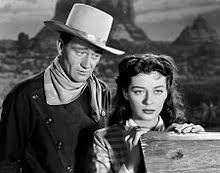
There were many talented female contract players at Republic Pictures. In the mid-1940s, the studio had more than 120 actors in its stable of gifted individuals. Some of those actresses became household names because of their work in front of the camera, and others rose to fame as a result of their off-screen exploits. The following is a look at a few of the studio’s most recognizable and popular women thespians, their careers, and the roles that made them stars.
One of Republic Pictures’ most popular actresses was one of the motion picture industry’s most troubled. Her name was Gail Russell. Russell, a beautiful brunette with dark, blue eyes, was a gifted talent who dreamed of becoming a commercial artist. She was born Elizabeth L. Russell in Chicago on September 21, 1924. Throughout her childhood, she was painfully shy and often hid under her parents’ piano whenever guests came to their home. The young girl only felt completely comfortable when she was sketching various people and places in her sphere of influence. She began drawing at the age of five years old and was considered exceptional by most who saw her sketches and paintings.
When she was in her late teens, her mother, Gladys Russell, encouraged her to set aside her drawing pencils and venture into films. Russell was fourteen when her parents moved to Los Angeles so their daughter could pursue their dream of her becoming a star. She attended Santa Monica High School, and as soon as she graduated, she auditioned for Paramount Pictures and signed a contract with the studio for fifty dollars a week.
Russell’s shyness followed her as she began her career. Acting instructors were hired to help her overcome her timidity, but it never completely subsided. It did add to her haunting persona, and she was cast in roles where that part of her personality could be highlighted. As her star rose in the industry, her fear of performing became more pronounced. With each film it took more effort to overcome her lack of self-confidence and commit to the part. While filming The Uninvited in 1944, Russell chose to deal with her paralyzing self-doubt by drinking. Alcohol did not quiet her nerves; it merely made her more anxious. By the end of the production, she had become dependent on liquor and was on the brink of a nervous breakdown. The Uninvited was a critical success, and the film was nominated for an Academy Award. Russell became even more popular thanks to the film. She went on to work with such stars as Alan Ladd and Joel McCrea, Jane Wyatt and Adolphe Menjou. The work was continuous and the pace grueling. Russell dealt with the frantic schedules the same way she did with her shyness, by drinking.
In 1946 Russell starred in the first of four films she made for Republic Pictures. John Wayne co-produced The Angel and the Badman and specifically requested Gail Russell to play opposite him in the western written and directed by James Edward Grant. Wayne was moved by her quiet, unassuming personality. He treated her with the respect and kindness she’d not known from many other leading men or producers. The two became good friends while working on the film. Wayne was protective of Russell. He recognized vulnerability in the actress some could have taken advantage of. He was a father figure to Russell, and she considered him to be a fiercely honest individual.