
Americana West
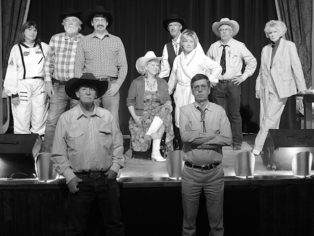
I had the honor of being a part of the cast of performers for a the production Americana West. The play premiered at Old Tucson, Arizona, and was presented as a part of the Western Writers of America convention. The play was written by Red Shuttleworth, poet and playwright, Western Heritage Wrangler Award winner, and three time Spur Award winner.
It was an experience I’ll treasure always.
Coming Soon, No Place for a Woman
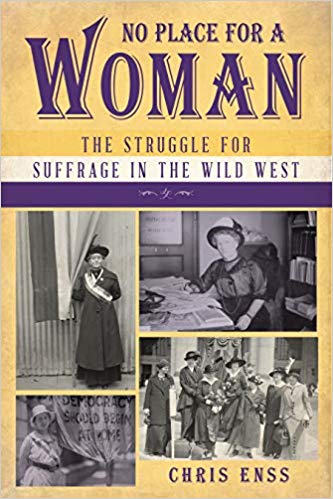
No Place for a Woman: The Struggle for Suffrage in the Wild West by Chris Enss and Erin Turner, explores the history of the fight for women’s rights in the West, examining the conditions that prevailed during the vast migration of pioneers looking for free land and opportunity on the frontier, the politics of the emerging Western territories at the end of the Civil War, and the changing social and economic conditions of the country recovering from war and on the brink of the Gilded Age.
This Day…
1861 – Dorothea Dix is appointed superintendent of female nurses for the Union army.
The Warrior, Mochi
Enter now to win a copy of Mochi’s War: The Tragedy of Sand Creek
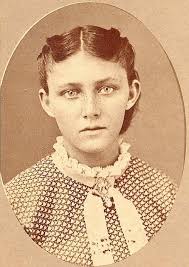
The sun had not quite risen over the vast Kansas plains when John German heard a sound that tempted him from his work packing his family’s belongings into their wagon. He surveyed the campsite with a careful eye. His wife Lydia and their seven children were each going about their morning chores and preparing to continue their journey to Colorado. The Germans were from the Blue Ridge region of Georgia and had spent the summer of 1874 traveling west. They planned to reach their new home before winter.
John and Lydia’s oldest children, twenty-year-old Rebecca Jane and nineteen-year-old Stephen, were tending to the livestock in a field not far from the family campsite. For a brief moment all seemed as it should be; then, suddenly, a small herd of antelope darted across the trail, panicked. Several shots rang out, and the antelope scattered in different directions. Another shot fired and a bullet smacked John in the chest, and he fell in a heap on the ground. Lydia ran toward her husband. Nineteen members of the Bowstring Society rode hard and fast into the German family’s camp, whooping and yelling. Lydia continued running. A Cheyenne Indian on horseback chased her down and thrust a tomahawk into her back.
Rebecca Jane grabbed a nearby ax and attempted to fight off the warrior as they rode toward her. She managed to hit one of the attackers in the shoulder before she was knocked unconscious with the butt of a gun, raped, and killed.
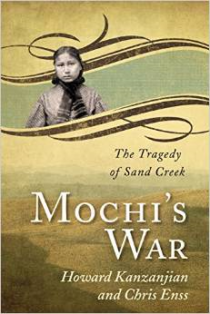
To learn more about the German family and the tragedy that drove Cheyenne Indian warrior, Mochi, read Mochi’s War: The Tragedy of Sand Creek
This Day…
The Tragedy of Sand Creek
Enter now to win a copy of Mochi’s War: The Tragedy of Sand Creek
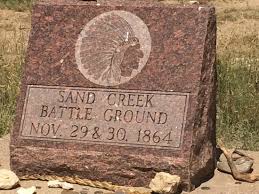
Colorado Territory in 1864 wasn’t merely the wild west, it was a land in limbo while the Civil War raged in the east and politics swirled around its potential admission to the union. The territorial governor, John Evans, had ambitions on the national stage should statehood occur–and he was joined in those ambitions by a local pastor and erstwhile Colonel in the Colorado militia, John Chivington. The decision was made to take a hardline stance against any Native Americans who refused to settle on reservations–and in the fall of 1864, Chivington set his sights on a small band of Cheyenne under the chief Black Eagle, camped and preparing for the winter at Sand Creek. When the order to fire on the camp came on November 28, one officer refused, other soldiers in Chivington’s force, however, immediately attacked the village, disregarding the American flag, and a white flag of surrender that was run up shortly after the soldiers commenced firing.
In the ensuing “battle” fifteen members of the assembled militias were killed and more than 50 wounded Between 150 and 200 of Black Kettle’s Cheyenne were estimated killed, nearly all elderly men, women and children.
As with many incidents in American history, the victors wrote the first version of history–turning the massacre into a heroic feat by the troops. Soon thereafter, however, Congress began an investigation into Chivington’s actions and he was roundly condemned. His name still rings with infamy in Colorado and American history. Mochi’s War explores this story and its repercussions into the last part of the nineteenth Century from the perspective of a Cheyenne woman whose determination swept her into some of the most dramatic and heartbreaking moments in the conflicts that grew through the West in the aftermath of Sand Creek.
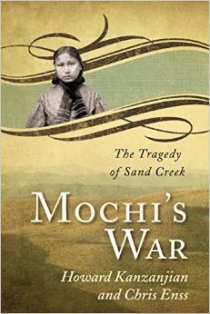
To learn more about the tragic events at Sand Creek read Mochi’s War
This Day…
1851 – Harriet Beecher Stowe publishes the first installment of Uncle Tom’s Cabin in The National Era.
The Fearless Cheyenne
Enter now to win a copy of the Will Rogers Medallion Award winning book Mochi’s War: The Tragedy of Sand Creek
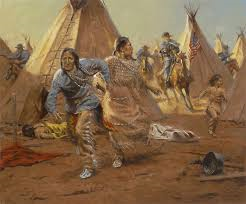
Colonel John Chivington and representatives of the First and Third Colorado Cavalry rode hard and fast from the sun-touched butte where they’d been waiting at the Indian encampment along Sand Creek. A bugler sounded the charge as the horses’ hooves drummed and the soldiers shouted, reins in their teeth and guns in their fists. Members of the Cheyenne and Arapaho tribes living in the path of the cavalry hurried from their lodges and frantically scattered in different directions. Mothers scooped young children into their arms and ushered elderly men and women to clusters of trees. Braves grabbed weapons in order to defend themselves from the surprise invasion.
Several of Chivington’s troops raced to the paddock where the Indians’ horses were corralled. Without the herd the Indians would be at a disadvantage, unable to pursue attackers or flee from the chaos. Just before the flood of soldiers arrived on the scene, Colonel Chivington urged his men to “recall the blood of wives and children spilled on the Platte and Arkansas [Rivers].”
The full force of the cavalry’s strike yielded immediate devastation. Bullet ridden children fell where they once played; mothers lay dying with their babies in their arms; elderly women and men collapsed from gunshot wounds in their backs. It was a killing frenzy. Some Indians managed to escape without injury and take refuge in thick brush and behind scattered rock outcroppings.
Black Kettle tried desperately to keep his people from panicking. He clung to the belief that the attack would cease when the soldiers noticed the American flag unfurled. He and Chief White Antelope huddled at the base of the flag post. They only ran for cover when they realized the soldiers were hell-bent on annihilating them.
Fearless Cheyenne women and braves stood their ground, refusing to leave without a fight. The men exchanged shots with the soldiers and the women fought using spears and knives, all of which gave members of the tribe a chance to retreat slowly up the dried streambed. Many Cheyenne and Arapaho were killed as they ran to hide in the banks of the Sand Creek.
To learn more about the tragedy at Sand Creek read Mochi’s War.