1954 – KMOX (now KMOV) TV channel 4 in Saint Louis, MO (CBS) 1st broadcast

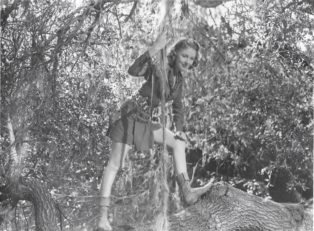
Zombies of the Stratosphere was one of three movies Republic produced dealing with a Mars invasion. Another profitable serial the studio made was Panther Girl of the Kongo. When wildlife photographer Jean Evans discovers a giant crab-like creature in the jungles of southern Africa, she sends word to a big game hunter and friend Larry Sanders for help. The pair soon learn these large crustaceans are the work of a mad scientist who wants to scare the population away from the area to operate a diamond mine. Jean, nicknamed the Panther Girl by the tribal locals because she shot a panther that had been terrorizing the village, and Larry are determined to find the mad scientist and stop him. Along the way, the pair must battle oversized sea urchins, wild animals, creepy henchmen, and inclement weather. They must survive gun battles, falls into quicksand, the roaring rapids, poison darts, and angry gorillas.
Panther Girl of the Kongo starring Phyllis Coats was the most expensive serial Republic Pictures produced in the 1950s. A great deal of footage used to make this film had been originally shot in 1941 for the movie Jungle Girl. Frances Gifford, the star in Jungle Girl, was the first female lead in a Republic serial, and Phyllis Coats was the last female lead in a Republic serial. In fact, Phyllis Coats wore the same outfit in Panther Girl that Frances Gifford wore in Jungle Girl.
The director of Jungle Girl was studio favorite William Witney. From 1935 to 1956, Witney practiced the philosophy Herbert Yates taught which was “make em’ fast and make em’ cheap.” Witney was a specialist in outdoor action and stunt direction. He directed or co-directed more Republic serials than any other company hire. He is considered the greatest action director in B movies.
Witney traveled to Los Angeles from Lawton, Oklahoma, to visit his sister and brother-in-law in 1933. His brother-in-law was a director for Mascot Pictures, and he got Witney a job at the studio as an office boy. After Mascot merged with Republic in 1935, Witney was promoted to script clerk and then to film editor.
In 1937, while Witney was working in Utah on a western serial, the director was fired, and twenty-one-year-old Witney was asked to take his place. Witney went on to direct the studio’s principal western, science fiction, and horror serials. From the Drums of Fu Manchu to the Mysterious Doctor Satan, he was able to masterfully put action sequences together for the screen
Among Witney’s fans are directors Steven Spielberg and Quentin Tarantino. Tarantino gave Witney high praise for his rough and believable action scenes and visual style. Witney’s Republic serials served as the inspiration for Spielberg’s Indiana Jones movies.
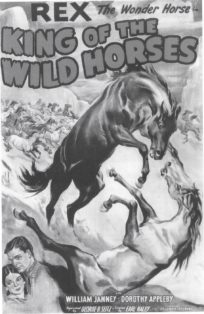
The serial work producer Nat Levine was doing was extremely popular. Audiences flocked to theaters each week to find out how cowboy heroes like Johnny Mack Brown, Ken Maynard, and Tom Mix fared against the bad guys and to learn if equine stars like Rex, the King of Wild Horses, and canine actor Rin Tin Tin managed to save their pal Smiley Burnette from the villainous Harry Woods. Levine wanted to expand his moviemaking and looked to acquire the Mack Sennett production lot and facilities in order to make it happen. He approached Monogram Pictures’ executives Trem Carr and W. Ray Johnston about a merger. Neither was interested in combining his resources to purchase Mack Sennett. Both men felt the cost to run such a business would be too much to sustain. Yates heard about Levine’s proposal and offered to finance the deal. With Yates’ considerable wealth behind the enterprise and the promise that the two could share the responsibility of studio chief, Carr and Johnston decided to participate. The owners of Liberty and Majestic Studios also agreed to merge with Mascot and Monogram. The talent and resources of each small motion picture company were pooled and a distribution arm was also added to the corporation.
Republic Pictures was born in June 1935. As the money behind the venture, Yates wasted no time in asserting his authority. Although Johnston and Carr were installed as managers, Yates made it clear that he would make all major decisions regarding the company. The two executives were outraged by the mogul’s behavior but were compelled to stay with the new studio because they now lacked the means to start their own business. Nat Levine clashed with Yates, too, but chose to keep quiet in favor of making movies. He churned out a number of modest yet successful films during the first four years Republic was in operation.
Undeterred by the conflicts with his managing staff, Yates announced in a press conference with his top personnel that Republic Pictures would produce fifty-two films a year. Edward A. Golden, general sales manager for the studio, added that the company would strive to make exceptional pictures and cited problems with finances in the industry as a whole for the reason some companies delivered inferior products. Johnston shared his belief that not only financing played a part but that the lack of quality material was a contributing factor to bad movies being made. Johnston outlined Republic Pictures’ program to produce classics and the works of famous authors and urged American authors to “write better stories for screen production.”
Throughout the summer of 1935, Republic Pictures and its qualified staff made news. Stories about the ambitious independent studio’s line of pictures and the controversial comments about the industry appeared on the front pages of the newspapers. Johnston, an actor in his early days in Hollywood and a member of Franklin Roosevelt’s motion picture code authority, had definite thoughts about the salary lead actors at Republic should expect to earn. “Stars of today are paid according to their drawing power,” he told the Associated Press. “What they get is all right if they bring it back through the box office. Many of them don’t do that, however. We at Republic Pictures will pay according to the draw.”
1863 – Battle of Gettysburg, largest battle ever fought on the American continent, ends in a major victory for the Union during the US Civil War
Herbert Yates, a tall, compact man in his mid-fifties, stood staring out the window of his magnificent office at Republic Pictures in Studio City, California, surveying the domain spread before him. A scene from a western film was being rehearsed in the middle distance. The usual, turbulent activity surrounded it: extras, makeup women, cameramen, grips, assistants, set designers, etc. Yates lit a cigar the size of a baby’s leg and held it tightly in his teeth. He took a long puff and blew the smoke out the corner of his mouth and checked the pockets of his charcoal gray, Brooks Brothers suit for the additional cigars he had tucked away. He patted them reassuringly, then rolled the fat stogie from one side of his mouth to the other.
Yates had acquired his taste for cigars while working as a salesman at the American Tobacco Company. Paired with a stiff bow tie, a receding hairline, and a dour expression, the cigar added a layer of seriousness to his persona. As head of a burgeoning, motion picture studio, he felt the look was necessary. He wanted to appear menacing. More often than not, his business approach was “never underestimate the power of good, old-fashioned intimidation.”
Herbert Yates founded Republic Pictures in 1935, but his history working in the movie industry began twenty years prior to the creation of the studio. Yates’ introduction to cinema came by way of a film-processing business called Hedwig Laboratories. He learned all about developing celluloid and relationships with some of the most profitable filmmaking executives in the field. He parlayed his knowledge into his own processing venture called Consolidated Film Industries. In a short time, Consolidated Film Industries became the leading laboratory in southern California. They processed negatives and made prints for the majority of movies produced by studios such as First National Pictures, Warner Bros., and Fox Film Corporation. Consolidated Film Industries proved to be extremely profitable for Yates, and he sought other areas of the industry of which to be a part. He acquired record companies and financed ventures for director Mack Sennett and comedic actor Fatty Arbuckle.
Within eight weeks of advancing funds to Sennett and Arbuckle, Yates received a 100 percent return on his investment. The speed in which his funds were replenished intrigued him. Yates saw the profit to be made in producing motion pictures, and it whetted his appetite for further opportunities.
On July 1, 1847, the United States Post Office issued its first general issue postage stamp External, a five-cent stamp honoring Benjamin Franklin, the first postmaster general under the Continental Congress, and a ten-cent stamp honoring George Washington. The first U.S. postal cards were issued in 1873, the first commemorative stamps in 1893, and the first airmail stamps in 1918.
Republic Pictures was arguably the most important and influential studio in the history of the B movie. During the Golden Age of Hollywood, the studio flourished, and the low-budget commercial movies produced in mass made Republic a profitable concern. Herbert Yates enjoyed the financial reward for the B pictures his studio produced but lacked the respect studio heads like MGM’s David O’Selznick or Fox’s Darryl Zanuck had. It took a considerable amount of talent and innovation to make a B movie, and Yates employed an exceptional team of cinematographers, stuntmen and stuntwomen, and special effects artists to achieve the finished product. Despite the skill and invention needed to create the product, such films were generally considered inferior. Yates wanted to experience the admiration other film companies such as Paramount Pictures and United Artists received. It drove him to increase Republic’s feature film investments.
In the late 1930s, Yates decided to raise the status of the company. He wanted a better product coming out of the studio. He wanted to make an “A” picture. Yates needed a large budget, bankable stars, and a quality script to realize his vision. He believed he could begin gaining the respectability he longed for by developing a project entitled Man of Conquest. He poured considerable resources into the project. Man of Conquest, the fictionalized action biopic of Sam Houston, was Republic’s first A film.
Directed by George Nichols Jr. and starring Richard Dix and Joan Fontaine, the estimated budget for the movie was one million dollars. Man of Conquest was inspired by Marquis James’ Pulitzer Prize–winning book The Raven. New York film critics announced that Man of Conquest was a “thrilling drama skillfully splashed across a broad canvas.” The April 28, 1939, article found in the Brooklyn Daily Eagle praised the direction of the film noting that it “never loses track of its hero or allows its social message to become bigger than its story.” William Boehnel, film reviewer for the New York World Telegram, wrote that Man of Conquest was a “rousing, spectacular blend of Americanism and adventure which not only sounds the clarion call of freedom and democracy in high, resounding notes but related its message of liberty and the right of men to govern himself in a vigorous, colorful, thrilling manner.”
Herbert Yates was pleased Man of Conquest had done so well. The film was nominated for three Academy Awards: Best Art Direction, Best Sound Recording, and Best Original Score. The nominations were proof that Republic Pictures had what it took to develop a project to rival the bigger studios. Industry leaders acknowledged Yates’ effort, and he pledged to produce additional, bigger budget films. Those bigger films were to be done on a limited basis.
Yates was proud of the studio’s reputation for being a dominant force in serials. Not only was Republic good at it, but they also made a substantial amount of money, and financial success was even more important to Yates than respectability as an A movie studio.
Yates wanted to continue building the sales organization as well as creating bigger budget films. He believed a healthy balance of both would elevate the status of the company. In early 1939, he hired James Grainger, the former head of distribution for Fox and Universal Studios. Grainger immediately embarked on a series of meetings with theatrical distributors and exhibitors throughout the nation. He authorized the purchase of franchise distributors and established Republic’s own theatrical distribution system. Grainger was exceptional at his job. Within a year, he increased the number of exhibitors (theaters) to more than nine thousand. The number of theaters showing Republic Studios’ motion pictures grew even higher with each high-budget film and big-name cast member released. By the end of 1939, a mere four years after Herbert Yates founded the company, Republic was showing a profit of $4,742,175. Industry papers such as Variety and the Hollywood Reporter predicted the studio would “wind up a top flight major.”
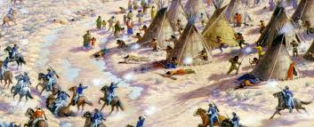
Colonel John Chivington and representatives of the First and Third Colorado Cavalry rode hard and fast from the sun-touched butte where they’d been waiting at the Indian encampment along Sand Creek. A bugler sounded the charge as the horses’ hooves drummed and the soldiers shouted, reins in their teeth and guns in their fists. Members of the Cheyenne and Arapaho tribes living in the path of the cavalry hurried from their lodges and frantically scattered in different directions. Mothers scooped young children into their arms and ushered elderly men and women to clusters of trees. Braves grabbed weapons in order to defend themselves from the surprise invasion.
Several of Chivington’s troops raced to the paddock where the Indians’ horses were corralled. Without the herd the Indians would be at a disadvantage, unable to pursue attackers or flee from the chaos. Just before the flood of soldiers arrived on the scene, Colonel Chivington urged his men to “recall the blood of wives and children spilled on the Platte and Arkansas Rivers.”
The full force of the cavalry’s strike yielded immediate devastation. Bullet-ridden children fell where they once played; mothers lay dying with their babies in their arms; elderly women and men collapsed from gunshot wounds in their backs. It was a killing frenzy. Some Indians managed to escape without injury and take refuge in thick brush and behind scattered rock outcroppings.
Black Kettle tried desperately to keep his people from panicking. He clung to the belief that the attack would cease when the soldiers noticed the American flag unfurled. He and Chief White Antelope huddled at the base of the flag post. They only ran for cover when they realized the soldiers were hell-bent on annihilating them.
Fearless Cheyenne women and braves stood their ground, refusing to leave without a fight. The men exchanged shots with the soldiers and the women fought using spears and knives, all of which gave members of the tribe a chance to retreat slowly up the dried streambed. Many Cheyenne and Arapaho were killed as they ran to hide in the banks of the Sand Creek.
Indian horses spooked by gunfire broke away from the soldiers trying to drive them from the encampment. Indian women who managed to capture and calm a horse long enough to climb onto its back were shot. Their lifeless bodies slid from the backs of the horses onto the hard earth. Braves on foot who dared charge the relentless soldiers were stopped in their tracks with a barrage of bullets. According to accounts from those who witnessed the battle, children who ventured out of hiding waving white flags and mothers who pleaded for their infants’ lives were beaten with the butt of the soldiers’ guns and then scalped.
Black Kettle stood watching the bloody event in disbelief. He made a white flag of truce and raised it under the American flag. It had no effect upon the soldiers. Chivington’s persistent orders to continue to pursue the enemy were strictly followed. Black Kettle grabbed his wife, and the two fled toward a creek bed. The bark of the rifles all around him was steady, and there seemed to be no escape for the Cheyenne leader. Black Kettle’s wife was struck by several bullets, and the concussion of the shots knocked her face first onto the ground. Black Kettle tried to get her onto her feet again, but her injuries were too serious. The cavalry was bearing down on him quickly and he was forced to leave his wife’s body behind. He continued running until he reached the sandy creek bed. He hid in the dry wash under a thick overgrowth of brush.