
This Day…
Trouble in Tahlequah
Enter now to win a copy of
Sam Sixkiller: Frontier Cherokee Lawman
Willis Pettit, a tall, well-built black man, sunk his spurs into his horse’s back end and the animal, already moving at a fast pace, quickened its stride. The anxious rider chanced a glance over his shoulder to see if he was being followed. In the rapidly disappearing landscape there was no sign of any other rider. A flash of relief passed over his face.
Sheriff Sam Sixkiller, who was in pursuit of Pettit and had anticipated the route the fleeing criminal would take, waited for him at a ford in the Illinois River several miles outside of Tahlequah. The sheriff’s horse carried him over the rocks through a shallow section of water, then dropped its head to the surface and eagerly drank. Sam swung himself crossways in the saddle, lifted the canteen hanging off the horn, opened the container, and took a long swig. He carefully scanned the scenery around him as he hopped off his horse and plunged his canteen into the water to refill it. The sound of a fast-approaching horse made him pause for a moment. The sheriff returned the canteen to his saddle, then lifted his rifle out of its holster. Turning slowly toward the sound, he leveled his gun in the direction of the oncoming steed.
Pettit and his ride emerged from the thicket that flanked the river on both sides and followed the incline to the water’s edge. The horse spooked and reared back when it came upon Sheriff Sixkiller, and Pettit was thrown to the ground. Before he could even get to his feet, he was staring down the barrel of the sheriff’s gun. He raised his hands in surrender, cursing his luck in the process.
On May 15, 1876, Sheriff Sixkiller arrested Willis Pettit for “assault with intent to kill Emanuel Spencer with a pistol.” It was the first of many arrests for Pettit in the Cherokee Nation during Sam’s time in office. Pettit, a former slave, aligned himself with other ex-slaves who believed they were entitled to a section of the territory that had been given to the Five Civilized Tribes. They argued that, as restitution, slaves owned by the Cherokee, Chickasaw, Choctaw, Creek, and Seminole tribes who were freed after the Civil War should be granted a part of the region for their own exclusive use. With the exception of the Seminole Indians, every tribe disagreed with the idea, and the conflict sparked controversy and, at times, violence.
To learn more about this courageous lawman read
Sam Sixkiller: Frontier Cherokee Lawman.
This Day…
1846 U.S. takes San Francisco .
Principles of Peace
Enter to win a copy of
Sam Sixkiller: Frontier Cherokee Lawman
The sweeping prairie lay quietly under the heat of a brassy sun as a lone wagon topped a grassy knoll that afforded an arresting view from every direction. Redbird Sixkiller drove the team of two horses pulling the wagon toward the town of Tahlequah, Oklahoma Territory, in the near distance. His four-year-old son, Sam, sat beside him captivated by the sights and listening intently to the stories Redbird told about his ancestors and the origin of the Sixkiller family name. Redbird shared with Sam a tale about one of their fearless relatives. The ancestor was engaged in battle against the Creek Indians and had killed six braves and then himself before another band of hostile Creek Indians that surrounded him could attack. The Cherokee Indian warriors who witnessed the daring act referred to the warrior as Sixkiller.
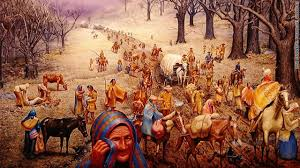
Given the courageous example Sixkiller had set, Redbird felt he owed it to the legendary Cherokee to face with the same fortitude the trials that lay ahead for the Indian Nation. It was a pathetic group of thousands of Indians who were herded west during the winter of 1838–39. Redbird Sixkiller’s recollection of the grueling journey that came to be known as the Trail of Tears was passed along to his son, his son’s sons, and every generation that followed. The January 18, 1972, edition of the Statesville, North Carolina, newspaper, the Statesville Daily Record, published Redbird’s reminiscences as told by those generations and noted that the inhumanity of the forced move of the Indians preyed on his sense of justice. He saw helpless Cherokee arrested, dragged from their homes, and driven at bayonet point into the stockades. He watched as his people were loaded like cattle into wagons and hauled west. Redbird told Sam how few of the Indians were given time to make arrangements to leave and that one family was driven from its home as members were preparing to bury a child who had died. He recounted how another mother forced from her home fell and died of a heart attack before they could take her to the stockade. Still another mother died of pneumonia contracted after giving her only blanket for the protection of a sick child.
Sam listened intently to his father describe a Cherokee elder’s reaction to the tragic event. The elder’s name was Chief Junaluska. During the Battle of the Horse Shoe, the chief saved the life of a man who would eventually become the president of the United States, and who would support the relocation of Indian tribes. The chief later admitted that if he had known the life he was saving was that of Andrew Jackson, American history would have been written differently.
Like many other Indians who survived the Trail of Tears, Redbird passed on to his son the stories of how government soldiers treated the Cherokee during this time. Only a few men were remembered for being humane. The majority of officers and the members of their units treated the Indians harshly. A soldier with the Georgia volunteers who showed sympathy to the Cherokee described in his memoirs the severity of the treatment the Indians received. “I fought through the War Between the States,” the veteran recounted, “and I have seen men shot to pieces by the thousands, but the Cherokee removal was the cruelest work I ever knew.”
To learn more about Sam Sixkiller read:
Sam Sixkiller: Frontier Cherokee Lawman.
This Day…
Comes A Lighthorsemen
Enter now to win a copy of
Sam Sixkiller: Frontier Cherokee Lawman
Lawman Sam Sixkiller led his horse through a belt of sparse timber along the Illinois River in southeast Oklahoma Territory. He was a stocky, dark-skinned, heavy-shouldered man with a neatly trimmed, droopy mustache and small dark eyes that were flatly calculating. His eyes shifted purposefully from the streams of sunlight off a growth of blackberry bushes to the rocky path dancing before him. Apart from the sound of his roan’s hooves slowly moving through the sweet-gum shrubs and short grass, the only noise was a mingling of a trio of agitated voices wafting through the warm air.
Sam urged his horse into a clearing where three half-blood Cherokee-Seminole Indians sat playing dice. In between rolls of the dice, the men drank from an amber-colored bottle that they eagerly shared with each other. Scattered beside the men were four empty liquor bottles. The drunken Indians barely noticed Sam slowly inching his horse into their crude camp.
The men were undisturbed by Sam’s presence and continued with their game. They argued over whose turn it was, nearly coming to blows over which player went next. Sam watched them toss the dice on a thick blanket. At first glance the dusty blanket appeared to be draped over a log. The closer he got to the action the more it became clear that the makeshift table was actually the body of a fourth Indian. A dark red stream of dried blood had trickled out from under the covering and pooled around a stand of bright orange butterfly weed.
Sam scrutinized the scene more carefully and spotted a massive knife within reach of the Indian closest to him. Sam casually pushed his jacket over the six-shooter strapped on his side, revealing not only the weapon but also the slightly tarnished badge that showed he was a member of the Cherokee Nation police force. One by one the men turned and looked at the lawman. For a breathless instant Sam watched the knife, expecting one of the Indians to snap it up. Without saying a word the three got to their feet, wavering a bit as they did so.
Sam pulled his gun out of his holster and leveled it at the men as he eased his five-foot eight-inch frame off his horse. He motioned for the men to back away from the body, and they reluctantly complied.
Disgusted, Sam walked over to one of the bottles and kicked it hard. It spun into a nearby rock and broke. What little booze was left inside spilled out and quickly soaked into the dry land.
Sam made his way to the motionless man on the ground and, using the toe of his boot, rolled him over on top of the blanket. The man was dead. There was a deep cut across his throat, and his limbs were stiff.
Possession of liquor on Indian land was a criminal offense. Since being appointed captain of the Indian Police at Union Agency in Muskogee, Creek Nation, in February 1880, Sam had arrested numerous buyers and sellers of liquor. The effect liquor had on many of the men and women in his jurisdiction threatened to destroy the Cherokee way of life.
To learn more about this courageous lawman read
Sam Sixkiller: Frontier Cherokee Lawman
This Day…
The New Sheriff in Town
Enter now to win a copy of
Sam Sixkiller: Frontier Cherokee Lawman
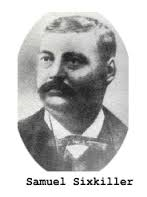
Although his exploits on the job were as courageous as those of Bill Hickok or Wyatt Earp, the name of Sam Sixkiller is scarcely recognized today. The criminal class that invaded the Indian Nation in the region now known as Oklahoma from 1870 to 1886 had to contend with an Indian police force known as the Lighthorsemen, of which Sam Sixkiller was a member. His ability to fearlessly handle horse thieves, bootleggers, murderers, and rapists that perpetrated such illegal acts on Indian land earned him the respect of his people and fellow officers.
As High Sheriff in Tahlequah, the capital of the Cherokee Nation, Sixkiller apprehended white lawbreakers selling rotgut whiskey to Indians and squared off against hostile half-breeds like “Badman” Dick Glass. Glass had a reputation that rivaled Jesse James; some said he was even more ruthless. Sheriff Sixkiller wasn’t intimidated by the outlaw and did what was needed to bring him in. Sam Sixkiller not only arrested outlaws and put them in jail but also served as the warden of the very facility that housed the lawbreakers.
From Tahlequah, Sixkiller moved on to Muskogee, in present-day Oklahoma, where he was promoted to captain of the Lighthorsemen and helped to bring peace to the volatile area. When the railroads sliced through the landscape, Captain Sixkiller was named a special agent to the rail lines, thwarting attempted robberies and staving off whiskey peddlers hoping to transport their goods across the territory. Isaac Parker, the famous 12th Judicial Circuit judge who held court at Fort Smith, Arkansas, from 1868 to 1898, was so impressed with Captain Sixkiller’s tenacity and dedication to law and order that he recommended the officer be given a commission as a US deputy marshal. These additional responsibilities further exposed the lawman to some of society’s most dangerous characters.
A legal altercation between Sixkiller and a pair of violent repeat offenders named Richard Vann and Alf Cunningham sparked a vendetta that eventually led to the lawman’s death. Off duty and unarmed, Sixkiller was ambushed and killed by the criminals on Christmas Eve in 1886.
The death of Captain Sixkiller exposed a serious void in federal law as it pertained to those who murdered Native American US deputy marshals: There was nothing on the books that made it a federal offense to kill an Indian officer. Although legislation to correct this deplorable oversight eventually passed, it came too late to affect the cowards that robbed Sixkiller of his life.
Sam Sixkiller died a martyr to the cause of law and order. His story is not only about his life and untimely demise, but also about the everyday life of frontier lawmen and the duties they performed, from the mundane to the perilous.
To learn more about this courageous lawman read
Sam Sixkiller: Frontier Cherokee Lawman