
Operative Barkley

Enter now for a chance to win a copy of

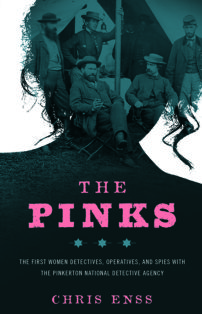
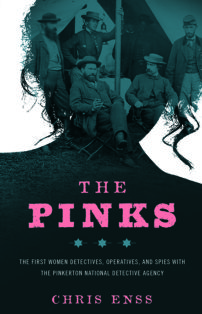
The Pinks:

The First Women Detectives, Operatives, and Spies with the Pinkerton National Detective Agency


President-elect Abraham Lincoln showed no sign of being nervous or apprehensive about the late night ride Pinkerton operatives arranged for him to take on February 23, 1861. Kate Warne noted in her records of the events surrounding Mr. Lincoln leaving Pennsylvania that he was cooperative and congenial.

When the politician arrived at the depot in Baltimore with his colleagues and confidants, Ward Hill Lamon and Allan Pinkerton he was focused and quiet. He was stooped over and leaning on Pinkerton’s arm. The posture helped disguise his height and when Kate greeted with a slight hug and called him “brother” no one outside the small group thought anything of the exchange. For all anyone knew Kate and Mr. Lincoln were siblings embarking on a trip together. Neither the porter nor the train’s brakeman noticed Mr. Lincoln as the President-elect. Kate made it clear to the limited railroad staff on board that her brother was not well and in need of solitude.

It took a mere two minutes from the time the distinguished orator reached the depot until he and his companions were comfortably on board the special train. The conductor was instructed to leave the station only after he was handed a package Pinkerton had told him to expect. The conductor was informed the package contained important government documents that needed to be kept secret and delivered to Washington with “great haste.” In truth the documents were a bundle of newspapers wrapped and sealed.

The bell on the engine clanged and the train lurched forward. The gas lamps in the sleeping berths in Mr. Lincoln’s car were not lit and the shades were pulled. Kate and Pinkerton agreed it would be best to prevent curious passengers waiting at various stops from seeing in and possibly recognizing the President-elect. No one spoke as the train slowly pulled away from the station. All hoped the journey would be uneventful and were hesitant to make a sound for fear any conversation might jeopardize what had been done to get Mr. Lincoln to this point. It was Mr. Lincoln who broke the silence with an amusing story he had shared with Pennsylvania Governor Andrew Curtain the previous evening.

“I used to know an old farmer out in Illinois,” Mr. Lincoln told the three around him. “He took it into his head to venture into raising hogs. So he sent out to Europe and imported the finest breed of hogs that he could buy. The prize hot was put in a pen and the farmer’s two mischievous boys, James and John, were told to be sure not to let it out. But James let the brute out the very next day. The hog went straight for the boys and drove John up a tree. Then it went for the seat of James’s trousers and the only way the boy could save himself was by holding onto the porker’s tail. The hog would not give up his hunt or the boy his hold. After they had made a good many circles around the tree, the boy’s courage began to give out and he shouted to his brother: “I say, John, come down quick and help me let go of this hog.”

Mr. Lincoln’s traveling companions smiled politely and stifled a chuckle. Had the circumstances been different perhaps they would have laughed aloud. Undaunted by the trio’s subdued response, the President-elect continued to regale them with amusing tales of the people he’d met and experiences they shared. The train gained speed and soon Philadelphia was disappearing behind them.


To learn more about Operative Barkley, the cases she worked,

and the other women Pinkerton agents read

The Pinks:

The First Women Detectives, Operatives, and Spies with the Pinkerton National Detective Agency
 

Operative Ellen

Enter now for a chance to win a copy of

The Pinks:

The First Women Detectives, Operatives, and Spies with the Pinkerton National Detective Agency


Several months before the start of the Civil War, Kate Warne was masquerading as a Southern sympathizer and keeping company with women of refinement and wealth from the South. When war did break out, those women were unafraid to express how much in favor they were of the Rebels. Some of them were secretly supplying the Confederate forces with information they had acquired using their feminine wiles. Kate was tasked with staying close to opponents of the government who were seeking to overthrow it and secure proof that secrets were being traded.

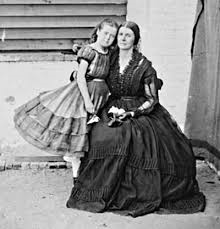
For weeks Kate had been monitoring the movements of Mrs. Rose Greenhow, a Southern woman believed to be engaged in corresponding with Rebel authorities and furnishing them with valuable intelligence. By late August 1861, Allan Pinkerton and a handful of his most trusted operatives, including Kate, had compiled enough evidence against Rose that a warrant for her arrest was granted. She was outraged when Pinkerton detective agents invaded her home and began gathering boxes of secret reports, letters, and official, classified documents. She called the agents “uncouth ruffians” and objected to her home being searched.

Pinkerton and his team left none of Rose’s possessions intact in their quest to extract all suspicious paperwork. The headboards and footboards of all the beds were taken apart, mirrors were separated from their backings, pictures removed from frames, and cabinets and linen closets were inspected. Coded letters were found in shoes and dress pockets. Among the items found in the kitchen stove were orders from the War Department giving the organizational plan to increase the size of the regular army, a diary containing notes about military operations, and numerous incriminating letters from Union officers willing to trade their allegiance to their country for a romantic interlude with Mrs. Greenhow.

According to Rose’s account of the inspection of her house and the seizure of many, sensitive letters, the “intrusion was insulting.” One of the investigators at the scene complimented her on the “scope and quality” of the material found. It was “the most extensive private correspondence that has ever fallen under my examination,” the operative confessed. “There is not a distinguished name in America that is not found here. There is nothing that can come under the charge of treason, but enough to make the government dread and hold Mrs. Greenhow as a most dangerous adversary.”

Pinkerton had hoped to keep the arrest quiet, but Rose’s eight-year-old daughter made that impossible. After witnessing the operatives foraging through her room and the room of her deceased sister, she raced out the back door of the house shouting, “Mama’s been arrested! Mama’s been arrested!” Agents chased after the little girl. Having climbed a tree nothing could be done until she decided to come down.

A female detective Rose referred to in her memoirs as “Ellen” searched the suspected spy for vital papers hidden in her dress folds, gloves, shoes, or hair. Nothing was found. Historians suspect the operative Rose referred to as Ellen was Kate Warne. Kate divided her time between guarding the prisoner and questioning leads that could help the detective agency track and apprehend all members of the Greenhow spy ring. Rose realized quickly that Kate was not someone to be trifled with, and she kept her distance.


To learn more about Operative Ellen, the cases she worked,

and the other women Pinkerton agents read

The Pinks:

The First Women Detectives, Operatives, and Spies with the Pinkerton National Detective Agency
 

Midwest Book Review of The Pinks

From the Women’s Studies Shelf

The Pinks
Chris Enss
TwoDot
c/o Rowman & Littlefield
9781493008339 $16.95 www.rowman.com

The Pinks: The First Women Detectives, Operatives, and Spies with the Pinkerton National Detective Agency is recommended for history, women’s issues, and sociology holdings with a special interest in law enforcement as it surveys the Pinkerton Detective Agency and the true stories surrounding the first woman detective in America and those who came after her. Chapters capture feats of courage, daring, and historical import as they follow female agents who pursue justice and whose exploits added to American history and early struggles for justice. No women’s history collection should be without this lively, important survey.


This from the Midwest Book Review

The Midwest Book Review

Established in 1976, the Midwest Book Review is an organization committed to promoting literacy, library usage, and small press publishing. The MBR publishes the following monthly book review magazines specifically designed for community and academic librarians, booksellers, and the general reading public:


The Pinks & Operative Potter

Enter now to win a copy of

The Pinks:  The First Female Operatives, Detectives and Spies with the Pinkerton National Detective Agency.


In the spring of 1858 a friendly, two-horse match race attracted the attention of many residents in the town of Atkinson, Mississippi. Mrs. Franklin Robbins and Mrs. R. C. Potter, both guests at one of the community’s finest hotels had decided to see which one of their mounts was the fastest.  They had begun their afternoon ride in the company of several others enjoying the balmy air, blooming flowers, and waving foliage of the sunny southern landscape.  Exploring a path that led to a bubbling stream, Mrs. Robbins and Mrs. Potter had lagged far behind the party and decided to narrow the gap when talk about who could make that happen first arose.

For a few moments both of the horses the women were riding ran at an uneven but steady pace then suddenly Mrs. Robbins’ horse bolted ahead.  Her ride didn’t stop until they reached the business district of town.  Mrs. Robbins slowed the flyer to a trot before she glanced back to check on her competitor.  Mrs. Potter was nowhere to be seen.  Mrs. Robbins backtracked a bit; her eyes scanned the road she’d traveled.  Her horse reared and threatened to continue the run but she restrained the animal and pulled tightly on the reins.  “Mrs. Potter!” she called out frantically, “Mrs. Potter?!”  Mrs. Robbins urgent cries drew the attention of the people with whom the pair had started the ride. They had congregated in front of the hotel when they heard Mrs. Robbins call for help.  Not only did the fellow riders hurry to the scene, but men and women at various stores or saloons rushed to Mrs. Robbins’ aide.

Through broken tears she explained what had transpired and asked volunteers to accompany her in her search for Mrs. Potter.  Many quickly agreed and wasted no time in following after Mrs. Robbins.  She spurred her horse back along the roadway they had just traveled.

The riders spread out in hopes of finding a trail leading to where Mrs. Potter’s mount might have carried her.  One rider spotted a woman’s scarf caught in a low hanging branch of an oak tree and made his find public.  Tracks near the tree led searchers to believe Mrs. Potter’s horse might have been spooked and out of control.  After several tense moments trekking back and forth over field and stream, Mrs. Potter was located.  She had been thrown from her ride and was lying motionless in a meadow adjacent to the home of the county clerk, Alexander Drysdale.
Mrs. Robbins rode to Alexander’s house and informed him of what had happened.  In less than five minutes he had improvised a stretcher out of a wicker settee and a mattress, and had summoned four of his hired hands to help retrieve the injured Mrs. Potter.  She was groaning in pain.  She told those attending to her that her head hurt.  In a few moments the hired hands had lifted her off the ground and gently placed her in the settee.  While being carried to the Drysdale’s home Mrs. Potter complained that her ribs were sore and her back was aching.  Mr. Drysdale sent Mrs. Robbins and the other riders on their way and requested that Mrs. Robbins return with a physician.  He promised that he and his wife would keep Mrs. Potter comfortable while waiting for the doctor to arrive.

Mrs. Potter was grateful for the Drysdale’s consideration and thanked them over and over again.  The hired hands were instructed to put her in one of the guest bedrooms and see to her every need.

When the physician arrived he examined her but could not determine the extent of her injuries.  He recommended that she remain in bed and not be moved.  He thought she would not have to be confined to bed rest for more than two weeks.  Mrs. Potter asked if she could be moved to the hotel, as she did not want to trespass on the Drysdale’s hospitality.  Mrs. Drysdale, however, refused to hear of such a thing as the removal of a sick person from her house, and said that she would enjoy Mrs. Potter’s company.  Mrs. Potter agreed to stay with the Drysdales until she could move about without assistance.

No one suspected that Mrs. Potter was an operative for the Pinkerton Detective Agency.  They had no idea her real name was Kate Warne and that she had been tasked with infiltrating the Drysdale’s home to locate a murderer.  As Mrs. Potter, Kate had pretended her horse had been frightened and out of control and eventually threw her, that she’d been deposited purely by chance near the Drysdale’s house and that the injuries sustained in the fall were substantial enough to render her too fragile to move.


To learn more about Operative Potter and the other female agents with the Pinkerton Detective Agency read The Pinks.

Tombstone Epitaph and The Pinks

Enter now to win a copy of

The Pinks:  The First Women Detectives, Operatives and Spies with the Pinkerton National Detective Agency.


The Tombstone Epitaph is a Tombstone, Arizona, based monthly publication that serves as a window in the history and culture of the Old West. Founded in January 1880 (with its first issue published on Saturday May 1, 1880), The Epitaph is the oldest continually published newspaper in Arizona.

It long has been noted for its coverage of the infamous Gunfight at the O.K. Corral on Oct. 26, 1881, and its continuing research interest in Wyatt Earp, Doc Holliday and their cowboy adversaries. In 2005, for example, it presented for the first time a sketch of the O. K. Corral gunfight hand drawn by Wyatt Earp shortly before his death.