Tired of Bachelor Life

To do list: WIN!

Enter to win a copy of two books about mail order brides of the Old West. The titles you can win are Hearts West: True Stories of Mail Order Brides on the Frontier and Object Matrimony: The Risky Business of Mail Order Match Making on the Western Frontier.


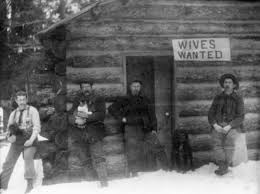
In the early days of westward travel, when men and women left behind their homes and acquaintances in search of wealth and happiness, there was a recognized need for some method of honorable introduction between the sexes. The need was readily fulfilled by the formation of a periodical devoted entirely to the advancement of marriage. Throughout the 1870s, 80s and 90s, that periodical, to which many unattached men and women subscribed, was a newspaper called Matrimonial News. Here’s a sample of one of the advertisements that appeared in the publication:

May 1873 – I am 33 years of age, and as regards to looks I am average with most men. I am looking for a lady to make her my wife, as I am heartily tired of bachelor life. I desire a lady not over 28 or 30 years of age, not ugly, well educated and musical. Nationality makes no difference, only I prefer not to have a lady of Irish birth. She must have at least $20,000.


To learn more about mail order brides and the advertisements they placed in various publications read Hearts West: True Stories of Mail Order Brides on the Frontier and Object Matrimony: The Risky Business of Mail Order Match Making on the Western Frontier.


Refined Lady Wanted: Must Like Biking

Time is short. Enter now to win a copy of two books about mail order brides of the Old West. The titles you can win are Hearts West: True Stories of Mail Order Brides on the Frontier and Object Matrimony: The Risky Business of Mail Order Match Making on the Western Frontier.


In the early days of westward travel, when men and women left behind their homes and acquaintances in search of wealth and happiness, there was a recognized need for some method of honorable introduction between the sexes. The need was readily fulfilled by the formation of a periodical devoted entirely to the advancement of marriage. Throughout the 1870s, 80s and 90s, that periodical, to which many unattached men and women subscribed, was a newspaper called Matrimonial News. Here’s a sample of one of the advertisements that appeared in the publication:

No. 236: A gentleman of 25 years old, 5 feet 3 inches, doing a good business in the city, desires the acquaintance of a young, intelligent and refined lady possessed of some means, of a loving disposition from 18 to 23, and one who could make home a paradise. Must like biking.


To learn more about mail order brides and the advertisements they placed in various publications read Hearts West: True Stories of Mail Order Brides on the Frontier and Object Matrimony: The Risky Business of Mail Order Match Making on the Western Frontier.


The Dreamer and the Lothario

Enter to win a book for history lovers and brides to be who believe the risk is worth it all – Object Matrimony: The Risky Business of Mail-Order Bride Matchmaking on the Western Frontier.


Annie Gayle was considered one of the prettiest, most ambitious girls in Akron, Ohio. Her eyes were large, her features were well proportioned, and her desire to go west was her number-one aspiration. She was well on her way to achieving her goal when she accepted the proposal of a man living in French Camp, California. He had advertised for an adventurous woman anxious to settle in the Gold Country and experience the excitement of the wild frontier. Annie wasted no time favorably responding to his letter asking for her hand in marriage.

Born an only child in 1874 to Charles Gayle and Margaret Stantz Gayle, Annie grew up hearing her father’s tales of the land beyond the Rockies and the endless possibilities to be had there. Charles died before he realized his own dream of moving to San Francisco. Fearing that the chance to make such a journey had died with her father, Annie decided to consider mail-order bride opportunities.

Horace Knapp, a handsome man in his late forties, collected his teenage bride-to-be at the train depot in Sacramento, California, on September 10, 1890. Annie was anxious to meet the sheepish suitor who had described himself in his letters as a “good fellow, with means and prospects.” The plan was for the two to marry the day after Annie arrived—and only if their first encounter proved to be mutually satisfactory. The couple dined together and discussed their possible future. By the end of the evening they were in complete accord to wed. Vows and a ring were exchanged the following morning.

Annie was delighted not only to be married, but also finally to be at a location that seemed bursting with potential. If she had remained in Ohio working at a millinery shop, life as a farmer’s wife was the best she thought she could hope for. She believed being Mrs. Knapp would bring her happiness, and she therefore surrendered to her husband the small amount of money she had earned working as a seamstress in Akron. It never crossed her mind that Horace might be untrustworthy. She was honest and thought everyone else was as well.

The newlyweds moved to a small cabin nestled in a mining community in the San Juan Valley. Everything went along nicely. It was as though the couple had been settled for years in their new position. Horace invested his wife’s funds in a mining venture he explained to her would produce great dividends—enough for them to see the world beyond California. Annie was thrilled by the idea, and while her husband was away tending to their interests, she planned trips to distant lands.

One night, alone again in their fledgling homestead, a ragged little boy arrived at the doorstep and delivered a soiled note to her. It read as follows:


To learn more about the note found on the doorstep and tales from other mail-order brides read Object Matrimony: The Risky Business of Mail-Order Matchmaking on the Western Frontier.

 

This Day…

1838 Joseph Smith abandons Ohio.   After his Mormon bank fails in the Panic of 1837, Joseph Smith flees Kirtland, Ohio, to avoid arrest and heads for Missouri to rebuild his religious community.

The Belle and the Businessman

Enter now to win a book for history lovers and brides to be who believe the risk is worth it all – Object Matrimony: The Risky Business of Mail-Order Bride Matchmaking on the Western Frontier.


The SS Continental pitched and rolled as it traveled over the rough waters of the Pacific Ocean en route to the northwestern section of the United States. The nearly three dozen women on board were violently ill with seasickness and desperate for the waves to subside. They were either lying on their bunks in their berths or hanging over the railing of the vehicle heaving into the sea. The tormented females were part of a unique group headed west in search of a spouse.

In 1860, Asa Mercer, a twenty-one-year-old educator and entrepreneur, conceived the idea of bringing eligible females to the Washington Territory in hopes of settling the area and making it fit for societal advancements. The Pacific Northwest was known as a man’s paradise. Everything a young man ever dreamed of or wanted was there, except young women.

Life without the presence of a woman to share a home and life grew monotonous-so much so, in fact, that a big percentage of single men vowed they could pull up stakes and seek a new place to settle unless someone did something in a hurry. Enter Asa Mercer.

Mercer organized an expedition of prospective brides to go west in 1864. He recruited dozens of young ladies (mostly teachers) to journey to a place where their talent and gender were in high demand. The Mercer Belles, as the primarily Massachusetts-born females became known, welcomed the chance to accompany the businessman on his second voyage to the growing coastal town of Seattle. In addition to offering the chance to meet and marry ambitious, hardworking bachelors, Mercer promised the eager, single passengers honorable employment in schools and good wages.


To learn more about the Mercer Belles and the other mail-order brides who came West read

Object Matrimony: The Risky Business of Mail-Order Matchmaking on the Western Frontier.


The Murderous Mail-Order Bride

Enter now to win a book for history lovers and brides to be who believe the risk is worth it all – Object Matrimony: The Risky Business of Mail-Order Bride Matchmaking on the Western Frontier.

When Carroll B. Rablen, a thirty-four year old veteran of World War II from Tuttletown, California, advertised for a bride he imagined hearing from a woman who longed to spend their life with him hiking and enjoying the historic, scenic beauty of the Gold Country in Northern California. The ad he placed in a San Francisco matrimonial paper in June 1928 was answered by Eva Brandon. The thirty-three year-old Eva was living in Quanah, Texas when she received a copy of the matrimonial publication.

If Carroll had been less eager to marry he might have noticed the immature tone Eva’s letters possessed. If he’d taken the time to scrutinize her words he might have been able to recognize a flaw in her thinking. According to the July 14, 1929 edition of the Ogden, Utah newspaper the Ogden Standard-Examiner, one of Eva’s first correspondences demonstrated that not only did she seem much younger than thirty-three years old, but she also had a dark side. “Mr. Rablen, Dear Friend,” the letter began. “You wrote about a son I have. He has had no father since he was a month old. The father left me. I haven’t seen him. If a man leaves me I don’t want to see them. And I’ll make sure I can’t.”

Eva left Texas for California in late April 1929. She and Carroll were married the evening of April 29, 1929. The dance that followed the nuptials at the Tuttletown school house was well attended by Carroll’s friends and neighbors. They were happy he had found someone to share his life. Eva twirled around the room dancing with anyone who wanted to join her. She was elated with her situation. Carroll on the other hand chose to wait outside for his new bride in the car. According to the Ogden Standard Examiner, Carroll was slightly deaf and despondent over the other physical ailments that kept him from fully enjoying the festivities.

When Carroll’s father, Stephen Rablen began regaling guests with his rendition of the song “Turkey in the Straw” on his fiddle, Eva excused herself and went outside to visit with her husband. She took a tray of sandwiches and coffee to him. He smiled proudly at her and commented on how thoughtful it was for her to bring him some refreshments. Carroll helped himself to a cup of coffee, blew across the top of it to cool it down then took a sip. He made a bit of a face as if the coffee lacked something. He took another drink to determine what it needed.


To learn more about how mail-order bride Eva Brandon killed

her husband read

Object Matrimony: The Risky Business of Mail-Order Matchmaking on the Western Frontier.