
Making Matrimony Pay

Enter to win a book for history lovers and brides to be who believe the risk is worth it all – Object Matrimony: The Risky Business of Mail-Order Bride Matchmaking on the Western Frontier.


Long after an advertisement is placed in the newspaper by lonely hearts in need of a spouse, and once nerves have settled after meeting the bride or groom of choice for the first time, comes the challenge of making a mail-order marriage last. Matches that came about through a public announcement, marriage broker, or matrimonial agency in the mid-1800s were not necessarily unhappy. Though embodying more of the lottery element than the ordinary marriage is said to contain, they frequently yielded surprises to the persons involved.

Conscientious marriage brokers like Edgar Kaborchev of Bachmut, Russia, wanted his clients to be satisfied with their decision for a lifetime. Kaborchev resided in New York City and represented several men west of the Mississippi looking for a bride. According to the June 23, 1890, edition of the Longansport, Indiana, newspaper the Daily Reporter, Kaborchev provided photographs to those interested in marrying so “the individual who hired him could make a more informed decision about the person entering into such a sacred union.” Each photograph was accompanied by details concerning the social and financial standing of the person pictured.

The Daily Reporter noted that Kaborchev was “kindly received everywhere.” He was quick to point out to the eager men and women he had arranged to marry that he wanted them to be happy for years. “Knowing a potential spouse is attractive and of fair fortune before they exchange vows is the key to success,” Kaborchev proudly confessed.


To learn more about mail order brides and the advertisements they placed in various publications read Hearts West: True Stories of Mail Order Brides on the Frontier and Object Matrimony: The Risky Business of Mail Order Match Making on the Western Frontier.


The New Plan Company Catalog for Matrimony

Enter to win a copy of two books about

mail order brides of the Old West.

The titles you can win are

Hearts West: True Stories of Mail Order Brides on the Frontier and

Object Matrimony: The Risky Business of Mail Order Match Making on the Western Frontier.
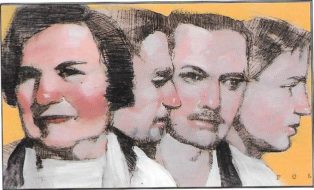
 

Matrimonial clubs date as far back as 1849. Lonely hearts from Syracuse, New York, to San Francisco, California, joined such organizations in hopes of finding a suitable mate with whom to spend the rest of their lives. The New Plan Company based in Kansas City, Missouri, was a matrimonial club that claimed to have more than thirty-two thousand members during its existence from 1911 to 1917. According to the New Plan Company’s handbook, printed in the fall of 1910, the plan and method of the club were simple and easy to understand and follow.

“Our time and money is devoted entirely to the interest of the unmarried. We are dedicated to elevating and promoting the welfare of marriageable people and furnishing them with a safe, reliable, and confidential method at a nominal cost, whereby good honorable people of sincere and moral intentions, may better enable themselves to become acquainted with a large number of such people of the opposite sex as they may deem worthy of consideration, which may lead to their future happiness and prosperity.”

The follow are a sample of some of the ads placed in The New Plan Company catalog:

American; widow by death, age 38; weight, 135; height, 5 feet 6 inches; brown eyes; brown hair; Methodist religion; occupation, housewife, income $700 per year, business education and musician. Have means of $10,000. I am considered very good looking and neat. Will marry if suited.

A nice little blue-eyed Miss from North Carolina, with brown hair, age 18, weight 125, height 54 inches, fair complexion; can sing and plan piano; have a fine home, also have means of $50,000; my occupation is trained nurse; would like to hear from a nice young man of suitable age, rich or poor, but must be good-hearted and true; will marry a true love only.

Am not considered good looking, but make a nice appearance; plain, and neat dresser; immaculate character; quiet, loving disposition; Christian religion, age, 22; weight, 135; height 5 feet 4 inches, blue eyes; blonde hair; light complexion. Would like to hear from gentleman interested in missionary work.


To learn more about mail order brides and the advertisements they placed in various publications read Hearts West: True Stories of Mail Order Brides on the Frontier and Object Matrimony: The Risky Business of Mail Order Match Making on the Western Frontier.
 

Object Matrimony

Enter to win a copy of two books about mail order brides of the

Old West.

The titles you can win are

Object Matrimony: The Risky Business of Mail Order Match Making on the Western Frontier and

Hearts West: True Stories of Mail Order Brides on the Frontier


In the early days of westward travel, when men and women left behind their homes and acquaintances in search of wealth and happiness, there was a recognized need for some method of honorable introduction between the sexes. The need was readily fulfilled by the formation of a periodical devoted entirely to the advancement of marriage. Throughout the 1870s, 80s and 90s, that periodical, to which many unattached men and women subscribed, was a newspaper called Matrimonial News. Here’s a sample of one of the advertisements that appeared in the publication:

No. 45 Here comes a sweet lady from the land of flowers and sunshine; age 35; weight 150, height 5 feet 8 inches; brown eyes, brown hair, rosy complexion; a musician, occupation – real estate. Have income also some means. Object matrimony.


To learn more about mail order brides and the advertisements they placed in various publications read Hearts West: True Stories of Mail Order Brides on the Frontier and Object Matrimony: The Risky Business of Mail Order Match Making on the Western Frontier.


Arthur Barker Shot Trying to Escape from Alcatraz

Ring in the New Year with Ma and her boys.

Enter to win a copy of

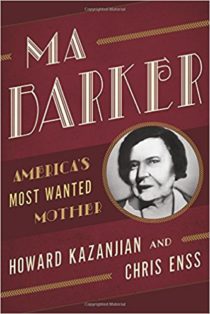
Ma Barker: America’s Most Wanted Mother

In a time when notorious Depression-era criminals were terrorizing the country, the Barker-Karpis Gang stole more money than mobsters John Dillinger, Vern Miller, and Bonnie and Clyde combined. Five of the most wanted thieves, murderers, and kidnappers by the Federal Bureau of Investigation (FBI) in the 1930s were from the same family. Authorities believed the woman behind the band of violent hoodlums that ravaged the Midwest was their mother, Kate “Ma” Barker.

On January 14, 1939, immediately following an autopsy of the slain convicted kidnapper Arthur Barker, a staff member at the San Francisco Coroner’s Office made a death mask of the dead man’s face.

A memorandum written by a representative of the San Francisco division of the FBI noted that a plaster mold of Arthur’s face had to be made as close to his death as possible. “Well before bloating and the elements distort the character of expression,” the memo read. The process of making the mold was included in the note dated April 20, 1939. “Apply grease to the face and especially any facial hair, including eyebrows. Once the plaster dries layer plaster bandages mixed with water on the face. The first layer captures the details, even wrinkles, while the other layers reinforce the first. Then carefully remove the hardened mold, or negative, from the face. Finally, pour a substance like wax or a metal such as bronze into the negative to make a positive, three-dimensional death mask.”

The memo, outlining the dos and don’ts of making a death mask, was addressed to J. Edgar Hoover’s office. “This is a good death mask,” the note read. “I am arranging for a negative mold of the same to be made at once so that several copies can be made and used in the Director’s office or wherever else it may be considered desired to exhibit.”

The mask made of Arthur’s face was not the first FBI Director Hoover requested to be made. He had one poured of gangster John Dillinger in July 1934. Four masks of Dillinger’s face were made, and Hoover proudly had one on display in his office. The mask captured every detail of Dillinger’s face: the bullet wound, the scrapes from where he had hit the pavement, the bloating and the swelling from the heat and pooling blood, and even the tell-tale signs of underground plastic surgery. Arthur’s mask was just as telling. His original death mask was placed for safe keeping in the glass exhibit case on displaying moulage (the process of making molds) in the front exhibit room of the San Francisco coroner’s laboratory.

To learn more about the life and violent death of Ma Barker

and her sons read

Ma Barker: America’s Most Wanted Mother


Alvin Karpis, Ma’s Other Son


Take Ma home for the holidays.

Enter to win a copy of

Ma Barker: America’s Most Wanted Mother


In a time when notorious Depression-era criminals were terrorizing the country, the Barker-Karpis Gang stole more money than mobsters John Dillinger, Vern Miller, and Bonnie and Clyde combined. Five of the most wanted thieves, murderers, and kidnappers by the Federal Bureau of Investigation (FBI) in the 1930s were from the same family. Authorities believed the woman behind the band of violent hoodlums that ravaged the Midwest was their mother, Kate “Ma” Barker.

A dilapidated Ford Model T pickup slowed to a stop in front of the Barker home in Tulsa, Oklahoma, in mid-May 1931, and Alvin Karpis climbed out of the bed of the vehicle. Alvin was a tall, self-confident man, well dressed but not flashy. He carried a small duffle-style suitcase containing all the belongings he had in the world. He studied the weathered house in front of him, taking notice of its state of disrepair. The homes on either side were not in perfect condition; it was a low-income neighborhood, and everyone seemed to be struggling, but the Barkers’ house was in a sorry state in comparison. A man and woman inside the Barker home were arguing. The exact nature of the disagreement was not clear, but the sound of doors slamming and glass breaking made it apparent that the fight had escalated into a war.

Alvin removed a cigarette from his suit jacket pocket and lit it while contemplating what to do next. Ma Barker exited the front door carrying a hammer and nails. She didn’t pay much attention to Alvin. Her lower lip was bleeding, but she didn’t pay much attention to that either. She was focused on fixing a portion of the screen that had been torn from the corner of the door. “Are you Mrs. Barker?” Alvin asked, walking toward Ma and taking a drag off his cigarette. “I am,” Ma said turning around to face Alvin. “I want to get ahold of Freddie,” he told her. Ma looked Alvin over suspiciously. “Who are you?”

“I’m the guy who called with Freddie in Lansing,” Alvin told her.

“Oh, yes, he told me about you,” Ma replied. “He told me you’d be getting out soon. He came to visit me when he got out. He’s a good boy.” Ma let her guard down, and Alvin stepped onto the porch. He told her he was a thief and that he’d been sent to the Kansas State Penitentiary in Lansing for attempting to rob a pool hall. It was just one of many crimes Alvin told Ma that he’d committed.

To learn more about the life and violent death of Ma Barker

and her sons read

Ma Barker: America’s Most Wanted Mother