
1777 – The new United States celebrates its first national day of thanksgiving on Thursday, December 18, 1777, commemorating the American victory at the Battle of Saratoga after the surrender of General John Burgoyne and 5,000 British troops in October 1777.
Murder in Wisconsin
Take Ma home for the holidays.
Enter to win a copy of
Ma Barker: America’s Most Wanted Mother
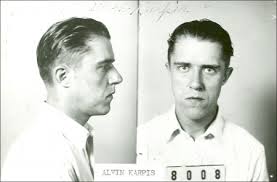
In a time when notorious Depression-era criminals were terrorizing the country, the Barker-Karpis Gang stole more money than mobsters John Dillinger, Vern Miller, and Bonnie and Clyde combined. Five of the most wanted thieves, murderers, and kidnappers by the Federal Bureau of Investigation (FBI) in the 1930s were from the same family. Authorities believed the woman behind the band of violent hoodlums that ravaged the Midwest was their mother, Kate “Ma” Barker.
A dilapidated Ford Model T pickup slowed to a stop in front of the Barker home in Tulsa, Oklahoma, in mid-May 1931, and Alvin Karpis climbed out of the bed of the vehicle. Alvin was a tall, self-confident man, well dressed but not flashy. He carried a small duffle-style suitcase containing all the belongings he had in the world. He studied the weathered house in front of him, taking notice of its state of disrepair. The homes on either side were not in perfect condition; it was a low-income neighborhood, and everyone seemed to be struggling, but the Barkers’ house was in a sorry state in comparison. A man and woman inside the Barker home were arguing. The exact nature of the disagreement was not clear, but the sound of doors slamming and glass breaking made it apparent that the fight had escalated into a war.
Alvin removed a cigarette from his suit jacket pocket and lit it while contemplating what to do next. Ma Barker exited the front door carrying a hammer and nails. She didn’t pay much attention to Alvin. Her lower lip was bleeding, but she didn’t pay much attention to that either. She was focused on fixing a portion of the screen that had been torn from the corner of the door. “Are you Mrs. Barker?” Alvin asked, walking toward Ma and taking a drag off his cigarette. “I am,” Ma said turning around to face Alvin. “I want to get ahold of Freddie,” he told her. Ma looked Alvin over suspiciously. “Who are you?”
“I’m the guy who called with Freddie in Lansing,” Alvin told her.
“Oh, yes, he told me about you,” Ma replied. “He told me you’d be getting out soon. He came to visit me when he got out. He’s a good boy.” Ma let her guard down, and Alvin stepped onto the porch. He told her he was a thief and that he’d been sent to the Kansas State Penitentiary in Lansing for attempting to rob a pool hall. It was just one of many crimes Alvin told Ma that he’d committed.
To learn more about the life and violent death of Ma Barker
and her sons read
Ma Barker: America’s Most Wanted Mother
This Day…
December 15, 1890 – Sioux leader Sitting Bull (native name Tatanka-yatanka) was killed in a skirmish with U.S. soldiers along the Grand River in South Dakota as his warriors tried to prevent his arrest.
Barker Gang Kidnaps Bank President
Take Ma home for the holidays.
Enter to win a copy of
Ma Barker: America’s Most Wanted Mother

When the suggestion to kidnap Edward Bremer was presented to Ma, she ordered her crew to meet and discuss the proposal. In the summer of 1933, the Barker-Karpis Gang had kidnapped William Hamm, Jr., the president of Hamm’s Brewing Company. The caper was successful, yielding the gang $100,000 in cash for the return of the millionaire. News of the kidnapping was reported throughout the country. “Money or death was the ultimatum laid down by the culprits that absconded with Hamm’s Brewing Company executive,” the June 17, 1933, edition of the Albert Lea Evening Tribune read.
William had been captive near the same location in Bensenville, Illinois, where Edward Bremer was secured away. The police had withdrawn from the case at the request of the family. They were frightened of what might happen to William if law enforcement interfered. The ransom note from the abductors warned the Hamms that William would be shot and killed if the police were allowed any involvement. A note sent to William’s father instructed him to deliver the ransom money in “$5, $10, and $20 bills.” Payment of the ransom for the release of William, the kidnappers directed, was to be made using one of the company’s beer trucks. Not only did the Barker-Karpis Gang get the full amount they were asking in ransom, but when the authorities did begin investigating the kidnapping, a rival gang was arrested for the crime.
“J. Edgar Hoover himself announced from Washington that his men had put together a solid case against the Touhy gang,” Alvin Karpis wrote in his memoirs. “The scientific evidence left no doubt at all,” Hoover said, “that the Touhys were behind the kidnapping of William Hamm.”
The ease with which the Barker-Karpis Gang was able to get away with taking William and collecting the ransom was an argument for kidnapping Edward Bremer. In late December 1933, Ma’s boys convened at William Weaver’s apartment in St. Paul to talk through the details of the abduction. Who would trail Edward to learn about his habits, routine, friends, and work associates, who would write the ransom notes, who would deliver those notes to what contact, and when the job would be done were all determined. With the exception of Arthur, whom Ma suggested might have been a little too rough with the victim, everyone performed his duties as planned.
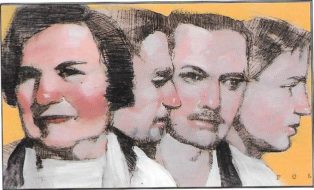
To learn more about the life and violent death of Ma Barker
and her sons read
Ma Barker: America’s Most Wanted Mother
Ma Barker: Ruthless and Daring
Take Ma home for the holidays.
Enter to win a copy of
Ma Barker: America’s Most Wanted Mother
In a time when notorious Depression-era criminals were terrorizing the country, the Barker-Karpis Gang stole more money than mobsters John Dillinger, Vern Miller, and Bonnie and Clyde combined. Five of the most wanted thieves, murderers, and kidnappers by the Federal Bureau of Investigation (FBI) in the 1930s were from the same family. Authorities believed the woman behind the band of violent hoodlums that ravaged the Midwest was their mother, Kate “Ma” Barker.
Kate Barker marched her fifteen-year-old son, Herman, through the remains of a cornfield outside Webb City, Missouri. Using the collar of her boy’s shirt as a lead, she steered him past bent and weathered stalks of corn. It was a hot, humid, September afternoon, all white light and glare. Herman chanced a look back at his mother, hoping the scowl on her face had softened. Kate wore a gray sweater embellished with rhinestone buttons and a blue- and- white plaid rayon dress with a sashed belt and bow collar. Her hair was nicely coiffed with spit curls on each temple in the style of the times. Although she had been born and raised in the rural Ozark Mountains and married a miner from a nearby town, she was no house Frau. She carried her plump, five-foot four-inch frame with a confidence generally relegated to those with a wealthy, sophisticated background.
Herman was dressed in jeans and an old shirt two sizes too big for him. He was barefoot and occasionally grimaced when his toe connected with a jagged rock on the ground. His mother was furious with him and disinterested in how uncomfortable their fast-paced walk made him. Herman had been caught with a few wallets he’d stolen from the deacons of the local Presbyterian church. The preacher had graciously contacted Kate about the matter after he had informed the police. Mother and son now had an appointment with the Jasper County judge, and Kate was determined not to be late. Herman stumbled a time or two, but his mother jerked the boy to his feet and urged him on.
Webb City in 1910 was a rough and wild mining community with a population of more than eleven thousand. The majority of the people living there were excavators who worked in the numerous galena ore mining companies in the area. Galena is the chief ore of lead. Wages were low but steady. There was nothing opulent about the businesses and homes in Webb City. They were modest in design, dusty, and uninspired. Among the enterprises that flourished in town were the mercantile businesses, courthouse, and numerous taverns that lined the main thoroughfare. Railroad tracks cut through the center of town, and trains announced their passing with loud blasts from their horns.
A train was making its presence known as Ma and Herman reached the courthouse. Without saying a word, she pulled open the door of the building and escorted her son inside. She led Herman to a pair of empty chairs in the courtroom, and the two sat down to wait for the judge.
To learn more about the life and violent death of Ma Barker and her sons read
Ma Barker: America’s Most Wanted Mother
Praise for The Pinks

This Day…
This Just In…
We interrupt our regular monthly book giveaway to Giveaway a copy of
Tales Behind the Tombstones and
More Tales Behind the Tombstones.


Today and tomorrow only enter to win
a copy of these two titles.
Tales Behind the Tombstones: The Deaths And Burials Of The Old West’s Most Nefarious Outlaws, Notorious Women, And Celebrated Lawmen tells the stories behind the deaths (or supposed deaths) and burials of the Old West’s most nefarious outlaws, notorious women, and celebrated lawmen. Readers will learn the story behind Calamity Jane’s wish to be buried next to Wild Bill Hickok, discover how and where the Earp brothers came to be buried, and visit the sites of tombs long forgotten while legends have lived on.
More Tales Behind the Tombstones: More Deaths and Burials of the Old West’s Most Nefarious Outlaws, Notorious Women, and Celebrated Lawmen tells the stories behind the deaths (or supposed deaths) and burials of even more of the Old West’s most nefarious outlaws, notorious women, and celebrated lawmen. Readers will learn the stories behind these legendary characters and visit the sites of tombs long forgotten while legends have lived on.
Read about the lives (and deaths) of fearless, famous lawmen such as Bass Reeves, Chalk Beeson, Bill Tilghman, and Pat Garrett; learn about the dauntless women who blazed new paths for their sex in medicine, journalism, entertainment, and voting rights; and discover the intriguing facts and myths that continue to circulate about these and other infamous characters long after their grave markers have become worn down or simply lost to time
Enter now for a chance to win
Tales Behind the Tombstone and
More Tales Behind the Tombstones.
This Day…
1863 – U.S. President Abraham Lincoln announced his plan for the Reconstruction of the South.
Losing Herman
Take Ma home for the holidays.
Enter to win a copy of
Ma Barker: America’s Most Wanted Mother.
In a time when notorious Depression-era criminals were terrorizing the country, the Barker-Karpis Gang stole more money than mobsters John Dillinger, Vern Miller, and Bonnie and Clyde combined. Five of the most wanted thieves, murderers, and kidnappers by the Federal Bureau of Investigation (FBI) in the 1930s were from the same family. Authorities believed the woman behind the band of violent hoodlums that ravaged the Midwest was their mother, Kate “Ma” Barker.
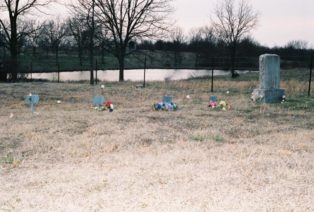
The monument placed on Herman Barker’s grave was a massive, granite stone that stood more than four feet high. The deceased’s name was carved into the marble along with his date of birth and the date he died. In the beginning, Ma regularly visited the site near Welch, Oklahoma, bringing flowers and some of Herman’s belongings from when he was a boy. She laid his things neatly on the mound of dirt that covered his remains. Detective Harrison Moreland, a writer for the Master Detective magazine, reported that Ma “turned her back entirely on morality once Herman was gone.” There had been a time when she might have lied to George about their sons’ criminal activities or tried to dispel the rumors she was spending time with other men, but that all stopped when she saw Herman’s bullet-ridden body lying on a slab at the morgue.
George Barker had taken time away from his job at the filling station in Webb City, Missouri, to attend Herman’s funeral. Ma paid little attention to her estranged husband. Any comfort she needed during her time of grief was handled by the man who accompanied her to the cemetery, Arthur W. Dunlop, also known as George Anderson. Ma had met Arthur at a club in Tulsa. He had been a carpenter and painter for
Sommers Sign System. Ma never let Arthur stray too far from her side; even when George approached her for what he hoped would be a private conversation about where the money for Herman’s headstone came from, Arthur was milling around close behind the pair.
Ma dismissed George’s question about the headstone but informed the timid, grieving man that Herman and their other boys regularly sent money home for her support. She gushed over how considerate the Barker boys were and cursed those who argued that her sons were anything less. “If the good people of this town don’t like my boys,” Ma was often heard saying, “then the good people know what to do.” George returned to Missouri with the full knowledge that he and his wife would never reconcile and that his sons could never be respectable citizens.
To learn more about the life and violent death of Ma Barker and her sons read
Ma Barker: America’s Most Wanted Mother.