1839 – George Armstrong Custer is born in New Rumley, Ohio.

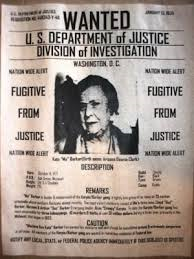
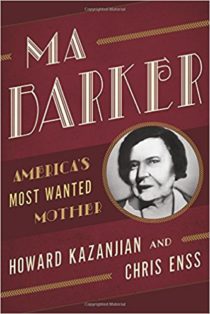
“I’ll never have a close relationship with anyone other than my boys. After all, they know what my heart sounds like on the inside.” With that being said, Arizona Barker, Ma Barker to the world, set out to raise four sons to be criminals. It’s believed by many that the Ma Barker image was originated by J. Edgar Hoover’s FBI in an effort to justify the killing of an old lady. She has been portrayed as the mastermind of the Barker-Karpis gang, while surviving gang members absolutely denied the allegations. However, evidence indicates that she was much more involved in criminal activity than some think, whether she was the “mastermind” or not is debatable.
To say the least, she was a willing accomplice, if nothing else. Arizona Donnie Clark was born near Springfield, Missouri, the exact year is not known, though most agree that she was born on October 8, 1873. In 1892, she married George Barker and in time gave birth to four of the meanest examples of humanity ever to exist! The boys were named Herman, Lloyd, Arthur and Fred. After the birth of Fred, George Barker left the family, though it may have been at the insistence of his wife. At some point, she began using the name Kate Barker. On several occasions Kate faced the authorities on behalf of her sons, trying to keep them from serving jail time. She was usually successful. It all came to an end for Ma in early 1925.
Posing as J.E. Blackburn and wife, Ma and her son Freddie rented a house on the northern banks of Lake Weir, near the town of Ocklawaha, Florida. The neighbors thought they were an odd couple with him being so young and her being so much older. They didn’t associate with the neighbors and frequently large cars were seen entering and leaving the place. Unknown to the Barkers, the FBI had the map they had taken from Doc’s apartment and had been checking their mail through the postal service to positively identify them.
Disguised as county road workers, the FBI kept surveillance on the house. Upon seeing the Blackburns, the FBI positively identified the Barkers. The FBI was under the impression that several members of the gang were in the house. Just before daybreak on January 16, 1935, the FBI arrived outside the two-story house. There were agents from Jacksonville, reinforced by agents who had been flown in from Chicago and Cincinnati. A call for their surrender was met with no response. After a few moments, Agent Earl Connelly of Cincinnati yelled, “Unless you come on out, we’re going to start shooting!” Ma replied, “Go ahead.” What followed was the longest gun battle the FBI was ever involved in; it lasted four hours and there are reports that a minimum of 1500 rounds of ammunition were poured into the house. The FBI requested that the bodies of Ma and Freddie be held in a morgue for an extended time, thinking that other gang members would show up to pay their respects – and be captured. Eight months later, they were removed from the morgue, transported to Welch, Oklahoma and buried alongside Herman, in the Williams Timberhill Cemetery.
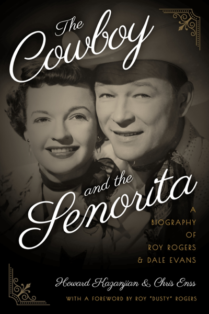 In 1944 Roy Rogers and Dale Evans lit up the silver screen in The Cowboy and the Senorita, making their names – and lives – inseparable. It was the start of a fifty-six-year partnership that included thirty motion pictures, a long-running hit television series, and a family of nine children.
The Cowboy and the Senorita tells the heartbreaking yet ultimately triumphant story of the “King of the Cowboys” and “Queen of the West.” In this new, authorized biography, the Rogers family shares the inside story of these beloved Western heroes, detailing Roy’s and Dale’s struggles and rise to stardom, the lives of their children, their professional triumphs, and the personal tragedies that befell their family.
Over their long careers, Roy Rogers and Dale Evans came to represent truth, justice, and the American way. Their story will take you back to a simpler time, when wholesome entertainment ruled Saturday matinees and the good guys wore white hats both on and off the screen.
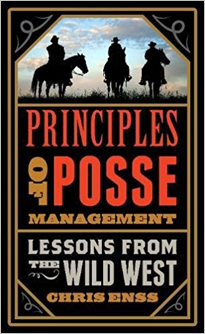
Pat Garrett and Wyatt Earp, management experts? Expert management skills were necessary to quickly organize a group of law enforcement officers able to effectively keep the peace and pursue and arrest felons.
The actual work of transforming the frontier into farms and cities was carried on by the stream of settlers, but working with, or sometimes ahead of them were the business people who directed the conquest of the wilderness and law enforcement officials who helped protect their interests.
The business people brought capital and labor together, sent logging crews into the forests; built bridges, canals, and railways; bought, sold, and transported commodities; laid out town sites and planned cities; started industries; developing mines; and nearly always speculating in land. Often times their efforts were thwarted by criminal elements who kept the goods, services, and funds from their appointed destination. Posses were formed to make sure fleeing desperados were brought to justice. In the process civility was brought to the lawless territory as well.
| 1862 | President Abraham Lincoln orders the hanging of 39 of the 303 convicted Indians who participated in the Sioux Uprising in Minnesota. They are to be hanged on December 26. |
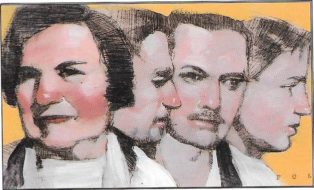
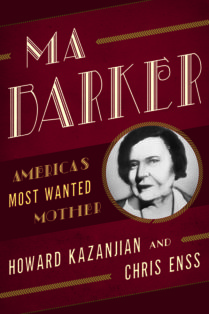
She began with a hymn book in her hand; she died clutching a gun. That was “Ma” Barker, mother of four outlaw sons whom J. Edgar Hoover, chief of the Federal Bureau of Investigation, Department of Justice described as the real “public enemy No. 1.”
Kate Barker – “Ma” as she was known to her criminal associates was the “brains” of the Barker-Karpis gang – kidnappers, bank robbers, and murderers. And she died as most criminals wanted by the federal government do. Ma Barker began her public career in Kansas City, Missouri. In either an attitude or assumed or real piety she was the leader of a small band of religious zealots who used to hold meetings in the street near city hall. Whenever one of her followers was arrested for picking pockets, vagrancy, or street walking or casual misdemeanor, she would go before the police judge, shed tears and claim that she alone was left in the world to befriend the poor defendant. In most cases the defendant went back to more and bigger crimes and “Ma” Barker’s friendliness and a slight ability as a defense witness soon became a racket.
“Ma” and her boys were responsible for kidnapping two of the country’s wealthiest men and holding them ransom. The Barker-Karpis gang murdered police officers and federal agents and any outlaw who double-crossed them. Ma Barker’s life ended at a home she was renting in Florida on January 16, 1935.
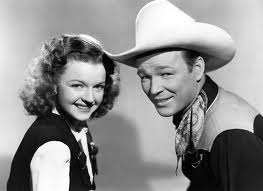
On December 30, 1951, The Roy Rogers Show debuted on NBC. Children across the country were poised in front of their parents’ television sets on Sunday nights at 6:30 to watch their favorite singing cowboy fight for law and order in the contemporary West. The theme song for the program, written by Dale Evans, was “Happy Trails.”
Dale joined Roy in the series, as did actor-singer Pat Brady, who played a bumbling sidekick. In addition to the human actors, the show featured Roy Roy’s horse, Trigger; Dale’s horse, Buttermilk; her dog, Bullet; and Pat’s cantankerous jeep, Nellybelle.
Critics believed the show was popular not only because audiences loved the mix of action and comedy, but also because of the high morals it brought to light. Roy and Dale’s faith in God and their desire to live according to His ways were evident in each episode. (Roy read the Cowboy’s Prayer at the Riders Club meetings at theatres that featured his movies and television shows.) The programs struck a positive chord with children and parents alike. The show remained on the air for seven years.
Evangelist Billy Graham invited Roy and Dale to perform at his crusades and give their testimony. New attendance records were established wherever they appeared. Dale went on to record her testimony in a series of books about her life and faith. Each one was a popular seller for the publishing house, the Revell Company.

Early in Roy’s career as a western star, Republic Pictures created a fictitious promotional campaign to introduce him to the public. Press agents decided it would add to Roy’s appeal if they told potential moviegoers that he was a real cowboy born in Cody, Wyoming. Citizens in Wyoming and Ohio wrote to the studio protesting the false reports. Within a few days an accurate biography of Rogers was released.
The studio sent Roy on press junkets after each of his films was released. According to Republic executives, Roy came across much better in person than on the screen. They felt his eyes were more expressive and his shy smile more appealing. Fans agreed, and his personal-appearance tours proved to be profitable ventures.
Roy was grateful for his success and went out of his way to show his gratitude to his family and friends. With a portion of the money he earned, he purchased his parent’s home in California and got the Sons of the Pioneers a contract working with him in all his westerns. He felt a deep sense of satisfaction to be doing something for those he loved and those who had befriended him in the lean years.