The Pinks

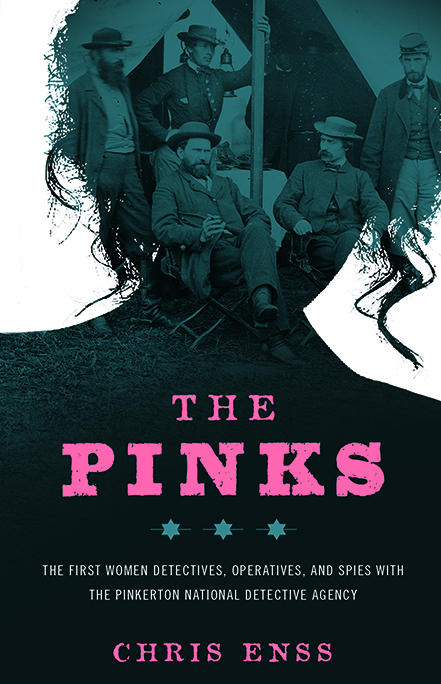
The Pinks Cover

Read the Introduction of The Pinks

Most students of the Old West and American law enforcement history know the story of the notorious and ruthless Pinkerton Detective Agency and the legends behind their role in establishing the Secret Service and tangling with Old West Outlaws. But the true story of Kate Warne, an operative of the Pinkerton Agency and the first woman detective in America—and the stories of the other women who served their country as part of the storied crew of crime fighters—are not well known. For the first time, the stories of these intrepid women are collected here and richly illustrated throughout with numerous historical photographs. From Kate Warne’s probable affair with Allan Pinkerton, and her part in saving the life of Abraham Lincoln in 1861 to the lives and careers of the other women who broke out of the Cult of True Womanhood in pursuit of justice, these true stories add another dimension to our understanding of American history.

Posse Makes Way to Nebraska, History Riding With Them

Posse1


Take a literary ride with the Most Intrepid Western Author’s Posse as they travel through the sand hills and Great Plains of Nebraska.  The Most Intrepid Western Author’s Posse is comprised of five published, award-winning western authors; Monty McCord author of Mundy’s Law: The Legend of Joe Mundy and Hastings: The Queen of the Plains; Sherry Monahan author of Mrs. Earp: The Wives and Lovers of the Earp Brothers, The Cowboy Cookbook, and Frontier Fare; Bill Markley, author of Deadwood Dead Men and Dakota Epic: Experiences of a Reenactor During the Filming of Dances with Wolves, Kellen Cutsforth, author of Buffalo Bill, Boozers, Brothels, & Bare-Knuckle Brawlers:  An Englishman’s Journal of Adventure in America, and Chris Enss, author of Frontier Teachers: Stories of Heroic Women of the Old West, Hearts West: Mail Order Brides of the Old West, and Object Matrimony: The Risky Business of Mail-Order Matchmaking on the Western Frontier will tell exciting tales of the Old West.

Stories told by the posse promise to transport readers back to the days of the wild frontier when times were rowdy and justice was swift.

The Most Intrepid Western Author’s Posse’s first stop will be the Sturh Museum in Grand Island on Friday, June 10 from 3 p.m. to 5 p.m.  On Saturday, June 11, the Posse will be in Beatrice at the Homestead National Monument of America from 2 p.m. to 4 p.m.  The Posse will be discussing their books and the taming of the Wild West.

For more information visit www.chrisenss.com.

This Day…

1824 – Jessie Ann Benton Frémont, American author and activist, outspoken opponent of slavery, known for her writings about her husband, John C. Frémont, and their lives in the western US (d. 1902)

An Indian In Yosemite

Last chance to enter to win the book

High Country Women: Pioneers of Yosemite National Park

Celebrate the 126th anniversary of Yosemite!
 MaggieHoward

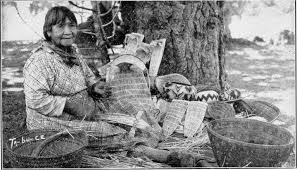
The dark clouds that hovered over a crude trail in Yosemite Valley in May 1899 broke loose with a torrent of rain that nearly knocked Paiute Indian Maggie “Ta-bu-ce” Howard and her fourteen-year-old niece, May Tom, off the rocky path where they walked. Mighty claps of thunder echoed around the majestic granite walls of Yosemite Falls, and huge boulders shook from the sound. A powerful wind charged down the mountain and tossed leaves, twigs, and brush into the air. Maggie and May Tom hurried to an outcropping of craggy rocks and huddled underneath them. Lightning flashed violently, and the wind raged on without ceasing. It was as if the sky just beyond their crude shelter was in an angry pursuit to destroy them.1

As soon as the rain eased a bit, the pair raced toward a grove of trees, and it was there they made camp. The following morning they had planned to travel to their home in Indian Village along the Merced River. In spite of the wind and continual rain, Maggie and May Tom eventually managed to fall asleep. Their uneasy slumber was interrupted sometime in the night by a massive pine tree that blew over on them. May Tom was killed instantly. Maggie’s collar bone was broken; the bones in her right leg were fractured, and her ankles and feet were severely injured.2

When the two didn’t arrive home the evening of the storm worried relatives had gone in search of Maggie and her niece. They were heartbroken by what they saw. May Tom’s mother and brothers took her body back to the valley where they lived, and Maggie was transported to a doctor. He set her bones in casts that extended over most of her frame. She was unable to move until the bones mended in late August. Maggie couldn’t recall anything after the tree hit her, but the lifetime limp she acquired as a result of her injury served as a reminder of the events leading up to the tragedy.3

Naturalist and explorer John Muir referred to the storms that occurred at Yosemite as “not easily borne.” Maggie was in complete agreement. According to the June 3, 1910, edition of the Hayward, California, newspaper the Hayward Daily Review, it is estimated that Maggie “Ta-bu-ce” Howard was born in 1867 at Mono Lake thirteen miles east of Yosemite Valley. She was a Paiute Indian and her name Ta-bu-ce meant “grass nut” or “sweet-root.” Her father, Joaquin Sam or Kosana as his tribe called him, was a medicine man who made frequent trips to Yosemite to gather acorns and pinon nuts. He would bring them home to Maggie’s mother who would grind them into meat to use to make bread. Kosana passed away at the age of eighty while en route home from Yosemite Valley. A snowstorm overtook the group of Indians he was traveling with, and they were unable to make it over the Sierra Mountains before Kosana died from exposure. He was buried near what is now the Yosemite Museum.4

 To learn more about Maggie Howard and the other women who helped make Yosemite a National Park read

High Country Women: Pioneers of Yosemite National Park



This Day…

1861 – Victoria Earle Matthews, American author, essayist, journalist, settlement worker and activist; founder of the White Rose Mission, a settlement house for young black women (d. 1907)

A Bride in Yosemite

Enter now for a chance to win the book

High Country Women: Pioneers of Yosemite National Park

Celebrate the 126th anniversary of Yosemite!

BridalVeilFalls

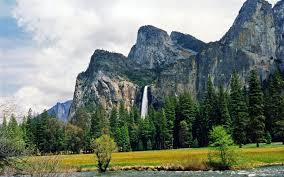
At the turn of the century Yosemite Valley, in particular the area known as Bridalveil Falls, was referred to as the “show place of the Sierras.” Artists from every medium thought the falls cascading down more than six hundred feet of rock wall into the valley to be so beautiful that it was considered selfish for anyone who looked on the splendor of the setting not to share the pleasure with others using whatever talent they were given. Among the many famous guests who visited the most prominent waterfall in the Yosemite Valley were General Ulysses S. Grant, Horace Greely, General William T. Sherman, and Ralph Waldo Emerson. Naturalist John Muir entreated the public to visit the spot often. According to his memoirs he challenged park patrons to “climb the mountains and get their good tidings.” He assured them that “nature’s peace will flow into you as sunshine into trees.”1

It’s not unusual that couples chose the stunning Bridal Veil Falls as the backdrop for their nuptials. The first bride to plan her wedding at the spot was a prominent young woman from Los Angeles. According to the August 6, 1901, edition of the newspaper The Boston Globe, the ceremony was “so incredible it defied description and started a trend in civil unions held at the majestic National Park.” The momentous occasion highlighted in The Boston Globe article was duplicated by hundreds of betrothed couples in the early 1900s. “With a mighty altar and the generous diapason of an incomparable waterfall furnishing the melody of a bridal march Miss Annie Ripley of Los Angeles and Henry C. Best of San Francisco were wed in the valley a few days ago,” The Boston Globe article continued. “It was the first marriage ceremony performed in Yosemite, and for solemnity and picturesqueness it was surpassingly notable.”2

One hundred guests of the bride and groom were present and walked with them over trails and under trees to the place where the water crashed upon the rocks beneath the towering cliffs on either side of Bridalveil. “The day was a superb one and the scene one of matchless beauty,” The Boston Globe article continued3

“Miss Ripley was prettily attired in a mountain costumes and the man who was to be made her husband had set aside the customary garments and wore camping attire as well. Their look was fitting for the setting.

To learn more about Annie Ripley, Elizabeth Fry, and Sara Haight

and the other women who helped make Yosemite a National Park read

High Country Women: Pioneers of Yosemite National Park


A Consort in Yosemite

Enter now for a chance to win the book

High Country Women: Pioneers of Yosemite National Park
Celebrate the 126th anniversary of Yosemite!

LouisaStrentzelMuir


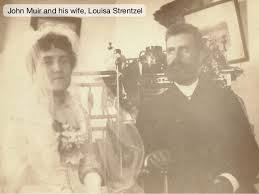
The light from a spectacular full moon spilled into the windows of the parlor at the Strentzel Ranch near the town of Martinez in the Alhambra Valley in California. The room was filled to overflowing with well-dressed guests, owners and operators of farms in the area and their wives and family. All eyes were on Louisa “Louie” Wanda Strentzel, a petite, thirty-one-year-old woman playing a piano. No one spoke as the melancholy tune she offered filled the air. Louie played well and had a voice to match the exceptional talent demonstrated. Midway through the mesmerizing performance, forty-year- old John Muir, an explorer and naturalist from Wisconsin, quietly entered the home and stood in the shadow of the door leading into the parlor. With the exception of a quiet greeting from Strentzel family friend Mrs. Jeanne Carr, his presence went largely unnoticed.1

John’s eyes were transfixed on Louie. She had high cheek bones, a firm mouth, and clear, gray eyes. He gazed at her with an unfathomable look of admiration and longing. At the conclusion of her song the gathering enthusiastically applauded. John followed suit as he ventured into the light. It was June 1, 1878.2

This was not the first time he had seen Louie. The two had been introduced in 1874 in Oakland at a meeting of homesteaders and farmers organized by her father, horticulturist Dr. John Strentzel. John and Louie had many friends in common, and many agreed they would make the perfect couple. Jeanne Carr had tried in vain to arrange a date between John and Louie, but John always had travel plans that conflicted with a rendezvous. In April 1875 Jeanne sent Louie a message letting her known that the “chronic wanderer,” as John was often referred to, could not be distracted from an expedition to the Cascade Range in Siskiyou County, California. “You see how I am snubbed in trying to get John Muir to accompany me to your house this week,” Jeanne wrote Louie. “Mount Shasta was in opposition and easily worth the choice.” Jeanne would not be defeated, however. She was convinced the two had so much in common their paths were bound to pass eventually and forever.3


To learn more about Florence Louisa Strentzel Muir

and the other women who helped make Yosemite a National Park read

High Country Women: Pioneers of Yosemite National Park