A Rebel in Yosemite

Enter now for a chance to win the book

High Country Women: Pioneers of Yosemite National Park

Celebrate the 126th anniversary of Yosemite!
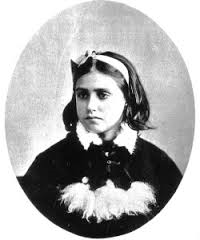
 FlorenceHutchings

Fifteen-year-old Gertrude Hutchings sat on the edge of her sister Florence’s bed, crying. Florence, a pretty girl of seventeen with long, dark hair lay motionless under a mountain of blankets. A massive purple and black bruise on the side of her right cheek was the only color on her slender, pale face. Her eyes were closed and her hands were folded across her chest, her breathing was labored and slow. Her grandmother, Florantha Sproat, dabbed the teenager’s forehead with a cool, moist cloth, kissed her forehead, and then stepped away waiting for the girl to respond.1

Florence did not move. She would never move again. She died on September 26, 1881. Family and friends that surrounded her wept and wondered aloud to one another how someone so young and vibrant could be gone from them. “Yosemite Valley was diminished in a sense by her passing,” one of Florence’s teachers said at the young girl’s funeral. “She was a rarity and added to the setting’s beauty.”2

Florence “Floy” Hutchings was the first white child born in Yosemite. Her parents, James Mason Hutchings, a businessman, farmer, and promoter of Yosemite National Park, and artist Elvira Sproat, welcomed their daughter into the world on August 24, 1864. The precocious, inquisitive child was the first child for the couple who lived in a log cabin close to Yosemite Falls.3

In addition to exploring the land in which James Hutchings and John Muir would help preserve, James was a homesteader in the north section of Yosemite where he raised fruit trees, strawberry plants, and various livestock, including horses. He also owned an inn which Florence’s mother and he ran. Elvira was a reluctant innkeeper; she preferred painting, reading poetry, writing, and playing music. Her mother, Florantha, assumed the responsibility of caring for Floy and the two other children the Hutchings had: Gertrude, a blue-eyed, fair-haired girl born in October 1867, and William a cheerful boy born in July 1869 who suffered from a spinal deformity.4

Despite her best efforts, Florantha had a difficult time raising Floy to be a proper young lady. Even as a small child she cared little for frilly dresses, curly hair, and ribbons. She was a tomboy and enjoyed collecting insects and toads, hiking, camping, and riding horses. She would often disappear for hours at a time to explore the valley and mountains. Although her mother would be furious with Floy for taking off without letting anyone know where she was going, the young girl refused to change and was seldom sorry for making her mother [and grandmother] worry.5

To learn more about Florence Hutchings

and the other women who helped make Yosemite a National Park read

High Country Women: Pioneers of Yosemite National Park


This Day…

1930 – Lorraine Hansberry, American playwright and director, best known work is the play A Raisin in the Sun, first black woman to have one of her plays performed on Broadway (d. 1965)

Tall in the Saddle

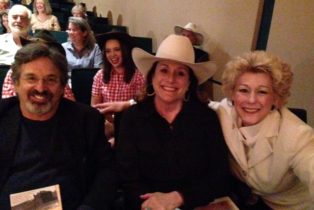
Robert Carradine, Anita Wayne Swift, and myself.

Robert Carradine, Anita Wayne Swift, and myself.

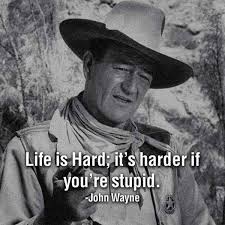
Out in the wild, wild West, the men were strong, the horses were fast, and the talk was rough-rougher than the saddle on a rustler’s steed, rougher than a barroom brawl, rougher than the face of a lonesome drifter. Okay, you get the picture. It was rough. I spent part of my weekend discussing the rough talking men and women in the numerous films John Wayne made and how that tough talk could be used to deal with any circumstance. Looking for a cool comeback to a tough character? “Pick it up,” Wayne tells a bad guy reaching for his gun in the movie Rio Bravo, “I wish you would.” Trying to get out of an unhappy relationship? “I got places to go and country to put behind me,” the Duke announced to Gail Russell in Angel and the Badman. Wondering how to fit in? “Well, if you’re going to stay around here,” Wayne tells James Caan in El Dorado, “I got two pieces of advice for you. Get rid of that hat and learn how to use a gun.”

An enthusiastic crowd was on hand at the Autry Museum of the American West yesterday to celebrate the wisdom of Wayne. Among those gathered were actors Robert Carradine, Paul Koslo, Mary Kove, Bruce Boxleitner, producers Rob Word, Howard Kazanjian, Wayne’s granddaughter, Anita Wayne La Cava Swift, and many others who knew, worked, or were fans of the Duke. It was an experience I’m not likely to ever forget. Movies are the great equalizer. Politicians may be making decisions on our nation’s security during the day, but at night I’d like to think they’re watching a John Wayne western or any western for that matter.


Louisa Strentzel Muir – A Consort in Yosemite

Enter now for a chance to win the book

High Country Women: Pioneers of Yosemite National Park

Celebrate the 126th anniversary of Yosemite!

 LouisaStrentzelMuir

The light from a spectacular full moon spilled into the windows of the parlor at the Strentzel Ranch near the town of Martinez in the Alhambra Valley in California. The room was filled to overflowing with well-dressed guests, owners and operators of farms in the area and their wives and family. All eyes were on Louisa “Louie” Wanda Strentzel, a petite, thirty-one-year-old woman playing a piano. No one spoke as the melancholy tune she offered filled the air. Louie played well and had a voice to match the exceptional talent demonstrated. Midway through the mesmerizing performance, forty-year- old John Muir, an explorer and naturalist from Wisconsin, quietly entered the home and stood in the shadow of the door leading into the parlor. With the exception of a quiet greeting from Strentzel family friend Mrs. Jeanne Carr, his presence went largely unnoticed.1

John’s eyes were transfixed on Louie. She had high cheek bones, a firm mouth, and clear, gray eyes. He gazed at her with an unfathomable look of admiration and longing. At the conclusion of her song the gathering enthusiastically applauded. John followed suit as he ventured into the light. It was June 1, 1878.2

This was not the first time he had seen Louie. The two had been introduced in 1874 in Oakland at a meeting of homesteaders and farmers organized by her father, horticulturist Dr. John Strentzel. John and Louie had many friends in common, and many agreed they would make the perfect couple. Jeanne Carr had tried in vain to arrange a date between John and Louie, but John always had travel plans that conflicted with a rendezvous. In April 1875 Jeanne sent Louie a message letting her known that the “chronic wanderer,” as John was often referred to, could not be distracted from an expedition to the Cascade Range in Siskiyou County, California. “You see how I am snubbed in trying to get John Muir to accompany me to your house this week,” Jeanne wrote Louie. “Mount Shasta was in opposition and easily worth the choice.” Jeanne would not be defeated, however. She was convinced the two had so much in common their paths were bound to pass eventually and forever.3

Louie Strentzel was born in Texas in 1847. She was an only child and according to Louie and John’s daughter, Helen, “she was a devoted daughter and a great comfort to her parents in their later years.” Her father, a Polish physician who fled to American in 1840 to escape being drafted into the Russian Army, settled in the southwest near the city now known as Dallas. In 1849, he left Texas for California. Strentzel moved his wife and child to the Alhambra Valley north of Oakland. He purchased several hundred acres of land and began educating himself on how to grow various crops. According to the May 5, 1974, edition of the Joplin, Missouri, newspaper the Joplin Grove, the main product at the Strentzel farm was peaches.4

Louie inherited her father’s love of plants and flowers. In addition to her affection for growing things, she was interested in astronomy, poetry, and music. She was extremely bright and excelled at her studies at Miss Adkins’ Young Ladies Seminary in Benicia. Louie became a music scholar while in attendance at the seminary, and her teachers boasted that she had a bright future ahead of her as a concert pianist if she so chose. Once she graduated in 1864 she decided to return home to the ranch in Martinez and focus on fruit ranching and hybridizing.5

The stunning and talented Louie was not only the pride of the family, but according to the January 5, 1975, edition of the Long Beach, California, newspaper the Independent Press Telegram, “she was known widely for the grace with which she dispensed the generous hospitality of the Strentzel household.”6

John Muir was a frequent guest at the Strentzel homestead. He enjoyed conversing with Dr. Strentzel about his trek from Texas to California. Strentzel had been the medical advisor for a wagon train of pioneers called the Clarkesville train. He kept a journal of his travels and happily shared the experience with John. The Spanish name for the Alhambra Valley where the Strentzel’s settled was “Canada de la Hombre.” The English translation being Valley of Hunger.


To learn more about Louisa Strentzel Muir

and the other women who helped make Yosemite a National Park read

High Country Women: Pioneers of Yosemite National Park


This Day…

1875 – Harriet Quimby, American pilot and screenwriter, first woman granted a U.S. pilot’s license, first woman to fly across the English Channel (d. 1912)

Sally Dutcher & Lady Jane Franklin: A Debutant in Yosemite

Enter now for a chance to win the book

High Country Women: Pioneers of Yosemite National Park

Celebrate the 126th anniversary of Yosemite!

SallyDutcher

Yosemite’s Half Dome, the hooded monk in stone, brooding over its eastern end, rises thousands of feet from the ground below, so high that its summit is wreathed in clouds. In October 1876, three men scaled the mountain face slowly working their way to the top. All were dressed in woolen caps and trousers, thick coats and gloves, and leather boots. Scotsman George Anderson, a former sailor and carpenter working in Yosemite Valley as a blacksmith and surveyor, led the way up the massive rock. The confident manner in which he ascended the mountain suggested he was a seasoned climber. Author Julius Birge followed closely behind George, his face a mask of strained concentration and worry that confirmed he was a novice at climbing. Occasional gusts of wind tried to knock the men off balance, but they persevered, finding finger hold after finger hold, and finally pulling themselves onto a ledge at the top. The second adventure seeker with the party proceeded behind him trying to regain his strength.1

Resting on the summit, the men stared out over the valley admiring the scenic grandeur. Yosemite Valley had an average width of half a mile. The great walls of the canyons all around them were seamed by water-worn fissures, down which rivers leapt, thundered, churned, and sang with all possible variations and expressions of sound.2

In his memoirs entitled Awakening in the Desert published in 1912, Julius described the process of arriving at the top of Half Dome. “Anderson had spent the summer drilling holes into the granite face of the upper cliff,” he wrote. “Driving in it iron pins with ropes attached. Two or three were tempted to scale with the aid of these ropes the heights which are nearly a perpendicular mile. I, too, was inclined to make the venture. It was a dizzy but inspiring ascent.”3

After more than an hour at Half Dome’s Summit, catching his breath and preparing himself for the desert, Julius found an unusual item on the rocks. “I discovered on its barren surface a lady’s bracelet,” he recalled in his book. “On showing it to Anderson, he said: You are the third party who has made this ascent. I pulled up a young woman recently but she never mentioned any loss except for nausea. Returning to Merced, I observed a vigorous, young woman wearing a bracelet similar to the one I found. The lady proved to be Miss Sally Dutcher of San Francisco, who admitted to the loss and thankfully accepted the missing ornament. A letter to me from Galen Clark (Yosemite resident, businessman, and explorer) stated that he assisted in Miss Dutcher’s ascent, Anderson preceding with a rope around his waist connecting with Miss Dutcher; also that she was certainly the first and possibly the last woman who made the ascent.”4

Although the exact date is not known, Sarah Louisa Dutcher was the first woman to make her way to the top of Half Dome. Historians believe the intrepid young woman accomplished the feat in 1875.5 According to James Hutchings, a British journalist who traveled to Yosemite and wrote about his experiences, “Miss S.L. Dutcher was the first lady that ever stood upon the mountain. George Anderson was one of the first human beings to ascend Half Dome and his efforts made it possible for others to follow.” “In preparation for the climb,” James wrote in his memoirs, “Anderson’s next efforts were directed toward placing and securely fastening a good, soft rope to the eye-bolts, so others could climb up and enjoy the inimitable view, and one that has not its counterpart on earth. Four English gentlemen, then sojourning in the valley and learning of Mr. Anderson’s feat, were induced to duplicate his intrepid example. A day or two afterwards, Sarah Dutcher, with the courage of a heroine, accomplished it.”6

To learn more about Sally Dutcher and Lady Jane Franklin

and the other women who helped make Yosemite a National Park read

High Country Women: Pioneers of Yosemite National Park


Autry Museum Speaking Event

ANNUAL JOHN WAYNE BIRTHDAY TRIBUTE

JohnWayneCowboy


11 A.M. Wednesday, May 18, 2016 @The Wells Fargo Theater at The Autry Museum

Still the greatest western hero and movie star of all time! Come meet with Duke’s friends, family and co-workers as we celebrate his continued popularity with stories of his accomplishments and his films. Join us for the Autry’s annual birthday tribute to our enduring western icon, John Wayne. Of course, we’ll talk about other westerns, too. Plus, surprises and prizes.

To accomodate the always overflow patrons and fans, our program will take place in the spacious Wells Fargo Theater. Doors Open at 10:30am. The program A WORD ON WESTERNS will begin at 11am in the Theater with a performance featuring Will Ryan and The Saguaro Sisters. Don’t be late!

Scheduled to join us for interviews are:

Family members actor PATRICK WAYNE and Duke’s granddaughter ANITA WAYNE LA CAVA SWIFT.

Popular actors ROBERT CARRADINE and PAUL KOSLO, both co-stars of John Wayne.

And prolific author/historian CHRIS ENSS.

EntertainWomen

After the program, continue the conversation over lunch at the Autry’s Crossroads West Cafe.

Yes, next Wednesday will be special! It’s always fun to hear the rare behind-the-scene stories about the making of some of your favorite westerns. Don’t miss out!

Below are some links to a few of our past interviews, new episodes are posted each week on YouTube, and a song about John Wayne, “Singing Sandy,” written exclusively for A WORD ON WESTERNS by Will Ryan and performed by Will and the Saguaro Sisters. Yee-ha!


This Day…

1869 – The Golden Spike is driven at Promontory Point, Utah signifying the completion of the transcontinental railroad even though there are no bridges spanning the Missouri River.

Elizabeth Pershing – A Journalist in Yosemite

Enter now for a chance to win the book

High Country Women: Pioneers of Yosemite National Park
Celebrate the 126th anniversary of Yosemite!

 WomenatYosemit

Twenty-four-year-old Lizzie K. Pershing stood at the base of Yosemite’s South Dome staring up at the mountain. A cold, stiff wind traveled across the rock with such force she struggled to keep her balance. She pulled her coat tightly around her shoulders and rubbed her gloved hand over the smooth stone. It was October 8, 1876, and Lizzie was still pondering the climb up the precipice, which was considered at the time to be the largest and highest in the world.1

Standing at the fork of the upper valley South Dome is a solid, rocky loaf six thousand feet above the ground. To Lizzie it appeared as though a powerful hand cut away the eastern half of the mountain, leaving a sheer cliff over a mile in height. According to the July 24, 1860, edition of the Milwaukee, Wisconsin, newspaper The Daily Sentinel, the first person to climb South Dome was a Scottish sailor and blacksmith named George Anderson, and he did so in 1859. George was a skilled outdoorsman who later built a house near the saddle of the dome. During the summer of 1876 he began the difficult task of constructing a staircase of a thousand steps up the dome. He had hoped to have an elevator running by the start of fall in 1876 as well as a steam car that would carry passengers up the almost perpendicular walls. His dream was never realized.2

Since George first tackled the ascent to the top of South Dome, Lizzie and other visitors to the spot had gazed in wonder at the spikes driven into the rock by hardy spirits who had repeatedly endeavored to scale it. The shreds of rope dangling in the wind told the story of their failure. Sheep had been spotted browsing on the hitherto-inaccessible peak. How they got there was a mystery. “They had plenty of grass to eat,” Lizzie contemplated in her memoirs, “but no water, only the dew that fell on the dome at night.”3

Lizzie made the South Dome climb using gear comprised of ropes, harnesses, steal hooks, sturdy boots, and gloves. She carefully studied the method George used to take on the climb. She also read notes written by naturalist John Muir about George’s trek. Prior to George’s climb most Yosemite explorers such as Josiah Whitney insisted the mountain would “never be trod by human foot.”4

“[George] Anderson began with Conway’s old rope,” John, a Yosemite Valley resident who had attempted to climb South Dome but was forced to abandon the effort when it became too hard and dangerous, wrote in his book the Treasures of Yosemite, “which had been left in place, and resolutely drilled his way to the top, inserting eye-bolts five or six feet apart, and fastening his rope fast to each in succession, resting his feet on the last bolt while he drilled a hole for the next above. Occasionally, some irregularity in the curve, or slight foothold, would enable him to climb a few feet without the rope, which he would pass and begin drilling again….”5


To learn more about Elizabeth Pershing and the other women

who helped make Yosemite a National Park read

High Country Women: Pioneers of Yosemite National Park