1821 – Lola Montez, Irish actress and dancer was born (d. 1861)
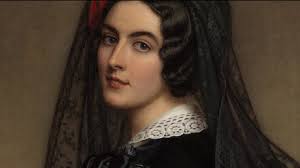

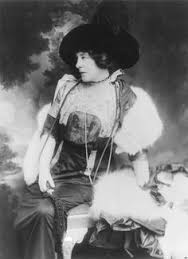
Long before actors were vying for an Oscar nomination and world wide fame thespians were trying to carve out a modest living entertaining prospectors and settlers of the Old West. Today the curtain goes up on a woman entertainer who captured the hearts of the western pioneers.
The first actress to appear in Virginia City was Antoinette Adams, variously described as six feet tall, long-necked, Roman-nosed, cracked-voiced, and a faded blonde. Although her audience of miners were cruelly disappointed in what they saw and heard, they listened patiently through her first rendition. At the first pause in her performance, a burly miner stood up and ordered the audience to give three cheers for “Aunty.”
The cheers resounded, and Antoinette sang again. Once more the miners applauded her, then one man rose to suggest they give her enough money to retire from her profession. A shower of silver cascaded upon the stage, the audience rowdily saluting her retirement. After that, every time Antoinette opened her mouth to sing, the miners cheered her so lustily she could not be heard; they also hurled more silver at her feet. At last the actress surrendered, ordered the curtains pulled. When she gathered the silver up, it filled two money sacks. But Antoinette could take a hint; she left town the next day.

Long before actors were vying for an Oscar nomination and world wide fame thespians were trying to carve out a modest living entertaining prospectors and settlers of the Old West. Today the curtain goes up on a woman entertainer who captured the hearts of the western pioneers.
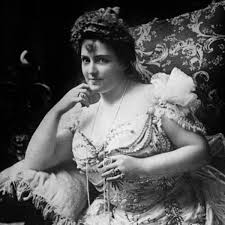
Among the many stars that performed at Piper’s Opera House in Virginia City, Nevada in the late 1870s was a beautiful soprano by the name of Adelina Patti. Adelina was a highly acclaimed 19th-century opera singer, earning huge fees at the height of her career in the music capitals of Europe and America. She first sang in public as a child in 1851, and gave her last performance before an audience in 1914. Along with her near contemporaries Jenny Lind and Theresa Tietjens, Patti remains one of the most famous sopranos in history, owing to the purity and beauty of her lyrical voice and the unmatched quality of her bel canto technique. Bel canto is a lyrical style of operatic singing using a full rich broad tone and smooth phrasing.
During an American tour in 1862, she sang John Howard Payne’s Home Sweet Home at the White House for the President of the United States, Abraham Lincoln, and his wife Mary. The Lincolns were mourning their son Willie, who had died of typhoid. Moved to tears, the Lincolns requested and encore of the song. Henceforth, it would become associated with Adelina Patti, and she performed it many times as a bonus item at the end of recitals and concerts.
Patti’s career was one of success after success. She sang not only in England and the United States, but also as far afield in mainland Europe as Russia, and in South America as well, inspiring audience frenzy and critical superlatives wherever she went. Her girlish good looks gave her an appealing stage presence, which added to her celebrity status.
Long before actors were vying for an Oscar nomination and world wide fame thespians were trying to carve out a modest living entertaining prospectors and settlers of the Old West. Today the curtain goes up on a woman entertainer who captured the hearts of the western pioneers.
Ladies and gentlemen, Lillian Russell,
America’s Greatest Beauty
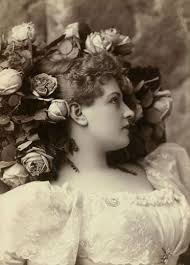
It was not so much the late Lillian Russell’s great dramatic ability or her clear, well-trained voice as her personality and physical beauty that made her the most famous musical comedy star of her day and acclaimed for more than a generation as “America’s Greatest Beauty.” And after she had ceased to sing and act for the public the compelling charms that had lifted her to the stage’s topmost pinnacle persisted and made her up to the very day of her death one of the most admired of women.
Other women marveled to see how Lillian Russell, as she neared sixty years of age, still retained the clear complexion, soft skin, unwrinkled face, youthful expression and all the vivacity of earlier life.
How did she achieve this modern miracles? What was the secret of her unfading beauty.
Lillian Russell made no secret of some of the measures and means she employed to retain her extraordinary good looks, but she did not tell the whole story. She did not say that in addition to the baths, cold creams, cosmetics, exercise and wholesome living she made liberal use of common sense, self-control, persistence, energy and cheerfulness-factors neglected by many women who faithfully follow her other formulas.
She employed the combination of mental qualities and drug store and beauty parlor accessories not only during her whole stage career, but long after the time when most women realize that they are growing old and believing that they have become passé and unattractive, make no effort to improve their appearance. At sixty Lillian Russell was even more careful of her appearance her face and figure, than she was at twenty or thirty.
Long before actors were vying for an Oscar nomination and world wide fame thespians were trying to carve out a modest living entertaining prospectors and settlers of the Old West. Today the curtain goes up on a woman entertainer who captured the hearts of the western pioneers.
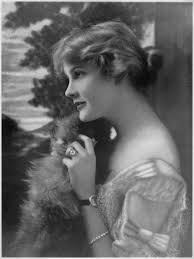
Triumph and tragedy, alternating strangely throughout her life converged on the night on October 3, 1929, when Jeanne Eagels, beautiful and famous actress, suddenly collapsed and died. At a time when her health seemed much improved and she was planning a comeback to the Broadway that had barred her for eighteen months, the black curtain descended noiselessly and swiftly.
It brought to an end the drama of a woman who had made a sensational rise to the heights of theatrical stardom, a woman men clamored for and loved, perhaps too well. Romance, broken hearts, success and defeat, adulation and repudiation – a pageant of experiences and emotions – had paraded through her life. And in the end Jeanne Eagels was the same woman she had been years before – a proud, tempestuous spirit seeking bewilderingly for some distant horizon of happiness.
On her last day alive it probably did not seem to her that death was in the wings. If so, it made no difference. For that night she dressed in her most elaborate and beautiful clothes. She was planning to join a Broadway party. Broadway! The street which soon, she thought, would once more echo to her name and where incandescents would spell it out in glittering letters.
But hardly had she dressed when she suddenly fell faint. The night before she had taken an overdose of a solution of a sleep-producing drug called chloral hydrate. She was rushed from her Park Avenue home to a private sanitarium. They brought her into a room for an examination. She sat on the bed a moment, and then wearily took off her coat. It revealed her in all her glory. Jewels shone magnificently. Diamonds and pearls sparkled on her fingers, about her neck and on her wrist.
She signed. There was only a nurse to see this last act. She sank on the bed in convulsions. A little later she was lifeless. And then Broadway and the whole world learned with astonishment of her sudden passing.
Long before actors were vying for an Oscar nomination and world wide fame thespians were trying to carve out a modest living entertaining prospectors and settlers of the Old West. Today the curtain goes up on a woman entertainer who captured the hearts of the western pioneers.
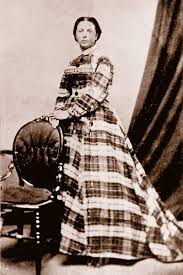
Dora Hand was in a deep sleep. Her bare legs were draped across the thick blankets covering her delicate form and a mass of long, auburn hair stretched over the pillow under her head and dangled off the top of a flimsy mattress. Her breathing was slow and effortless. A framed, graphite- charcoal portrait of an elderly couple hung above her bed on faded, satin-ribbon wallpaper and kept company with her slumber.
The air outside the window next to the picture was still and cold. The distant sound of voices, back-slapping laughter, profanity, and a piano’s tinny, repetitious melody wafted down Dodge City, Kansas’s main thoroughfare and snuck into the small room where Dora was laying.
Dodge was an all night town. Walkers and loungers kept the streets and saloons busy. Residents learned to sleep through the giggling, growling, and gunplay of the cowboy consumers and their paramours for hire. Dora was accustomed to the nightly frivolity and clatter. Her dreams were seldom disturbed by the commotion.
All at once the hard thud of a pair of bullets charging through the wall of the tiny room cut through the routine noises of the cattle town with an uneven, gusty violence. The first bullet was halted by the dense plaster partition leading into the bed chambers. The second struck Dora on the right side under her arm. There was no time for her to object to the injury, no moment for her to cry out or recoil in pain. The slug killed her instantly.
In the near distance a horse squealed and its galloping hooves echoed off the dusty street and faded away.
A pool of blood pored out of Dora’s fatal wound, transforming the white sheets she rested on to crimson. A clock sitting on a nightstand next to the lifeless body ticked on steadily and mercilessly. It was 4:30 in the morning on October 4, 1878, and for the moment, nothing but the persistent moonlight filtering into the scene through a closed window recognized the 34 year-old woman’s passing.
Twenty-four hours prior to Dora being gunned down in her sleep she had been on stage at the Alhambra Saloon and Gambling House. She was a stunning woman whose wholesome voice and exquisite features had charmed audiences from Abilene to Austin. She regaled love starved wranglers and rough riders at stage and railroad stops with her heartfelt rendition of the popular ballads Blessed Be the Ties That Bind and Because I Love You So.