
Sultan of Swat

Take a chance! Enter to win a copy of Tales Behind the Tombstones: The Deaths and Burials of some of the West’s Most Nefarious Outlaws, Notorious Women, and Celebrated Outlaws.

BabeRuth

When the Death Row All Stars were playing ball at the Crossbar Hotel in Rawlins, Wyoming in 1911-1912, Babe Ruth was sitting in class at St. Mary’s Industrial School for Boys in Baltimore, Maryland.

George Herman Ruth, the Sultan of Swat, remains baseball’s greatest legend and its home run king, hitting 60 in one year, 714 in total, without carrying the stigma of suspected steroid and amphetamine use or asterisks after his name. He was born in Baltimore to saloon keepers, raised on the streets, and was in enough trouble by the age of seven that his father signed away custody to St. Mary’s Industrial School for Boys, a reform school. There, an athletic priest used baseball as a way to teach rules to the incorrigibles and to channel learning or behavioral disabilities into the love of a sport. According to tests conducted by psychologists at Columbia University in 1921, Ruth had been born with an above-average eye, ear, and muscle coordination due to hyperactive brain function, primarily in the posterior parietal cortex, the middle to rear section of the brain most often associated with spatial interpretations. Biologically, he might have been an equally good safe-cracker if never introduced to the game. Ruth’s ultimate death from throat cancer at the age of fifty-three in 1948 was due most probably to his penchant for smoking cigars, chewing tobacco, and dipping snuff. However, studies have now shown that his facial carcinoma, located in the nasopharynx, or the upper part of the throat behind the nose, are more often linked to other risk factors. The enhanced gamma-band activity (electrical signals) of his posterior parietal cortex, something he was born with, enabled him to pack the sensory stimuli of three lifetimes into one and might explain his well known womanizing, love of food, drink, and his excellence at baseball. The high-functioning spatial portion of his brain triggered his odd case of malignant cancer. What made him great – the anatomy of his brain – is what killed the Babe at a young age.

To learn more about the death of legendary characters read Tales Behind the Tombstones: The Deaths and Burials of some of the West’s Most Nefarious Outlaws, Notorious Women, and Celebrated Outlaws.
 

This Day…

1884-At the toll bridge over the Arkansas River in Dodge City, Kansas, Marshall Bill Tilghman emptied his revolver and started up with his Winchester in order to encourage some rowdy cowboys to return to their camp.  They stood their ground and fired a few shots in return but nobody was hit.

Guns Down, Punk!

Enter to win a copy of Tales Behind the Tombstones: The Deaths and Burials of some of the West’s Most Nefarious Outlaws, Notorious Women, and Celebrated Outlaws.
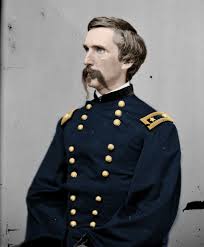
JoshuaChamberlain


General Joshua Chamberlain was in twenty-four battles and was wounded six times. He was chosen by Grant to receive the formal surrender of weapons and colors (April 12, 1865) from Robert E. Lee at Appomattox Court House in Virginia. During the ceremony he saluted the Confederate soldiers, an action that caused uproar in the North but which he defended as an act of honor among warriors. After the war, he was elected governor of Maine by the largest majority in the state’s history. He died at the age of eighty-five from complications of battle wounds, apparently having taken quite some time for those previous six battle scars to do their damage.

To learn more about the death of legendary characters read Tales Behind the Tombstones: The Deaths and Burials of some of the West’s Most Nefarious Outlaws, Notorious Women, and Celebrated Outlaws.
 

Wicked Women

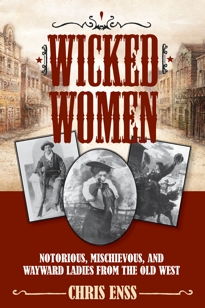
Wicked Women Book Cover

This collection of short, action-filled stories of the Old West’s most egregiously badly behaved female outlaws, gamblers, soiled doves, and other wicked women by award-winning Western history author Chris Enss offers a glimpse into Western Women’s experience that’s less sunbonnets and more six-shooters. During the late nineteenth century, while men were settling the new frontier and rushing off to the latest boom towns, women of easy virtue found wicked lives west of the Mississippi when they followed fortune hunters seeking gold and land in an unsettled territory. Prostitutes and female gamblers hoped to capitalize on the vices of the intrepid pioneers. Pulling together stories of ladies caught in the acts of mayhem, distraction, murder, and highway robbery, it will include famous names like Belle Starr and Big Nose Kate, as well as lesser known characters.

Toughest Man West of Anyplace East

Giveaway! Enter to win a copy of Tales Behind the Tombstones: The Deaths and Burials of some of the West’s Most Nefarious Outlaws, Notorious Women, and Celebrated Outlaws.
ColtCowboy

In 1839 Samuel Colt patented the revolving-chamber pistol. As a teen he had worked as a sailor and had spent long hours staring at the ship’s wheel. He used this principle to invent a gun that could shoot multiple bullets without reloading. He excelled at both invention and marketing and today would be considered a compulsive workaholic. He struggled with a way to produce his guns cheaply but was forced to find a method of mass production after he received an order from the U.S. government in 1847 for 1,000 revolvers. By the time he died of exhaustion at age forty-seven, Samuel Colt had produced more than 400,000 Colt .45 revolvers. At his funeral in 1862 it was said of the Colt .45 he invented: “God created man, but Sam Colt [the Colt .45] made them all equal.”

To learn more about the death of legendary characters read Tales Behind the Tombstones: The Deaths and Burials of some of the West’s Most Nefarious Outlaws, Notorious Women, and Celebrated Outlaws.


This Day…

On this day in 1866, the Reno gang carries out the first robbery of a moving train in the U.S., making off with over $10,000 from an Ohio & Mississippi train in Jackson County, Indiana. Prior to this innovation in crime, holdups had taken place only on trains sitting at stations or freight yards.

Little Spoiled One

Giveaway! Enter to win a copy of Tales Behind the Tombstones: The Deaths and Burials of some of the West’s Most Nefarious Outlaws, Notorious Women, and Celebrated Outlaws.

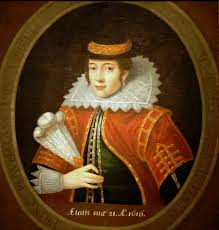
Pocahontas

Pocahontas, a nickname meaning “little spoiled one,” was born Amonute, daughter of Chief Powhatan in 1595, She was an extrovert from a young age, inquisitive and naturally good-natured. At eleven years old she played a miner role in securing John Smith’s survival. Later she was the go-between for trade among the settlers and Indians bartering at Jamestown. The fictionalized version of her love affair with Smith may, in fact, bear some truth, but in a much more disturbing way for our modern sensibilities. Today, a thirty-year-old having sex with a preteen is pedophilia and a crime. But, in that era, relations with non-Christian pagans of any age was not considered wrong. Pocahontas was known to have “long, private conversations” with Smith during her frequent visits to the Jamestown complex, yet the true dimensions of the encounters are a matter of conjecture. A few years later she was betrothed to the older Englishman John Rolfe, only after she agreed to be baptized in 1614. Two years later Rolfe took her to London, where she was received as a celebrity, billed as a real live Indian princess by high society, and held an audience with King James. In 1617 she believed the smoky air of London was the cause of her coughs and bouts of weakness and wished to return to the forests she had known. Along with Rolfe she boarded a ship to return to Virginia, but the vessel only made it to the end of the Thames River before it turned back. Pocahontas died in London at age twenty-two of a disease called the king’s evil, a form of tuberculosis characterized by swelling of the lymph glands.

To learn more about the death of legendary characters read Tales Behind the Tombstones: The Deaths and Burials of some of the West’s Most Nefarious Outlaws, Notorious Women, and Celebrated Outlaws.


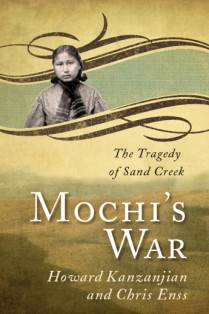
Mochi’s War

Mochi's War Book Cover

Colorado Territory in 1864 wasn’t merely the wild west, it was a land in limbo while the Civil War raged in the east and politics swirled around its potential admission to the union. The territorial governor, John Evans, had ambitions on the national stage should statehood occur–and he was joined in those ambitions by a local pastor and erstwhile Colonel in the Colorado militia, John Chivington. The decision was made to take a hard line stance against any Native Americans who refused to settle on reservations–and in the fall of 1864, Chivington set his sights on a small band of Cheyenne under the chief Black Eagle, camped and preparing for the winter at Sand Creek.When the order to fire on the camp came on November 28, one officer refused, other soldiers in Chivington’s force, however, immediately attacked the village, disregarding the American flag, and a white flag of surrender that was run up shortly after the soldiers commenced firing.

In the ensuing “battle” fifteen members of the assembled militias were killed and more than 50 wounded Between 150 and 200 of Black Kettle’s Cheyenne were estimated killed, nearly all elderly men, women and children.

As with many incidents in American history, the victors wrote the first version of history–turning the massacre into a heroic feat by the troops. Soon thereafter, however, Congress began an investigation into Chivington’s actions and he was roundly condemned. His name still rings with infamy in Colorado and American history. Mochi’s War explores this story and its repercussions into the last part of the nineteenth Century from the perspective of a Cheyenne woman whose determination swept her into some of the most dramatic and heartbreaking moments in the conflicts that grew through the West in the aftermath of Sand Creek.

An Excerpt from Tales Behind the Tombstones

Introduction

“A cemetery is a history of people – a perpetual record of yesterday and sanctuary of peace and quiet today. A cemetery exists because every life is worth loving and remembering – always.”
William Gladstone, Prime Minister of England – 1890

In the mid 1800s, courageous pioneers ventured across the rugged plains to start a new life. The weathered tombstones and worn out crosses that dot the trails from Independence, Missouri to San Francisco, California represent the brave souls who passed away traveling across the wild frontier. Many who made the arduous journey died from disease, starvation or the inhospitable elements in an unfamiliar land. Some died violent deaths from gunfights and lawlessness often associated with the untamed West.

Emigrants were often too busy with day to day survival to spend the time and effort to create cemeteries. Family members and friends were buried where they fell. Most of the head boards of Indian scouts, wagon masters, business owners, soldiers, women, prospectors and children have since then toppled over and in some cases all that remains is a sun scorched piece of wood, teetering on the edge of a grave.

Many of the markers that still stand and are still legible don’t often tell the story of the remarkable, dedicated, outrageous and sometimes notorious people who made a lasting impression conquering the new frontier. In many cases, the manner of their deaths and odd details of their impromptu funerals are as interesting as the lives they led.

For instance, many people have seen Buffalo Bill Cody’s grave on Lookout Mountain in Golden, Colorado, but many do not know that shortly after Cody’s death the Governor of the state dispatched a World War I tank to the site to protect his remains.

Whether or not they were famous, how pioneers were treated after they passed is worthy of note. Settlers who died on the trek west were generally wrapped in material or blankets and then buried. The wooden flanks that lined the bottom of wagons were occasionally used to make crude caskets. Rocks were piled high over the grave to prevent wild animals from getting to the remains. Surviving settlers rolled wagons over the top of the graves to conceal the plots from vengeful Indians. Family members drove away from the burial site with particularly heavy hearts.

Not only had they lost a loved one, but the chance that they would ever be able to find and visit the burial site again was slim.

When western towns like Sacramento, Tucson and Denver were established graveyards and proper burials became standard. Coffins were made with rough boards and lined with white cloths. In small mining burghs, friends and family carried the coffin to the cemetery. In larger towns the casket was placed in a black, horse-drawn vehicle complete with glass sides and decorated with elaborate carvings and brass ornaments. The deceased was driven to their final resting place by a team of six horses. A member of the clergy would offer a few words about the departed and lead those gathered in prayer.

The undertaker usually made the wooden markers placed at the graves. Granite or marble tombstones had to be ordered from major cities like Kansas City, San Francisco, or Denver, and the inscriptions were scrawled across the front before they were sent back to the families. The process took three to six months to complete. From time to time the stone would be returned with the name misspelled or key information omitted. Given the cost and time spent, the stone was used regardless of the mistake.

Included in this volume are a few of the interesting tombstone inscriptions, unusual burial places, and strange circumstances surrounding some well known western heroes and frontier characters. While there are many compelling tales behind the tombstones, the head boards included in this tome were chosen as the most fascinating and least told.

Many visitors standing over the burial plots of legends like Lotta Crabtree, Doc Holliday and Lola Montez, or lesser known pioneers like Old Joe or Sheriff David Douglass, wonder where the occupant of the grave was when they met their maker, their course of death, or who witnessed their last words. Tales Behind the Tombstones answers those queries and serves as a guide through the hallowed grounds where today one can visit the markers of pioneers, bad guys, missionaries, teamsters and lawmen of the Old West.

This Day…

1876-A patrol led by Texas Ranger Sergeant John Armstrong closed in on an outlaw camp in Espinoza Lake near Carrizo, Texas.  When the smoke cleared the rangers had killed three of the four outlaws in that camp and the fourth was hit four times, in separate shootouts that night Armstrong’s detachment killed two other outlaws.