No Name on the Bullet

Enter to win a copy of Tales Behind the Tombstones: The Deaths and Burials of some of the West’s Most Nefarious Outlaws, Notorious Women, and Celebrated Outlaws.

AudieMurphy

The most decorated American war hero in World War II, Audie Murphy returned home with no place to go but down. What could top his spectacular battle feat? After lying about his age to join the army at 17, he had been wounded three times and credited with killing 240 Germans. Of 235 men in his company, Murphy was one of two who survived. Not yet 21, he won twenty-seven medals, including three from the French and one from Belgium.

After the war, Murphy was recruited to Hollywood by James Cagney, and in 1955 he starred in a movie version of hit autobiography, To Hell and Back. He said it was “the first time, I suppose, a man has fought an honest war, then come back and played himself doing it.” Murphy joked about his lack of talent, but in twenty years his boyish face and freckles appeared in forty movies, mostly war films and Westerns in which he played eager fighters. It was a far cry from his youth as one of eleven children of a Texas cotton sharecropper – and from the battle fields of Europe – and the transition was not smooth. Murphy said the war left him with nightmares for years. He slept with a loaded automatic pistol under his pillow, and when he was asked how people survive a war, he said, “I don’t think they ever do.”

One of Murphy’s friends, cartoonist Bill Maudlin, said, “Murphy wanted the world to stay simple so he could concentrate on tidying up its moral fiber wherever he found himself.” Murphy became a quasi law-enforcement officer in the 1960s. He was made a special officer of a small California police department and rode around with police during drug busts. In 1970, he and a bartender friend beat up a dog trainer in a dispute over treatment of the friend’s dog. Murphy was acquitted of attempted murder.

Though he had earned more than $2.5 million in his film career, Murphy was forced by too many bad business ventures to declare bankruptcy in 1968. Three years later, hounded by creditors and still trying to rebuild financial security for his wife and two teenage sons, he became interested in a company in Martinsville, Virginia, that manufactured prefabricated homes. He was on a small charter flight from Atlanta to see about making an investment when the plan crashed in a wooded mountain area during a light drizzle. The region, northwest of Roanoke, was so isolated that the wreckage, including the bodies of Murphy and five company officials, was not found for three days. The war hero was laid to rest in Arlington National Cemetery.

To learn more about the death of legendary characters read Tales Behind the Tombstones: The Deaths and Burials of some of the West’s Most Nefarious Outlaws, Notorious Women, and Celebrated Outlaws.
 

As Honest as a Looking Glass

Enter to win a copy of Tales Behind the Tombstones: The Deaths and Burials of some of the West’s Most Nefarious Outlaws, Notorious Women, and Celebrated Outlaws.

DBoone

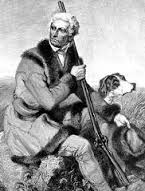
Daniel Boone, America’s most famous pioneer hero, had set off into a hostile world without roads, toting only a flintlock musket and a knife; the region was so wild he reportedly killed over ten thousand bears while he surveyed and settled vast virgin wildernesses of Kentucky, West Virginia, and Missouri. In 1820, at the age of eighty-five, Boone went on his final hunting trip near his home in St. Charles, Missouri, caught pneumonia, and died. Although he spent his life in the woods and claimed a lot of property for himself and his family, he lost it all to the slick dealings of investors using issues of unclear titles and creditors liens to strip him of all but his name. His funeral was held in his son’s barn instead of the house; hundreds showed up unexpectedly to pay their respects. Many remember a TV show that portrayed Daniel Boone wearing a coonskin cap. He actually wore a felt-brim hat in the Quaker style now seen on boxes of oatmeal. The TV theme song: “Daniel Boone was a man. Yes a big man. With an eye like an eagle as tall as a mountain was he,” was also a stretch. Boone was 5 feet 8 and weighed about 175 pounds. He did have a keen and active mind and stayed physically fit, a fact that kept him alive long after what is currently considered retirement age.

To learn more about how legends such as Daniel Boone died read Tales Behind the Tombstones: The Deaths and Burials of some of the West’s Most Nefarious Outlaws, Notorious Women, and Celebrated Outlaws.
 

This Day…

On this day in 1829, Dr. Sarah R. Adamson Dolley was born in Schuylkill Meeting, Pennsylvania. Aspiring to become a doctor, she sought an apprenticeship with her physician uncle, Hiram Corson, but he initially would not accept her, believing the practice of medicine to be an unsuitable profession for women. After seeing that she was determined and relentless, he finally agreed.

No Women Need Apply

Last chance to enter to win a copy of the New York Times Best-Selling book

The Doctor Wore Petticoats: Women Physicians of the Old West.

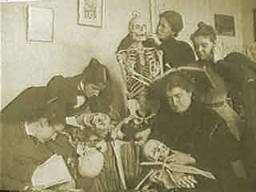
Women Medical Students - 1893

Women Medical Students – 1893

“No Women Need Apply.”  These four discouraging words of admonition often greeted female physicians looking for jobs in the frontier-era West.  Despite the dire need for medical help, it seemed most trappers, miners, and emigrants would rather suffer and die than be treated by a female doctor.  Nevertheless dozens of highly trained women headed West, where they endured hardship and prejudice as they set broken limbs, performed operations, and delivered generations of babies-and solidified a place for women in the medical field.

In the beginning, western communities where Doctor Mary Canaga Rowland practiced were reluctant to accept her skills. After hanging her shingle out in Lebanon, Oregon, she overheard people talking as they passed by her sign. “Doctor Mary Canaga Rowland, a woman doctor, well, well, well…” The first patient she saw in Oregon in 1909, was not opposed to women doctors. In fact he sought her out for just that reason: “He was a little boy of ten or eleven. He came to me about half past eleven one night and woke me up to take care of his hurt finger. He was crying and I asked him how he happened to come to me and he said, “Cause I know’d you’re a woman and you’d be careful…”

To learn more about Mary Canaga Rowland and other lady healers on the frontier read The Doctor Wore Petticoats: Women Physicians of the Old West.


Like Pulling Teeth!

Giveaway! Enter to win a copy of the New York Times Best-Selling book

The Doctor Wore Petticoats: Women Physicians of the Old West

Dentist

Frantic pounding on the front door of Nellie Pooler Chapman’s home forced the petite woman out of a deep sleep, off of her bed, and onto her feet. She quickly lit a nearby candle, threw on her robe, and hurried to answer the desperate person knocking and calling out for help.

As soon as Nellie opened the door, a scruffy miner pushed his way inside. His left hand was holding his left cheek and tears were streaming down his face. “I’ve got to see the doc,” he pleaded. Nellie left the door standing open as she brushed her mussed hair from her face. “The doctor isn’t here,” she informed the man. “He’s in Nevada looking for silver.” The miner groaned in pain and cried even harder. “You’ve got to help me,” he insisted. “I’ve got a bad tooth and it’s killing me.” Nellie stared back wide-eyed at the suffering man. “I’m not a dentist,” she told him. “I don’t know how to removed a bad tooth.”

The man drew in a quick breath and winched. He was in agony. “You’ve watched him work, though,” he reminded her. “You know what to do. Please,” he begged. Nellie thought about it for a moment, then ushered the tormented patient into the dental office in the back of the house. “I’ll try,” she told him.

Nellie’s introduction into the field of dentistry was dramatic, but it suited her. She went on to become the first licensed dentist in the Old West.

To learn more about Nellie Pooler Chapman and other lady healers on the frontier read The Doctor Wore Petticoats: Women Physicians of the Old West.


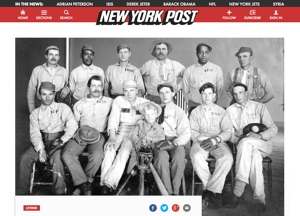
The New York Post – The death-row inmates forced to play baseball for their lives

nypost On a hot summer day in baseball-mad Rawlins, Wyoming in 1911, a tightly-packed crowd watched pitcher Thomas Cameron rear back and hurl a fastball toward home plate. The ball went wild, clipping the opposing player on the left shoulder before bouncing into the stands, allowing him to take first base.

Cameron was dying on the mound. In more ways than one…

Read more here: http://nypost.com/2014/09/14/the-death-row-inmates-who-were-forced-to-play-baseball-for-their-lives/

This Day…

1824: Adeline Train Whitney born (writer)

1866: Anne Sullivan Macy born (educator – Helen Keller‘s “Teacher”)

1868: Lida Shaw King born (educator, classicist)

1945: Jessye Norman born (opera singer)

1963: Four girls killed in the bombing of 16th Street Church in Birmingham, Alabama (story)

The Doctor in Deadwood

Giveaway! Enter to win a copy of the New York Times Best-Selling book

The Doctor Wore Petticoats: Women Physicians of the Old West

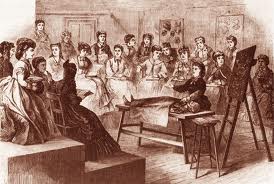
Woman Doctor demonstrates operation to class - 1883

Woman Doctor demonstrates operation to class – 1883

The rough-and-tumble town of Deadwood, South Dakota was home to a variety of notorious western characters in the mid-1800s. Buffalo Bill Cody, Wild Bill Hickok, and Calamity Jane were just a few of the infamous names associated with the gold-mining camp. These three legends of the West were at one time patients of the first woman doctor in the area, Doctor Flora Hayward Stanford. Doctor Stanford opened a practice in Deadwood in 1888 and began seeing to the healthcare needs of hundreds of prospectors, prostitutes, business owners, and their families. She entered the medical profession late in her life, receiving her degree from Boston University of Medicine in 1878, at the age of forty.

To learn more about lady healers on the frontier read

The Doctor Wore Petticoats: Women Physicians of the Old West.