The Gambling Outlaw

Enter to win a copy of The Bedside Book of Bad Girls:

Outlaw Women of the Midwest

PokerAlice

Death, dealing from “a cold deck,” flipped the ace of spades for ‘ Poker Alice” Tubbs on February 27, 1930, it was her admission card to the big game that is eternity.  She was one of the last of a bizarre coterie of hard living, straight-shooting men and women who added the color—sometimes it was blood-red—to the old West. “Deadwood Dick,” “Wild Bill” Hickok end “Calamity Jane” were others.  Poker Alice wore a gun, smoked cigars and could swear like a trooper.  During a life as adventurous as any man’s, she gambled for high stakes without a single betraying quiver of the-hand as she dealt; without the twitch of a face muscle.  Old age and complications, following an operation for gall stones, were given by doctors as the cause of her death.  Poker Alice was English born but American bred, and always the gambler. She started as a faro dealer.  A woman at the box was a novelty that drew the black beards of the wild West, with their bags of gold, to the gambling table. So successful was she, that soon she was known, not just, as a woman gambler, but as a winning gambler, man or woman.  Colorado, Nevada, Montana, the Dakotas—wherever there was pay dirt and hombres with guts enough to lay it against the turn of a card—Poker Alice was. She took $6,000 in one night’s play in Silver City, N. M.  It seems rather strange, in retrospect, that Poker Alice, self-reliant, courageous and able to take care of herself anywhere—should have had time for love, yet she was three times married. Her first husband was a mining engineer, P. Duffield.  Then came W. G. Tubbs, a gambler who, despite a wide reputation of his own, never could equal Poker Alice at the card table. Her third husband was George Huckert, but when he died Poker Alice resumed the name of he- second husband.  She was in the rush of the ‘free lands’ of Oklahoma, and later skipped from place to place as the federal government warred on the gamblers. One by one commanding figures of the old, the lawless West, dropped away—many by bullets.  Poker Alice grew old. Times changed. Railroads brought civilization to the raw, elemental West.  Eventually there came prohibition.  Poker Alice retired to a little cabin in the Black Hills.  She was convicted for violating the prohibition law but never served the sentence.  Governor W. J. Bulow pardoned her, saying: “I can’t send a white-haired old woman to jail on a liquor charge.”  The days of big games, hard liquor and strong language are gone now. Only the wild glory of the Black Hills remains. Civilization could not take them away; and there today she lies dead—Poker Alice was seventy-seven when she died.

To learn more about Poker Alice read The Bedside Book of Bad Girls:

Women Outlaws of the Midwest

This Day…

1760 – Fort Loudoun on the Little Tennessee River surrenders to Indian attackers after a bitter siege.  Many survivors are cut down by Indians as they flee from Loudoun to Fort Prince Georgia.

A Lady Horse Thief

Enter to win a copy of the Bedside Book of Bad Girls:

Women Outlaws of the Midwest

Chris3-0059

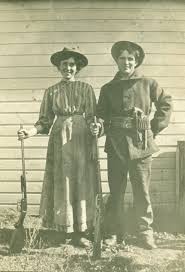
On August 21, 1894, Governor Lowe of Oklahoma issued requisition papers to the Governor of Kansas for Mrs. Flora Mundis, alias ‘Tom King’ the notorious horse thief who has been captured at Fredonia, Kansas.  There were scores of charges against her, and she had broken out of jail in the Territory more than a half a dozen times.  ‘Tom King’ was a handsome and fascinating young woman of about twenty-two years.  She was a quarter-blood Cherokee Indian and many of her relatives and her people lived near Springfield, Missouri from where her ancestors emigrated to the Cherokee country.  Her operations in the Territory had been extensive and notorious and her captures frequent, but she had never yet been brought to trial.  About a year and a half prior to the requisition being ordered she was arrested for complicity in the Wharton train robberies, and, after being held in the Guthrie jail for some time, escaped.  A while later she was held in the Oklahoma City jail and escaped in the same explicable way.  For the last three months of last year she had been in the new jail of Canadian county and her trial was to have taken place in the district court in December.  A few nights before her trial, however, she walked out the open doors of the jail dressed in a full suit of men’s clothing.

To learn more about Flora Mundis read The Bedside Book of Bad Girls: Women Outlaws of the Midwest.

This Day…

1882-Bob Ford, that dirty little coward, killed Jesse James with a gunshot to the back of the head.  Right afterwards he scampered down to the telegraph office to claim the reward offered by Governor Crittenden.

Best Sellers List

Hearts West on the Publisher’s Weekly, Wall Street Journal and USA Today Best Sellers List

hearts_west_lg

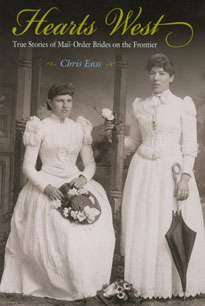
TwoDot, an imprint of Globe Pequot Press, is proud to announce that the book Hearts West: True Stories of Mail Order Brides on the Frontier has been listed as a best seller for Publisher’s Weekly and USA Today. Hearts West brings to life true stories of mail-order brides of the Gold Rush era. Some found soul mates; others found themselves in desperate situations. Complete with the actual hearts-and-hands personal advertisements that began some of the long-distance courtships, this book provides an up-close look at the leap of faith these men and women were willing to take.

Enss has written more than two dozen books on the subject of women of the Old West. Some of the books Chris Enss has written are Frontier Teachers: Stories of Heroic Women of the Old West, Object Matrimony: The Risky Business of Mail Order Matchmaking on the Frontier, and Gilded Girls: Women Entertainers of the Old West. Her latest title is Love Lessons from the Old West: Wisdom from Wild Women. You can visit the author online at: www.chrisenss.com.

Publishers Weekly Best-Sellers

Best-Selling Books Week Ended March 22nd.
Nonfiction E Books

1. “Twelve Years a Slave” by Solomon Northup (HarperCollins)

2. “The Nazi Officer’s Wife” by Edith Hahn Beer (Harper Collins)

3. “Unbroken” by Lauren Hillenbrand (Random House)

4. “Jesus Feminist” by Sarah Bessey (Howard Books)

5.  “Hearts West” by Chris Enss (TwoDot)

6. “Not Cool” by Greg Gutfield (Crown Forum)

7. “10% Happier” by Dan Harris (It Books)

8. “Uganda Be Kidding Me” by Chelsea Handler (Grand Central Publishing)

9. “Killing Jesus: A History” by Bill O’Reilly & Martin Dugard (Macmillan)

10. “Call the Midwife” by Jennifer Worth (Ecco Press)


USA Today Best-Sellers

March 28, 2014 (AP)
By The Associated Press
NONFICTION E BOOKS

1. “Twelve Years a Slave” by Solomon Northup (HarperCollins)

2. “The Nazi Officer’s Wife” by Edith Hahn Beer (Harper Collins)

3. “Unbroken” by Lauren Hillenbrand (Random House)

4. “Jesus Feminist” by Sarah Bessey (Howard Books)

5. “Hearts West” by Chris Enss (TwoDot)

6. “Not Cool” by Greg Gutfield (Crown Forum)

7. “10% Happier” by Dan Harris (It Books)

8. “Uganda Be Kidding Me” by Chelsea Handler (Grand Central Publishing)

9. “Killing Jesus: A History” by Bill O’Reilly & Martin Dugard (Macmillan)

10. “Call the Midwife” by Jennifer Worth (Ecco Press)

This Day…

1867 – In the Alaska Purchase Treaty, concluded by American Secretary of State William H. Seward and Russian Minister to the United States Edouord de Stoeckl, Russia transfers Alaska to the United States for $7,200,000.  However, some unhappy Congressmen with references to ‘Seward’s Folly,’ voice opposition to the treaty and its ratification is delayed.  The House of Representatives must approve the appropriation to conclude the treaty.

Zip Wyatt’s Gang

Enter to win a copy of the Bedside Book of Bad Girls:

Women Outlaws of the Midwest.


WomenOutlaws

On August 2, 1895, two women bandits, Mrs. Belle Black and Mrs. Jennie Freeman, were captured in the Glass Mountains, in the western part of the Cherokee Strip, and were place in the Unites States jail in Guthrie, Oklahoma.  They belonged to the notorious gang of desperados led by Zip Wyatt, an outlaw guilty of at least a dozen murders.  So skillful was his performance and that of his two female deputies that they defied the vigilance of the Sheriff for more than a year.

According to the arresting officers neither of the women was “appealing in any way.”  “Mrs. Black was small and heavy with dark hair and blue eyes and an expression that was not only criminal, but very unpleasant.  Her husband was one of the outlaw members of the gang.  Mrs. Freeman was tall, thin and malignant.  She left her husband in 1894 to elope with Zip Wyatt.  The women dressed as ordinary farmers’ wives and their appearance and manner enabled them to get away with a good deal of plunder unsuspected.  They sit in their cells chatting with the other prisoners or playing a game of cards with those who have been allowed the freedom of the corridors with them.”

For more information about the women highway robbers who eluded law enforcement read the Bedside Book of Bad Girls.

Playing for Time

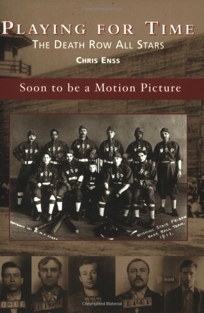
Playing for Time Book CoverFor Joseph Seng and the other death row inmates in the line-up for the Wyoming State Penitentiary All Stars, baseball was literally a game of life or death. Based on primary source documents, some unearthed at the old prison itself, Playing for Time recreates the compelling story of this team of hardened criminals who excelled at a civilized game to become amateur sports heroes, and of the key player who led them to many victories.
Shakespeare and the Actress

The winner of a copy of the book Gilded Girls: Women Entertainers of the

Old West is Sarah Rozowski.

The Great Shakespearean Actress, Matilda Heron

The Great Shakespearean Actress, Matilda Heron

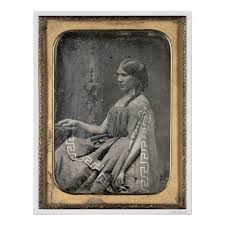
Among the greatest actresses who brought Shakespeare to California in the early 1850s was Irish-born Matilda Heron.  She was still in her early twenties, virtually at the beginning of her career, and she arrived under circumstances that were bound to stir the chivalrous impulses of romantic San Francisco.  Trained Shakespearean actors said of her ability that they had never known “a more original, lawless, interesting woman, among the luminaries of the stage,” and to describe her as “an exponent of the elemental passions, in their universal flow and ebb; she was the whirlwind, not the zephyr.”

It was not, however, as the whirlwind that Miss Heron swept to an immediate conquest of California theatre goers during Christmas week of 1853.  San Francisco thrilled to her “noble conduct,” her pious and munificent charity.”  On the third night she was performed in the busy city she was presented with a superlatively dazzling diamond cross in recognition of the generosity with which she promptly dispatched the proceeds of her benefit to the widow of her manager, who had died on the voyage up from Panama.

Born in County Cork in 1830, Matilda emigrated to the United States in 1842.  She was living in Philadelphia when she began appearing professionally in plays. In 1853 she traveled to California and gained popularity. In 1854, she was married to lawyer Henry Herbert Byrne in San Francisco, but the union lasted but a few months.  While in Paris in 1855, Heron saw the popular play La Dame aux camélias (The Lady of the Camellias), and decided to present her own version, in English, in America. The resulting “Camille” for which she is best known, had its New York debut in January 1857 at Wallack’s Theatre.

In 1857, Heron wed composer Robert Stoepel (they separated in 1869). During the 1861-1862 season Heron wrote “The Belle of the Season” and starred in it at the Winter Garden. In 1863, she gave birth to a daughter, Helen Wallace Stoepel, better known as Bijou Heron, who became an actress herself. By the late 1860s, and as her health began to wane, Matilda Heron receded from the spotlight and taught acting. A big benefit show was done to raise funds for her in January 1872, which included Edwin Booth, Jules Levy, John Brougham, and Laura Keene.

Matilda died in New York City on March 7, 1877. Her reported last words were “Tilly never did harm to anyone – poor Tilly is so happy.”


This Day…

1882-In a bloody shootout at Chandler’s milk farm near Gleeson, Arizona a posse led by Billy Breakenridge killed Billy Grounds, and Zwing Hunt was shot up and captured.  One of the possemen was killed, two others were wounded.