Zip Wyatt’s Gang

Enter to win a copy of the Bedside Book of Bad Girls:

Women Outlaws of the Midwest.


WomenOutlaws

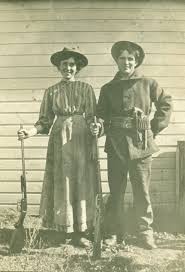
On August 2, 1895, two women bandits, Mrs. Belle Black and Mrs. Jennie Freeman, were captured in the Glass Mountains, in the western part of the Cherokee Strip, and were place in the Unites States jail in Guthrie, Oklahoma.  They belonged to the notorious gang of desperados led by Zip Wyatt, an outlaw guilty of at least a dozen murders.  So skillful was his performance and that of his two female deputies that they defied the vigilance of the Sheriff for more than a year.

According to the arresting officers neither of the women was “appealing in any way.”  “Mrs. Black was small and heavy with dark hair and blue eyes and an expression that was not only criminal, but very unpleasant.  Her husband was one of the outlaw members of the gang.  Mrs. Freeman was tall, thin and malignant.  She left her husband in 1894 to elope with Zip Wyatt.  The women dressed as ordinary farmers’ wives and their appearance and manner enabled them to get away with a good deal of plunder unsuspected.  They sit in their cells chatting with the other prisoners or playing a game of cards with those who have been allowed the freedom of the corridors with them.”

For more information about the women highway robbers who eluded law enforcement read the Bedside Book of Bad Girls.

Playing for Time

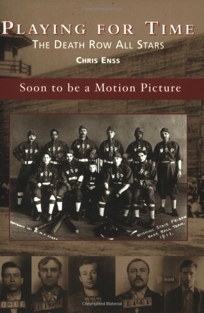
Playing for Time Book CoverFor Joseph Seng and the other death row inmates in the line-up for the Wyoming State Penitentiary All Stars, baseball was literally a game of life or death. Based on primary source documents, some unearthed at the old prison itself, Playing for Time recreates the compelling story of this team of hardened criminals who excelled at a civilized game to become amateur sports heroes, and of the key player who led them to many victories.

Shakespeare and the Actress

The winner of a copy of the book Gilded Girls: Women Entertainers of the

Old West is Sarah Rozowski.

The Great Shakespearean Actress, Matilda Heron

The Great Shakespearean Actress, Matilda Heron

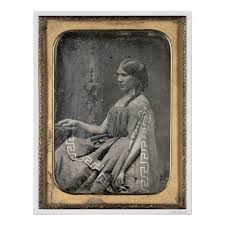
Among the greatest actresses who brought Shakespeare to California in the early 1850s was Irish-born Matilda Heron.  She was still in her early twenties, virtually at the beginning of her career, and she arrived under circumstances that were bound to stir the chivalrous impulses of romantic San Francisco.  Trained Shakespearean actors said of her ability that they had never known “a more original, lawless, interesting woman, among the luminaries of the stage,” and to describe her as “an exponent of the elemental passions, in their universal flow and ebb; she was the whirlwind, not the zephyr.”

It was not, however, as the whirlwind that Miss Heron swept to an immediate conquest of California theatre goers during Christmas week of 1853.  San Francisco thrilled to her “noble conduct,” her pious and munificent charity.”  On the third night she was performed in the busy city she was presented with a superlatively dazzling diamond cross in recognition of the generosity with which she promptly dispatched the proceeds of her benefit to the widow of her manager, who had died on the voyage up from Panama.

Born in County Cork in 1830, Matilda emigrated to the United States in 1842.  She was living in Philadelphia when she began appearing professionally in plays. In 1853 she traveled to California and gained popularity. In 1854, she was married to lawyer Henry Herbert Byrne in San Francisco, but the union lasted but a few months.  While in Paris in 1855, Heron saw the popular play La Dame aux camélias (The Lady of the Camellias), and decided to present her own version, in English, in America. The resulting “Camille” for which she is best known, had its New York debut in January 1857 at Wallack’s Theatre.

In 1857, Heron wed composer Robert Stoepel (they separated in 1869). During the 1861-1862 season Heron wrote “The Belle of the Season” and starred in it at the Winter Garden. In 1863, she gave birth to a daughter, Helen Wallace Stoepel, better known as Bijou Heron, who became an actress herself. By the late 1860s, and as her health began to wane, Matilda Heron receded from the spotlight and taught acting. A big benefit show was done to raise funds for her in January 1872, which included Edwin Booth, Jules Levy, John Brougham, and Laura Keene.

Matilda died in New York City on March 7, 1877. Her reported last words were “Tilly never did harm to anyone – poor Tilly is so happy.”


This Day…

1882-In a bloody shootout at Chandler’s milk farm near Gleeson, Arizona a posse led by Billy Breakenridge killed Billy Grounds, and Zwing Hunt was shot up and captured.  One of the possemen was killed, two others were wounded.

The Irish Prima Donna

Enter to win a copy of Gilded Girls: Women Entertainers of the Old West.
Catherine Hayes, the frontier's most famous opera singer.

Catherine Hayes, the frontier’s most famous opera singer.

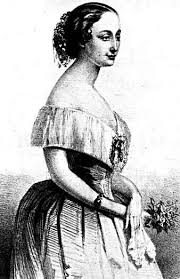
Catherine Hayes, affectionately known by her contemporaries as the “Swan of Erin,” was one of the first noted opera singers to appear in California when the Golden State was young, way back in the early 50s.  She appeared there through the efforts of P.T. Barnum, who first introduced Jennie Lind to the United States.  Her contemporaries in the musical world were Albini and Sontag and the Spanish dancer Lola Montez, with whom she called her friend: but there was a world of difference between the fiery Spanish artist, vivid interpreter of Terpsichore the morganatic wife of royalty, and the calm, placid “Swan of Erin.”

Catherine Hayes was born in Limerick, Ireland in 1928.  She was a quiet, reserved girl, not very robust.  Her favorite pastime was to wander by herself down the picturesque banks of the river Shannon, where, concealed in the thick shadow of the trees, she delighted to pour out her pent-up emotions in a medley of songs and trills, all quite extemporaneous, as at that time she had never had a singing lesson in her life and did not realize the great gift that was hers, which later was to thrill the hearts and stir the souls of thousands.

One starry summer’s night when the river was full of pleasure crafts, Catherine, concealed in her leafy bower, was pouring forth a veritable flood of melody.  One of the small boats stopped close to shore and its occupant, Bishop Edmond Knox, listened intently.  At that time he was the Bishop of Limerick.  He was enchanted by Catherine voice and wasted no time in becoming acquainted with the young singer.  Her persuaded her mother, who was a widow and Catherine’s sole guardian, to allow her daughter to take singing lessons from the foremost teachers in the city at his expense.

To read more about Catherine Hayes and how she became a star on stages across the frontier read Gilded Girls: Women Entertainers of the Old West. 

The winner of the drawing will be announced on Friday, March 28.

Polish Phenomenon in the Old West

Enter to win a copy of the book Gilded Girls: Women Entertainers of the Old West

Helena Modjeska, Virginia City, Nevada's Favorite Actress

Helena Modjeska, Virginia City, Nevada’s Favorite Actress

It was 1848 that Austria retracted an arrangement with Poland to allow Cracow, the capital of Poland, to exist as a free city, attacked Cracow bombarded it and took possession.  Accompanying this tragedy to the Poles was much bloodshed and sorrow.  Cracow became a city of turmoil and grief.  Amidst the terror Helena Opid, the daughter of a teacher in the school of Cracow, grew up.  She was destined to become one of the world’s greatest actresses, and without doubt the stern times in which she spent her youth had much effect in her capacity for displaying the emotions which she inevitably achieved.

Brought up in a classic atmosphere of culture and music, Helena developed a passion for acting at an early age.  It is said that after her first visit to a theatre, where she witnessed a performance of “The Daughter of the Regiment,” she spent many hours acting out the play she had seen to her friends.

When very young Helena met Gustav Modrezejewski, a friend of the family who taught Helena and her many brothers and sisters German.  Modrezejewski was twenty years Helena senior when they married and settled down to a quiet domestic life.

When she was twenty her son was born.  Soon Helena her husband and baby and mother moved to a little town called Bochnie, in Austrian Poland.  Bochnie was a center of salt mines and soon after Helena arrival in the village, there occurred a frightening accident in which many miners were killed.  The good citizens organized an amateur performance to raise funds for the relief of the widows and orphans.

On this occasion, Helena Modejska – as she was later known because English speaking audience had difficulty pronouncing her full name – made her first appearance on the stage.  So great was her success that Helena and her husband – who was appointed her manager – organized a little traveling troupe that went around the country performing.

To learn how Helena got to America and became star read Gilded Girls: Women Entertainers of the Old West. 

The contest winner will be announced on Friday, March 28.

Actress Adah Menken: Adored by the West

Enter to win a copy of the book Gilded Girls: Women Entertainers of the Old West.

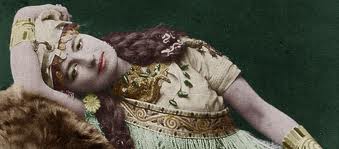
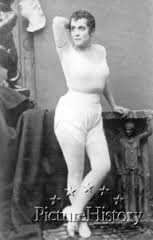
Adah Menken in a scene from Mazzepa.

Adah Menken in a scene from Mazzepa


Enter to win a copy of Gilded Girls: Women Entertainers of the Old West:  It was hard to guess who was more nervous – Beauty or the Beast, as portrayed respectively by Adah Menken and the black mare, Belle Beauty.  Adah Menken was jittery because she was about to make theatrical history by being the first woman to appear on stage wearing nothing but flesh colored tights.  Belle Beauty, the mare, was skittish because she had fallen off the incline runway during rehearsal, with Adah strapped to her back, causing the manager to exclaim, “There goes $2,000 worth of horse!”  The mare was unhurt, but the actress somebody noticed later had been severely gashed in the shoulder and it was suggested to call off the stunt.  “And have them call me a coward?” she snorted.   “Certainly not.  Fix the straps.”  Her lights and her ride rode up the painted stage mountain that night of June 7, 1861, at the climax of Byron’s play “Mazeppa”, made Adah Menken world famous, the toast of princes and poets on two continents, and climaxed a career that would be sensational even today, but was always incredible in the straight-laced early Victorian days.  In her brief lifespan of thirty-three years she managed to pack fortune and poverty, talent and tawdriness.  She was married four times and had romantic attachments with such a notable as Algernon Charles Swinburne, the poet.  Adah Menken set an example for glamour girls of the future by cloaking her birth and her youth in mystery.  She gave the year of her birth as 1835 and the place as New Orleans.  Some of those who professed to know her well insisted that her parents were named McCord.  Adah never agreed with them.

To learn more about the mysterious and daring Adah Menken read

Gilded Girls: Women Entertainers of the Old West.

The winner of the drawing will be announced on Friday, March 28, 2014.

Cowgirl Entertainer

Enter to win a copy of Gilded Girls: Women Entertainers of the Old West.

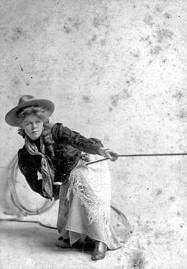
Lucille Mulhall, Cowgirls Entertainer

Lucille Mulhall, Cowgirl Entertainer

A pair of large, mean steers burst out of the gate and raced onto the parade field.  Eighteen-year-old Lucille Mulhall bolted after the beasts atop her trained horse, Governor.  The beautiful blond with petite features and blue-gray eyes quickly tossed the lasso she was twirling and snagged one of the animals around its neck.  The steer jerked to a stop as Governor planted his feet firmly on the ground.  Lucille leapt at the steer with another rope and began to tie its feet together.  In thirty seconds she had completed the task, breaking the steer-roping record at the rodeo grounds in Denison, Texas.

On a hot September day in 1903, Lucille won the Grayson County Fair’s roping contest, beating out two of the top cowboys in the county in the process.  She was awarded a pendant of gold with a raised star in which was imbedded a diamond.  In the center of the pendant was a steer-roping scene set in blue enamel.  It was a prize she wore with pride for the rest of her career.

Lucille Mulhall was destined to be a cowgirl.  Her father, Zack Mulhall, had her on the back of a horse before she could walk.  She was born on October 21, 1885, and raised on her family’s 80,000-acre ranch near Guthrie, Oklahoma.  At an early age she showed a talent for horse riding.  She was a natural in the saddle, at training horses, roping, branding cattle, and all the other chores associated with ranch hands.  History records that she was extremely bright and could have gone on to be a teacher, but she preferred cowboying, and with her father’s help, she made it her life’s work.

After a successful roping-and-riding contest in 1899, Zack decided this form of entertainment had massive monetary potential.  He put together a group of horseback performers and called them Mulhall’s Congress of Rough Riders and Ropers.  Lucille was a part of the group and began her career at a riding exhibition in Oklahoma City.  She was fourteen years old.  Lucille and her horse captivated audiences with their speed and precision.  In less than a year, she was the best-known cowgirl performer in the West.

In 1902 Lucille had an accident that would have caused any professional rider to give up the sport.  It happened during a relay race in St. Louis when she was dismounting a bronco.  She was struck by the pony of one of the other cowboys in the show and the muscles and tendons of her ankle were torn away and the limb badly bruised.  She finished the tour with her leg in a cast.

Throughout the course of her lifetime Lucille had many suitors, but her allegiance was to her father and the rodeo show first.  Zack often ran interference between his daughter and the young men interested in courting her.  He was protective of Lucille and didn’t want her settling down too soon.

Her busy schedule kept her mind off matters of the heart.  She performed at such prestigious venues as Madison Square Garden, the World’s Fair in St. Louis, and in Washington, D.C..  Among the celebrated people she rode with were movie star Tom Mix and Apache Indian Chief Geronimo.

In 1906 Mulhall’s Congress of Rough Riders and Ropers disbanded.  Lucille returned to the family ranch for awhile, but she was soon lured back into show business by her father when an offer came for her to join a vaudeville review.  Her new show was billed as “Lucille Mulhall and Her Ranch Boys.”  Theatres had to be adapted to accommodate the show.  A unique portable fence designed to hang from the fly loft and fasten between the stage and the orchestra pit was installed at each venue.  Several inches of dirt had to be spread out over the stage floor.

Lucille’s rodeo career spanned more than 30 years.  The loss of her parents in 1932, her declining health, and the depletion of the resources of the family ranch due to the Great Depression, forced her into retirement.

Brokenhearted and living in poverty, she turned to alcohol for solace.  By the spring of 1935, she had pulled herself together and accepted an offer from her hometown of Guthrie, Oklahoma, to lead its annual Frontier Celebration Day parade.  Encouraged by the crowd’s response to her parade appearance, Lucille agreed to join her brother’s Wild West show.  Now fifty years old, she participated only in special acts and didn’t take part in the rodeos as a contestant.

On December 21, 1940, Lucille was on her way back to the family ranch when a truck broadsided the car she was riding in, killing her instantly.  She was laid to rest alongside her parents in Guthrie.

For more information about Lucille Mulhall and many other frontier entertainers read Gilded Girls:  Women Entertainers of the Old West.

Drawing for the chance to win a copy of the book will be held on Friday, March 28.