Perhaps it’s because I like my agony in widescreen that I so appreciate any Sergio Leone movie. Or perhaps it’s the reoccurring theme of the bad guy getting his due that’s so appealing. If imitation is the sincerest form of flattery, then Leone was the most esteemed film director of the sixties. The popularity of his debut Western, A Fistful of Dollars (1964), turned Clint Eastwood into a worldwide star and founded the ‘spaghetti western’ style. U.S. publicists called Eastwood’s hero ‘The Man With No Name’, which became his name. Fistful’s success ensured two sequels: For a Few Dollars More (1965) and The Good, the Bad and the Ugly (1966). These films became very popular, resulting in dozens of imitative European westerns. As Leone noted, ‘They call me the father of the Italian western. If so, how many sons-of-_____ have I spawned?’ Conservative estimates exceed 500. Once Upon a Time in the West is not only my favorite Leone film, but my favorite film period. Key Largo runs a close second. Claire Trevor’s performance is spectacular. Once Upon a Time in the West is the quintessential ‘bad guy gets his due’ flick. Charles Bronson plays the protagonist and proves as Pete Townsend once said, “All the best cowboys have Chinese eyes.” Henry Fonda, with his shocking blue eyes, is the villain. Bronson pursues Fonda through the entire film. Fonda has committed a crime against Bronson and his brother and he can’t live a full life until he makes sure Fonda pays for what he’s done. The shootout between Bronson and Fonda is like every other shootout in a Leone film. It’s grand and the pacing makes you feel every anxious moment. The bad guy goes down. When he looks into the face of the person he’s wronged he knows exactly what he’s done. He’s not necessarily sorry for his actions, but he is fully and completely aware of what he’s done. That’s what makes Once Upon A Time in the West great. For me it fulfills the overwhelming desire to see justice served here and now. Fonda’s character doesn’t die to serve as a model for what will happen to all bad guys if they don’t do right. Fonda’s character dies because of what he did to Bronson’s character’s brother. It doesn’t matter if anyone else knows why he was killed. It only matters that the bad guy knows. Real life bad guys get away with murder. They go on with their lives without a care in the world, without a moments thought to the lives they’ve ruined by their actions. It must be wonderful to look into the face of the bad guy as she goes down for her crime and know that she is completely aware of what got her to the ‘point of dying.’ Think I’ll watch Once Upon a Time one more time. 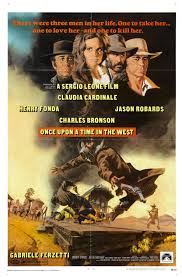
Twain was Here
There is no doubt Virginia City is the best known of the early Nevada mining towns. This is where it all began. It’s difficult to properly and adequately describe all that happened in the city that gave birth to the fabulous history of Nevada’s gold and silver mining processes. To say there is much to see, appreciate and understand from a visit to Virginia City is an understatement. If one has sufficient interest in what the town has to offer, be prepared to spend some time there. It will be time well spent for Virginia City is neither dead nor abandoned.
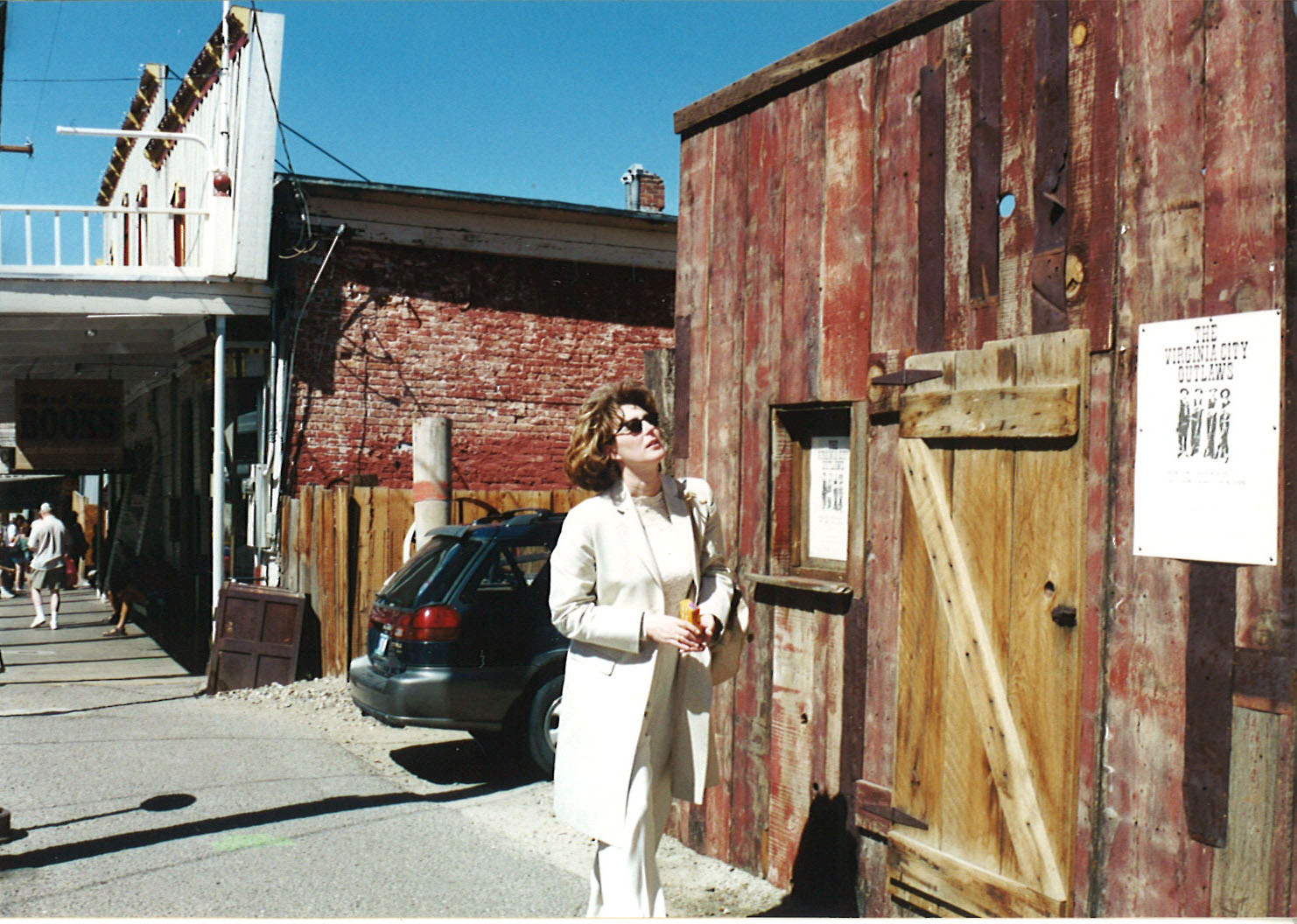
Doing Research in Virginia City, Nevada
This Day…
Looking Like Lillian Russell
Condensed milk was invented by Gail Borden in 1853. After one bad invention followed by another, he finally hit on the idea of food concentrates as an economical way to safeguard the food supply. He once said he conceived the notion by observing his wife adding sugar to her milk to keep her full-figured voluptuousness, a sign of beauty and wealth at the time. Lillian Russell had the full-figure look women tried to emulate. Before, milk was shipped in unsanitary oak barrels, and its spoiled quickly. Although he didn’t invent the tin can, his marketing skills in effect launched the canned food industry. Canning food diminished the possibility of food-storage spoilage, subsequent short supplies from the whims of natural elements, and contamination by vermin. He died in Borden, Texas, of gastrointestinal flu (possibly from drinking from a dented container) in 1874 and had his body packed in a tin can of a railroad car to be buried in Woodland Cemetery in New York.
Lillian Russell added sugar to everything she ate or drank.
This Day…
The Rebel
Actor Martin Sheen said of James Dean, “There were only two people in the fifties: Elvis Presley, who changed music, and James Dean, who changed our lives.” It’s an amazing assessment, considering that Dean died midway through the decade. In fact, he was in Hollywood less than two years and made only three movies, two of which – Rebel Without a Cause and Giant – had yet to be released when he died. The car crash that killed him rated only four short paragraphs on an inside page of The New York Times. But the West Coast newspapers knew better. Their front-page banner headlines above a picture of his crumpled Porsche was more attention that Dean had ever gotten when he was alive. But it was merely a hint of the legend that would follow, unfettered by the bounds of living human subject. “You Haven’t Heard the Half About James Dean, by Natalie Wood” and “Here is the Real Story of My Life – by James Dean As I Might Have Told It to Joe Archer” were two of the early postmortems in the movie magazines. The 24-year-old achieved immortality a few days after he completed filming Giant, a sweeping epic that, rising state that he was, matched him with Elizabeth Taylor and Rock Hudson. Dean had taken an interest in race-car driving, but Warner Brothers had forbidden him to race during the filming. On a Friday, the day after a party celebrating completion of the movie, Dean and one of the film’s stunt men headed for a weekend racing event. Dean was driving his new gray Porsche that he had bought for $7,000 a few days before. The car was capable of doing 150 miles per hour, and Dean named it “The Little Bastard. About 3:30 that afternoon Dean got a speeding ticket outside of Bakersfield, California. A little over two hours later, as he was driving west on a rural two-lane highway. Dean saw an east bound car slowing at an intersection, apparently to turn left across the highway. “That guy’s got to stop,” Dean told his companion. “He’ll see us.” But Dean’s gray Porsche blended into the late afternoon twilight. The impact tore open the hood and trunk on the little sports car and crushed the driver’s side of the car. Dean died almost immediately; his passenger was thrown from the convertible and seriously injured. The driver of the other car, a 23-year-old college student, received minor injuries. In one of those classic ironies, Dean had filmed a commercial for safe driving while on the set of Giant. “People say that racing is dangerous, but I’ll take my chances on the track any day than on the highway.” Dean, slouched in a chair and toying with a small lariat, had mumbled in his style. “Take it easy drivin’, uh, the life you might save might be mine, you know?” 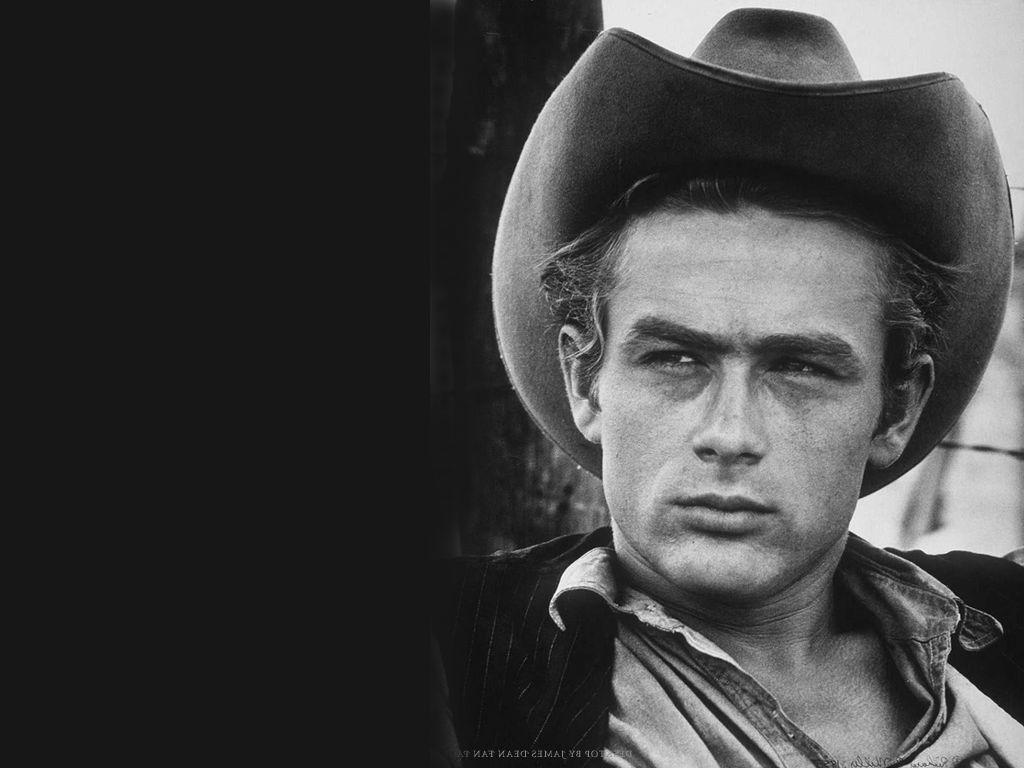
This Day…
This Day…
1633-Massachusetts Bay Colony settler John Oldham leads a group inland to the Connecticut Valley; they spend the winter at Wethersfield, Connecticut. Meanwhile, William Holmes of Plymouth Colony has been commissioned to erect a trading post on the river, above the Dutch post at Hartford. The movement west underway.
Lady Lawyer
Mary Ann Shadd Cary was an educator and abolitionist. She was the first black woman to graduate from Howard University Law School and the first black woman to vote in a federal election. She helped President Lincoln enlist black men to fight for the Union and her house was frequently a safe haven in the Underground Railroad for slaves fleeing the South. After the war she became a school principal, and then a lawyer in Washington, D.C., at the age of sixty. She died in 1893 at age seventy from heart failure, with an estate valued at $150. 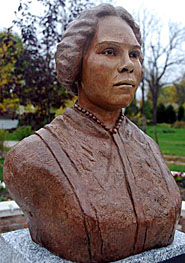
Howard Kazanjian and the Wild Bunch
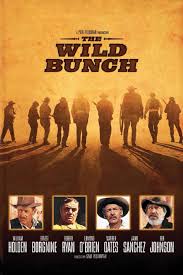
For a number of years I’ve been working with Executive Producer Howard Kazanjian. Today I thought I’d share a little of the life and career of Kazanjian. He’s a gifted film executive and his stories of Hollywood are fascinating. Movies affect large masses of people – as art, as entertainment, as a method of wide-scale dissemination of fact and opinion. Making movies offers a means of involving the mind and body in creating something that will have a direct and powerful effect on those who see and hear it. Creating such a powerful effect was the motivating factor behind Howard Kazanjian’s entry into film making. Over the course of his thirty-five years in the motion picture industry, Kazanjian has worked with some of Hollywood’s most influential actors and directors. Whether he was acting as an assistant director on such cinematic classics as The Wild Bunch, or producing movie masterpieces like The Bridge of San Luis Rey, Kazanjian has been dedicated to moving audiences through film. A graduate of the University of California Film School, Kazanjian was hired to work for a major studio as he completed the school’s assistant director training program. His exceptional talent and natural flare for directing caught the attention of his instructors and the film executives at Warner Brothers Pictures. One of the first projects Warner Brothers signed him to work on was The Wild Bunch with cantankerous director, Sam Peckinpah. Kazanjian’s first learned he had the job working with Peckinpah after he was summoned to the man’s office. “I was on time for our meeting,” Kazanjian said, “but Peckinpah wasn’t there. I waited in the outer office next to a bank desks where three secretaries were seated. I had a direct view into the opened door of Peckinpah’s massive office. I stepped into the room after getting the nod from one of a secretary’s to do so and was met by a doctor and a nurse who told me to ’drop my pants.’” The physicians gave Kazanjian a series of shots, typically administered to people set to travel out the country. It wasn’t until that moment that Kazanjian knew that Peckinpah had agreed to let him work for him. Kazanjian journeyed to Mexico to help scout locations for the film shoot, barely having enough time to buy a pair of wrangler jeans and a pair of boots before he left. The mood among the crew already on the sight was tense. Peckinpah had fired a number of staff members associated with the production and many of those that remained weren’t sure how long they would be keeping their jobs. Peckinpah was tough on the crew. “He liked making people feel uncomfortable,” Kazanjian said. Often the crew would learn they had been fired when Peckinpah’s production manager passed them on the set and told them that ‘their replacement’ had arrived. Eventually, 75% of the crew would be fired. Peckinpah tolerated Kazanjian until he felt he the young talent had proved himself. He carefully followed Peckinpah’s instruction and held his tongue when the volatile director made outrageous demands. “Sam liked to sit for two or three hours and studying a location until he figured out how hw wanted to shoot the scene,” Kazanjian recalled. “One of the scenes in the movie was to be filmed on a high bluff over looking a great expanse of desert. When Sam reached the area he was immediately upset. Through gritted teeth he shouted for me and I hurried over to him. The crew knew something was wrong and moved in a bit to hear. ‘Didn’t I tell you I wanted this valley to be greened in before we filmed here?’ Sam asked Kazanjian. “I knew he hadn’t said anything about this previously, but I didn’t argue. I had learned by now to just say, “Coming, Sam.” We had a water truck with us all the time, and I asked special effects to mix the water in the vehicle’s tanks with green die, which fortunately we had, and sprayed the area. I just got busy fixing the problem.” In a matter of a few hours the desert floor was slightly green closest to the camera. Kazanjian’s time working on The Wild Bunch was a true educational experience for him. Not only was he able to glean valuable filmmaking techniques from Peckinpah, but he learned life and work lessons from the cast as well. “William Holden and Ernest Borgnine were gifted actors who knew their craft. Sam yelled at them as much as anyone else on the set though. The only person he never yelled at or tore apart was Ben Johnson. Ben was like a father to me. He was kind and gave great advice. Advice he lived too. He told me that a person should have a second job they can fall back on in case the first job as an actor didn’t pan out or if there were dry spells.” Still photographers, grips, electricians, crew members, assistant directors, extras and key personnel came and went during the filming of The Wild Bunch, but Kazanjian stayed. Peckinpah believed the assistant director was capable and dependable, but any real respect he had for him came towards the end of shooting the movie. “We were getting ready to film a pivotal scene in the movie where a bridge is dynamited and the bounty hunters on horse back fall twenty feet down into a raging river,” Kazanjian explained. “Sam was on a barge with a film crew in the middle of the racing waters filing the last shot in the scene, the last shot of the day, the last day of shooting the picture. Sam’s barge was tethered with a cable to each bank of the river. I was on the bank with another camera filming the scene. After the shot, as the barge was being pulled towards shore, I called out to the crew near me to cut the cable! Sam immediately yelled, “Who said that?” When told, Peckinpah got off the barge laughing. He patted his assistant on the back and applauded Kazanjian for his spunk. After the film was finished and Sam returned to the studio, whenever the two met, Peckinpah would greet Kazanjian with a hug and a reflective smile. The end result of the film they had made together was an Academy Award winning, western classic. Kazanjian’s experiences working with celebrated directors like Alfred Hitchcock, George Roy Hill, and Billy Wilder provide keen insight into the filmmaking process and are as enjoyable as they are informative. Kazanjian association with such greats and his longevity in an industry that changes executives nearly every day has made him a legend in his own right.