1877-Crazy Horse, chief of the Oglala Sioux, is bayoneted by a soldier at Fort Robinson in Nebraska after pulling a knife upon learning he was to be imprisoned. Crazy Horse dies of his wounds a few hours later. He is about 35 years old.
Bad Enough for a Good Hanging
My new website will be launched in November. Visitors will feel more like they’ve stepped in time to the Old West when the site is up and running. Until then…A row of sturdy boxes was placed under the improvised gallows. The condemned men were made to step up on them and nooses were adjusted on their necks. Each man faced death in his own fashion. Plummer Gang member Jack Gallagher alternately cursed, grinned and cried. He asked for a slug of Valley Tan, Virginia City’s most popular whiskey. The fiery drink down he showed his usual bravado with a flip query, “How do I look in a necktie, boys?” Another gang member Boone Helm was at first silent but just before the end he shouted, “Every man for his own principles! Hurrah for Jeff Davis! Let her rip!” Then someone called out, “Boys, do your duty!” The boxes were yanked out from under the hapless men one by one, and each dropped to his death. Virginia City, Montana, may well hold the record for mining camp lawlessness and vigilante violence in attempts to control it. With the hanging of the Plummer gang at Bannack, the similar fates of George Ives at Nevada City and several more criminals and road agents, most of those selected by vigilantes for quick exit were disposed of. But there were six bad ones left and on January 13, 1864 they were marked for capture. One, Bill Hunter, played a hunch and departed via a drainage ditch. The escape was futile however as he was later tracked down and hanged in Gallatin Valley. Vigilante Thomas Dimsdale later wrote of the others. “Frank Parrish was brought in first. He was arrested without trouble in a store and seemed to expect death…Club-Foot George was arrested at Dance and Stuart’s…Boone Helm was brought in next. He had been arrested in front of the Virginia Hotel…He quietly sat down on a bench and being made acquainted with his doom, he declared his entire innocence…Helm was the most hardened, cool and deliberate scoundrel of the whole band…murder was a mere pastime with him. He called repeatedly for whisky and had to be reprimanded for his unseemly conduct several times. Jack Gallagher was found in a gambling room, rolled up in bedding with his shotgun and revolver beside him…Lyons had come back to miner’s cabin on the west side of the gulch above town…The leader threw open the door and bringing down his revolver said, “Throw up your hands.” Lyons had a piece of hot slapjack on his fork but dropped it instantly and obeyed the order. Although Lyons was graciously given permission to finish his breakfast, he declined, saying, “I lost my appetite.” At the “trial” all five strongly protested their innocence but the evidence of crimes committed was overwhelming. Helm’s offenses even including cannibalism. All were condemned to death by hanging, a foregone conclusion. Justice was carried out promptly for fear some or all of the prisoners might escape with help from sympathizers. There being no time for the erection of a suitable scaffold, ropes were strung from a handy beam in an unfinished building on Wallace Street and Van Buren, the hangings performed as given above. When all ceased jerking they were cut down and laid in a row in the street. 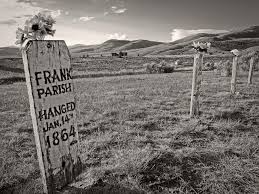
Murderers in Missouri
Before they took my brother’s life they said he had a criminal background. They lied and they took his life anyway. Clinched tightly in my fists are bitterness and resentment over the injustice that was done. I hold onto those emotion so tightly in hopes that the hatred will drown my sorrow. This is how it feels when the sacred is torn from your life and you survive. 
This Day…
Lottie & Bernice

This Day…
Countess Montez
Lola Montez was one of the more flamboyant figures of the gold rush days. She came to California by way of Ireland (where she was born), the music halls of London and Paris (where she danced), and the castle of Louis I Bavaria, which she had to vacate in ‘48 when the revolution drove Louis off the throne. The dark-haired beauty set herself up in royal style in Grass Valley, but the more conservative elements in the mining center rebelled against the soirees the ex-royal mistress ran. Lola, who was also a princess, courtesy of Louis, threatened to horsewhip an overcritical editor and then packed up and decided to try Australia. She spent her last days in New York saving the souls of lost women. It was a field she knew well. For more information about Lola Montez and other women of the California’s Gold Country read With Great Hope: Women of the California Gold Rush. Visit www.chrisenss.com.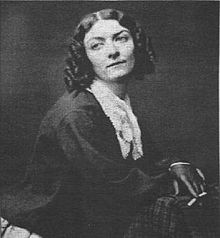

This Day…
Mr. Ferris
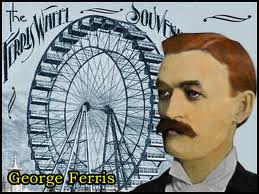
The second edition of Tales Behind the Tombstones isn’t scheduled to be released for a year, but I couldn’t resist sharing one of the tales now. The symbol of the Chicago World’s Fair of 1893 was a giant 250-foot steel wheel, designed and erected under the supervision of George W. G. Ferris, Jr. It had 36 wooden seats that allowed 1,440 to ride at a time, taking them 25 stories above the fair at a then-exorbitant price of fifty cents apiece. The wheel was considered a wonder of technology and made Ferris, a former bridge inspector, a famous and a wealthy man during its heyday. But in 1896 he was worried about where future money would come from and, some believed because of his stress contracted typhoid fever. He died five days after its onset at age thirty-seven. Reports suggested that it was suicide, since his wife had left him three months before and he was apparently heartbroken and depressed. The wheel was moved and reassembled in New Orleans for the 1904 fair. However, two years later, what many felt was the American Eiffel Tower was dynamited, its rusted spokes buried in a landfill. Ferris’s name still stands on thousands of rides as a legacy-ironic that, since no one ever came to claim his cremated ashes.