
There was an art to organizing a great posse. There was more to it than just calling on a few buddies to bring their horses and guns and join in on a long ride to find the bad guys. The business of putting together a great posse fascinates me and that’s why I decided to write about the subject. A lot of what lawmen like Charles LaFlore and Bill Tilghman knew about forming a smart posse was common sense. Which oddly enough is not so common. The same ideas that were used to organize a posse can be applied in business. No one knew that better than detective Allen Pinkerton. The Pinkerton National Detective Agency, founded in the 1850s, is still in existence today. Wish I would have researched this topic before I invested all my cash in that Christmas present opening service. 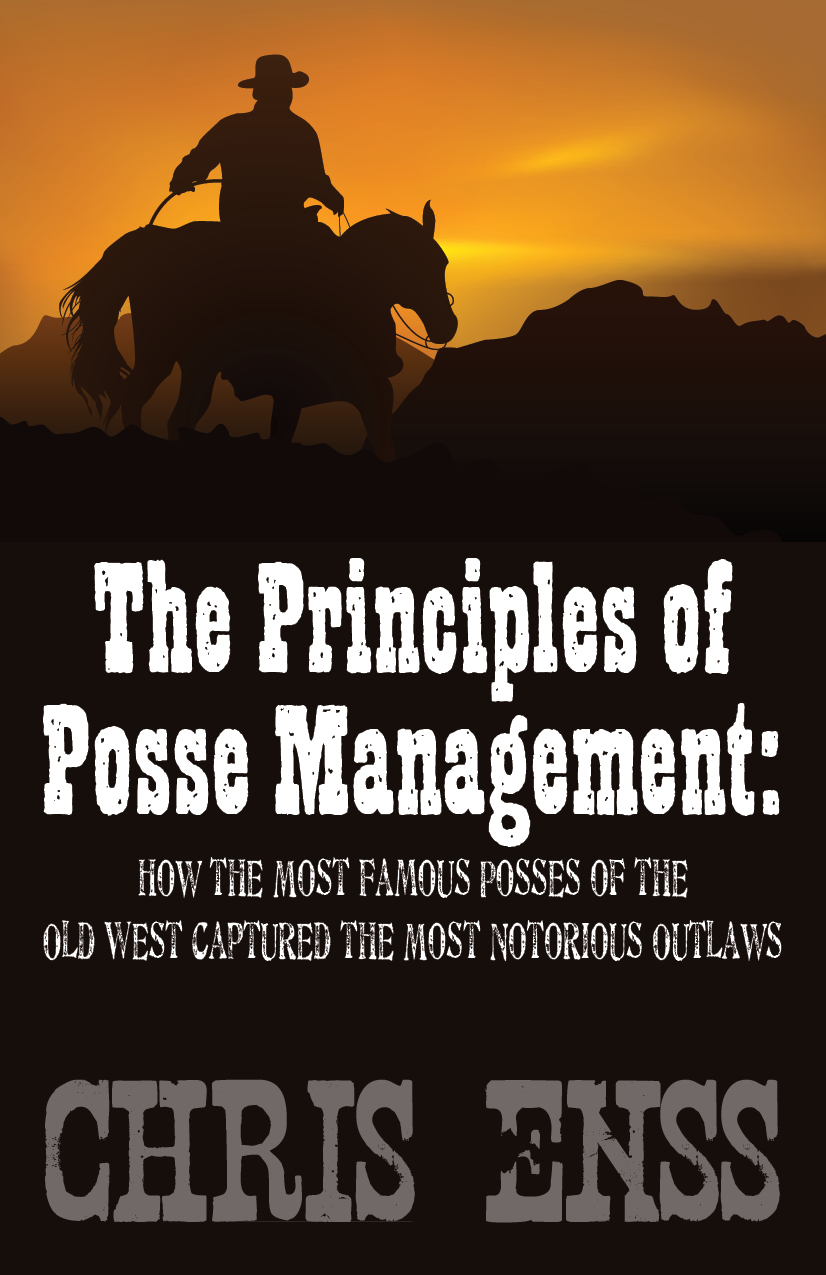
This Day…
The Sons of Mrs. Bixby
President Lincoln wrote this letter after an aide told him about a Boston widow whose five sons had been killed fighting for the Union armies. As Carl Sandburg wrote, “More darkly than the Gettysburg speech the letter wove its awful implication that human freedom so often was paid for with agony.” Here is an American president understanding that agony, sharing it, and performing a heartfelt rite, as Sandburg put it, “as though he might be a ship captain at midnight by lantern light, dropping black roses into the immemorial sea for mystic remembrance and consecration.” In a letter dated November 21, 1864, President Lincoln wrote the following to Mrs. Bixby in Boston, Massachusetts. “Dear Madam, I have been shown in the files of the War Department a statement of the Adjutant General of Massachusetts that you are the mother of five sons who have died gloriously on the field of battle. I feel how weak and fruitless must be any word of mine which should attempt to beguile you from the grief of a loss so overwhelming. But I cannot refrain from tendering you the consolation that may be found in the thanks of the republic they died to save. I pray that our Heavenly Father may assuage the anguish of your bereavement, and leave you only the cherished memory of the loved and lost, and the solemn pride that must be yours to have laid so costly a sacrifice upon the altar of freedom. Yours very sincerely and respectfully, A. Lincoln.” We now know that Lincoln had been misinformed: two of Mrs. Bixby’s sons had been killed in action, one was taken prisoner, and two deserted. The error does not stand in the way of the letter’s deserved fame. Mrs. Bixby’s loss and sacrifice hardly could have been greater. Lives are still being lost to save a nation. 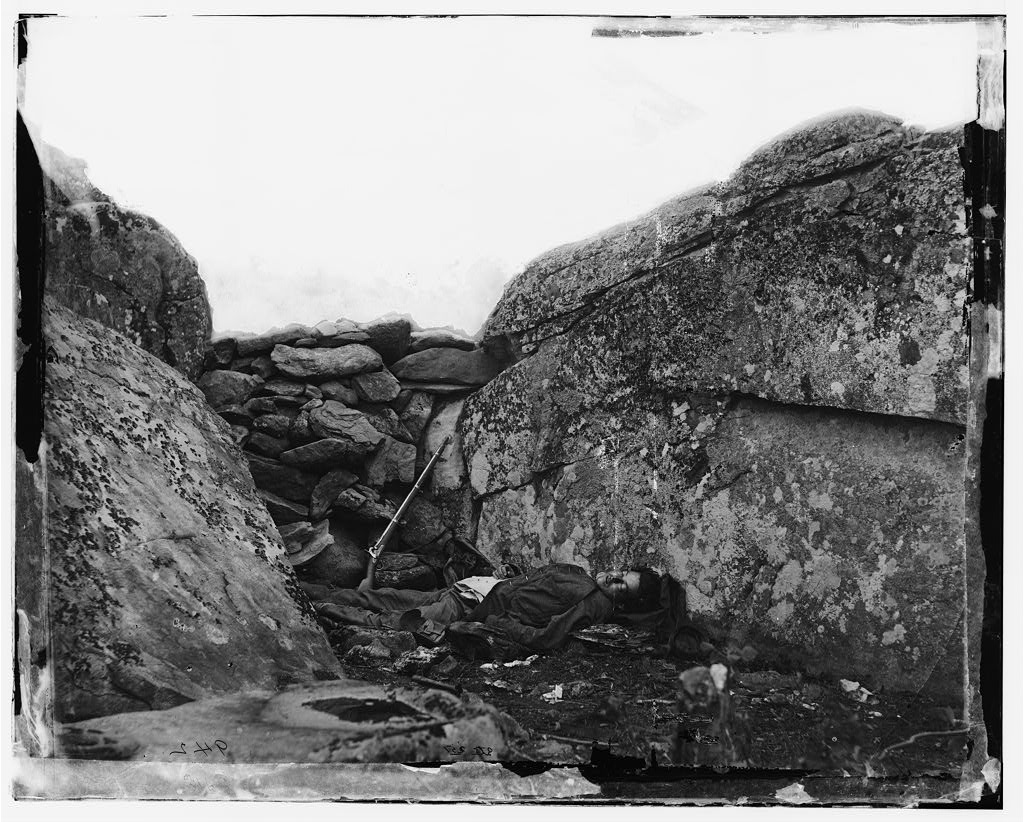
This Day…
Frontier Dieting
It might seem as though the idea of exercising and eating right was a notion unheard of prior to the 21st century, but that’s not the case. According to the December 9, 1882 edition of the New York Medical Gazette, women physicians, however rare they were at the time, subscribed to the belief that a “healthy diet and a brisk turn about the neighborhood is good for the mind and body.” I personally don’t care how far back the idea of exercise and eating right extends. I hate to exercise or eat right. When I think about it, the only exercise program that has ever worked for me is occasionally getting up in the morning and jogging my memory to remind myself exactly how much I hate to exercise and to pick up another box of Cap’n Crunch next time I venture out of my office. Walking? Walking? If it’s so good for you, how come my mailman looks like Jabba the Hut with a quirky thyroid? But I digress. In the summer of 1882, a patient who wanted to lose weight visited Doctor Phyllis Groussin of Denver. Doctor Groussin put the 252 pound woman on a brown rice only diet and told her to march around her the neighborhood twice a day. After a week the dieter returned to the doctor complaining of “giddiness, headaches, difficulty in walking, and a want of accuracy in manual movements.” Fearing apoplexy, Doctor Groussin turned all her attention in that direction and prescribed purgatives, mustard footbaths and bicarbonate soda to dilute the blood. The doctor found out by accident that her patient was mixing the footbath water with whiskey and drinking it. The patient thought the concoction would help her in her efforts to “march around the neighborhood.” Now that’s a fitness goal. If you’re interested in learning more about women physicians of the Old West read The Doctor Wore Petticoats. Visit www.chrisenss.com for more information. 
Murder at the RoundHouse
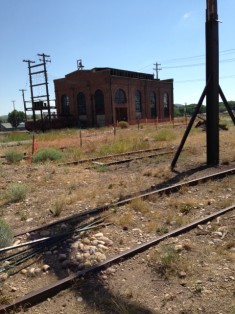
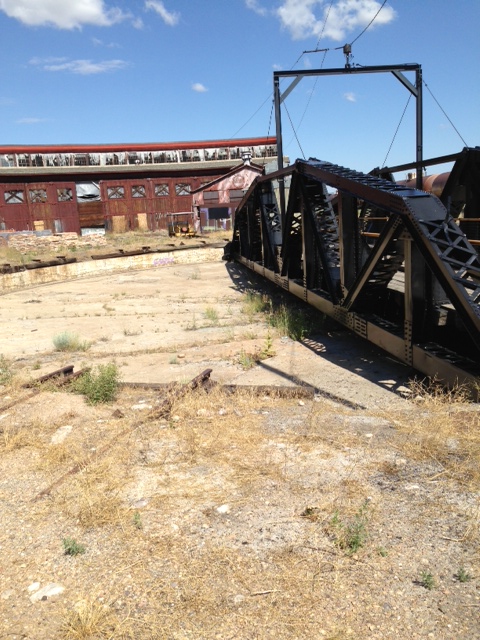
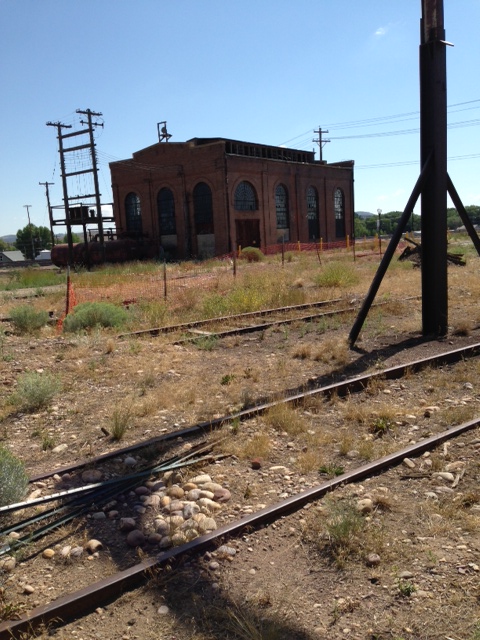
In 1910, a murder took place near the Union Pacific roundhouse in Evanston, Wyoming. I’ve been researching the details of the crime for more than five years and have uncovered some crucial background information on the murder victim and the man hanged for his killing. I recently made a trip to the roundhouse to try and pinpoint the exact location of the murder and it was like stepping back in time. A portion of the roundhouse has been beautifully restored, but the area where the train engines had to be taken for repairs as well as the spot where the engines were turned around on the track still stands in all its original glory. The man who paid the ultimate price for the felony didn’t act alone. Readers will have to wait until next year to find out what happened at the roundhouse and who was involved. It was an Old West mystery I was pleased to investigate. Playing for Time: The Death Row All Stars will be released in 2014 by Globe Pequot Press.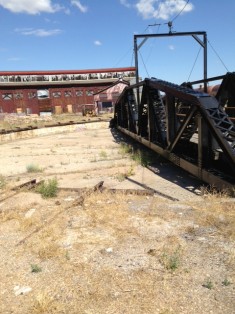
This Day…
1867-The Sioux and Cheyenne continue their war against the US Army forts stationed along the Bozeman Road. More than 500 Cheyenne warriors, led by Dull Knife and Two Moon, attack about 30 soldiers and civilians working in a hayfield near Fort C.F. Smith. In what becomes known as the Hayfield Fight, the defenders drive off the Indian attack with breech-loading Springfield rifles.
Alone at Fort Steele
While traveling to Rawlins, Wyoming from Salt Lake City I stopped at a spot that used to be a bustling army fort from 1868-1886. Fort Fred Steele was established by Major Richard I. Dodge, 30th U.S. Infantry in Carbon County, Wyoming. Dodge named the fort after Colonel Frederick Steele of the 20th U.S. Infantry. Fort Steele was one of three military forts designed to protect the Union Pacific Railroad route through Wyoming. It was established at a strategic point where the railroad crossed the North Platte River. Original military structures at Fort Steele included a commanding officer’s quarters, two large warehouses, a powder magazine, two enlisted barracks and a number of smaller structures. After the post closed in 1886 a small community grew up in and around the abandoned fort. In 1922 the transcontinental Lincoln Highway was routed right along the edge of the fort but it was rerouted in 1939 and the town faded away. There were no other tourists around the day I visited Fort Steele. At times it was so quiet I could almost hear history. Then a 21st century train would come through and it drowned out any imagined sounds of the past. 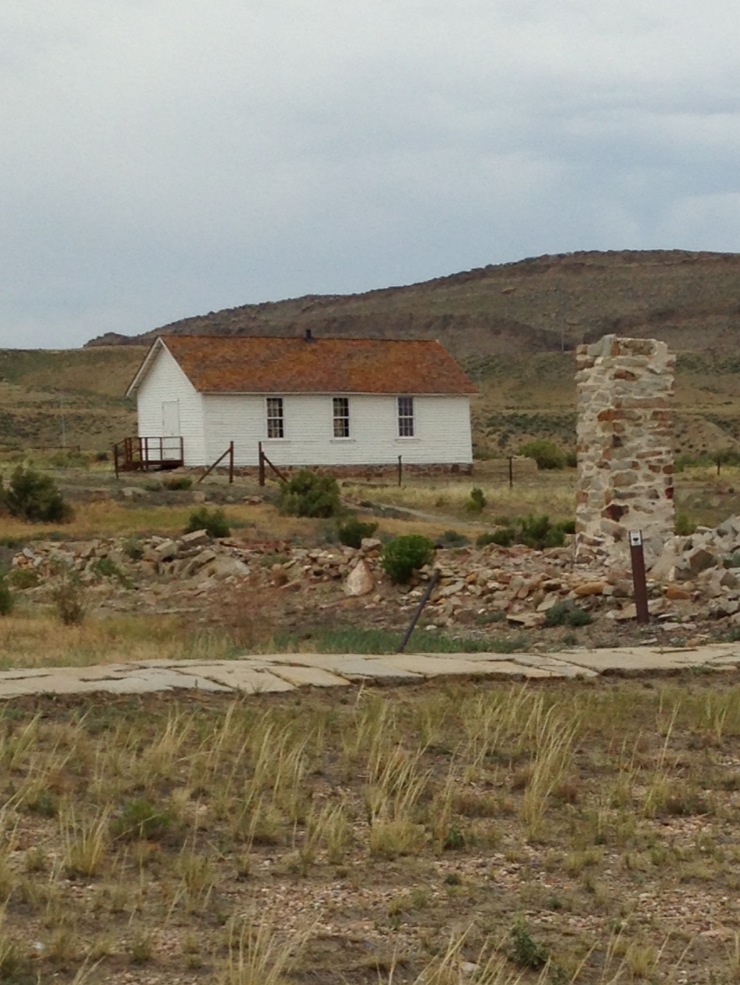
This Day…
Lost On the Oregon Trail
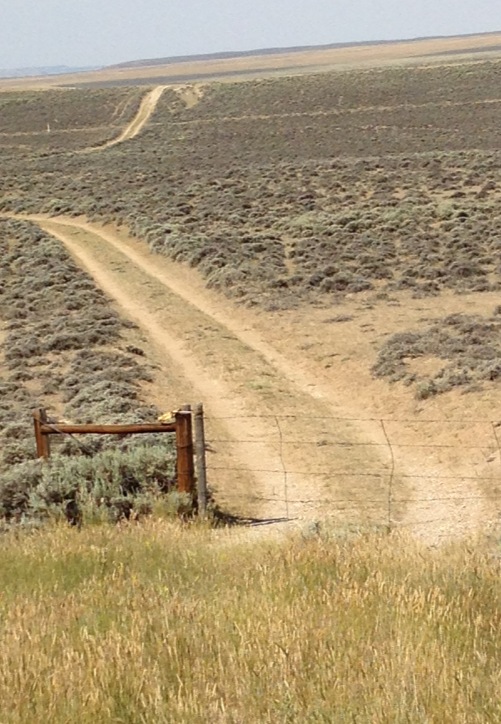
Wyoming and Montana are lovely states. Getting there — not so much. I got lost a couple of times while trying to locate the spot where a crime was committed in 1910 and needed help. I resisted asking for directions because often times the conversation begins with “You want to head north seven miles…” Head north?! I would but I left my compass back in, that’s right, the fourth grade. I’d be so much better off if folks would just point. And then there’s air travel. Flying anywhere has become an amazingly arduous process. I’m always stuck behind a guy who takes forever to get situated. He’s clogging the aisle like a piece of human cholesterol jammed in the passengerial artery. He folds his sport jacket like he’s in the color guard at Arlington National Cemetery. There’s a lot of terrorism in the air, but you know when you walk through the airport and see the crack security people manning the perimeter, I think we all sleep the sleep of angels. Can you hear my eyes rolling? In spite of the hassle it was a fruitful research trip. I stood at a section of the Oregon Trail and imagined the brave souls that traveled along the way. A little company of Astorians, fur hunters by trade, were the first to make out the long road down the valley of the Platte which became the primary artery of travel to and from the northern Rockies. I can’t imagine how difficult travel must have been in the early 1800s. I’m guessing they had compasses. That would have made it much easier for sojourners when they stopped for directions and a kind soul told them, “You want to head north seven miles.”
Oregon Trail