1865-In a romantic duel over the affections of Suzanna Moore Wild Bill Hickok shot Dave Tutt through the heart at 75 yards in the town square in Springfield, Missouri. Tutt fired first and missed.
They Wear Spurs, Don’t They?
One of the students in the Sunday school class I teach is an aspiring cowboy. With rare exception he comes to Bible study dressed as a cowboy. Corbin believes Roy Rogers is the finest movie cowboy he’s ever seen. I feel the same way. A few weeks ago Corbin and I had a serious discussion about whether or not Roy Rogers knew karate. I agreed that Roy Rogers was good with his fists, but that I’d never seen the King of the Cowboys deliver a side kick to the throat of a bad guy. Corbin was appalled. He insisted that not only was Rogers capable of performing a roundhouse to the temple, but did so in most every movie he ever made. I argued the point noting that the issue of the spurs strapped to Rogers’ boots would have seriously wounded anyone he battled. Roy Rogers might have been a little rough with outlaws, but he never cut them. Corbin said he did because the spurs were really Ninja fighting stars. So, I looked it up. A cowhand did not buckle on a pair of spurs until he’d filed the sharp rowels to make them blunt. Sharp rowels made a horse nervous and Roy Rogers could never have reached the bad guy’s hideout on a nervous Trigger. Spurs were used to signal quick action to a horse, not for cruel gigging or cutting the throat of an outlaw. I can’t wait to talk to Corbin further about this matter. At five-years-old he thinks he knows everything. 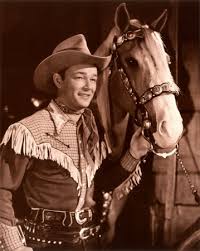
This Day…
Young Out West
Brigham Young became an explorer and hero to many when he embarked on the best-organized westward migration in U.S. history in 1847. Motivated by a vision to find a safe haven for his religious ideas, he brought the Mormon Church to Utah and, in so doing, helped shaped the American West. When he came upon the Great Salt Lake Valley, he said, “It is enough, this is the right place.” For thirty years he supervised Mormon settlements in Utah, Nevada, Idaho, Wyoming, Arizona, and California. Before Young died at the age of seventy-six in 1877 of acute appendicitis, he had more than fifty wives.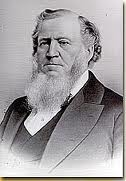
This Day…
1870-Wild Bill Hickok got into a drunken brawl with five troppers of the 7th Cavalry in Drums Saloon in Hays City, Kansas. When the five of them threw him to the ground and started kicking him Hickok pulled his gun and shot two of them. One died the next day and the other recovered. Hickok wisely skipped town.
Pioneer Hero
Daniel Boone, America’s most famous pioneer hero, had set off into a hostile world without roads, toting only a flintlock musket and a knife; the region was so wild he reportedly killed over ten thousand bears while he surveyed and settled vast virgin wildernesses of Kentucky, West Virginia, and Missouri. In 1820, at the age of eight-five, Boone west on his final hunting trip near his home in St. Charles, Missouri, caught pneumonia, and died. Although he spent his life in the woods and claimed a lot of property for himself and family, he lost it all to the slick dealings of investors using issues of unclear titles and creditor’s liens to strip him of all but his name. His funeral was held in his son’s barn instead of the house; hundreds showed up unexpectedly to pay their respects. Many remember a TV show that portrayed Daniel Boone wearing a coonskin cap. He actually wore a felt-brim hat in the Quaker style now seen on boxes of oatmeal. The TV theme song: “Daniel Boone was a man. Yes a big man. With an eye like an eagle and as tall as a mountain was he,” was also a stretch. Boone was 5 feet 8 and weighed about 175 pounds. He did have a keen and active mine and stayed physically fit, a fact that kept him alive long after what he currently considered retirement age.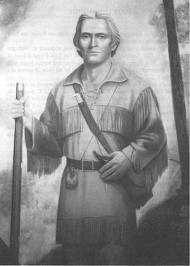
This Day…
Missing Bronson
You’re walking home from Jamba Juice one evening, you’re stopped by a young drifter who wants directions-and a smoke, if you have one. You don’t. You’re sorry, but you don’t smoke. Okay, he says. And as you walk away, he shoots you in the back of the head, your half-eaten, strawberry-banana smoothie with the shot of vitamin Q and your left eye spattering a young man twenty yards across the street. Shortly thereafter, the police happen to pick up the drifter for jaywalking, and find him with the still-warm gun in his pocket and your still-cold smoothie in his hand. He is then identified by the young man and arraigned. But then, as you watch-perched on a fluffy cloud in heaven-the legal system starts to kill you all over again. The gun isn’t admissible as evidence because it was found without probable cause. After all, they had only stopped him for jaywalking at that point. And the young man is discredited as an eyewitness because he usually wears glasses, and that dusky night he wasn’t wearing them, the truth being, he just needs them for reading. Besides, the defense attorney reveals, he lives in a neighborhood with an abortion clinic, and what does that make him? Plus, this fellow who shot you-his attorney will tell you he was once taken advantage of by one of the employees at Jamba Juice and you were taunting him with your smoothie. Now, as you stand there next to Charles Bronson in the great beyond (that’s one of the first souls I hope to meet there) and watch this cruel and ironic Catch-22 unfold – this insane sequence of events that leads up to the dismissal of all charges against the drifter who ended your life on that fine summer evening-as you watch this bizarre, almost synaptic set of occurrences fall into place like a chain of perverse dominoes that has been kicked over by Eric Holder-all you can think to yourself is, “Hey, I know where I’ve seen this before! Mouse Trap! And if you think I am stretching it with that little parable, well just look at the newspaper this past week. Most of the population thinks the only thing that’s happening in the world is the Trayvon Martin case, but last Tuesday, two hundred forty pounds of cocaine was disallowed as evidence in a drug case because the trooper who found it stopped the suspects’ car for failure to display a front license plate. The case was thrown out because, legally, Pennsylvania only requires a rear plate. Well you know something? That’s just exquisite bologna. And I know. I eat a lot of bologna for lunch. I also know that every ACLU hysteric who might be reading this is now jumping up on their desk screaming, “Rules of evidence! Rules of evidence!” But I think I speak for the general public when I say, “Take your nit-picking neurotic little rules of evidence and stick them up your understanding noses,” because quite frankly, I haven’t seen judgment this bad since I lost to that petite, Meg Ryan look-a-like on “Search for America’s Funniest Person.” Yeah, yeah, not that I dwell on that. The frightening reality is every day this society seems to make its legal decisions in much the same way the Archies picked their vacation spots-blindfold Jughead, give him a dart, and spin the globe. The whole system is maddening! And I know some of you are thinking, “doesn’t she usually write about the Old West?” Hey, I mentioned Charles Bronson. 
This Day…
1865-Ill feelings between Dave McCanles and Wild Bill Hickok culminated in the shooting death of McCanles at Rock Creek Station, NE. When they ran to help McCanles Hickok also shot and wounded James Wood and James Gordon. The station manager, Horace Wellman chased Woods down and hacked him to death with a hoe. Station hand Doc Brink finished Gordon off with a shotgun.
The Big Trail
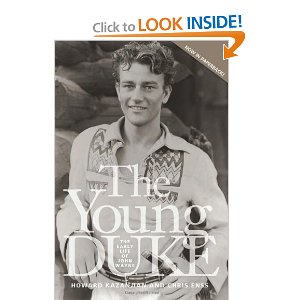
Several years ago I was given the opportunity to do an interview with a production company that provided the ‘extras’ on the DVD release of The Big Trail. The book I had written about John Wayne entitled The Young Duke had been released a few months prior to the DVD hitting the market and that’s what led to the opportunity to speak about Wayne and The Big Trail. In 1930, Raoul Walsh was preparing his wagon train epic, The Big Trail. In the lead roles of scout Breck Coleman, Walsh cast 23-year-old unknown prop man and bit-part player, Duke Morrison, after Tom Mix and Gary Cooper had turned it down (Cooper starred as scout Clint Belmet in Paramount’s almost identical Fighting Caravans the following year). The Big Trail tells the story of a wagon train of pioneers who trekked from the banks of ‘The Big River’ – the Mississippi – to the Promised Land of Oregon, 2,500 miles away, and details their surmounting of hazards en route. Scout Breck is also looking to exact ‘frontier justice’ on the killers of his best friend – the train’s bullwhacker Red Flack and his sidekick Lopez are the culprits. Flack is a memorable characterization by Tyrone Power Snr., a snaggled-toothed, bullwhipping monster with a face like a bear trap. The making of The Big Trail was chaotic, with filming taking place across Arizona, California, Utah, Wyoming and Montana. For part of the shoot, Morrison had dysentery. Marguerite Churchill, his beautiful leading lady, remained only intermittently beautiful between bouts of chronic acne; and most of the cast got drunk. The logistics for such an epic $2 million production involved coordinating hundreds of extras and props, including dozens of heavy, ox-drawn Conestoga ‘prairie schooners’ (so called because of their boat-shaped hulls). In one scene the wagons descended sheer cliffs on primitive pulleys (filmed at Hurricane Bluffs, Zion National Park); in another, they ford a swollen, muddy, storm-lashed river. The film was shot in two different formats – 35 mm and 70 mm widescreen “Grandeur”. The 70 mm print of The Big Trail was exhibited at 158 minutes in only two cinemas in Hollywood and New York, while everywhere else showed the 125-minute version in 35 mm. Unfortunately, The Big Trail was a big flop. Wayne was soon dropped by Fox and the action from the film was sold to Republic, where many a B-movie hero subsequently fell under stock footage Indian attack. Viewed today, with its impressive sweep and scope, The Big Trail remains one of the great early westerns. For more information about The Young Duke visit www.chrisenss.com.