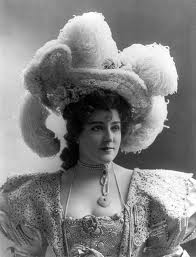
Annie Ripley, Elizabeth Fry, & Sara Haight
A Bride in Yosemite
At the turn of the century Yosemite Valley, in particular the area known as Bridalveil Falls, was referred to as the “show place of the Sierras.” Artists from every medium thought the falls cascading down more than six hundred feet of rock wall into the valley to be so beautiful that it was considered selfish for anyone who looked on the splendor of the setting not to share the pleasure with others using whatever talent they were given. Among the many famous guests who visited the most prominent waterfall in the Yosemite Valley were General Ulysses S. Grant, Horace Greely, General William T. Sherman, and Ralph Waldo Emerson. Naturalist John Muir entreated the public to visit the spot often. According to his memoirs he challenged park patrons to “climb the mountains and get their good tidings.” He assured them that “nature’s peace will flow into you as sunshine into trees.” 1
It’s not unusual that couples chose the stunning Bridal Veil Falls as the backdrop for their nuptials. The first bride to plan her wedding at the spot was a prominent young woman from Los Angeles. According to the August 6, 1901, edition of the newspaper The Boston Globe, the ceremony was “so incredible it defied description and started a trend in civil unions held at the majestic National Park.” The momentous occasion highlighted in The Boston Globe article was duplicated by hundreds of betrothed couples in the early 1900s. “With a mighty altar and the generous diapason of an incomparable waterfall furnishing the melody of a bridal march Miss Annie Ripley of Los Angeles and Henry C. Best of San Francisco were wed in the valley a few days ago,” The Boston Globe article continued. “It was the first marriage ceremony performed in Yosemite, and for solemnity and picturesqueness it was surpassingly notable.” 2
One hundred guests of the bride and groom were present and walked with them over trails and under trees to the place where the water crashed upon the rocks beneath the towering cliffs on either side of Bridalveil. “The day was a superb one and the scene one of matchless beauty,” The Boston Globe article continued 3
“Miss Ripley was prettily attired in a mountain costumes and the man who was to be made her husband had set aside the customary garments and wore camping attire as well. Their look was fitting for the setting.
The Yosemite populace made a holiday of it all. Men and women were brilliantly dressed and formed an attractive group when they arrived at the base of the falls a half an hour before noon. The Bohemian string orchestra was in attendance and rendered exquisite melody from a natural choir loft on a gigantic rock.
As the prospective bride and groom walked toward the altar-like stone on which the ceremony was to take place the orchestra began the melodious wedding march. The music of the stringed instruments at times was lost in the roar of the falling water, and the efforts of the well-intentioned melody makers were almost futile in comparison with the strength of the storm of sound nature had provided.
At the rock altar stood Rev. Walter Freeman of Portland, Maine, who was a guest at the hotel in the valley. The bridal couple passed through the semi-circle of friends and took their position before the clergyman. Miss Ripley was accompanied by Miss Helen Ripley, the bridesmaid, and Mr. Durrell attended the groom. The words of the marriage ritual were spoken, and Mr. and Mrs. Best returned to receive congratulations from friends, family, and witnesses.
The entire party then proceeded to the hotel where an elaborate wedding breakfast was served. Late in the afternoon Mr. and Mrs. Best left the valley in a stage profusely decorated with white ribbons. They would spend their honeymoon among the giant sequoias of the Mariposa big tree grove.
Henry C. Best was a well-spoken artist and was formerly employed by newspapers in San Francisco. He had come to Yosemite three months prior to paint scenery in the valley. He was a director of the Press Club in San Francisco.” 4
The scenic wedding of Annie Ripley and Henry Best was the first recorded ceremony performed at Yosemite, but William Chapman Ralston and his bride Elizabeth Fry were among the first to honeymoon at the park. The wedding journey from the Ralston’s villa in San Mateo County to Yosemite was written about quite extensively by wedding guests and Bay area newspapers. 5
On May 20, 1858, William Ralston, a banker, business owner, and investor in the Comstock mine, and debutant Elizabeth “Lizzie” Fry were married in San Francisco. He was thirty-two and Lizzie was twenty-one. According to the September 30, 1888, edition of the San Francisco Examiner, the afternoon wedding was held at the Calvary Church on Bush Street. “The church was crowded with their friends,” the newspaper article noted, “and the bride, a pretty brunette looked charming in a most becoming wedding costume. A short reception followed at the home of Mrs. Darling at North Beach, and then the ladies of the party donned Bloomer dresses and all departed for a honeymoon camping-out frolic in the Yosemite Valley.” 6
Sarah Haight, a member of the bride’s party, was among the guests to accompany the newlyweds to the park. She recorded in her journal that “three steamers, the Helen Hesley, the Sierra Nevada, and the Orizaba, carrying selected family and friends left the wharf at four o’clock in the afternoon.” “As the boats pulled away from the harbor,” Sarah continued, “hearty cheers were offered up to the happy couple and a salute was fired from the Sierra Nevada and the Orizaba. After traveling five days, first by steamer and then donkey, the wedding party passed through a cave which deposited the sojourners at the mouth of a cave which spilled out onto the Yosemite Valley. Looking up at the rock the stone formation around resembled a theatre with its side scenes. There were grotesque faces and bats and owls carved in rock, but when you change your position the resemblance would vanish.” 7
Sarah described the wildlife in the area which included a variety of birds, lizards, and fish. There were obstacles along the path that impeded their progress in some spots. Pine trees had fallen, and ferocious winds had covered crude trails with limbs and leaves, and little mountain brooks. At one point, Sarah, along with the bride and groom and other guests, tried to walk the steep ascent to the top of a mountain. After two miles they were too tired to go on and boarded their donkeys again. In the evenings the group slept in tents that were erected for them and dined on meals prepared over a campfire. “No supper that I ever ate tasted half so good as that one, the long ride having given us very good appetites,” Sarah wrote in her journal. 8
On the morning of May 25, 1858, William Ralston, his new wife, Sarah, and the other guests arrived at the foot of the mountains. Sarah remembered that it was one of the “most magnificent prospects” she had ever beheld. “The summits were so beautiful,” she wrote in her journal, “green level prairie with a little stream flowing through its midst and the trees were all like orchard trees. So cultivated did it look that we could scarcely believe that it was not cultivated. Above it on the opposite side toward a mountain covered with pine trees, and still beyond that rose another and another, range on range, and the last were covered with snow. How grateful the cold wind coming from the snow felt in the noon, and the snow was so pure and white that you could scarce distinguish it from the clouds resting midday on their sides. 9
Looking back of us we could see the coast range of mountains at a distance of two hundred miles and conspicuous among them was Mount Diablo. How that glimpse of the old veteran carried me home to my own room, where it is the first thing I can see on looking out of my window in the morning. 10
The road had been getting gradually wilder and the hills sterner. Immense granite rocks rest on the mountain above the trail with a threatening aspect. In some places they appear to have fallen and carried large pine trees along with them. In one place I saw where a large pine tree had torn up a rock in its fall, exactly as a dentist extracts a tooth with his pincers. These afternoon, when about two miles from the entrance of the valley, we saw the Bridalveil, the first fall in the valley. It looked like a silver thread in the distance and relieved the solemn grandeur of the surrounding hills,” Sarah recalled in her published journal. 11
After a short stop to enjoy the scenery, the wedding party continued on. “We rode through beautiful green meadows, under the shady branches of trees, and the fragrance of the wild honeysuckle was a pleasant exchange for the reflection of the sun’s rays from the great white rocks,” Sarah remembered in her journal. “We rode through beautiful green meadows, under the shady branches of trees, and the fragrance of the wild honeysuckle was a pleasant exchange for the reflection of the sun’s rays from the great white rocks. To the right of us was what is called a ‘Cathedral’ in the gothic style, and where could there be a church more magnificent? We rode on, at our left ‘El Capitan,’ a man wrapped in a Spanish cloak with a slouched hat. We drew rein on the banks of the Merced, where it was very still and deep, and lay down on our blankets under the protection of the ‘sentinel.’ Never did the beauty of the Twenty-Third Psalm present itself so before me. I had been frightened and disturbed and was very weary, and the words, “He maketh me to lie down in green pastures; he leadeth me beside the still waters. – Yea, though I walk through the valley of the shadow of death, I will fear no evil; for thou art with me; thy rod and thy staff they comfort me,” filled me with quiet and peace. We had been walking through the valley of the shadow of death, as it seemed. By my request the camp was called ‘Stillwater Camp.’ 12
From the camp we were not in sight of either of the falls, though we could hear very plainly. A large fire was burning. All the party was tired and stretched themselves out in various postures, but I was so happy and so occupied with the beautiful scene that I could not sleep. Behind me was the Sentinel – it was only by lying on my back that I could see its summit 4,000 feet above me. The valley was in shade when the mood began to shine on the Sentinel’s great bald head. I watched the moonlight creeping softly downwards until it was about half-way down its sides, and then I saw the moon itself advance hesitatingly above the brow of the opposite rocks. The hesitated advance withdrew and then came boldly forward. She was closely followed by a star that advanced trembling to the edge of the rocks, rose and fell several times, then followed her mistress. Gradually the moonlight advanced and covered the whole camp and shone on the beautiful river.” 13
Not long after the deluxe wagon train honeymoon, the Ralstons moved into a mansion William built for Elizabeth in San Mateo. 14
In August 1915, newlyweds Seth and Evelyn Bovial traveled from Janesville, Wisconsin, to celebrate their union. Evelyn was completely taken with Yosemite. She spent evenings writing about the day’s trek through the park. Seth complained that his new wife was neglecting him. Married on August 28, 1915, in Milwaukee, Seth hoped Evelyn’s focus would be solely on him. “Some things are too beautiful not to write about,” she recalled in her journal, “the trip must be noted for posterity’s sake if nothing else.” 15
Soon after Evelyn submitted a detailed account of her venture to the September 9, 1915, edition of the Janesville, Wisconsin newspaper The Janesville Daily Gazette, Seth filed a petition to the court to have the marriage annulled. He was convinced the lack of attention Evelyn paid him was indicative of how she would treat him in the future. Thus, Evelyn Bovial was the first woman to have lost a husband for recording the extraordinary sights of Yosemite. 16