The Jersey Lily

The Royal Aquarium in Westminster, England, was a hub of activity on April 6, 1876.  Many members of London’s wealthy aristocratic society were on hand for the gala opening of the magnificent structure built entirely underwater.

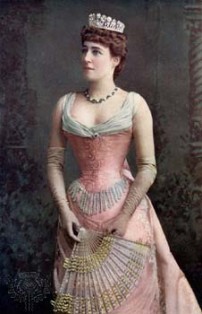
Dignitaries, barristers, popular sculptors, artists, and photographers were there to witness the occasion and to be inspired by the colorful coral reefs, graceful marine life, and crystal-blue waters.  Their attention, however, was drawn away from the oceanic scenery when a tall, curvaceous young woman with Titian red hair entered the room.  She was adorned in a simple black gown.  Her azure eyes scanned the faces staring back at her, and she smiled ever so slightly.  Within moments of her arrival, visitors descended upon the woman to admire her beauty.

Eminent portrait painters and photographers approached the unassuming woman and asked her to sit for them.  Poets sought introductions and then recited blank verse about her arresting features.  By the end of the evening, Lillie Langtry was the toast of Great Britain-a Professional Beauty to be reckoned with.

Emile “Lillie” Charlotte LeBrenton was born to William Corbet and Emilie Martin LeBreton in October of 1853 on the Isle of Jersey, a few miles off the coast of Saint-Malo, France.  She was the only daughter in a family of six children.

Beauty alone was responsible for Lillie Langtry’s initial renown.  Her photographs were printed in England and American newspapers, and by the time she was twenty-seven years old she was as famous in those countries as she was in her own.

The writer Oscar Wilde, whom Lillie had met at society parties, convinced her that the theatre was her calling and helped her get her start in the business.  Lillie took the stage for the first time on December 15, 1881 in the play She Stoops to Conquer at the Theatre Royal.  She was an instant hit.

Theatre managers throughout Europe clamored for a chance to star the famous beauty in one of their shows.  After touring London and Scotland, performing for full houses nightly, she traveled to America.  She appeared in a variety of productions in theatres from New York to San Francisco.

The Jersey Lily (a nickname she acquired because of where she was born) was romantically linked to the Prince of Wales, gambler Diamond Jim Brady, and actor Maurice Barrymore.  Everywhere she went men found her shockingly attractive.  Among her famous admirers was Judge Roy Bean of Texas.  Bean fell in love with Lillie after seeing her photograph posted on a playbill.  Soon the walls of Judge Bean’s saloon courthouse in Vinegaroon, Texas were covered with her pictures and press clippings.  He renamed that town Langtry and Lillie visited the town named in her honor in 1904.  Judge Bean had died not long before.  She toured his Jersey Lily Saloon and drank a toast in his honor.  Langtry residents gave her Bean’s pet bear, which had been chained for years to the foot of his bed, and the animal ran off as soon as it was released.  Lillie was then presented with the Judge’s revolver, the same one he’d used to keep order in his court.

Everywhere Lillie performed across the West she packed venues and received excellent reviews.  At times her theatrical performances were upstaged by her beautiful costumes and dazzling jewelry.  Thousands of women bought seats in the hope that they would attend a performance in which Lillie wore her fabulous gems.

World-famous Lillie Langtry retired from the theatre in 1919 and made her home in Monaco.  She died on February 12, 1929 from influenza.  She was seventy-six years old.  News of her death spread quickly through the United States.  The front pages of newspapers across America recalled her contributions to the theatre, and some editorials declared her passing as “an era that has come to an end.”
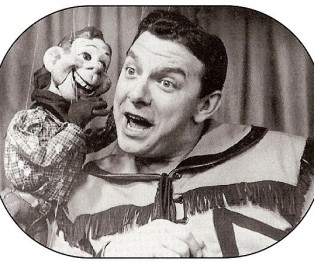
Howdy Doody

Howdy Doody was the first children’s program presented live for one hour every Saturday morning, featuring a freckle-faced boy marionette.  When kids across the country began yelling “It’s Howdy Doody Time!” it marked the beginning of the first generation of kids to be reared on TV.  The program ran until 1960 and spawned a few other children’s programs from characters in the ensemble.  “Buffalo” Bob Smith, who was the host and the voice of Howdy, died in 1998 at the age of eighty of pneumonia.  The original Clarabell the clown was played by Bob Keeshan who later became Captain Kangaroo and the host of his own show in 1954:  Keeshan died at seventy-six in 2004 of respiratory failure.  Lew Anderson who took over the job as Clarabell, died in 2006 at age eighty-four of prostate cancer.  Kids thought Howdy Doody was real, and in 1952 he received over a million write-in votes to become president.  When the show ended, Howdy spent many years locked inside a dark trunk in a cold and lonely vault.  In 2000, after an lengthy court battle deciding ownership, Howdy was finally freed, though currently hangs lifeless, on display at the McPharlin Puppetry Collection in the Detroit Institute of Arts. 

This Day…

1753-The Governor of French Canada, Marquis Duquesne de Menneville, orders the erection of a series of forts to strengthen the French position in the Ohio territory.  Fort Preque Isle (at present-day Erie), Fort Le Bouef (by portage point on French Creek) and Fort Venango (at the confluence of French Creek and the Allegheny) are built at once.

The Boys of Bonanza

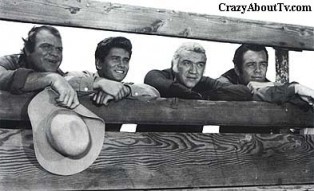
Bonanza made its TV debut in 1959 and was a smash hit for fourteen years, ranking only second as the most popular western of all time after Gunsmoke.  The story centered on a father raising three sons on the Ponderosa ranch, a huge spread on the shores of Lake Tahoe in Nevada.  Ben Cartwright, the father, was Lorne Greene:  He died from an ulcer at age seventy-two in 1987.  Two of the three sons died young:  The middle son, Hoss, played by Dan Blocker, a 6-foot-3, 300 pound, good natured guy on and off screen died in 1972 at age forty-three of a pulmonary embolism after routine gall bladder surgery.  The youngest son, Little Joe, played by Michael Landon, later went on to star in Little House on the Prairie and Highway to Heaven.  Landon died at age fifty-four in 1991 of pancreatic cancer.  Married three times, with nine children, he is remembered most for how he publicly faced news of his fatal illness with an unusual frankness.  Blocker’s type of embolism and Landon’s cancer are often caused by exposure to chemicals, frequently from too much contact with butoxyethanol, a chemical in many household cleaning products.  It seems likely that both actors breathed air or had skin contact with the chemical while on the set of Bonanza. The family cook, Chinese immigrant Hop Sing, played by Victor Sen Yung also died from exposure to chemicals, this time from his real-life kitchen:  He died in 1980 at age sixty-five due to carbon-monoxide poisoning, stemming from a gas leak in a household appliance.  

Rode Into the Sunset

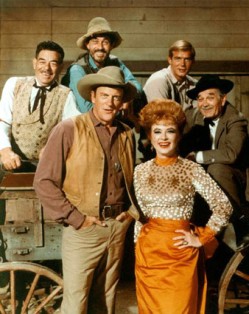
The three top television westerns were Gunsmoke, Wagon Train, and Have Gun Will Travel.  Gunsmoke featured Marshal Matt Dillon, modeled on Wyatt Earp.  Howard McNear played morbid Doc Charles Adams:  He died of a stroke in 1969 at age sixty-three.  Georgia Ellis was the prostitute Kitty Russell on Gunsmoke:  She died in 1988 at age seventy-one of AIDS, acquired after she married a bisexual younger husband.  Wagon Train was a weekly drama portraying a clean-cut version of post-Civil War America’s journey westward, featuring Ward Bond as Major Seth Adams.  He died in 1960 at age fifty-seven of a heart attack.  Have Gun Will Travel was about a professional gunfighter named Paladin, played by Richard Boone and Kim “Hey Boy” Chan by Kam Tong:  Boone holstered his six-shooter for a good as a result of cancer in 1981 at age sixty-three.  Tong bowed out a sixty-two, going in 1969 of heart failure. 

This Day…

1894-The bitter rivalry between Bud Frazer and his former deputy, Killin’ Jim Miller, boiled over in Pecos, Texas.  Miller got off a shot that wounded a spectactor and Frazer emptied his six shooter into Killin’ Jim’s Chest and walked away from the fight, but Miller survived that shooting by wearing a heavy steel plate under his coat.  Hey, I think I saw this movie!

Closing the Open Range

Barbed wire doesn’t seem like such an important invention today, but it once played an integral part in the development of the American West.  Joseph Glidden’s 1873 invention closed down the open ranges and placed cattle on well-defined lots of private plains and wide-open country was cordoned off with spikey wire, which effectively ended the era of the cowboy.  Glidden, through barbed wire, became one of the richest men of his time.  However, he died from an infection from an unhealed cut, much the way his invention had injured many handling it and the animals caught in its web.  Upon his death, his body was shipped in a special ice-cooled train coach.  His final wish was that he be buried far from the dusty plains where his Texas headquarters were located to lie eternally like a gentleman in a gravesite in New York. 

High Country Women

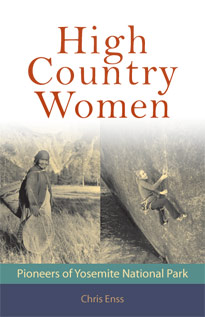
High Country Women Book Cover

Women have played an important—though often hidden— role in shaping the history of Yosemite National Park. High Country Women reveals the contributions made by these strong and independent pioneers, such as:

  • Clare Hodges, who seized her opportunity to be the nation’s first woman park ranger.
  • Jessie Fremont, who campaigned for protecting Yosemite from developers.
  • Florence Hutchings, who spent every moment exploring Yosemite’s backcountry, and who had a mountain and lake named after her.
  • Sally Dutcher and Elizabeth Pershing, who in 1875 and 1876 were the first women to climb Half Dome.
  • Lynn Hill and Beth Rodden, who in recent decades became legendary climbers in Yosemite.
  • Ta-bu-ce (Maggie Howard), a Paiute who lived humbly in the traditional manner and taught Yosemite visitors her tribe’s customs.

Meet these remarkable women and more like them, both historic and contemporary, in High Country Women: Pioneers of Yosemite National Park.

“Chris Enss breathes life back into the women who were so integral to the shaping and preservation of the greater Yosemite area.” Kristen Olsen, CALIFORNIA STATE ASSEMBLY MEMBER

“High Country Women does an exemplary job of highlighting some of the incredible women that added to the rich fabric of Yosemite’s history.” Beth Rodden, RENOWNED ROCK CLIMBER