
1916-A large group of deputized policemen carrying rifles fires on some 250 International Workers of the World supporters coming off a chartered steamboat in Everett, Washington. The Workers are protesting the treatment of their fellows who were forced to run a gauntlet as they left Everett.
American’s Creed & Big Foot
Unless you’ve been living in the woods somewhere in the Northwest, more concerned about finding Big Foot than affairs of the state, you know there’s an election tomorrow to decide who the next President of the United States will be. I wanted to spend this month writing about historical political events and the people who sought to make a difference in the process. In 1917, William Tyler Page of Maryland won a nationwide contest for “the best summary of American political faith.” The U.S. House of Representatives accepted the statement as the American’s Creed on April 3, 1918. It’s two paragraphs remind us that responsibilities are the source of rights. It deserves to be read and recited. Today very few people have even ever heard of it. “I believe in the United States of America as a Government of the people, by the people, and for the people; whose just powers are derived from the consent of the governed; a democracy in a republic; a sovereign Nation of many sovereign States; a perfect union, one and inseparable; established upon those principles of freedom, equality, justice, and humanity for which American patriots sacrificed their lives and fortunes. I therefore believe it is my duty to my country to love it, so support its Constitution; to obey its laws; to respect its flag, and to defend it against all enemies.” Don’t forget to vote. Oh, by the way, today’s news noted that Big Foot was last spotted in Idaho, in case you believe your time would be better spent searching for him. For what it’s worth, I’m not so certain that line of thought isn’t spot on.
This Day
Bad Girl Book Signing
PR-Bad_Girls_Midwest-emailI’ll be at the Book Seller in downtown Grass Valley Saturday from 2-4 p.m.. If you’re in the area stop by and listen to a few stories about the most notorious lady outlaws of the Midwest. Register to win a copy of the Bedside Book of Bad Girls and enjoy delicious refreshments. For more information and to see inside the book click on the attached icon.
This Day…
1875-Clay Allison led another lynch mob in Cimarron that strung up accused murderer Cruz Vega. The mob then shot vega in the back and Allison tied the lynch rope around the saddle horn and dragged the corpse over rocks and through brush. Vega was probably innocent of the murder he was accused of. Ain’t the always the way.
Mad Women
 Recognizing heroic women in history continues today with a look at two ladies that were born centuries apart who made an impact. A fifteenth-century French woman known as Joan of Arc began to hear voices. To her, God had a message of insider military information, instructing her to drive the English out of France. She dressed for battle and showed up for war, and by her convictions (others called it madness) she rallied the troops and achieved a long-sought victory of a key occupied city in just nine days. French King Charles VII, his own lineage rife with frequent bouts of insanity, dubbed her and her family nobility. A year later she was captured by the English, tried for heresy by the clergy of the Inquisition, and burned at the stake at age nineteen in 1431. Charles VII made no effort to free her. Five hundred years later she was canonized as a saint. Few women choose their hero path via exploration. One notable exception was May French-Sheldon, a wealthy American woman who became known as the first woman explorer of Africa. In the 1890s, with an entourage of 130 Zanzibarian men, she explored East Africa and the Congo. The press at the time called her a raging madwoman, but she didn’t care. She went on to lecture for many years about her travels, stressing-way before it was fashionable-that a “woman could do anything a man could.” She died of pneumonia in 1936 at age eighty-nine.
This Day…
Missing Pioneer
 Amelia Earhart was the first female aviation hero. She was a likable, slender woman with an independent mind. Determined to do anything a man could do, despite the obstacle, she drove a truck and worked at the telephone company to earn the money needed for her first flying lessons. She had the right image and was photogenic enough to be asked to make a sponsored, first female-copiloted flight across the Atlantic. Publisher George Putnam was going to do a book on this and met the young woman to determine her candidacy. Apparently, she was more than photogenic because this meeting ultimately led to their “open marriage” and a relationship that Earhart agreed to only if the “medieval code” of fidelity by either part was not followed. At the age of thirty-nine in 1937 she attempted to circumnavigate the globe. Similar to Magellan’s fate, she got only three-quarters of the way when her plane ran out of fuel and crashed into the Pacific Ocean. What really happened to her is unknown, with theories ranging from being captured by the Japanese and treated as a spy, to her living a life of solitude on a deserted island with a native fisherman. However, it is most probable that no sign of her body was ever recovered because she was eaten by sharks.
This Day…
1842-Commodore Thomas ap Catesby Jones, commanding a fleet of the US Navy in the Pacific Ocean, seizes Montery, the capital of the Mexican Provice of California, when he hears that the United States and Mexico are at war. Cateby Jones had feared that the British would take advantage of the hostilities to seize California. He returns to the post the following day when he learns of his mistake. Apologies reparations are made to Mexico by President Tyler.
The Death of Jeanne Eagels
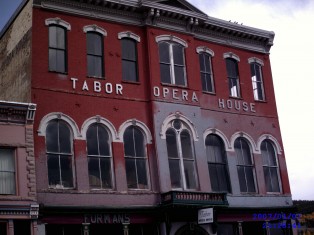 In 1929 Jeanne Eagels was nominated for a best actress Oscar for The Letter after she died earlier that year at age thirty-nine from alcohol and heroin complications. Eagles had started as a Ziegfeld Follies girl, but her talent and beauty soon moved her from the chorus line to center stage. Tabloids of the time followed her progress and her secret marriage to a Yale football star, and they especially liked her temper, her no-shows, and her quitting plays whenever she felt like it. At one point she was banned from appearing on stage by Actors Equity, which had forced her to move to Hollywood to make the “talkie” The Letter, one of the first films that showed the true dramatic possibilities of audio in cinema. In the fall of 1929 she checked into a private drying-out hospital in New York City a week before the stock market crashed; unfortunately she left via the morgue. During the 1920s heroin was used with impunity on Broadway, and many actors made their daily runs to the thriving heroin shops operating in New York’s Chinatown before and after every performance. By 1929 there was 200,000 heroin addicts in the United States. The prevailing treatment at the time consisted of treating the drug addict with more drugs, particularly more potent morphine derivations, which often caused fatal overdoses. Many Old West actors performed under the influence particularly at the Tabor Opera House in Colorado.