
1917 – Publisher Emma Goldman imprisoned for obstructing draft during WW1
Summer Reading List

This Day…
1907 – Florenz Ziegfeld staged 1st `Follies’ on NY Theater roof
Frances Boyd – The Lieutenant’s Wife
Enter now to win a copy of
Soldier, Sister, Scout, Spy: Women Patriots and Soldiers on the Western Frontier
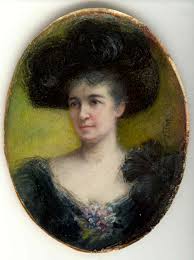
Frances eyed the horizon before them then disappeared into the wagon. She picked up two sabers lying next to a trunk, unsheathed them, and thrust them out either side of the back of the wagon. From a distance she hoped it would look like they were armed with more travelers who were ready to do battle with the Apaches. Unless they come very close, she thought, the dim light will favor our deception.
She returned to her husband’s side, cradling a pistol in her lap. The strap on Orsemus’ gun in his holster had been undone, and he was ready to fire his weapon as well. The riders in front of them had pulled their bayonets from their sheaths, the blades gleaming in the low-hanging sun. Frances believed the small band looked as warlike as possible. Members of the Eighth Cavalry had passed this same way a few days before and had been assaulted with bullets from some of Apache leader Geronimo’s warriors. Frances and the others were relying on an appearance of strength they in nowise possessed. They knew the Natives would not attack unless they were confident of victory.
The train proceeded into the canyon. The mountain walls on either side were jagged and high. They were a treacherous color against which an Indian could hide himself and almost seem to be a part of them. Frances later wrote that their “hearts quivered with excitement and fear at the probability of an attack.”
The going was slow, and, as time progressed without any hint of an ambush, the party started to relax. Then, suddenly, they heard the fearful cry of an Indian. His cry was answered by another.
Frances stared down at her baby lying at her feet. The child was bundled up in many blankets and sleeping soundly. Orsemus urged on the mule team pulling the wagon through the imposing gorge. Everyone with the party believed death was moments away. “At last, and it seemed ages,” Frances later recalled, “we were out of the canyon and on open ground.” The Boyds eventually met up with a large party of freighters and made their way to the northern part of the state, frazzled but unharmed. Thus was the life of a military wife on the wild frontier.
Women like Frances Boyd chose to endure the hardships of army living in order to make life for their husbands less burdensome and to help settle an untamed land. “I cast my lot with a soldier,” Frances wrote in her memoirs, “where he was, was home to me.”
Frances Anne was born into a well-to-do family in New York City on February 14, 1848. Her father owned a bakery; her mother was a housewife who died when Frances was quite young. Historians record that she was a bright girl with an agile mind. She met Orsemus Boyd when she was a high school senior and he was a cadet at West Point. They were married a year later, on October 9, 1867. Orsemus had a desire to go west, and Frances had a desire to be with Orsemus.
Soldier, Sister, Spy, Scout
I'm looking forward to hearing from you! Please fill out this form and I will get in touch with you if you are the winner.
Join my email news list to enter the giveaway.
"*" indicates required fields
To learn more about Frances Boyd and other such patriots read
Soldier, Sister, Scout, Spy: Women Patriots and Soldiers on the Western Frontier.
This Day…
1898 – Lizzie Arlington becomes first woman to play professional men’s baseball when she pitches 9th inning for the Reading Coal Heavers against the Allentown Peanuts; allows 2 hits and walks a batter but preserves 5-0 win
Francita Alavez – Angel of Goliad
Enter now to win a copy of
Soldier, Sister, Spy, Scout: Women Soldiers and Patriots on the Western Frontier
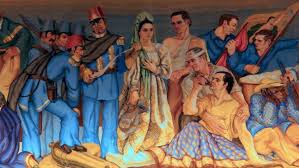
The moment Madam Alavez arrived at Copano, she began her work of intercession and performed deeds of mercy for the poor[,] suffering Texans who had fallen into the hands of the Mexican enemy. —Pioneer Press, October 1920
A slim shadow darted toward the old church at the ruined fortress of Goliad. The smell of smoke stained the night air as the figure picked a careful path through the rubble inside the fortress walls. Moonlight starkly displayed the damage caused by the retreating forces of Colonel James Fannin’s command. Hundreds of Fannin’s men now lay on the hard ground, prisoners of General Jose de Urrea, one of Supreme Commandant General Antonio Lopez de Santa Anna’s best commanders.
Pausing in a dark corner, Francita Alavez gazed toward the southwest gate and the dull gleam of a cannon positioned to fire on anyone who might attempt a rescue of the Americans. She shivered in the warm night as the knowledge of their fate bowed her shoulders. She knew what the captives did not. They believed they would be returned to the United States as prisoners of war. Francita had seen the order sent by Santa Anna to execute all of them.
As she had at Copano Bay almost the moment she arrived in Texas, Francita vowed to save as many as she could. On the eve of Palm Sunday, March 27, 1846, she slipped into the church and began the task.
“She had heard many tales of the bad, bold, immoral Texans, but like all good souls loath to think ill of others, scarcely believed they could be as bad as painted,” recounted the Pioneer Press in 1920. The article went on to outline what was then known about the woman who came to be called the “Angel of Goliad.” Little more is known today about the young woman who worked against a dictator’s orders at the risk of her own life.
Soldier, Sister, Spy, Scout
I'm looking forward to hearing from you! Please fill out this form and I will get in touch with you if you are the winner.
Join my email news list to enter the giveaway.
"*" indicates required fields
To learn more about Francita and other brave women like her read:
Soldier, Sister, Spy, Scout: Women Soldiers and Patriots on the Western Frontier
This Day…
1938 – President Franklin Roosevelt dedicates the Eternal Light Peace Memorial and lights the eternal flame at Gettysburg Battlefield
The Woman Chief
Enter now to win a copy of
Soldier, Sister, Spy, Scout: Women Soldiers and Patriots on the Western Frontier
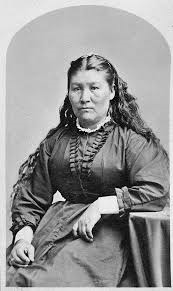
Mrs. Frank “Tobey” Riddle, better known as Winema, was a mediator for the Modoc people, other Indian tribes in the area of Klamath Lake, Oregon, and the United States Army in early 1878. With her skills she was able to negotiate treaties that kept the land of her ancestors in peace. Whenever that peace was threatened, her job was to set things straight. On February 1873, she rode into hostile Modoc territory to persuade the chief to surrender to the cavalry.
Chief Keintpoos, or Captain Jack (a named given to him by the settlers because of his liking for brass buttons and military medals on his coat), was Winema’s cousin. In 1863 the U.S. government forced his people from their land onto a reservation in Oregon. Conditions on the reservation were intolerable for the Modoc people. They were forced to share the land with the Klamath Indians of the region. The Modoc and the Klamath did not get along. The Modoc struggled to live in this hostile environment for three years. Modoc leaders appealed to the U.S. government to separate the tribes, but officials refused to correct the problem. In 1869, Captain Jack defied the laws of the white man and led his tribe off the reservation and back to the area where their forefathers had first lived.
The cavalry and frustrated members of the Indian Peace Council wanted to use force to bring Captain Jack and his followers back to the reservation. Winema persuaded them instead to give her a chance to talk with the chief.
When Winema reached the Modoc camp, Captain Jack’s men gathered around her. A dozen pistols were drawn upon her as she dismounted. She eyed the angry tribesmen as they slowly approached her. Then walking backward until she stood upon a rock above the mobs, she clasped her right hand upon her own pistol, and with the other on her heart she shouted aloud, “I am a Modoc myself. I am here to talk peace. Shoot me if you dare, but I will never betray you.” Her bravery in the face of such difficulty won the admiration of her people, and instantly a dozen pistols were drawn in her defense.
Soldier, Sister, Spy, Scout
I'm looking forward to hearing from you! Please fill out this form and I will get in touch with you if you are the winner.
Join my email news list to enter the giveaway.
"*" indicates required fields
To learn more about Winema and other women loyalists read
Soldier, Sister, Spy, Scout: Women Soldiers and Patriots on the Western Frontier
This Day…
1776 – 1st vote on Declaration of Independence for Britain’s North American colonies
Frontier Patriots
Throughout the month of July enter to win a copy of
Solider, Sister, Spy, Scout: Women Soldiers and Patriots on the Western Frontier
From the earliest days of the western frontier, women heeded the call to go west along with their husbands, sweethearts, and parents. Many of these women were attached to the army camps and outposts that dotted the prairies. Some were active participants in the skirmishes and battles that took place in the western territories. Each of these women-wives, mothers, daughters, laundresses, soldiers, and shamans-risked their lives in unsettled lands, facing such challenges as bearing children in primitive conditions and defying military orders in an effort to save innocent people.
Soldier, Sister, Spy, Scout tells the story of twelve such brave women-Buffalo Soldiers, scouts, interpreters, nurses, and others-who served their country in the early frontier. These heroic women displayed a depth of courage and physical bravery not found in many men of the time. Their remarkable commitment and willingness to throw off the constraints of nineteenth-century conventions helped build the west for generations to come.