
1856 – Republican Party opens its first national convention, party members meet in Philadelphia
Duty and Faithfulness
Enter now to win a copy of
The Widowed Ones: Beyond the Battle of the Little Bighorn
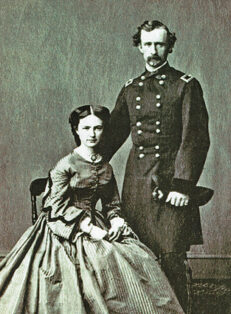
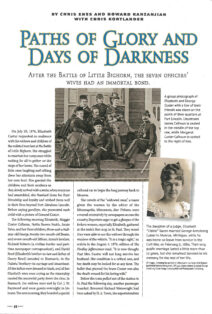
Elizabeth Custer and Annie Yates sat on the front porch of the Yates home watching Annie’s children playing in the yard. A stack of papers rested in the laps of both women, and, when they weren’t distracted by the unremarkable daily tasks of their new lives without their husbands, they sifted through the letters and government paperwork that had steadily arrived since late July 1876.
The summer of 1876 had passed slowly. The men who died at the Little Bighorn were sorely missed. Elizabeth had taken to sleeping with one of Custer’s shirts. It smelled like him, and, at night when she longed to have him near, it helped ease her pain. Annie spent evenings after the children were in bed writing letters to her deceased husband. She knew he was gone, but she had an overwhelming need to communicate with him about their little ones and the difficulty she was having moving on. Elizabeth and Annie had found unique ways to deal with their grief and by mid-fall were venturing out into public, if only to visit one another. Maggie Calhoun, on the other hand, still struggled, refusing to leave her parents’ home to even attend church. “Now that Bubbie is gone,” Maggie shared with Elizabeth about James Calhoun’s death, “…I do not feel that mentally I am fitted to fill any position of usefulness to others.”
Nettie Smith’s correspondence to Elizabeth revealed her struggle to move forward from the tragedy as well. “Last night I found a diary kept by Smithie on the Yellowstone Expedition [1873] in which so often he writes of his ‘little wife’. In one place he says, ‘These are hard marches, but it is consoling to know that we are marching toward my little wife Dudds. God bless her! Only about a month separates us.’ Oh, if that last part could only be true now. I realize the terrible truth more and more every day. Where shall we find the strength to endure?”
The Widowed Ones 3
I'm looking forward to hearing from you! Please fill out this form and I will get in touch with you if you are the winner.
Join my email news list to enter the giveaway.
"*" indicates required fields
To learn more about Elizabeth Custer and her friends read
The Widowed Ones: Beyond the Battle of the Little Bighorn
This Day…
1920 – US Post Office says children cannot be sent by parcel post (after various instances).
God and Time Alone
Enter now to win a copy of
The Widowed Ones: Beyond the Battle of the Little Bighorn
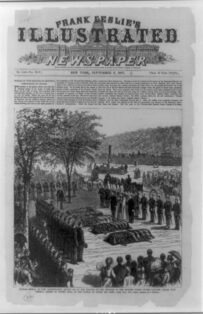
Thirty-four-year-old Elizabeth Bacon Custer filed into the Methodist church in Monroe, Michigan, on August 13, 1876, with hundreds of others attending the memorial service of her husband of twelve years, General George A. Custer, and five of his officers killed at the Battle of the Little Bighorn. She was adorned in a black bombazine (silk) dress with black fringe and a black bonnet with a black crepe veil. The mourning outfit would be her standard wardrobe for years to come. She walked mechanically, but purposefully, down the center aisle, her eyes focused on a reserved seat in the front pew. Friends and acquaintances smiled piteously at her as she passed; some refrained from looking at her at all. Those who knew of her and her well-known husband by reputation only stood on tiptoe and craned their necks to watch her every move.
The heat that afternoon was sweltering. Members of the Baptist and Presbyterian churches had joined the Methodists to pay tribute to the slain soldiers who were raised in the town located on the western shores of Lake Erie. The combination of congregants along with the other funeral goers made the atmosphere in the house of worship oppressive. Halftones from the bright sun diffused through the stained-glass windows cast a colorful light on the portrait of General Custer sitting on the organ next to a magnificent podium in the very front where the pastor delivered his weekly sermons. Custer’s picture was surrounded with an evergreen wreath, and two sabers crossed underneath the picture. The names of Captain Yates and Henry Armstrong Reed were scrawled across ribbons encompassing another display in evergreen.
Elizabeth’s attention was fixed on the national flag close to the lectern. She was quiet and composed. Her sister-in-law, Margaret (Maggie) Calhoun, was anything but that. She struggled to control her crying. She was grieving over the losses of her husband, Lieutenant James Calhoun; her three brothers, General George Custer, Captain Thomas Ward Custer, and Boston Custer; and her nephew Henry Armstrong Reed. Anxiety was written in Annie Yates’ every feature. Her husband, Captain George W. Yates, had also lost his life. More than a month had passed since Custer’s Seventh Cavalry met their end at the hand of the Lakota Sioux, Northern Cheyenne, and Arapaho Indians in Montana Territory. The bodies of the widows’ loved ones still remained behind at the battle site.
The Widowed Ones 3
I'm looking forward to hearing from you! Please fill out this form and I will get in touch with you if you are the winner.
Join my email news list to enter the giveaway.
"*" indicates required fields
To learn more about Elizabeth Custer and her friends read
The Widowed Ones: Beyond the Battle of the Little Bighorn
This Day…
1947 – Perennial Christmas film “Miracle on 34th St” starring John Payne and Maureen O’Hara, directed by George Seaton is released
The Widowed Moment
Enter now to win a copy of
The Widowed Ones: Beyond the Battle of the Little Bighorn
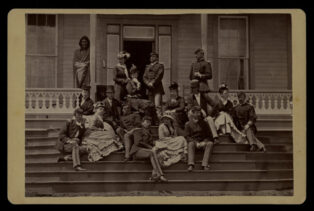
On Saturday, May 27, 1876, Henrietta “Nettie” Smith, her good friend Elizabeth Custer, and several other soldier’s wives made their way to the steamship Far West, docked in the waters near Fort Lincoln. They were excited and filled with purpose. They planned to persuade the ship’s captain, Grant Marsh, to transport them up the Missouri, to the Yellowstone River near where their husbands were camped. The wives of the Seventh Cavalry officers had met with their spouse in the field before, some living in tents with them while they performed their duties, so the request wasn’t out of the ordinary. When the troops had marched away from the fort a mere nine days prior, the goodbyes had been emotional and touching Nettie Smith, who had been married to Lieutenant Algernon Smith for more than nine years, was desperate to see him again. A sense of fear and foreboding over his safety had overtaken her and letters he had written assuring her he was fine could not convince her he was well.
Far West crew members welcomed the women aboard the vessel and as per the custom, Captain Marsh ordered a meal prepared for them. Nettie, Elizabeth, and the other wives were escorted the ship’s dining room where they were served “as dainty a luncheon as the larder of the board could afford.” Elizabeth requested the captain join them and he reluctantly did so. He was busy preparing the steamship to rendezvous with the Seventh Cavalry. He and his thirty-man crew were loading the vessel with food, ammunition, and other supplies the troops would need. There wasn’t a moment to spare.
After listening patiently to the officer’s wives request, Captain Marsh explained that in the best of circumstances “he did not wish to be burdened with many passengers for whose safety and comfort he would be responsible.” He went on to inform the women that the anticipated voyage to the Yellowstone River to be “both dangerous and uncomfortable.” This revelation did not cause the women to change their minds about their objective. They believed their place was with their husbands wherever they were and whatever peril might lie ahead.
The Widowed Ones 3
I'm looking forward to hearing from you! Please fill out this form and I will get in touch with you if you are the winner.
Join my email news list to enter the giveaway.
"*" indicates required fields
To learn more about the friendship between the grieving soldier’s wives read
The Widowed Ones: Beyond the Battle of the Little Bighorn
This Day…
1856 – American industrialist and firearms manufacturer Samuel Colt (41) weds American philanthropist Elizabeth Hart Jarvis (29) at Christ Episcopal Church in Middleton, Connecticut, until his death in 1862
Prescott Western Heritage Museum Gala

This Day…
1871 – Jesse James & his gang robs Obocock Bank (Corydon Iowa), of $15,000
Bearing the Unbearable
Enter now to win a copy of
The Widowed Ones: Beyond the Battle of the Little Big Horn
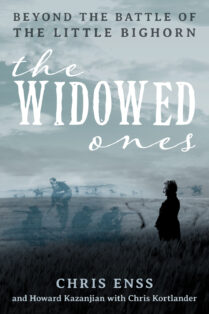
On June 25, 1876, seven officer’s wives lost their husbands at the Battle of the Little Bighorn. The story is told in the book The Widowed Ones: Beyond the Battle of the Little Bighorn. The friendship the bereaved widows had with one another proved to be a critical source of support. The transition from being officers’ wives living at various forts on the wild frontier to being single women with homes of their own was a difficult adjustment. Without one another to depend upon, the time might have been more of a struggle.
The Widowed Ones was the 2023 winner of the
Women Writing the West Willa Cather Award for
Scholarly Nonfiction.
“Exceptionally well written, organized and presented, ‘The Widowed Ones: Beyond the Battle of the Little Bighorn’ is an ideal and unreservedly recommended addition to 19th Century American Biography supplemental studies curriculum.”
― Library Bookwatch/Midwest Book Review
“The rigor of the scholarly research on display here is quite simply astonishing, as the authors seem to leave no stone unturned.”
— Kirkus Reviews
“Readers interested in 19th-century, women’s and military history will be drawn into this thoroughly humane and sympathetic treatment of U.S. army widows.”
― Library Journal
“The book weaves its way through the devastation wrought upon Libby Custer and the widowed wives of the men that wore the blue of the 7th Cavalry. Enss and Kazanjian do a terrific job detailing the women’s handling of loss; not only their husband’s demise, but also the pain of official criticism aimed to besmirch their loved ones, and their grappling with getting on with their lives without any apparent means. The path Libby et. al. took is detailed in “The Widowed Ones”, an insightful glimpse of how the survivors cope, or don’t. Each reader can measure their grit and resolute devotion to their fallen husbands. It is a marvelous story. Enss and company have filled in a neglected hole in one of the West’s greatest historical events. If you are restricted to one last book purchase, this is the one.”
― Arizona Daily Star